CH 01
Why Does a Carolina Crawl Space Need Humidity Control?
In the Carolinas, much crawl space moisture is humidity in the air, which is the job a dehumidifier is built for. Long, humid summers across the Piedmont and the SC Upstate and Midlands around Greenville and Columbia keep the air heavy with moisture for months, and along the coast near Wilmington the salt air carries even more.
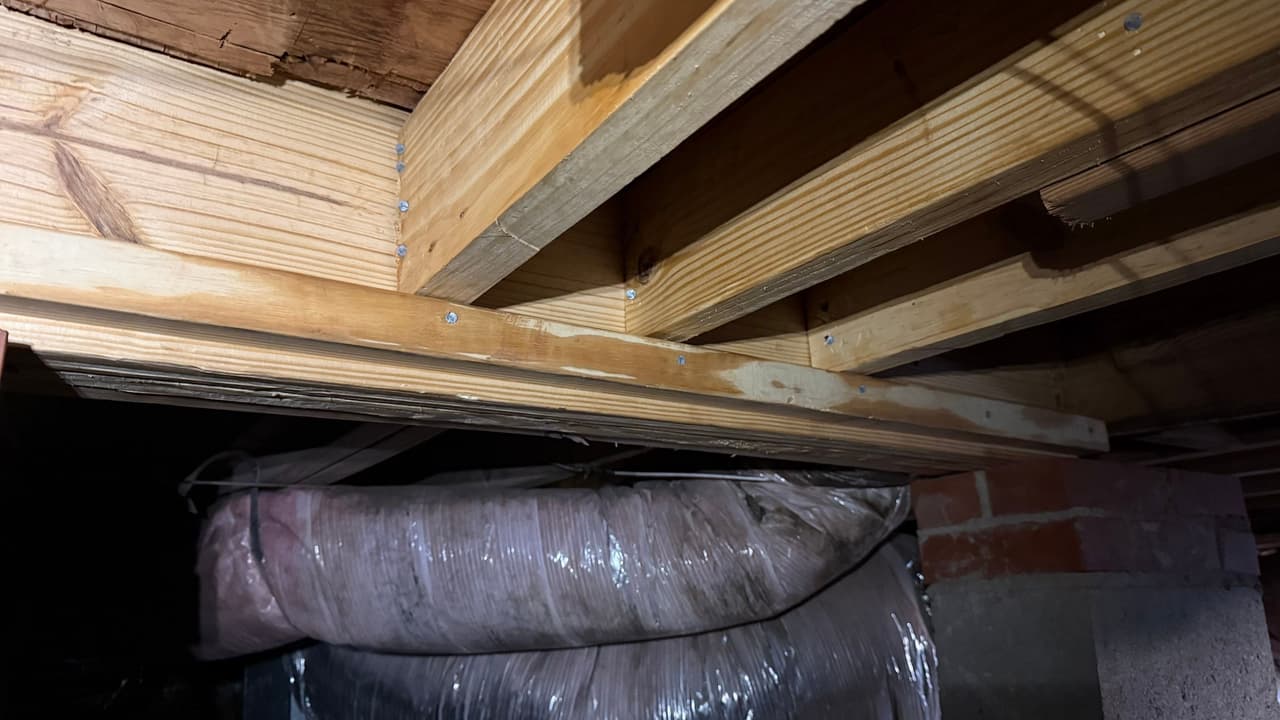
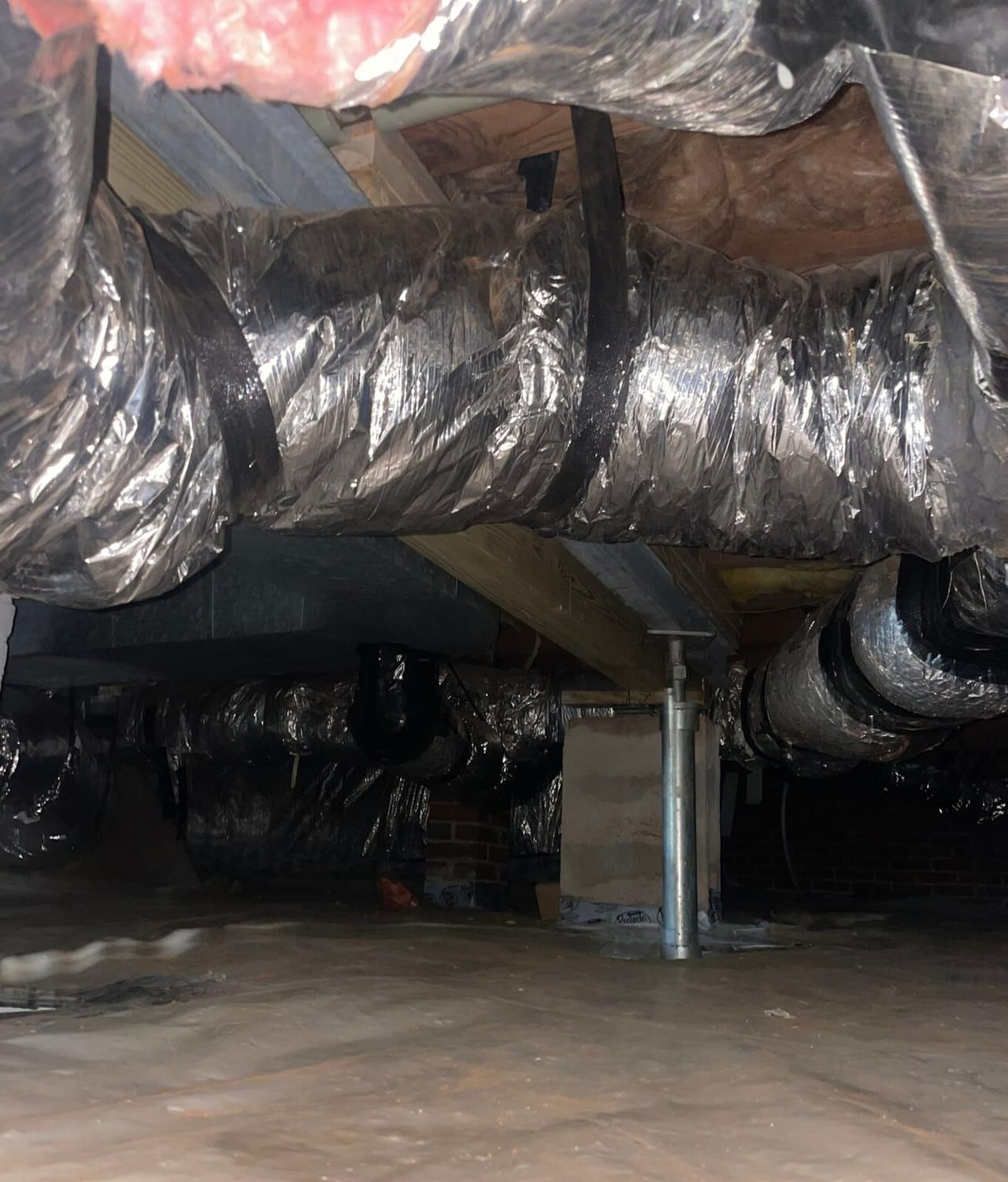
When that humid air sits in a crawl space, it condenses on cooler surfaces like ductwork, pipes, and the underside of the subfloor, and it can keep the framing damp enough to invite rot and mold growth. Common signs include damp air and wet framing and cooling bills that keep climbing. A vapor barrier cuts off moisture rising from the soil, but it does not remove humidity already in the air.
CH 02
What Are the Signs of High Humidity in a Crawl Space?
High humidity under the house tends to show up indoors as a musty smell, a clammy feel to the floors, and air that feels heavy in summer. Allergy symptoms at home that ease when you are away can be another clue, since air from the crawl space rises into the living space.
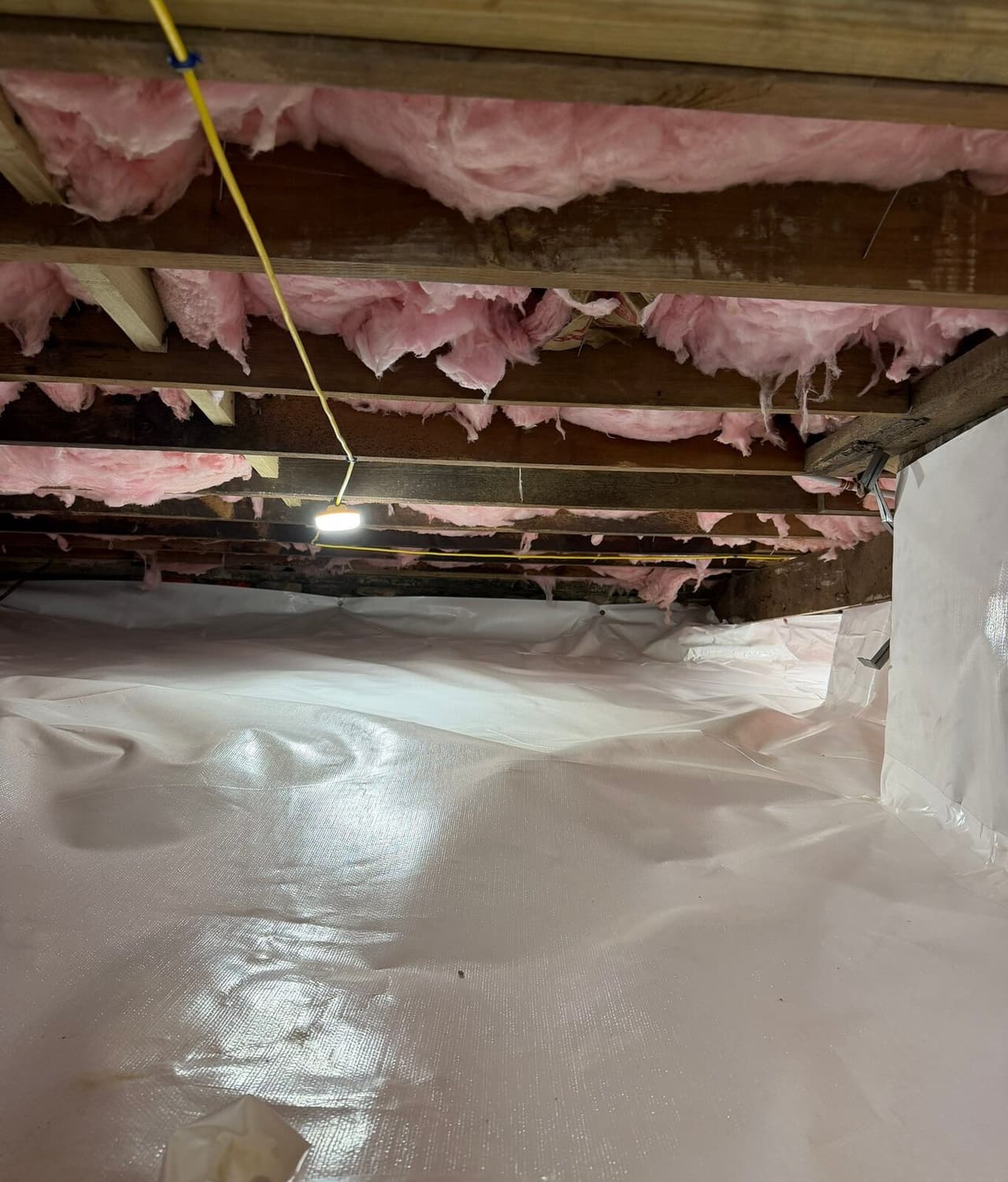
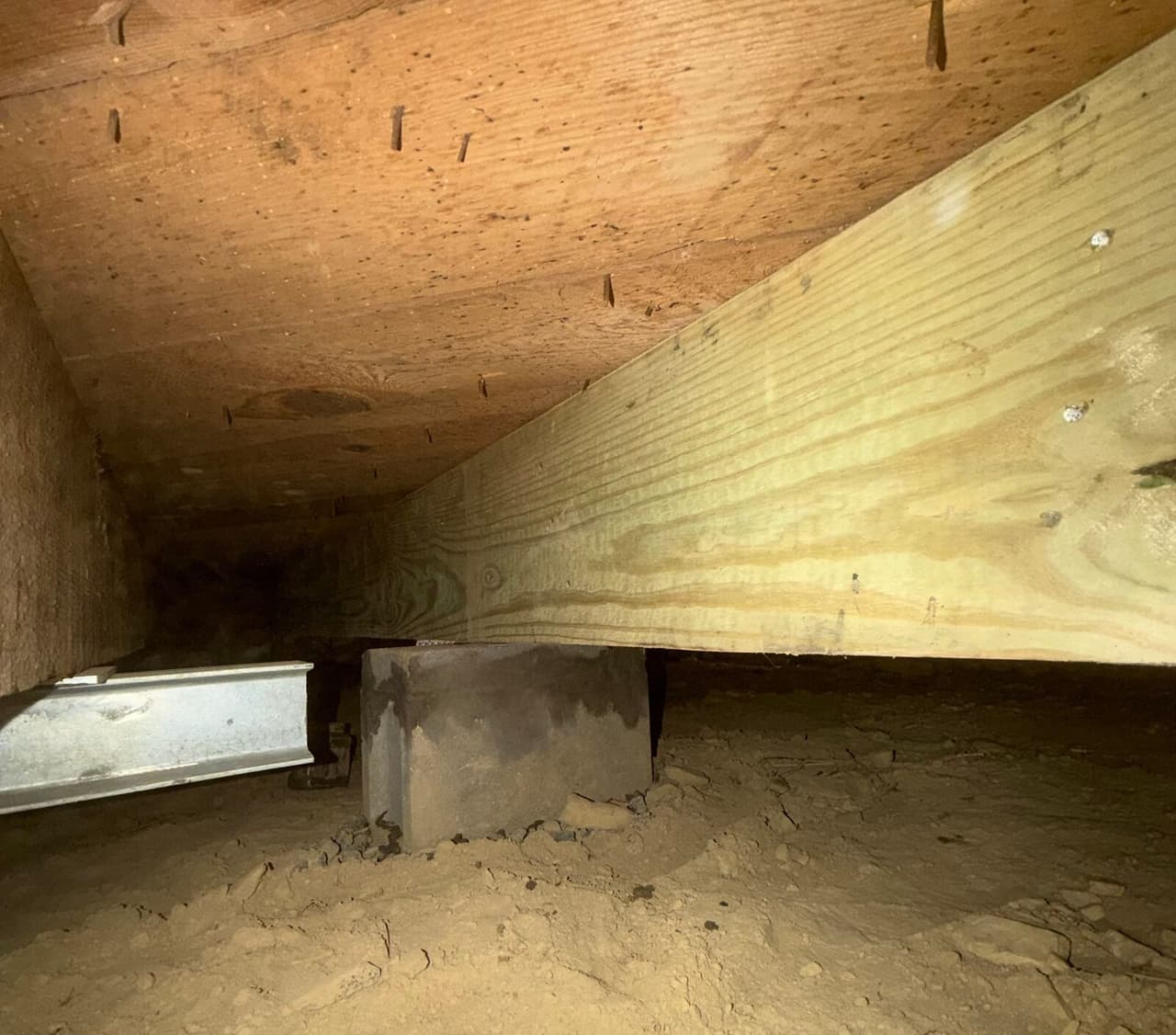
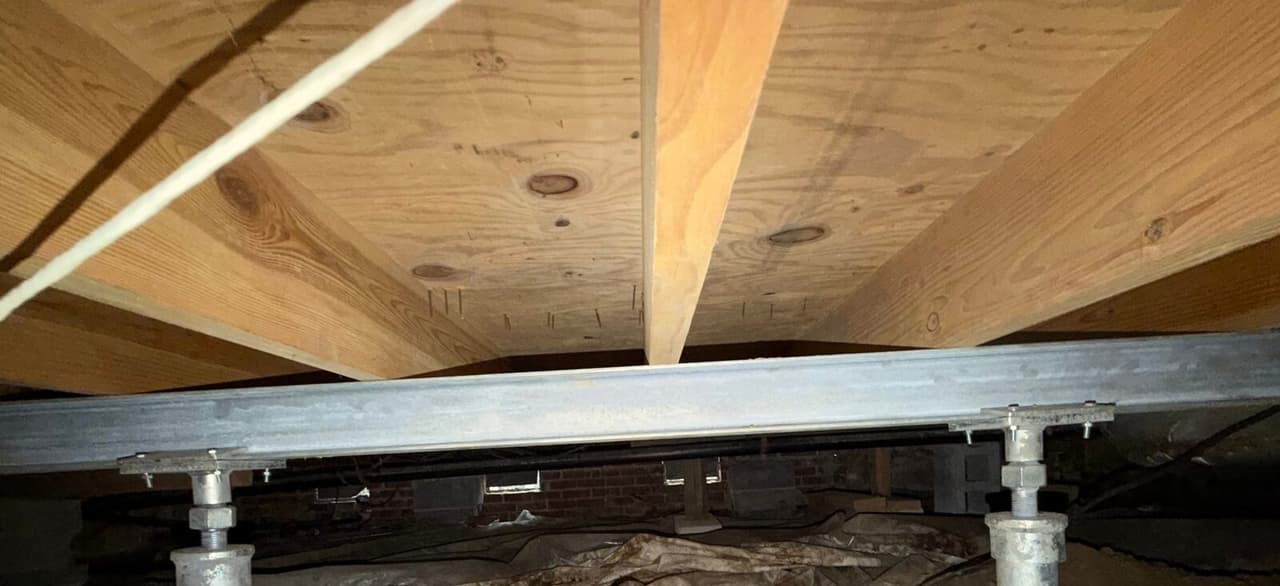
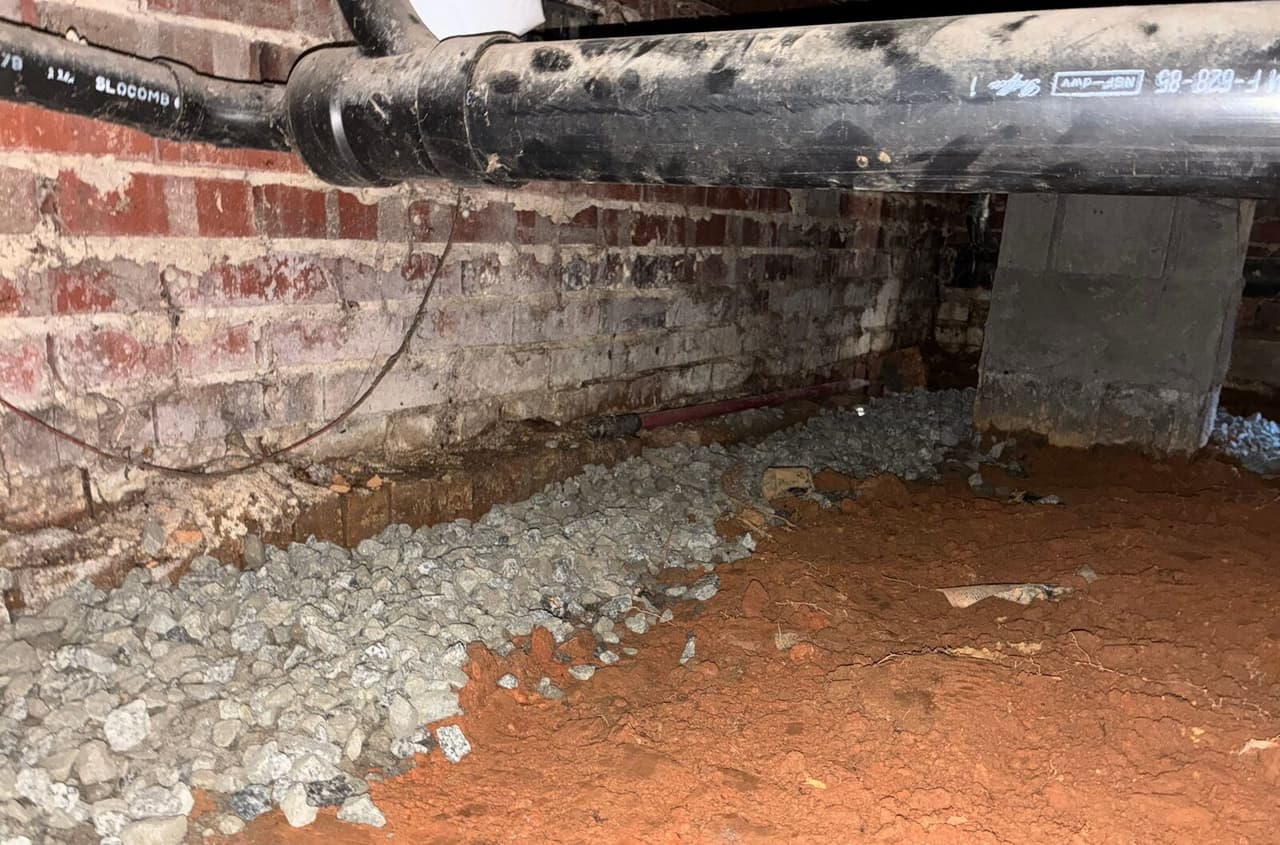
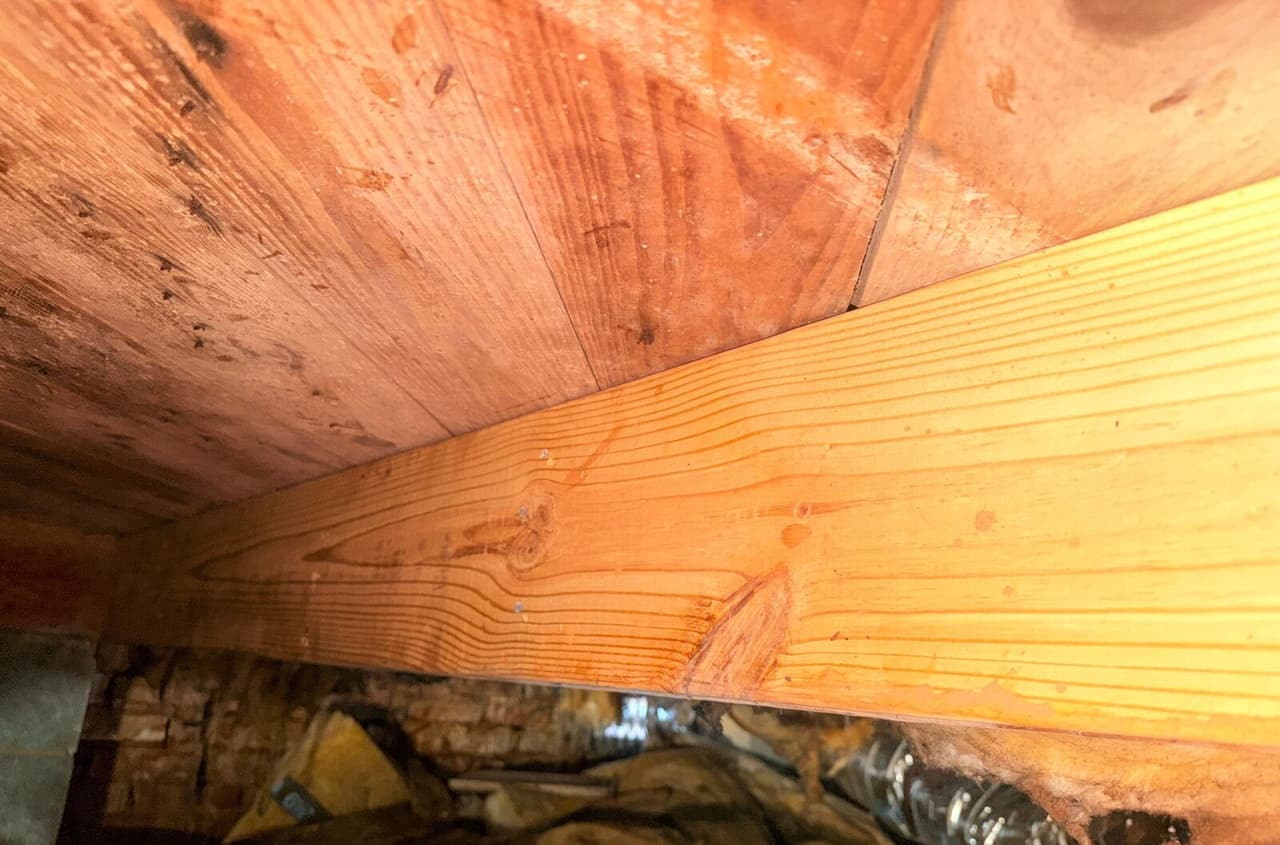
In the crawl space, the signs are water beading on ducts and pipes, a damp subfloor, insulation that sags, and wood that stays dark and damp. White or fuzzy growth on the framing is a moisture symptom. Mold depends on moisture, and holding the humidity down limits the conditions it needs.
CH 03
How Does a Crawl Space Dehumidifier Work?
A crawl space dehumidifier pulls moisture out of the air and holds the relative humidity down. The EPA recommends keeping indoor relative humidity below 60 percent, ideally between 30 and 50 percent, and a crawl space unit uses a humidistat to hold the humidity at a set target.
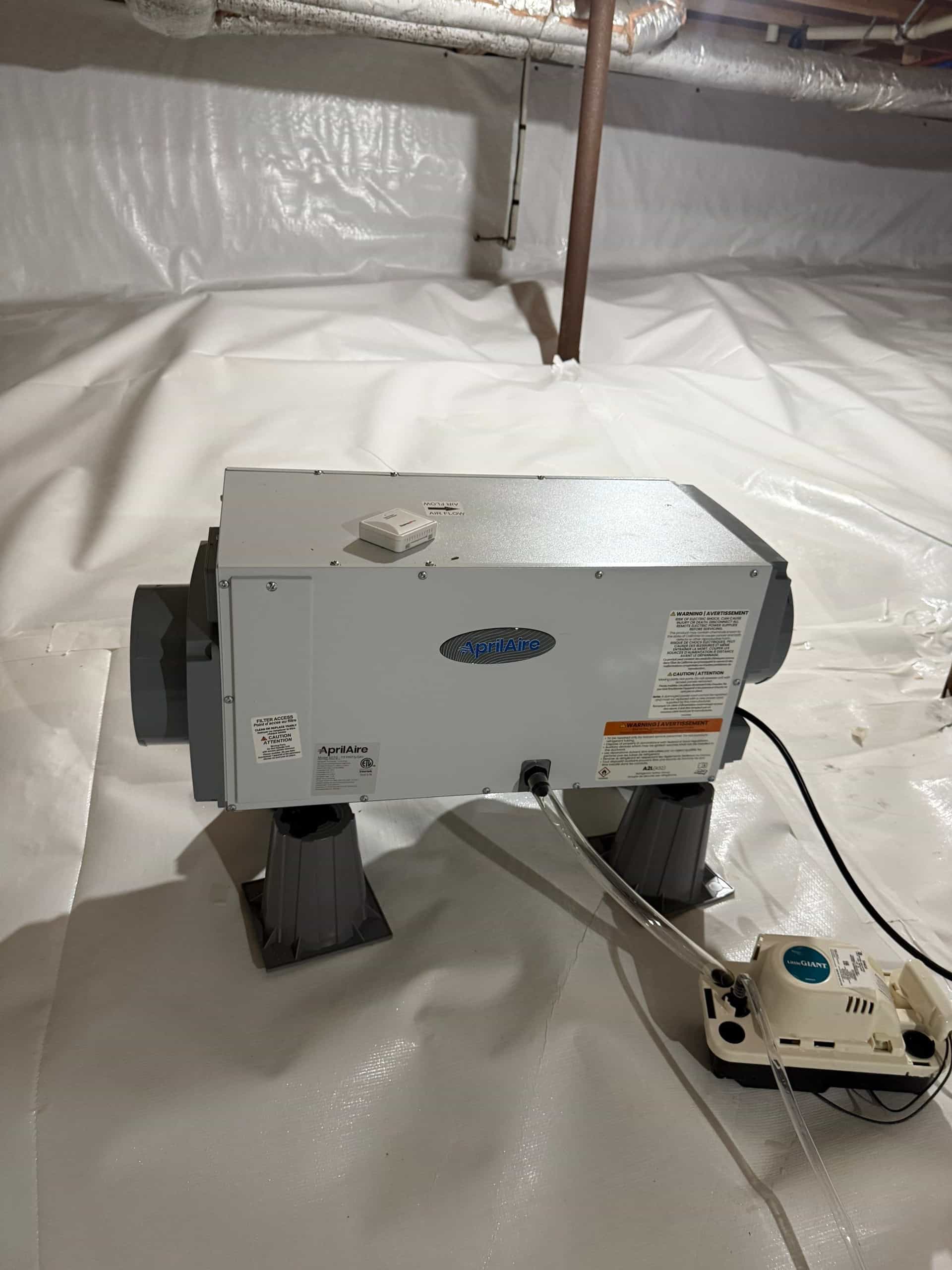
Installed correctly, it is sized to the volume of the crawl space and its moisture load, drains automatically so there is no tank to empty, and is placed to move dry air through the whole space.
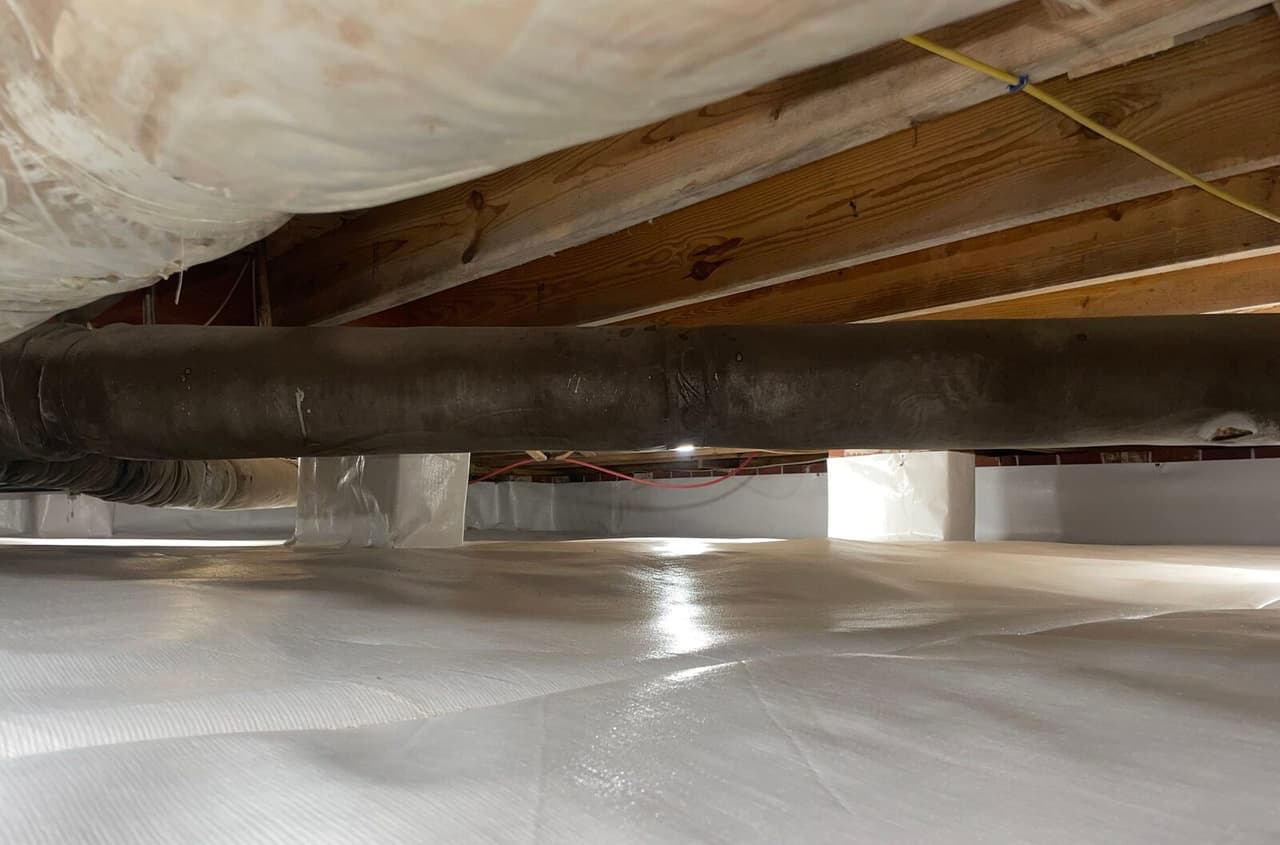
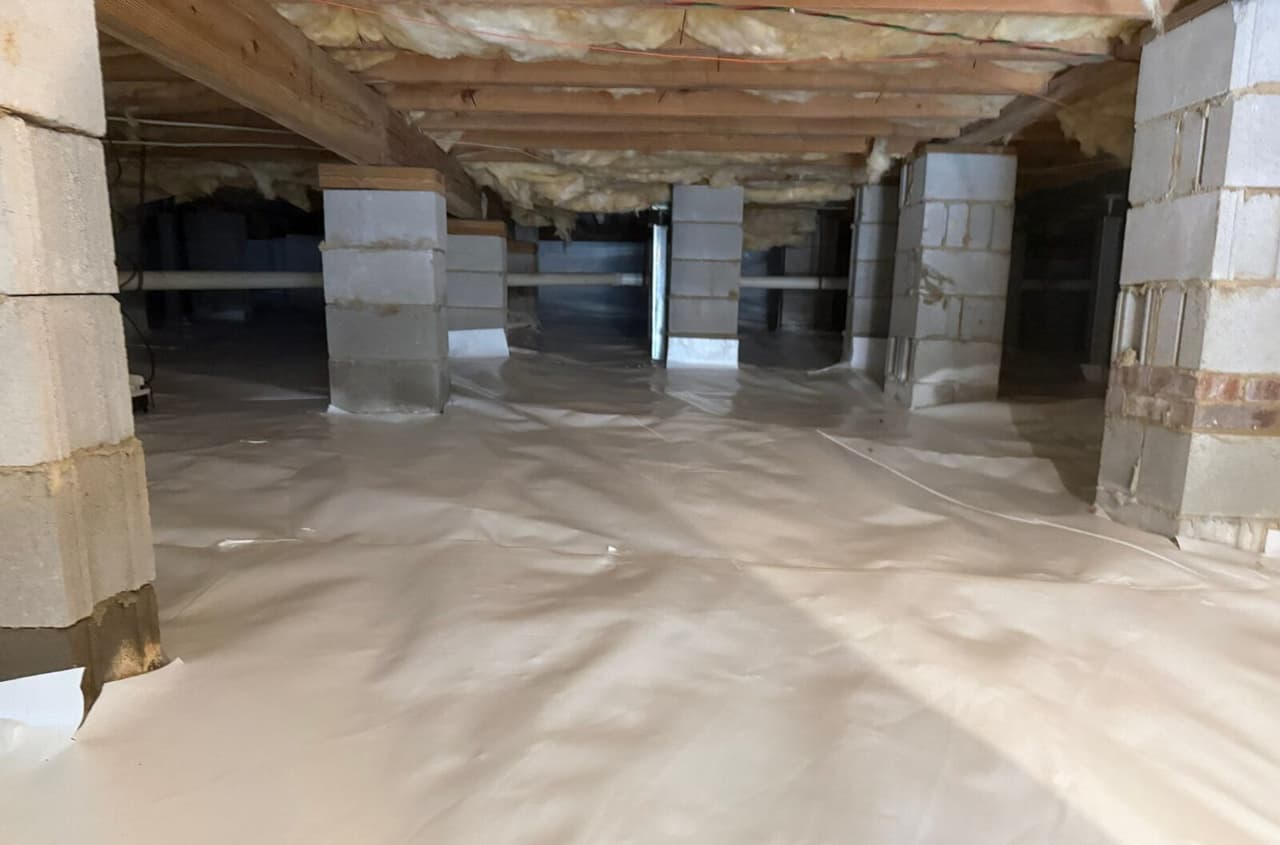
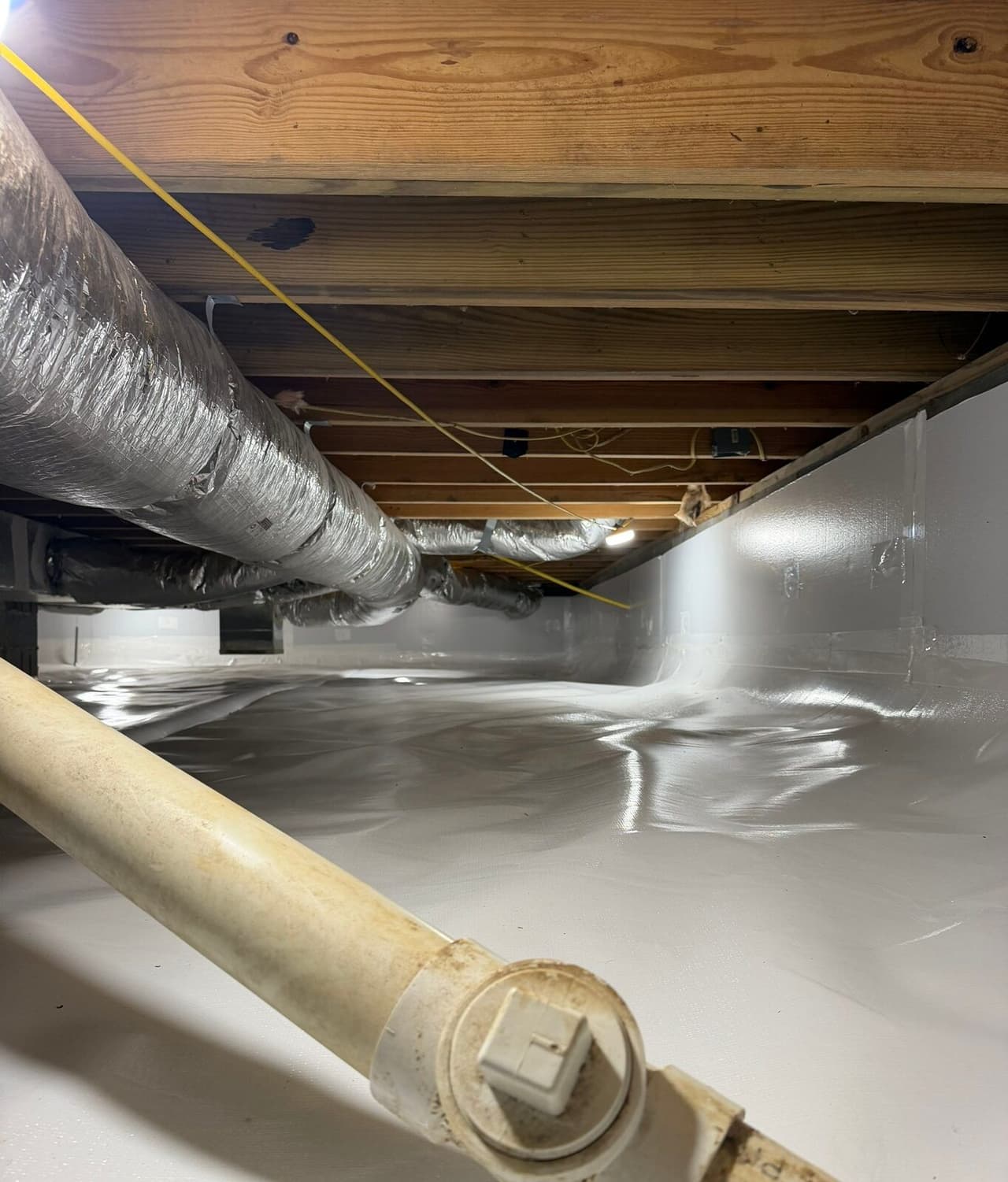
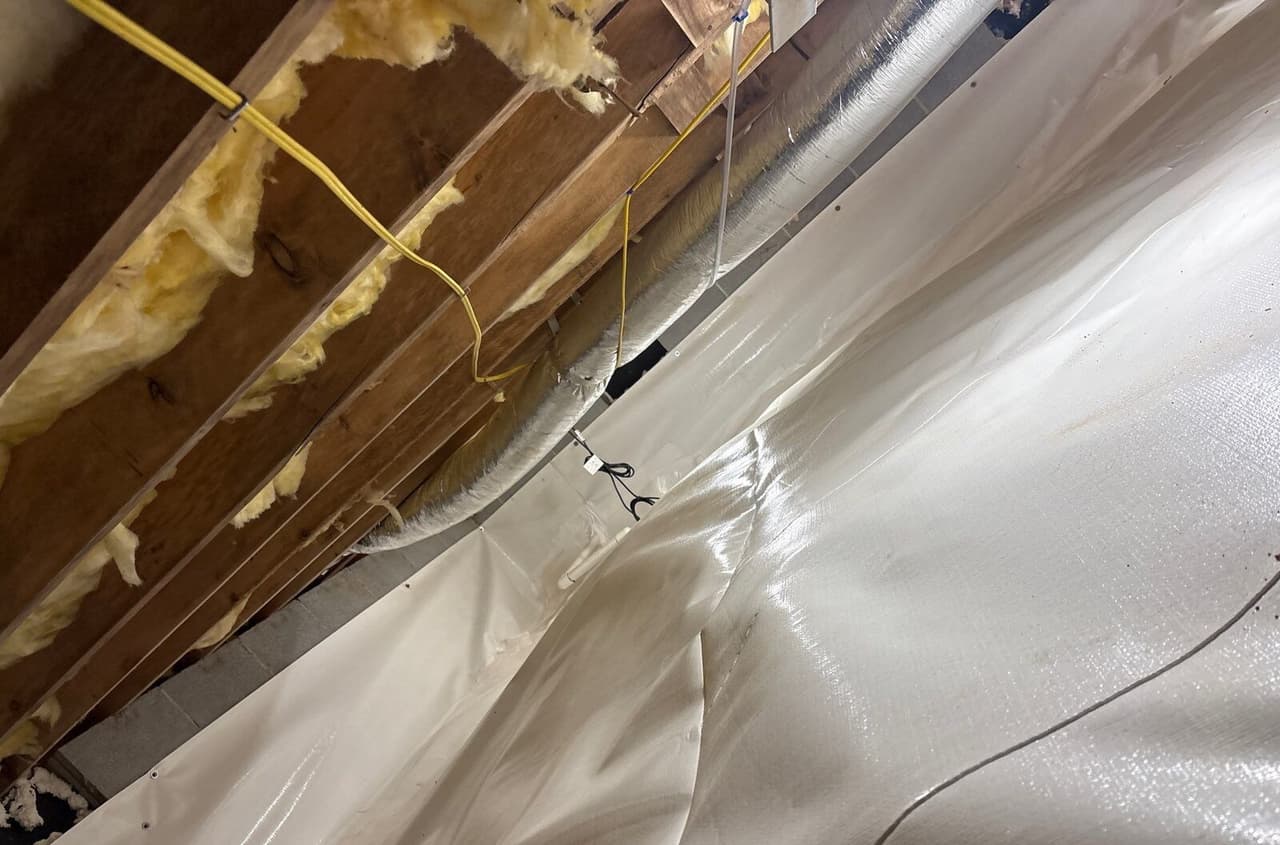
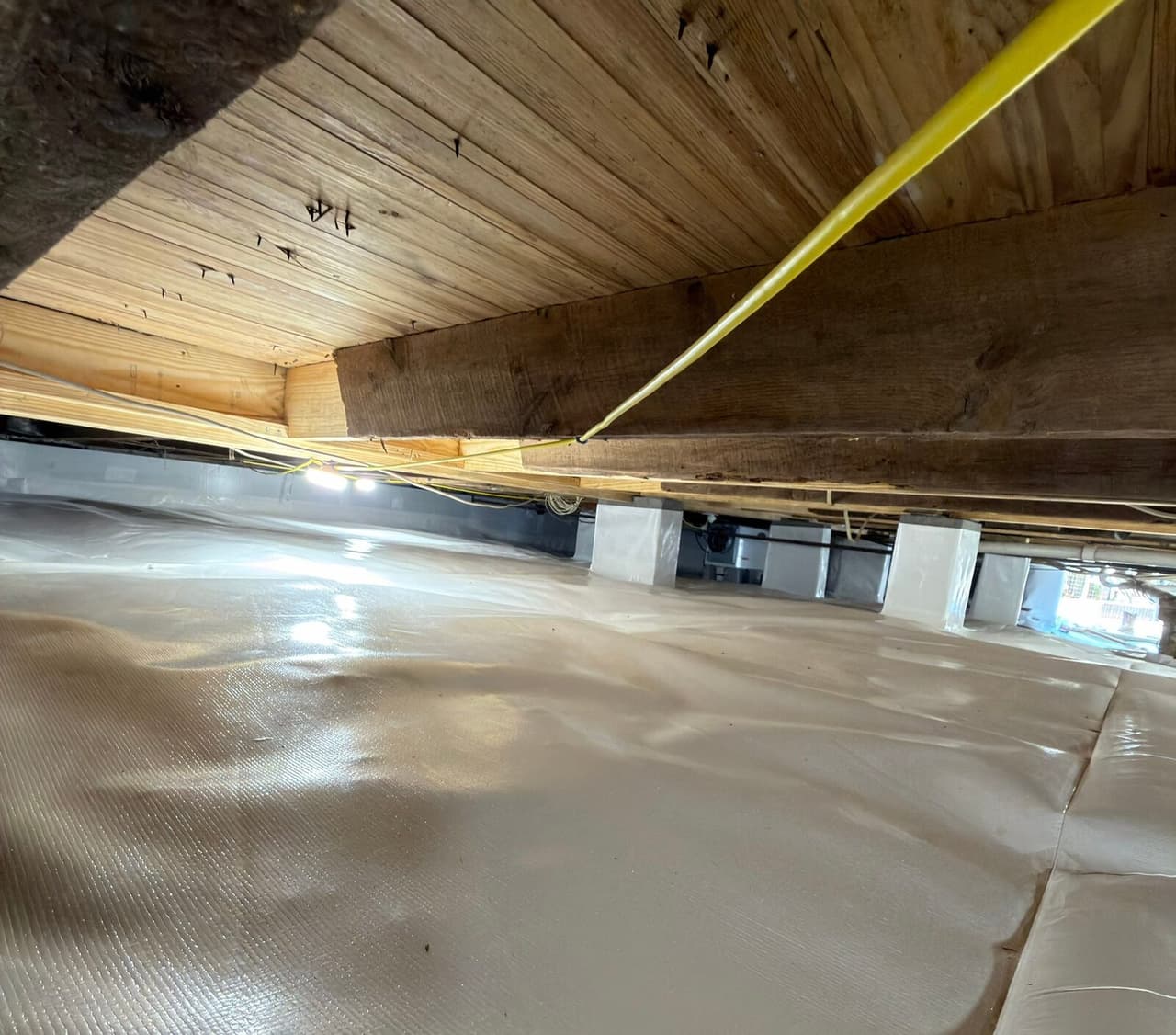
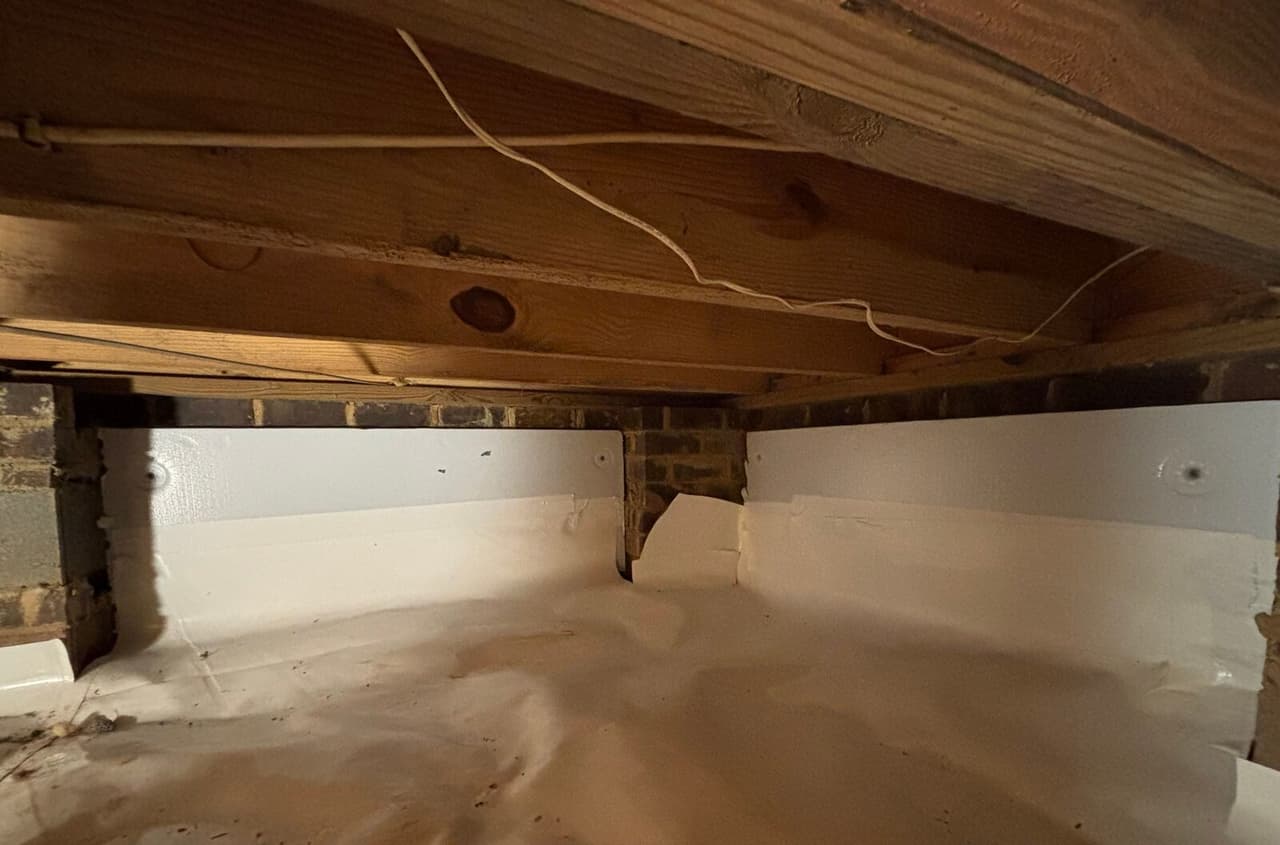
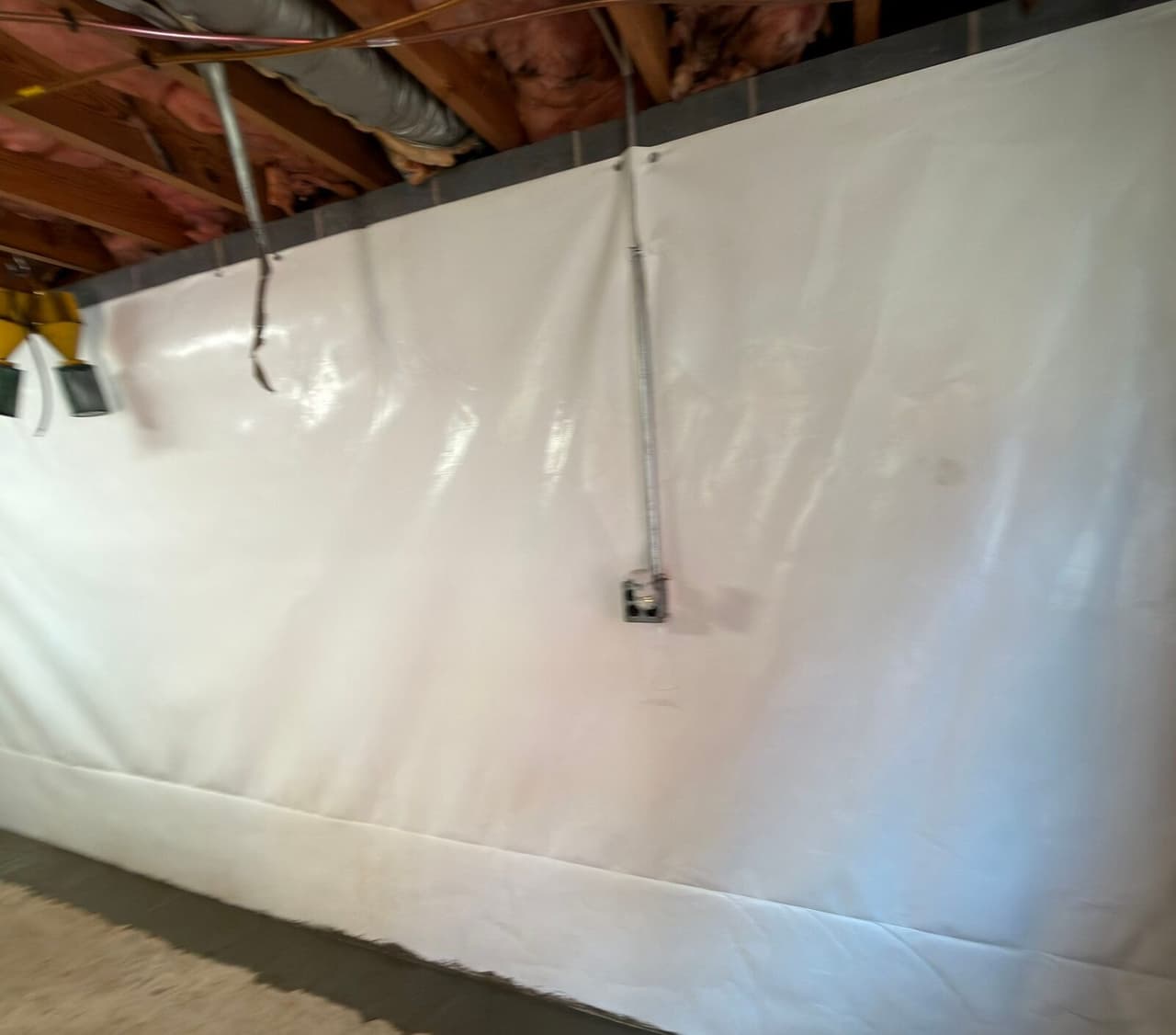
It works best in a sealed crawl space, where the vents are closed and a vapor barrier is down, so the unit is conditioning a controlled space. The crawl space dehumidifier solution covers sizing and drainage in more detail, and full crawl space encapsulation is how the space is sealed.
CH 04
Where Is a Crawl Space Dehumidifier Placed and How Does It Drain?
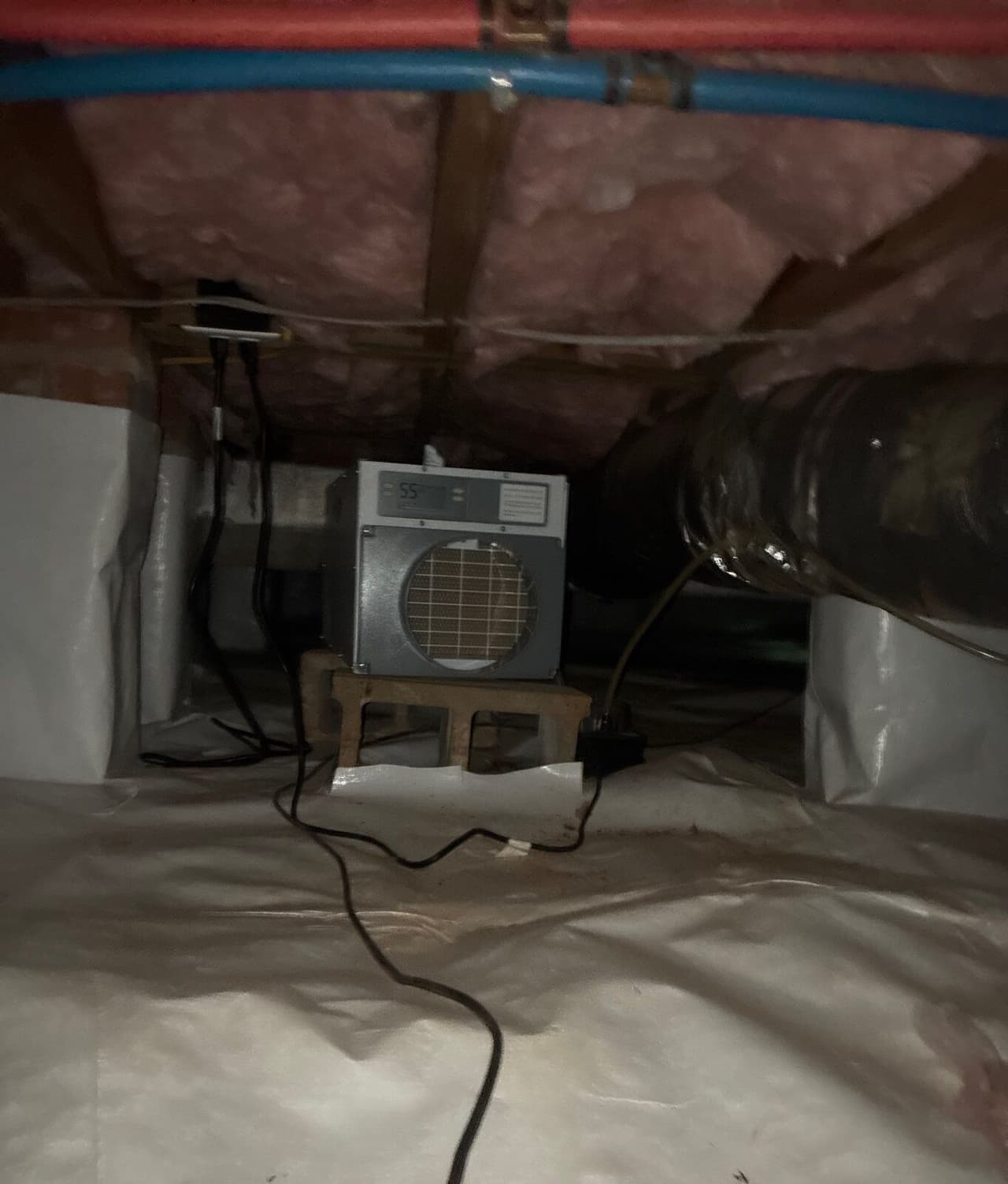
The unit is usually set on the liner or on a stand in a central spot, where it can move dry air through the whole space. In a long or divided crawl space, ducting can carry dry air to the far end. It is wired to a dedicated power source so it can run on its own schedule.
The water it collects runs through a condensate line to a drain or into the sump basin, so no one has to empty a tank. Keeping that line clear is part of annual maintenance. The sealed crawl space system is what lets one unit keep up.
CH 05
When Is a Dehumidifier Not Enough?
A dehumidifier handles airborne moisture and condensation, but it is not a substitute for managing liquid water. If a crawl space floods or collects groundwater, that water needs drainage to a sump pump first, and we will say so.
During the inspection we measure what is driving the moisture, whether soil vapor, outdoor humidity, condensation, or water intrusion, and we recommend a dehumidifier where the issue is humidity in the air. Dehumidifier coverage differs from the coverage for other crawl space systems, and the dehumidifier warranty details list every condition.
CH 06
How Do You Maintain a Crawl Space Dehumidifier?
A crawl space dehumidifier needs little attention, but it does need some. The filter is cleaned so air moves freely through the unit, the condensate line is checked so water keeps draining, and the humidistat setting is confirmed. A unit that runs constantly or never seems to shut off is worth having checked, because it may be undersized or the space may have a new source of moisture.
The dehumidifier carries a 5 year manufacturer warranty on materials only, and a lifetime warranty on parts and labor is available only through the annual maintenance program, which requires annual maintenance and inspection at the owner's expense and is $250 a year. Low humidity conditions, loss of power, GFCI tripping and breaker trips are not covered, and no warranty activates until the final invoice is paid in full.
CH 07
What Does a Crawl Space Dehumidifier Cost?
Dehumidifiers are not sold as a standalone install. They are installed as part of a larger crawl space project, so the cost depends on the size of the crawl space, the capacity the moisture load requires, and whether the space also needs a liner and sealed vents. You receive a written estimate after a free inspection, and financing is available.