A trained inspector (not a salesperson) will look at your home, explain what they find in plain language, and send a written estimate.
Concrete Leveling · North and South Carolina
Sidewalk Leveling Across the Carolinas
A sidewalk section that has lifted or dropped at a joint is a trip hazard. We bring it back to level and keep the existing walk in place. Looking for a reliable concrete leveling contractor? You're in the right place. Read on to learn more.
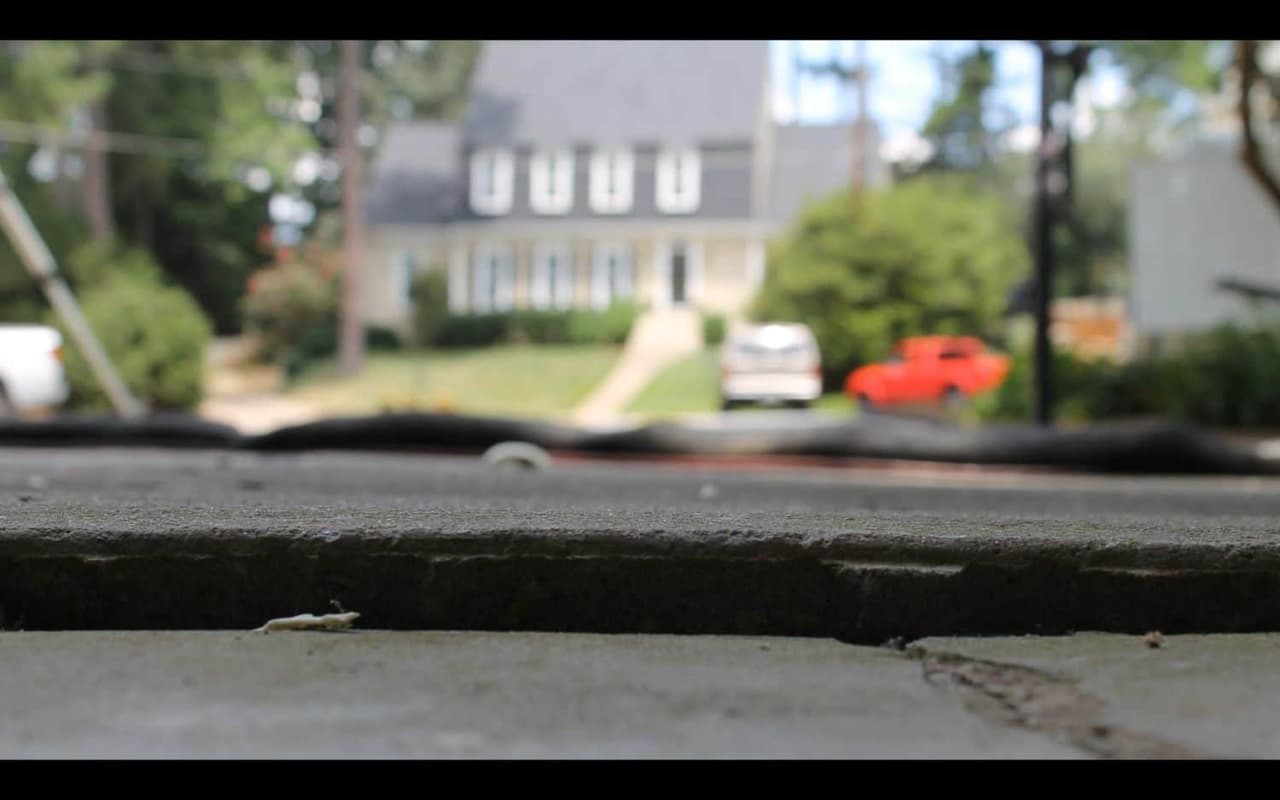
Sidewalks are poured in short sections, so when the soil under one section settles or a root pushes it up, a trip edge opens at the joint. For a section that dropped, we inject polyurethane foam beneath it until it rises to match the next one. The walk stays in place and is typically usable again soon after.
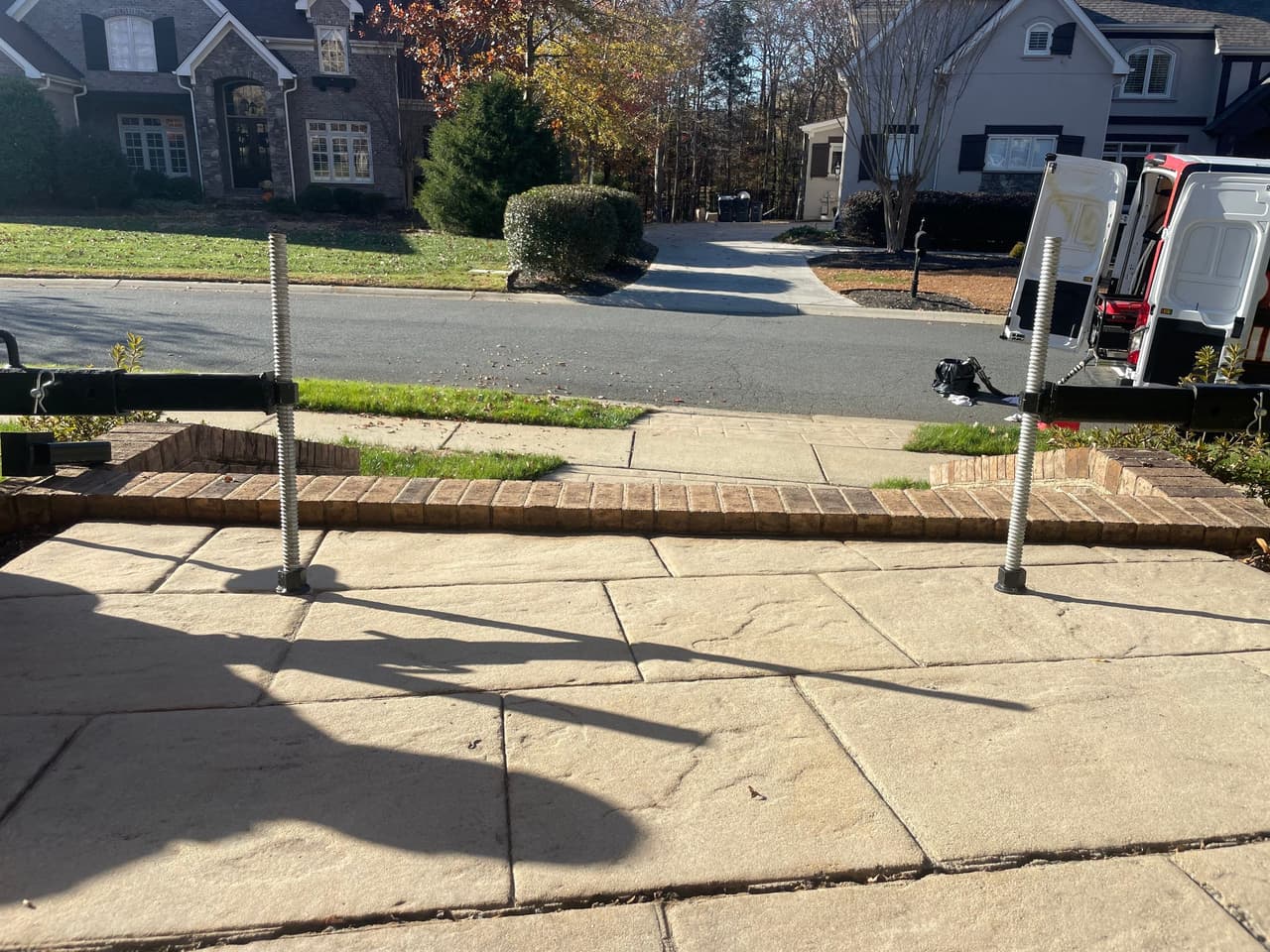
Lifting brings offset sections back into a single plane
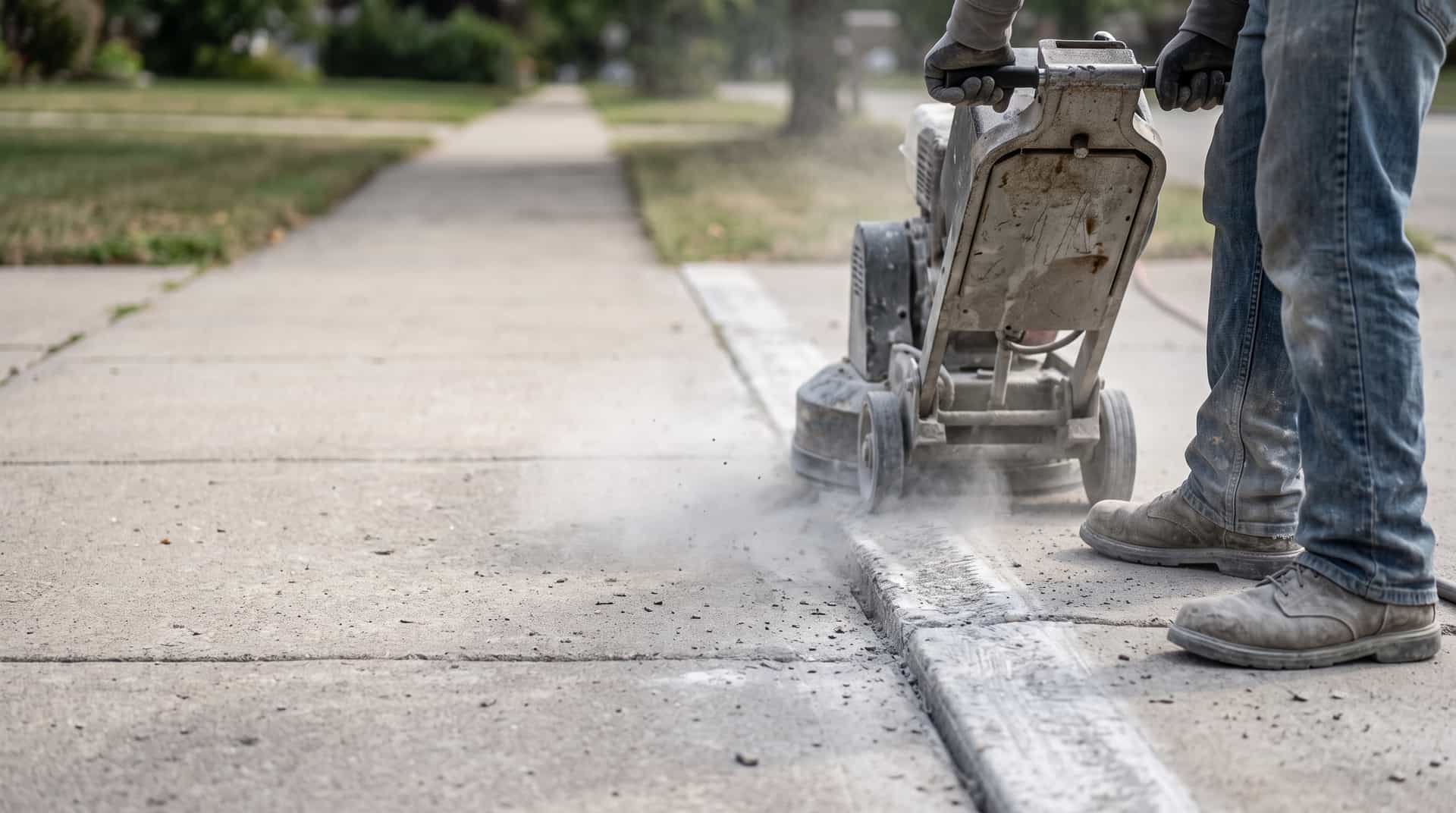
A raised edge on a stable walk can sometimes be ground flush instead
A shattered or spalling section may need replacement
A free inspection and a written estimate before any work
North Carolina · South Carolina
Get a Free Inspection
Two ways to start. Both are free, with no obligation.
One panel pushed up near a treeA Section Lifted by a Root
A section pushed up by a root has not settled, so lifting does not apply to it, and the inspection looks at the root and the slab together.
Pieces breaking apartA Shattered or Spalling Section
Lifting is not the right repair for a section that has broken apart.
In Depth
What Does This Guide Cover?
What a homeowner should understand about this repair, explained in plain language.
Would You Like the Guide by Email?
The Homeowner's Guide to Concrete Leveling, sent free to your inbox.
Free Homeowner Guide
The Homeowner’s Guide to Concrete Leveling
Why concrete sinks in the Carolinas, a checklist for walking around your home, and what foam lifting is.
HydroHelp911
North and South Carolina
Free Guide
Get the Free Concrete Leveling Guide
A free guide for homes in North and South Carolina: why walkways, patios, steps and garage floors sink, what to look for, and what polyurethane foam lifting is, in plain language.
A checklist to take on a walk around your walkways, patio, steps, pool deck and garage floor
Why concrete settles in Piedmont clay, on slopes and in coastal sand
What polyurethane foam lifting is, and how it compares with mudjacking and replacement
Questions worth asking any contractor, including us
Check your inbox
Your guide is on its way. If it has not arrived in a few minutes, check your spam folder, then add us to your contacts so the next one lands where it should.
Sidewalks are poured in short sections separated by joints, which makes uneven movement easy to spot and easy to trip over. When one section sits higher or lower than the next, the raised edge becomes a trip hazard.
In the Piedmont around Charlotte, Greensboro, and the Triangle, the cause is usually the same clay behavior that moves larger slabs: soil swells with moisture and shrinks in dry periods, lifting or settling individual sections out of alignment. Tree roots can heave a section upward, and in the Sandhills near Fayetteville and Pinehurst, sandy soil and washouts can drop one.
1Rain and runoff soak the soil at the edge of the slab.
2Over time the soil underneath can wash out or compact, leaving a void.
3With less soil under it, that section of the slab can drop or tilt.
CH 02
How Does Sidewalk Leveling Work?
Sidewalk leveling brings the offset sections back into a single plane. We drill small ports in the low section, then pump material beneath it under controlled pressure until it rises to match the adjoining concrete and the void below is filled, with a lifting method such as polyjacking with expanding foam.
The trip edge is gone and the walk is continuous again. Because we lift the existing sections and leave them in place, the work is quicker and less disruptive than breaking out and repouring. After the lift, sealing the sidewalk joints can help keep water from working beneath the sections.
How Polyurethane Foam Lifts a Settled Slab
1Small holes are drilled through the settled slab.
2Polyurethane foam is injected through the holes into the space underneath.
3The foam expands, fills the void and lifts the slab back toward level.
4The holes are patched.
CH 03
When Is a Sidewalk Section Better Ground Down or Replaced?
Lifting is the right call when the sidewalk sections are intact and simply out of alignment. When a root has pushed a section up, the section has not settled, and the concrete grinding explainer covers one way a raised edge is handled. When a section is shattered or spalling apart, lifting is not the right repair for that piece.
If a tree root is actively heaving the walk, lifting addresses the surface but the root may continue to push, so we point that out during the inspection so you can make an informed decision.
Sections are still level and open joints are letting water reach the soil beneath them.
A section has already settled, since sealing does not lift it.
A table is a starting point, not a diagnosis. Which method fits your home is confirmed during your free inspection.
Project Photos
Photos From Our Concrete Leveling Job Sites
Photos from our own crews and projects. Swipe or use the arrows to see more.
01 of 04
Why Choose HydroHelp911
Care and Expertise From a Team Serving the Carolinas Since 2017
HydroHelp911 handles concrete leveling and related structural and moisture work across North and South Carolina. Every repair recommendation starts with a free inspection of the whole home.
01
Trained inspectors, not salespeople.
An inspector looks at your home, finds the source of the problem, and explains each finding in plain language. There is no obligation.
02
Locally owned in Gaston County.
We are headquartered in Dallas, North Carolina, with eight offices across North and South Carolina.
03
Serving the Carolinas since 2017.
Foundation repair, crawl space repair and encapsulation, basement waterproofing, framing repair, and concrete leveling are the whole focus of the team.
04
Rated 4.9 stars on Google.
We have 1,300+ verified Google reviews (4.9 stars) from homeowners across the Carolinas and are BBB A+ Accredited.
05
Written warranty terms.
For example, helical and push piers carry a lifetime warranty that no additional settlement will occur in the area of installed piers, once the final invoice is paid in full. Read the warranty terms.
06
Financing is available.
Ask your inspector about financing when you get your written estimate. See financing options.
Cory ParksOWNER & PRESIDENT
Recent Work
Recent Concrete Leveling Projects
Finished concrete leveling jobs from our crews, photographed on site. Open any project to see the full photo set and what we did.
Answer three quick questions about your home. We'll match what you see to the most likely cause and point you to the right next step.
1
Symptom
2
History
3
Your Result
Location: Concrete & Flatwork
What Are You Seeing in Your Concrete?
Pick the symptom that best describes it.
Frequently Asked Questions
Common Questions About Sidewalk Leveling
Don't see your question here? Call or fill out our quick online form, and our team will help.
Because sidewalks are poured in separate sections, each one can move independently with the soil beneath it. In the Piedmont, clay soils swell and shrink with seasonal moisture, lifting or settling individual sections. Tree roots growing under a walk can heave a section upward, and erosion from runoff on sloped lots can wash out the support beneath one and let it drop. The result is offset sections and raised edges that become trip hazards.
Yes, that is its main purpose. When one section has settled or lifted out of line with the next, leveling brings the offset section back into the same plane so the surface is continuous and the raised edge is gone. It directly resolves the trip hazard created by misaligned sections, as long as the sections themselves are intact and just out of alignment.
Where the sections are sound and simply offset, leveling is usually the practical choice: lifting keeps your existing concrete, avoids the color mismatch of a new pour, and is quicker than breaking out and repouring. Replacement makes sense when a section is shattered or crumbling beyond what lifting can restore. We assess the condition during the inspection and give you a written quote for the option that fits your walk.
Leveling addresses the immediate problem by supporting the slab again and filling the void beneath it, which removes the unsupported span that can drive new cracking. It does not change conditions it cannot reach, such as an active tree root or ongoing water intrusion, so we assess those during the inspection. Treating the underlying cause alongside the lift is what gives the most durable result.
There is no set price for leveling a sidewalk. Your price depends on how many sections moved, how far they moved, access, and the soil underneath. The inspection is free and ends with a written estimate, which is the price for your home.
Pricing & Scope
How Is Your Repair Priced?
Every home is different, so every estimate is written for the home in front of us. A free inspection at your home gives you a written estimate at no cost, based on your scope, access, and conditions.
How Pricing Works
Pricing depends on how many sections are affected, how far they have moved, access, and the soil conditions underneath. You receive a written estimate after a free inspection.
When Is This Not the Right Fix?
Lifting is not the answer when a section is shattered or spalling apart, and an active tree root may keep pushing after a lift.
What Does the Free Inspection Include?
Your inspector explains every finding in plain language, and you get written documentation at no cost, typically an estimate with photographs.
Two ways to start. Both are free, with no obligation.