A trained inspector (not a salesperson) will look at your home, explain what they find in plain language, and send a written estimate.
Framing Repair · North and South Carolina
Floor Joist Sistering Across the Carolinas
When a joist is weakened but not destroyed, we can reinforce it in place with a new member fastened along its length. We inspect the joist, its supports and the crawl space conditions first, so you know sistering is the right repair before any work begins. Looking for a reliable framing repair contractor? You're in the right place. Read on to learn more.
Sistering is the practice of fastening a new joist tightly alongside an existing one so the two members share the load as a single, stronger unit. It is one of the most common framing repairs we perform in Carolina crawl spaces, because in many homes the joist is still there, just weakened.
North Carolina · South Carolina
Get a Free Inspection
Two ways to start. Both are free, with no obligation.
Sistering a floor joist means fastening a new board of the same depth tightly alongside a weakened joist so the two carry the floor together. It usually fits a joist that is cracked, split or partly softened but still sound enough to hold fasteners. When a joist has rotted through, or the sag comes from a beam or post below it, a different repair fits better, and the inspection tells you which one applies.
A soft or bouncy spot above one joistA Cracked or Split Joist That Still Holds a Fastener
The joist is weakened but structurally present, which is the classic case for fastening a new member alongside it so the pair shares the load.
Wood that crumbles under a probe, often near moistureA Joist That Has Rotted Through or Failed at Its Ends
A sister needs sound wood to fasten to. When too little remains, or the bearing ends have failed, replacing the joist is usually the repair the damage calls for, along with the moisture that rotted it.
A dip that runs along the center line of the houseJoists Following a Dropped Beam or Post
When a row of joists sags together, the cause is often the beam or post beneath them. Sistering the joists alone may not fix that, so the support is corrected first.
What a homeowner should understand about this repair, explained in plain language.
Would You Like the Guide by Email?
The Homeowner's Guide to Framing Repair, sent free to your inbox.
Free Homeowner Guide
The Homeowner’s Guide to Framing Repair
What holds up your floors, a checklist of the signs, and how framing repairs work.
HydroHelp911
North and South Carolina
Free Guide
Get the Free Framing Repair Guide
A free guide for homes in North and South Carolina: what holds up your floors, how moisture under a home can damage the wood framing, the signs worth writing down, and how framing repairs work, in plain language.
A floor and crawl space checklist to walk your home with
How joists, beams, sill plates and support posts carry your floors
How sistering, crawl space jacks and other framing repairs work
Five questions worth asking any contractor, including us
Check your inbox
Your guide is on its way. If it has not arrived in a few minutes, check your spam folder, then add us to your contacts so the next one lands where it should.
Sistering is the practice of fastening a new joist tightly alongside an existing one so the two members share the load as a single, stronger unit. It is one of the most common framing repairs we perform in Carolina crawl spaces, because in many homes the joist is still there, just weakened.
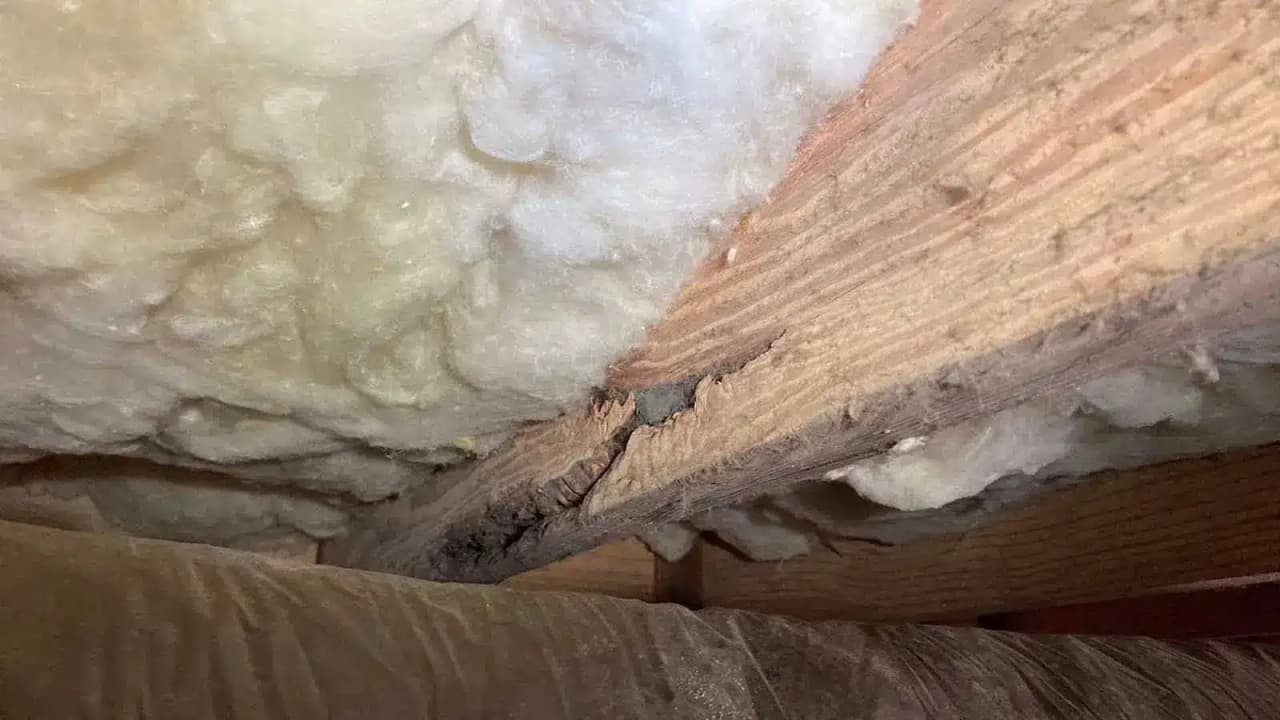
A floor joist that has cracked under load, developed a split along the grain, or softened at one section from years of crawl space humidity can often be brought back to strength without removing it.
In the Piedmont, where humid summers around Charlotte, Greensboro, and the Triangle keep crawl spaces damp for long stretches, we often find joists that have lost some strength to moisture but still hold their position. Those are strong candidates for sistering.
CH 02
How Is a Sister Joist Installed?
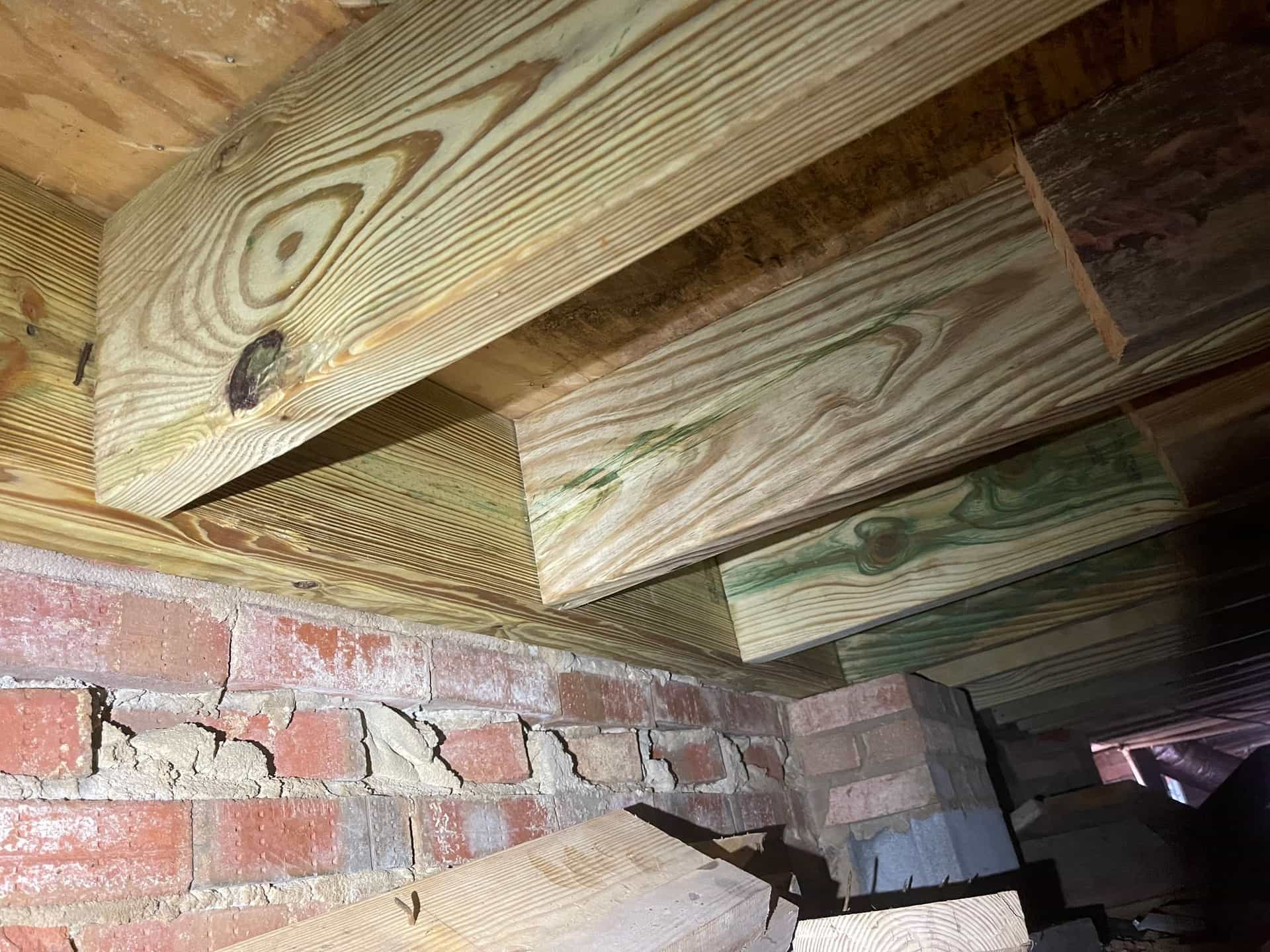
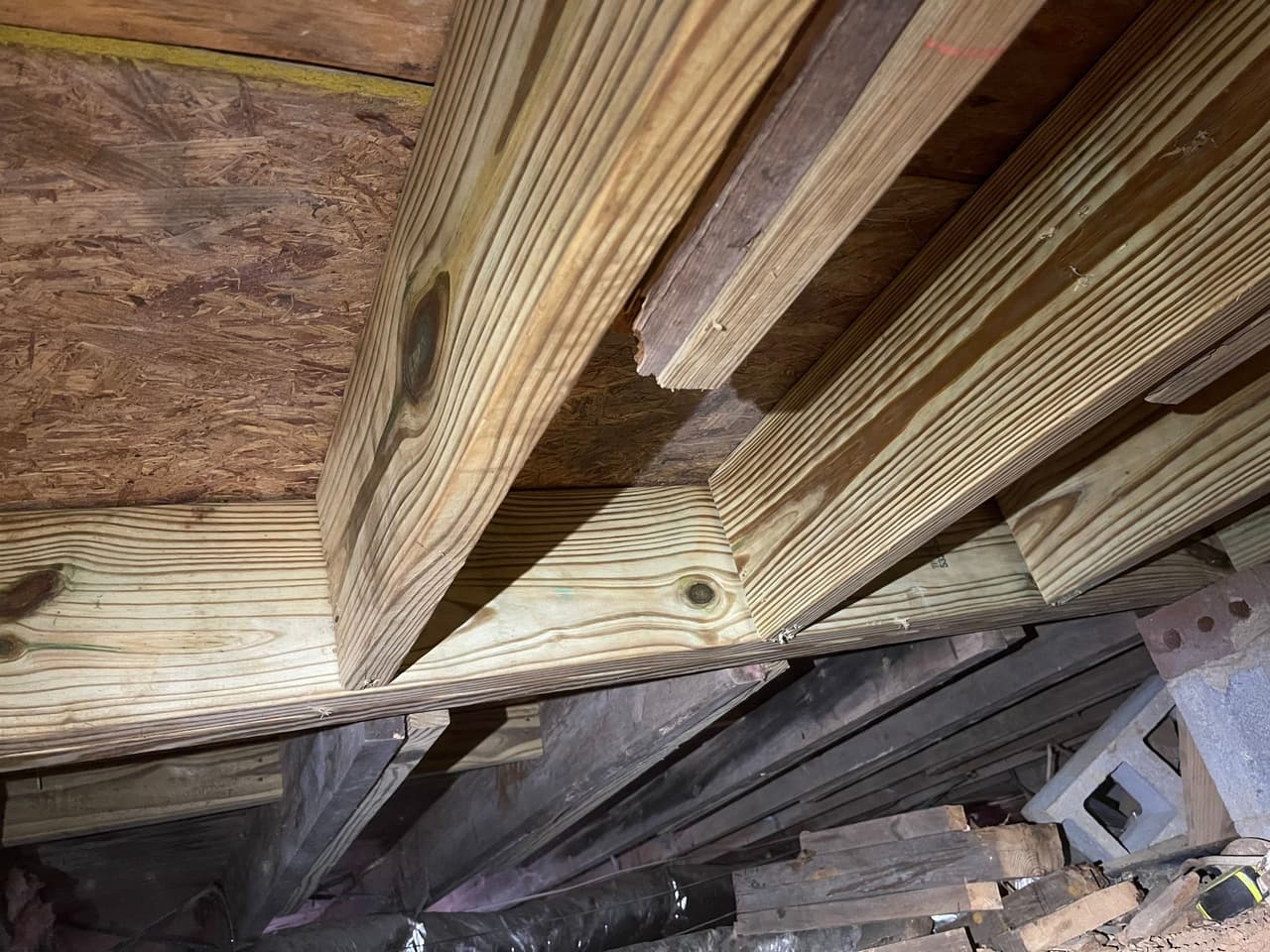
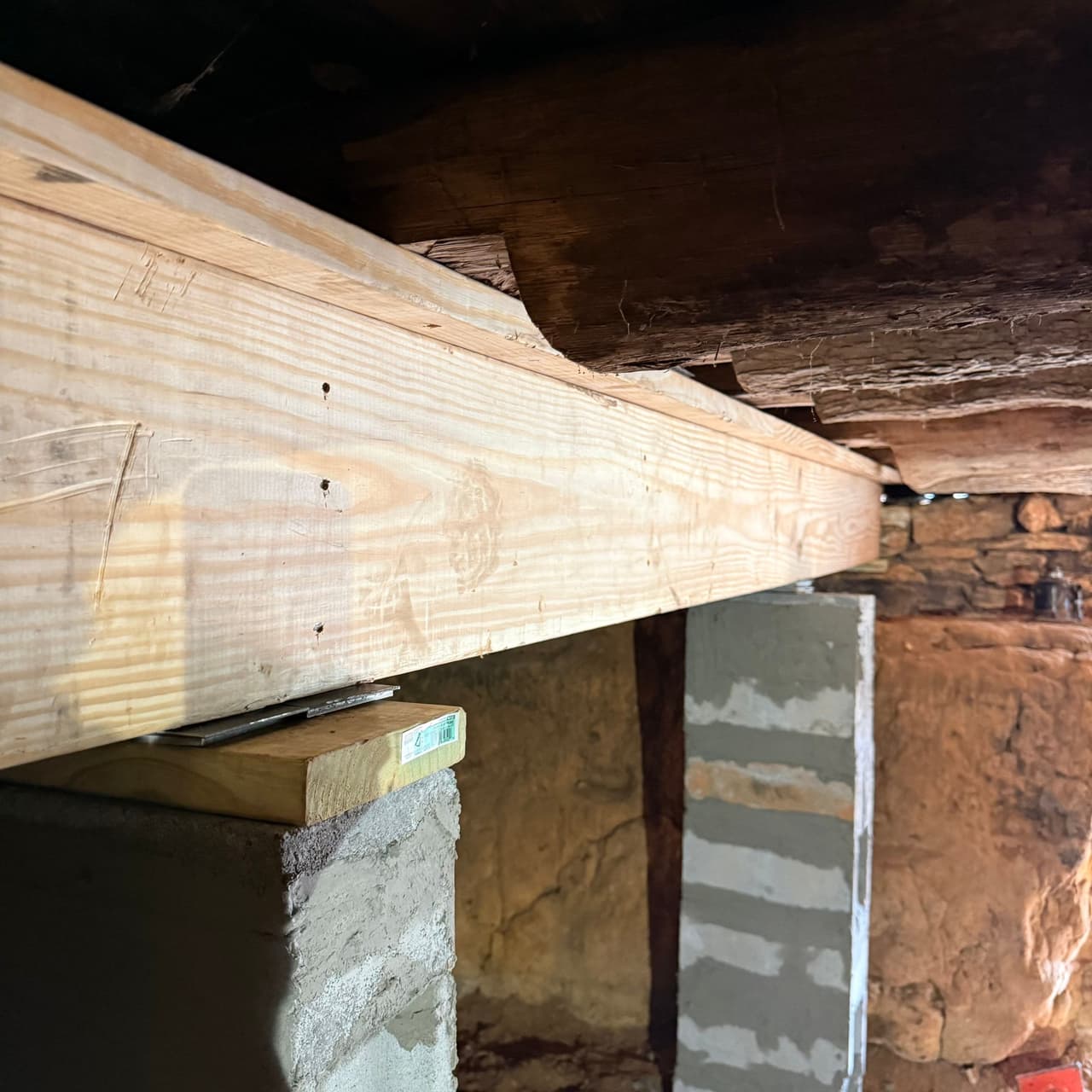
The repair starts with matching the sister member to the original: the same depth, a sound, properly sized board, run alongside the existing joist and fastened along its length so the load transfers between them.
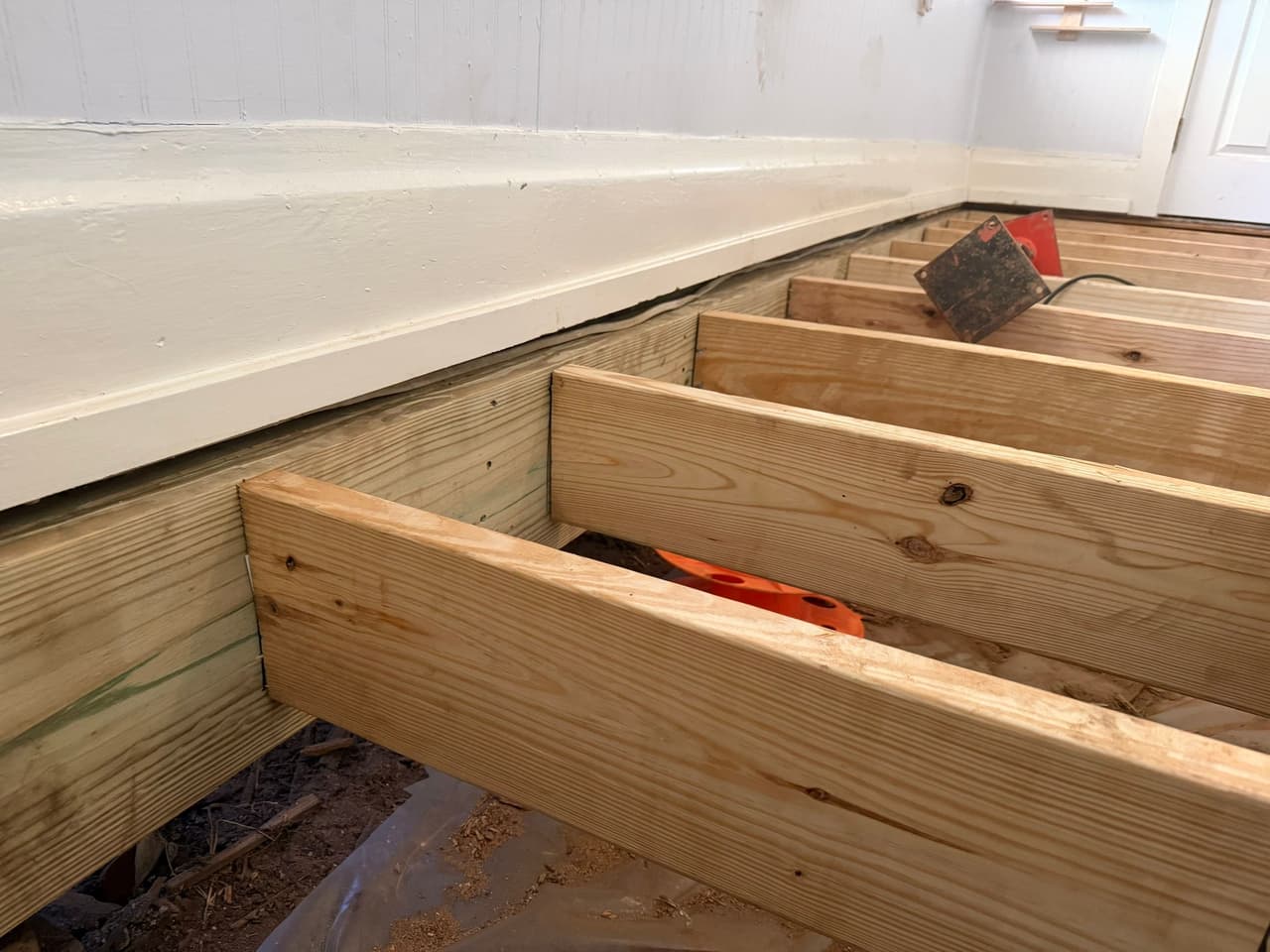
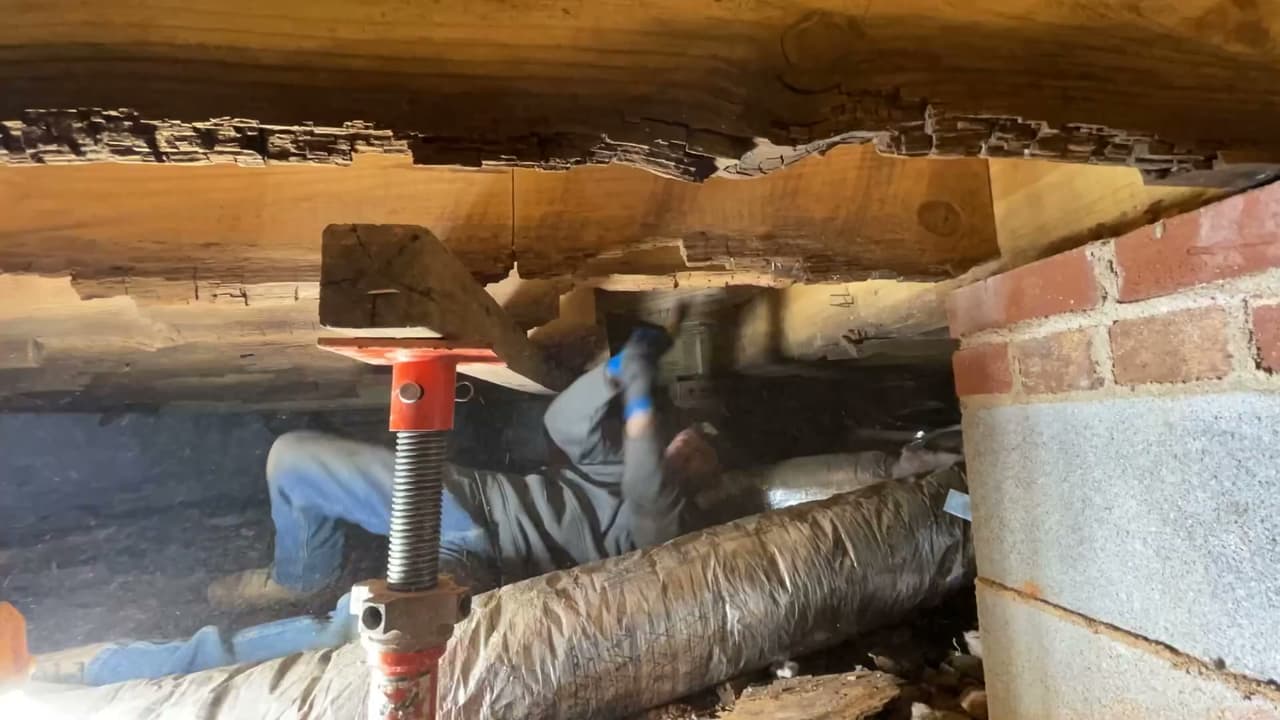
Where the original joist has dropped, we support and lift the framing back toward level before fastening, so the sister carries its share in the corrected position. Done correctly, a sistered joist behaves like a single, deeper, stronger member, and the bounce or slope it was causing in the floor above is removed.
CH 03
When Is Sistering Not the Right Repair?
Sistering is the right repair when the joist is weakened but structurally present, and a cracked, split, or partially softened joist is the classic case. It is not the right repair when a joist has rotted through, when the ends bearing on the sill or beam have failed, or when the real problem is a failing beam or a settled support post that the joists are simply following.
Fastening a sister to wood that cannot hold a fastener accomplishes nothing. During the inspection we tell you whether sistering will solve the problem or whether the damage has gone past it, and if a joist is too far gone we recommend floor joist replacement.
CH 04
What Are the Signs a Floor Joist Needs Sistering?
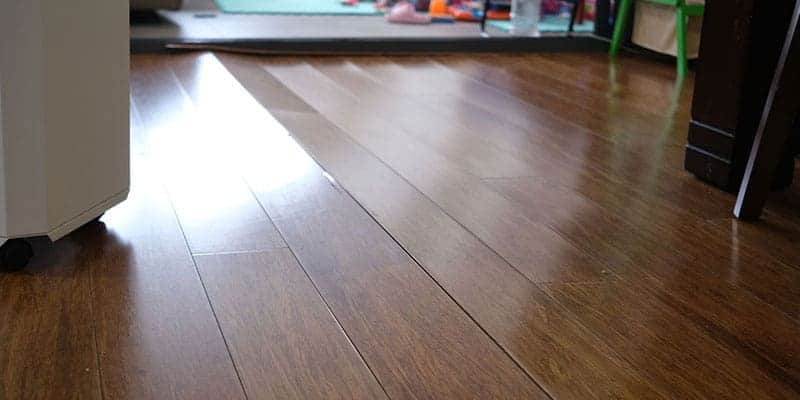
Most homeowners notice the floor before they ever see the joist. A soft or springy spot, a dip you can feel when you walk across a room, dishes that rattle in a cabinet, or a floor that slopes toward one wall can all trace back to a joist that has lost some of its stiffness.
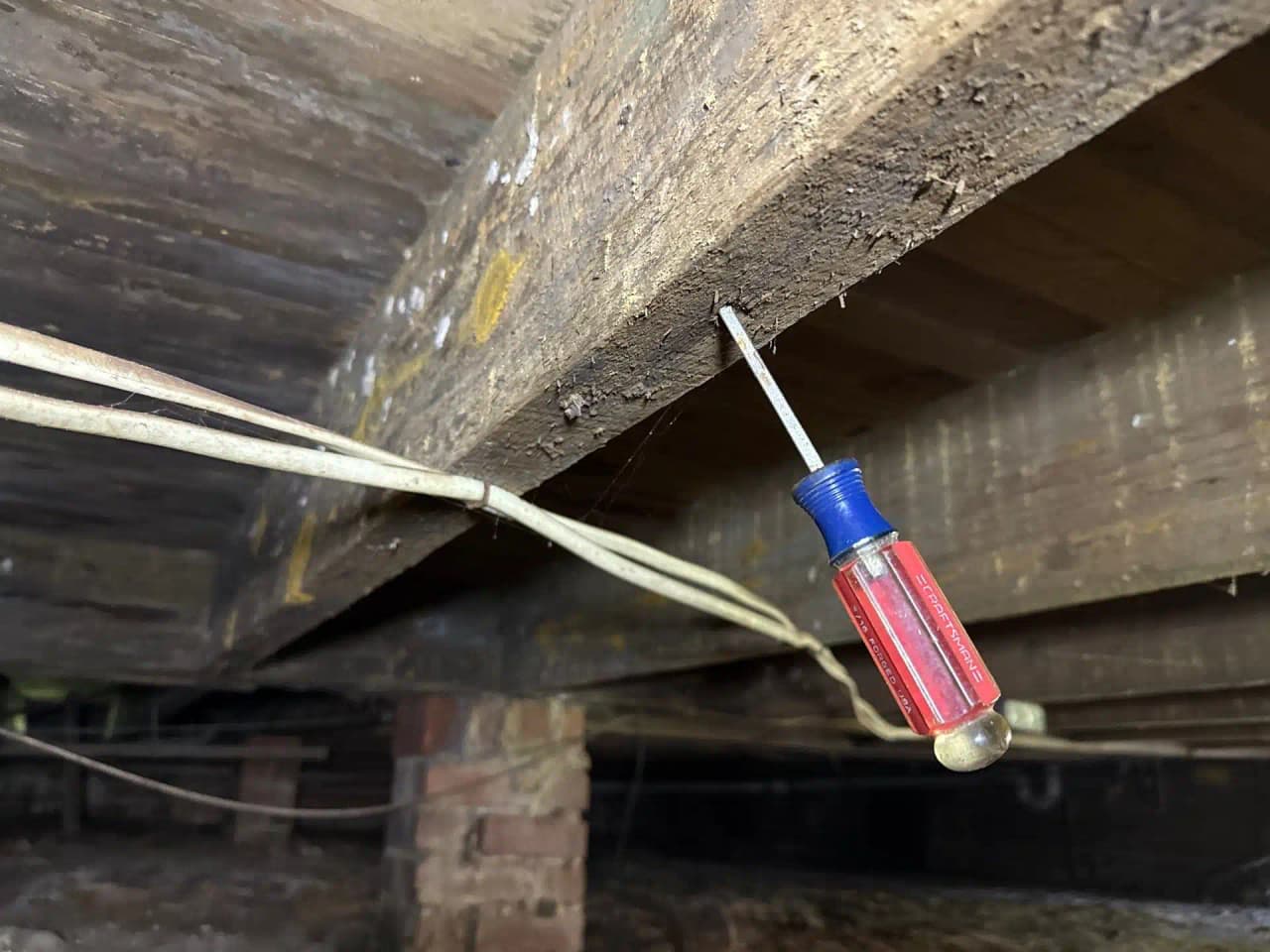
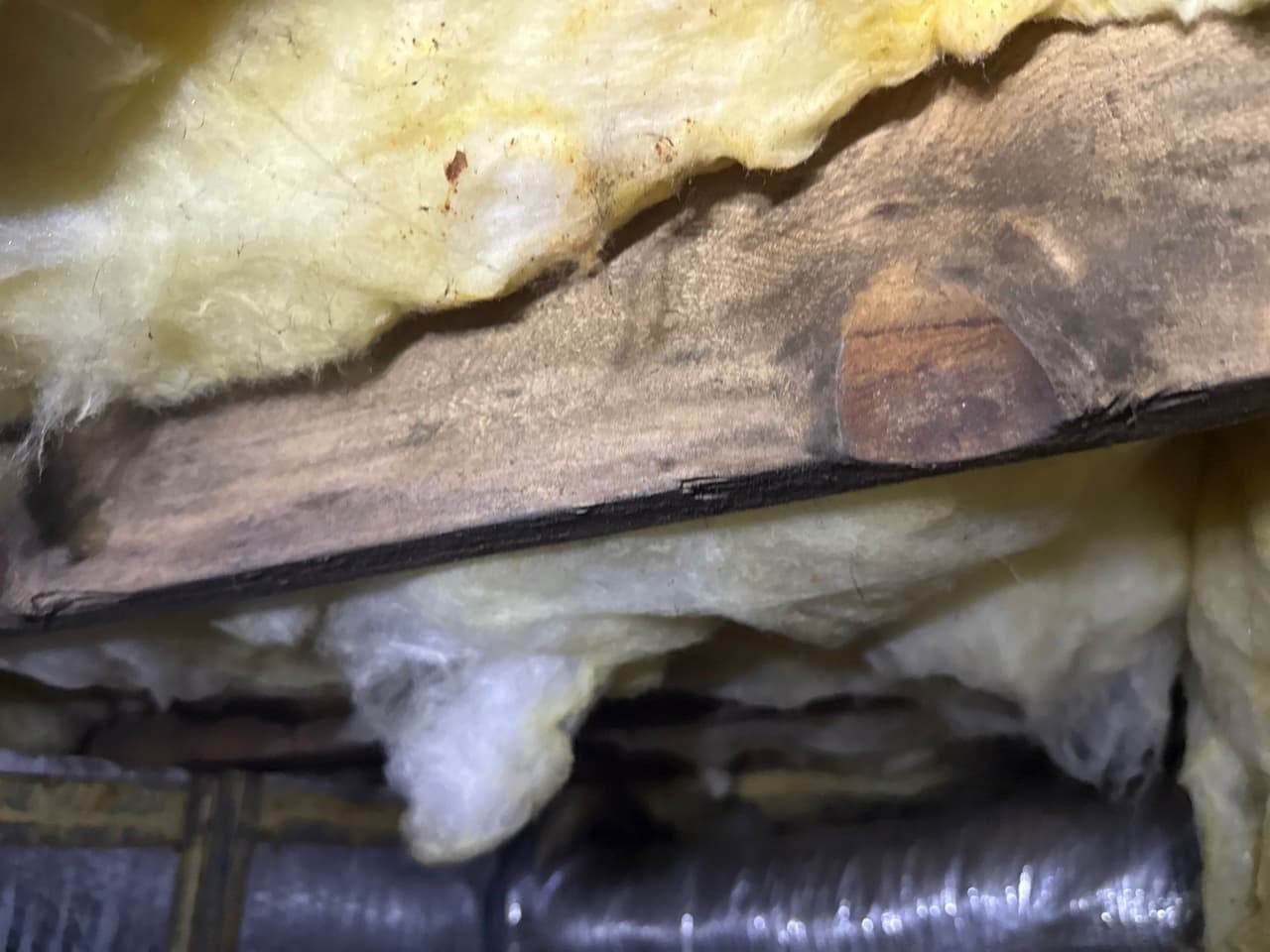
In the crawl space, the joist itself often shows the reason. A crack that runs with the grain, a split near a knot, a notch cut years ago for a pipe or duct, or a section that is darker and softer than the wood around it are common findings. Joists that were undersized for their span when the house was built can also sag over time without any damage at all, and those can be good candidates for a sister as well.
CH 05
Why Do Floor Joists Weaken in Carolina Crawl Spaces?
Moisture is the most common reason. Open crawl space vents let humid summer air into the space under the house, and when that air meets cooler wood and ductwork it can condense and keep the framing damp for months. Over time, damp wood can lose strength, and a joist that once felt solid begins to flex.
The soil and setting add to it. Piedmont clay around Charlotte, Greensboro and Winston-Salem holds water after rain, coastal homes near Wilmington and Leland sit over a high water table, and hillside homes around Asheville can send runoff under the house.
Past alterations play a part too: a joist cut for plumbing or ductwork carries less load than it was sized for. Our inspection looks at the wood and these conditions together, because a joist that has started to sag usually has a reason that is still present.
CH 06
Sistering, Repair Plates or Replacement: Which Fits?
Three repairs cover most weakened joists, and the condition of the wood decides between them. A sister runs a long section of new lumber beside the old joist and suits cracks, splits and general weakness along the span. Steel plates bridge damage at one spot, such as a single crack or a notch, when there is solid wood on both sides of it. Replacement fits a joist that has rotted through or failed where it bears on the sill or beam.
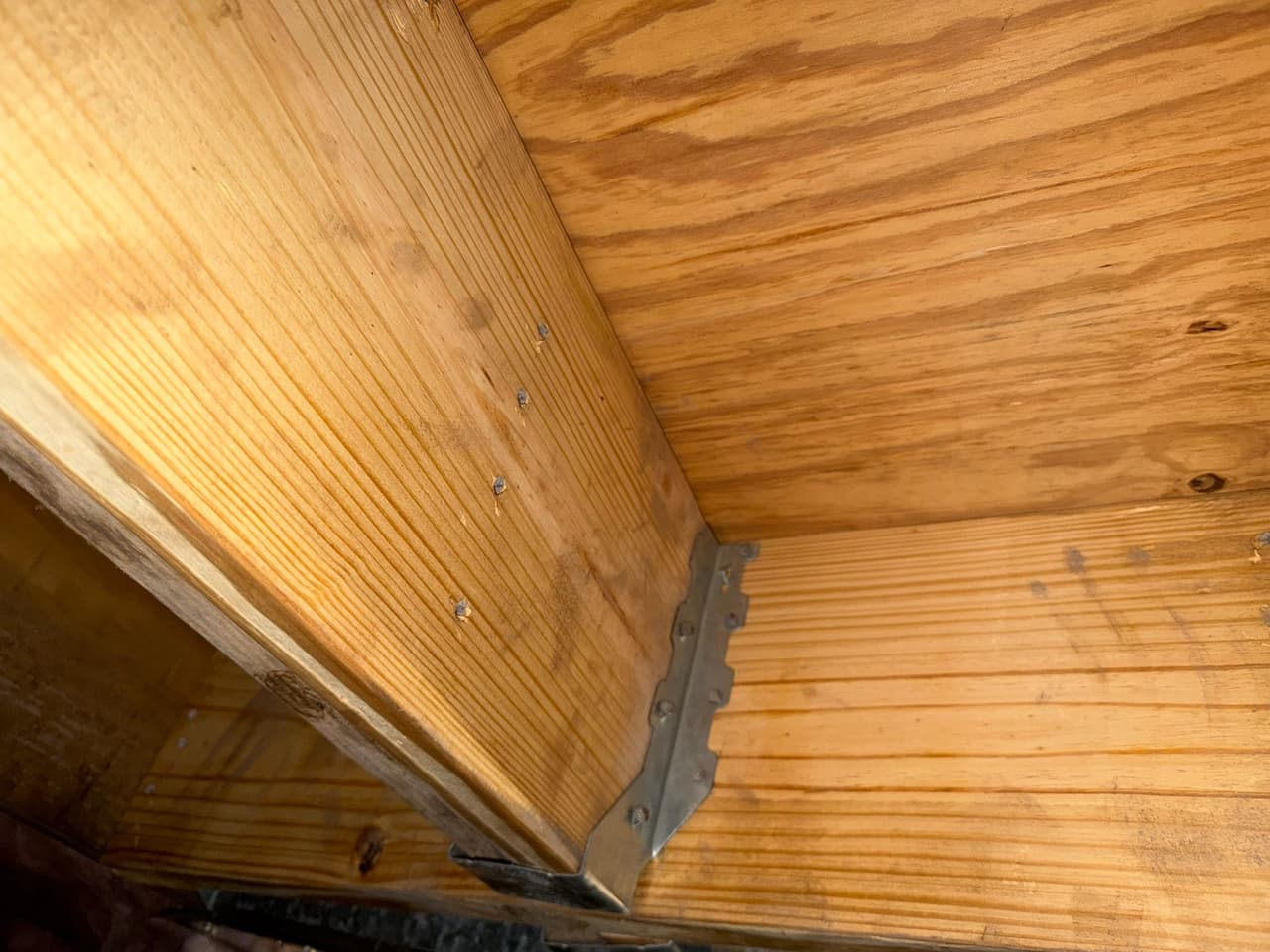
Sistering keeps the original joist in place, so the floor, subfloor and finishes above stay where they are. When the joist ends are sound but the connection at the beam has loosened, a metal joist hanger may be added at that connection as part of the same repair.
CH 07
What Happens During a Floor Joist Sistering Inspection?
The inspection starts upstairs, where we walk the floor and note where it dips, bounces or slopes. In the crawl space we check each joist in that area by eye and with a probe, look at where it bears on the sill and beam, check the posts and piers below, and note the moisture conditions around the framing.
You receive written documentation, typically an estimate with photographs of what we found. We can include video if you ask, and where the floor has dropped we can record elevation measurements so you can see how much it has moved. If the joists are sound and the bounce comes from somewhere else, we tell you that.
CH 08
What Does Floor Joist Sistering Cost?
Most floor joist sistering projects fall between $3,000 and $12,000. Where a project lands in that range depends on how many joists need reinforcing, whether any of them need replacement instead, how long the spans are, and how much room there is to work in the crawl space. A range is not a quote, and your written estimate comes from the free inspection. Financing is available.
Our experience is that addressing one weak joist costs far less than repairing many of them later, so it can help to have a soft or bouncy spot looked at while the repair is still small.
CH 09
What Warranty Comes With Joist Sistering?
Framing repairs carry a 30 year warranty that the work was completed correctly per state building code, which begins once the final invoice is paid in full and does not cover termite damage, or moisture or water damage unless a full encapsulation, a drainage system and a dehumidifier are all installed as part of the same project. The complete terms are on our warranty terms for wood framing page.
Photos From Our Work
Extra lumber sistered alongside floor joists above a vapor barrier in a crawl space
A floor that feels uneven when walking usually points to uneven foundation settlement or a weakened subfloor.
Read the Guide
Why Choose HydroHelp911
Care and Expertise From a Team Serving the Carolinas Since 2017
HydroHelp911 handles framing repair and related structural and moisture work across North and South Carolina. Every repair recommendation starts with a free inspection of the whole home.
01
Trained inspectors, not salespeople.
An inspector looks at your home, finds the source of the problem, and explains each finding in plain language. There is no obligation.
02
Locally owned in Gaston County.
We are headquartered in Dallas, North Carolina, with eight offices across North and South Carolina.
03
Serving the Carolinas since 2017.
Foundation repair, crawl space repair and encapsulation, basement waterproofing, framing repair, and concrete leveling are the whole focus of the team.
04
Rated 4.9 stars on Google.
We have 1,300+ verified Google reviews (4.9 stars) from homeowners across the Carolinas and are BBB A+ Accredited.
05
Written warranty terms.
For example, helical and push piers carry a lifetime warranty that no additional settlement will occur in the area of installed piers, once the final invoice is paid in full. Read the warranty terms.
06
Financing is available.
Ask your inspector about financing when you get your written estimate. See financing options.
Cory ParksOWNER & PRESIDENT
Recent Work
Recent Framing Repair Projects
Finished framing repair jobs from our crews, photographed on site. Open any project to see the full photo set and what we did.
Answer three quick questions about your home. We'll match what you see to the most likely cause and point you to the right next step.
1
Symptom
2
History
3
Your Result
Location: Floors & Framing
What Are You Seeing in Your Floors?
Pick the symptom that best describes it.
Frequently Asked Questions
Common Questions About Sistering Floor Joists
Don't see your question here? Call or fill out our quick online form, and our team will help.
Sistering is fastening a new joist tightly alongside an existing one so the two work together as a single, stronger member. It reinforces a joist that has cracked, split, or weakened without removing the original. The new sister shares the load with the old joist, restoring the strength the floor needs and removing the bounce or sag the weakened joist was causing.
Sistering fits a joist that is weakened but still in place, such as a cracked, split or partly softened joist that can still hold a fastener. It does not fit a joist that has rotted through or failed at its ends, or a floor that sags because a beam or post below has dropped. Our inspection checks whether enough sound wood remains to reinforce.
The sister member is a sound, properly sized board matched to the depth of the original joist so the two align and share the load evenly. It is fastened along the length of the existing joist so the connection transfers load between them. In a damp Carolina crawl space, addressing the moisture that weakened the original joist matters just as much as the new wood, otherwise the same conditions will work on the repair over time.
Often, yes. When a weakened joist causes the bounce or sag, sistering restores the stiffness the floor lost. Where the joist has dropped, we support and raise the framing toward level before fastening the sister. If a failing beam or settled post is driving the sag, sistering alone will not fix it, so we check the whole floor system first.
Often, yes. When a joist has already sagged, the framing is supported and raised back toward level before the sister is fastened, so the pair carries the floor in the corrected position. Raising is done gradually, because a floor that has sat low for years can crack drywall or trim if it is lifted too fast. A joist that is weak but has not dropped can be sistered where it is.
It depends on how many joists need work and how much room there is to move in the crawl space. A few joists in an open, accessible area is a smaller job than a long run of joists in a tight space with ductwork in the way. Your estimate from the free inspection lays out the scope of the work.
Most floor joist sistering projects fall between $3,000 and $12,000. That is an example range, not a quote. Your cost depends on how many joists need reinforcing, whether any need replacement instead, the spans and crawl space access, and the written estimate from your free inspection is the price for your home. Financing is available.
Every home is different, so every estimate is written for the home in front of us. A free inspection at your home gives you a written estimate at no cost, based on your scope, access, and conditions.
Example Pricing
How Pricing Works
Most floor joist sistering projects fall between $3,000 and $12,000. Pricing depends on how many joists need reinforcing, whether any need replacement instead, the spans, and crawl space access. You receive a written estimate after a free inspection.
Example ranges from the HydroHelp911 price sheet, shown for planning only. They are not a quote. Your price is set after a free inspection of your home and confirmed in your written estimate.
When Is This Not the Right Fix?
Sistering is not the right repair when a joist has rotted through, when its bearing ends have failed, or when a failing beam or settled post is the real cause.
What Does the Free Inspection Include?
Your inspector explains every finding in plain language, and you get written documentation at no cost, typically an estimate with photographs.
Two ways to start. Both are free, with no obligation.
Pick your own day in our calendar. You save $250 if you go ahead with the work.
Send a short form, and our office will call to book a time that suits you.
For new customers who book online through our website and then sign a contract.
The Process
How We Approach Sistering Floor Joists
Four steps, from your free inspection to the finished repair.
Step 01
Walk the Floor and Inspect the Crawl Space
We note where the floor dips or bounces upstairs, then check each joist in that area, its bearing points, the supports below and the moisture conditions.
Step 02
Confirm Sistering Is the Right Repair
We probe the wood to confirm there is enough sound material to fasten to, and recommend plates or replacement where the damage calls for it.
Step 03
Support the Framing and Install the Sister
Where the joist has dropped, the framing is supported and brought back toward level, then a new member of matching depth is fastened along the original.
Step 04
Check the Floor and Document the Work
We check the floor above, photograph the completed repair, and go over the warranty terms and any moisture work the crawl space still needs.