
Joist Sistering: Adding Strength Back to a Weak or Sagging Floor Joist
When a floor joist has cracked, split, or weakened from moisture, a new joist is fastened alongside it to share the load, a targeted way to firm up a sagging, bouncy floor across North and South Carolina.
Get a Free Inspection
Two ways to start. Both are free, with no obligation.
Pick your own day in our calendar. You save $250 if you go ahead with the work.
Send a short form, and our office will call to book a time that suits you.
For new customers who book online through our website and then sign a contract.
What to Know About Joist Sistering and Reinforcement
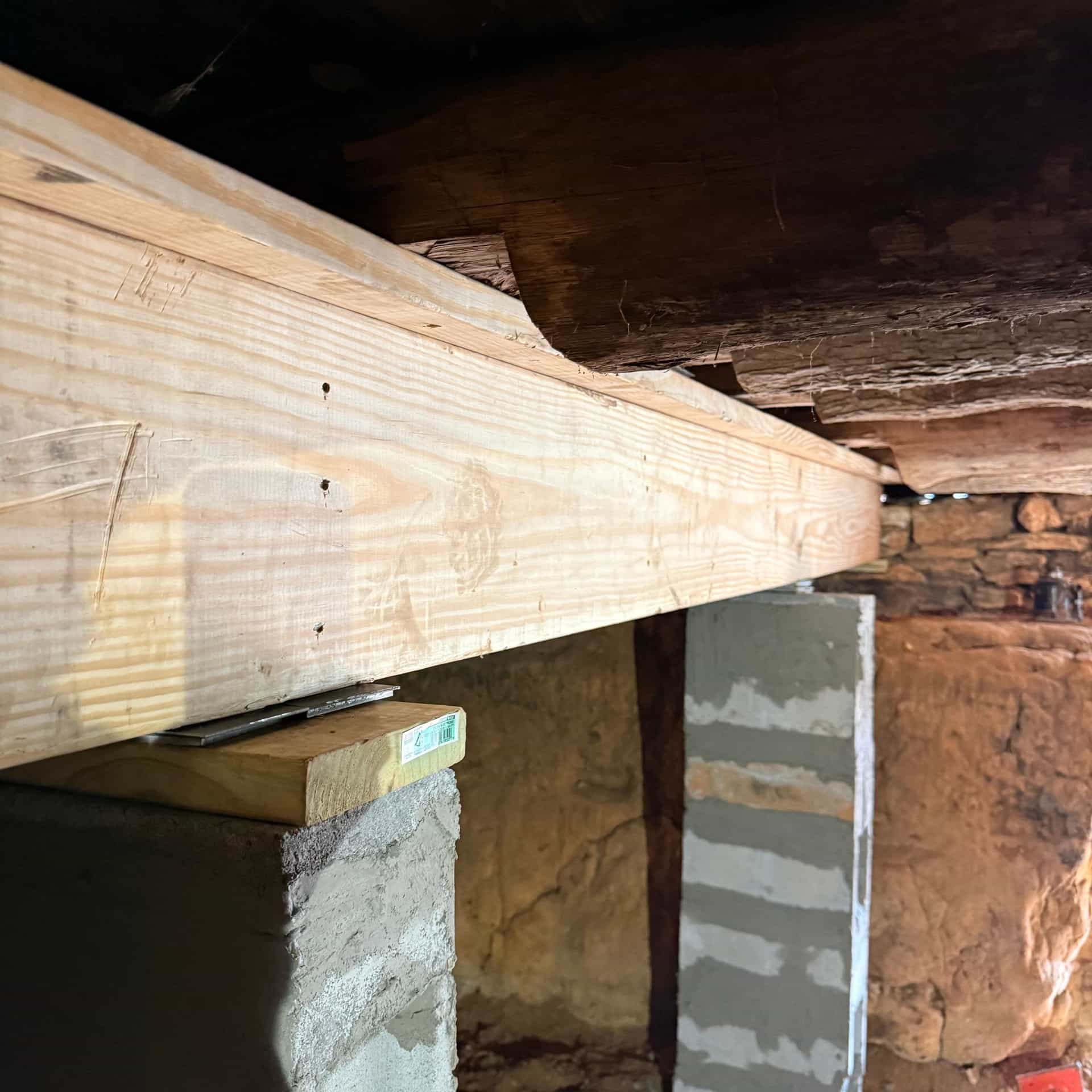
Joist sistering shares a load across more wood than the original joist could carry alone. A joist holds up the floor by resisting bending across its span. Once it cracks, splits, or loses wood to rot, it deflects and the floor sags. A sound new joist fastened tightly against it shares the load, so the pair resists the bending and the floor stops moving.
The sister is matched to the original in depth and joined to it with bolts, structural screws, or nails along its length. Both ends must bear on solid support, the girder, the sill, or a pier, so the inspection checks the supports too. Where the floor has dipped, the framing can often be raised in a controlled way first to recover some lost height.
Sistering reinforces a joist that is damaged or undersized but still sound enough to attach to and bear on. It depends on a few other conditions:
- A joist with too little solid wood left calls for replacing the joist
- A settled pier or footing is corrected first, often with an adjustable crawl space jack or a new footing
- Sistering does not remove the moisture that caused the rot
The symptoms that usually lead to joist sistering are on the framing repair problem signs page, alongside the other signs that point to the same underlying cause.
How We Sister a Floor Joist
- Step 01
Free Inspection and Diagnosis
We start under the home to find which joists are weakened and why. We check each joist for cracks, splits, sagging, and rot, look at the girder and the supports at each end, and read the soil and moisture conditions around them. A rotted joist in a damp coastal crawl space near Wilmington, framing left wet on an Asheville slope, and a joist left to span too far after a pier settled in Piedmont clay each tell a different story.
- Step 02
Confirm Sistering Is the Right Repair and Check the Supports
Joist sistering suits a joist that is damaged or undersized but still sound enough to bond to and bearing on solid support. We confirm whether sistering is the right approach or whether a joist is too far gone and should be replaced, whether the pier or footing beneath it has settled and needs correcting, and whether the moisture that caused the damage should be addressed alongside the framing. We walk you through the plan before any work begins.
- Step 03
Prepare the Joist and the Bearing Points
The crew clears the work area along the damaged joist and confirms that both ends of the new joist will bear on solid support, the girder, the sill, or a pier. Where a support has settled, it is corrected first so the sister joist has something solid to rest on, because a reinforced joist resting on a failing point is not a lasting fix.
- Step 04
Set and Fasten the Sister Joist
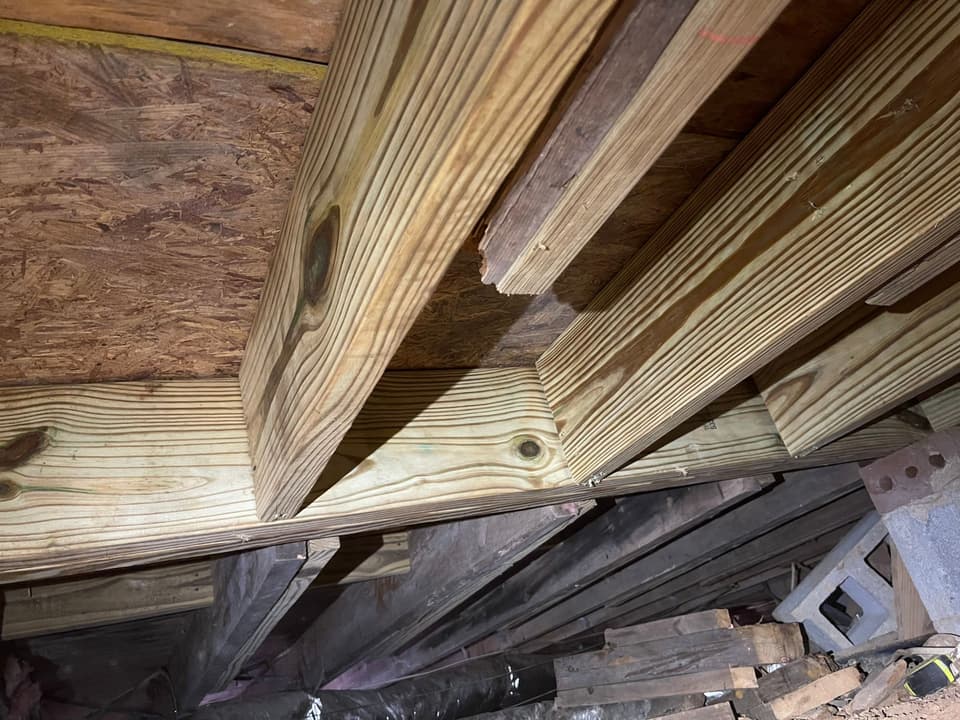
A new sister joist matched in depth to the original is run alongside it and set to bear on the same supports at each end. It is then fastened to the existing joist with bolts, structural screws, or nails in a pattern along its length, so the two members are joined tightly and share the load. Once connected, the pair carries the span that the weakened joist could no longer hold on its own.
- Step 05
Make a Controlled Adjustment Where the Floor Allows
Where the floor has dipped, the framing can often be supported and raised gradually before the sister is locked in, to recover some of the height the floor has lost. The adjustment is measured and controlled, which protects the drywall, tile, and trim upstairs. We explain how much correction is achievable for your specific floor.
- Step 06
Review the Result and the Moisture Picture
We review the reinforced floor with you and explain what comes next. Because joist damage in the Carolinas is so often tied to moisture, we go over any drainage, vapor barrier, or encapsulation work that would keep the crawl space dry, so the new wood does not face the same conditions that weakened the original. You get a clear picture of the cause, the fix, and how to protect it.
How Does Joist Sistering Strengthen a Weak Floor Joist?
A new joist, matched in depth to the original, is fastened tightly alongside it. The two act together, so the load that was overstressing the weakened joist is spread across the pair.
Care and Expertise From a Team Serving the Carolinas Since 2017
When the fix is joist sistering, our own crews do the work. HydroHelp911 handles framing repair and related structural and moisture work across North and South Carolina.
An inspector looks at your home, finds the source of the problem, and explains each finding in plain language. There is no obligation.
We are headquartered in Dallas, North Carolina, with eight offices across North and South Carolina.
Foundation repair, crawl space repair and encapsulation, basement waterproofing, framing repair, and concrete leveling are the whole focus of the team.
We have 1,300+ verified Google reviews (4.9 stars) from homeowners across the Carolinas and are BBB A+ Accredited.
For example, helical and push piers carry a lifetime warranty that no additional settlement will occur in the area of installed piers, once the final invoice is paid in full. Read the warranty terms.
Ask your inspector about financing when you get your written estimate. See financing options.

Common Questions About Joist Sistering and Reinforcement
Don't see your question here? Call or fill out our quick online form, and our team will help.
Joist sistering is a repair that fastens a new joist tightly alongside a weakened one so the two share the load. A floor joist holds up the floor by resisting being bent across its span. When it cracks, splits, sags, or rots, it can no longer resist that bending and the floor dips. The sister joist adds a second sound member running the same span, joined to the original with bolts, screws, or nails along its length, so the load that was overstressing one joist is spread across the pair. The bending is resisted again, the deflection stops, and the floor is supported. Both ends of the new joist are set to bear on solid support so the reinforcement actually carries the load.
Which Framing Repair Problem Signs Can Joist Sistering Help With?
A sign can trace to more than one cause. These are the framing repair signs that can point to a cause this method addresses; the inspection shows which cause is at work in your home.
Sagging Floor Joist
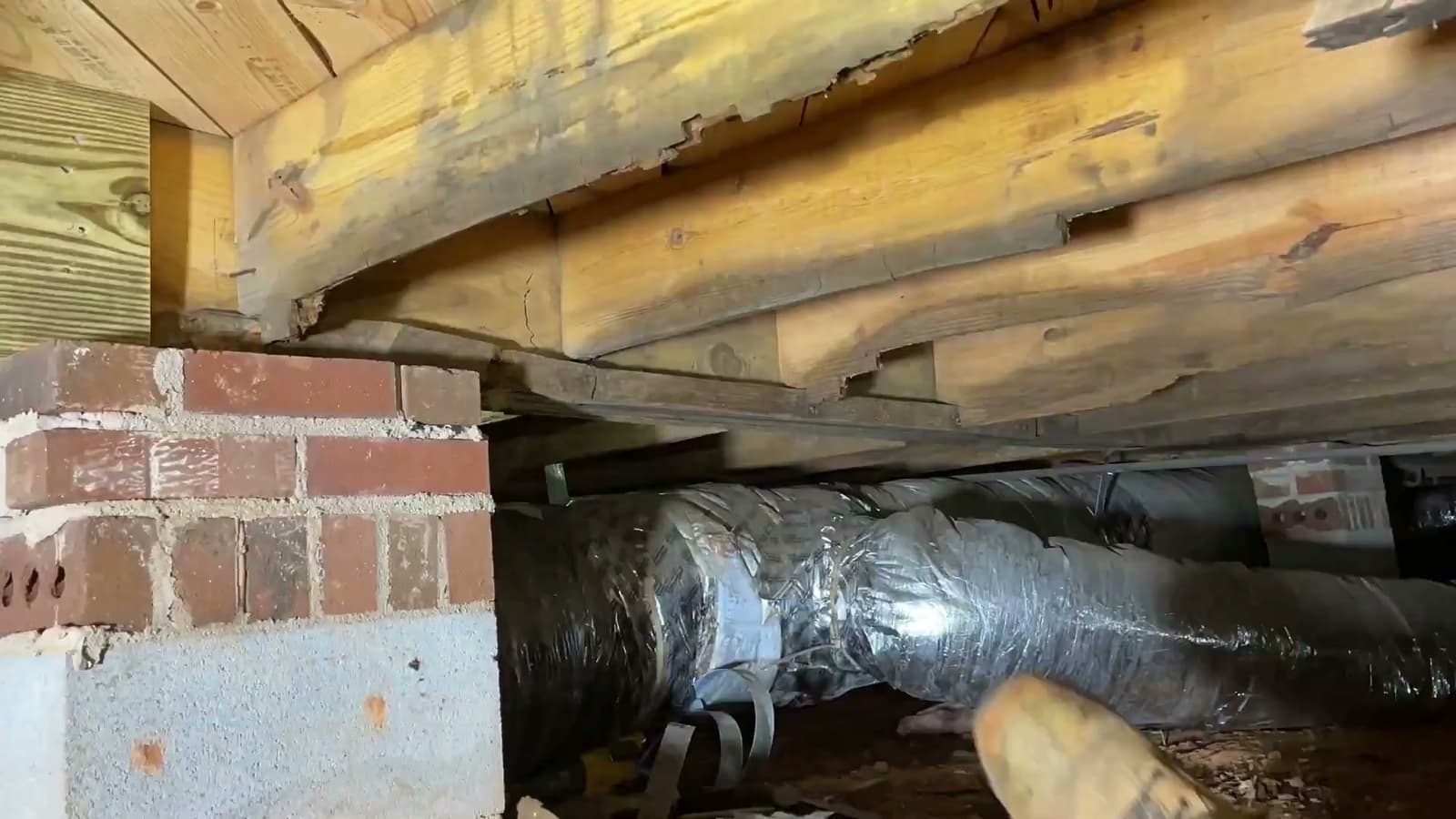
When one joist sags, you feel it as a dip or soft spot directly above it.
Learn More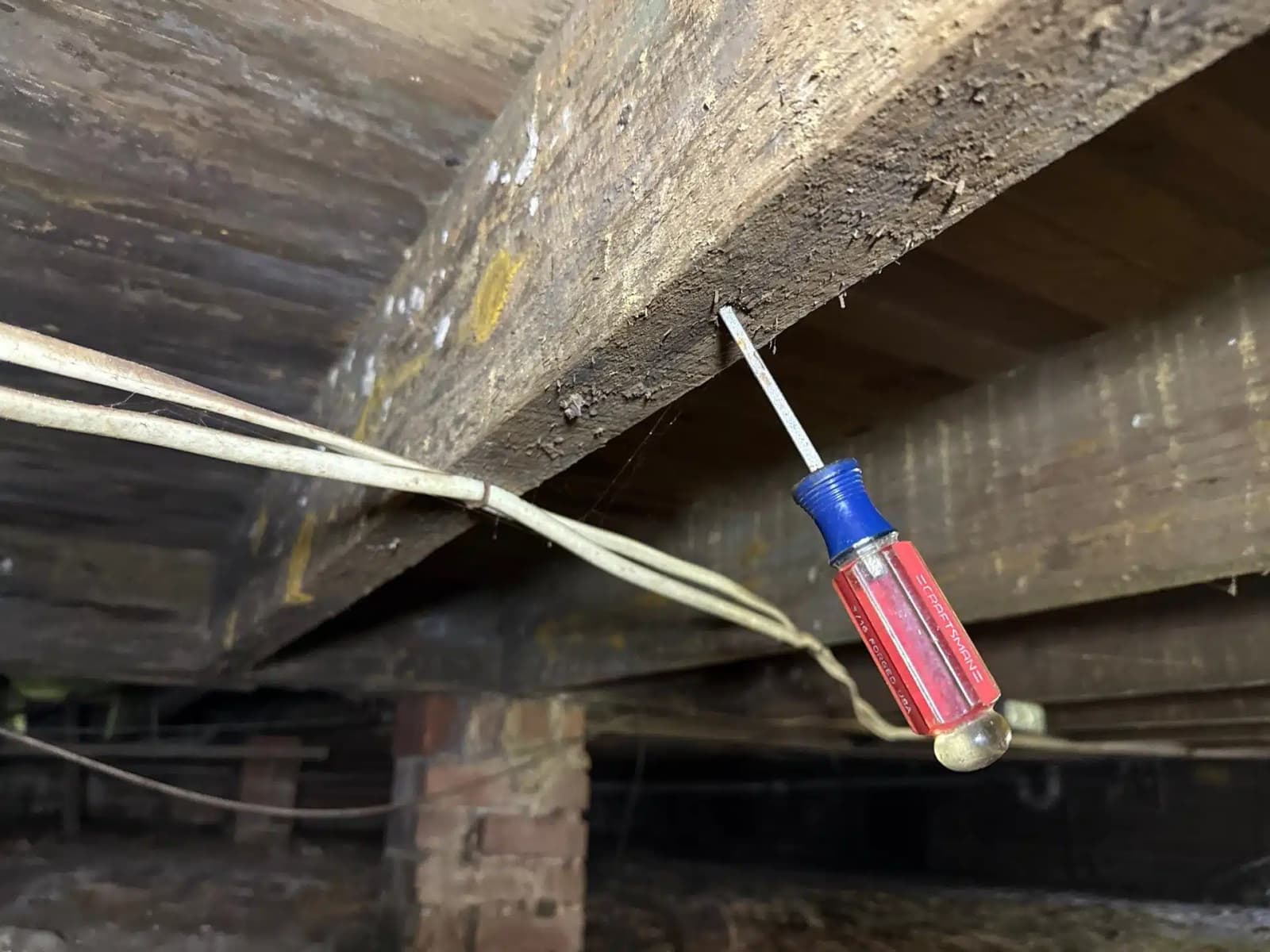
Rotted or Rotten Floor Joist
Floor joists are the horizontal beams under your floor that span the crawl space and hold everything above them.
Learn MoreBroken or Cracked Floor Joists
Floor joists carry the weight of the room above them.
Learn MoreOther Framing Repair Solutions We Install
Each solution fits a different cause. The inspection shows which one your home needs.
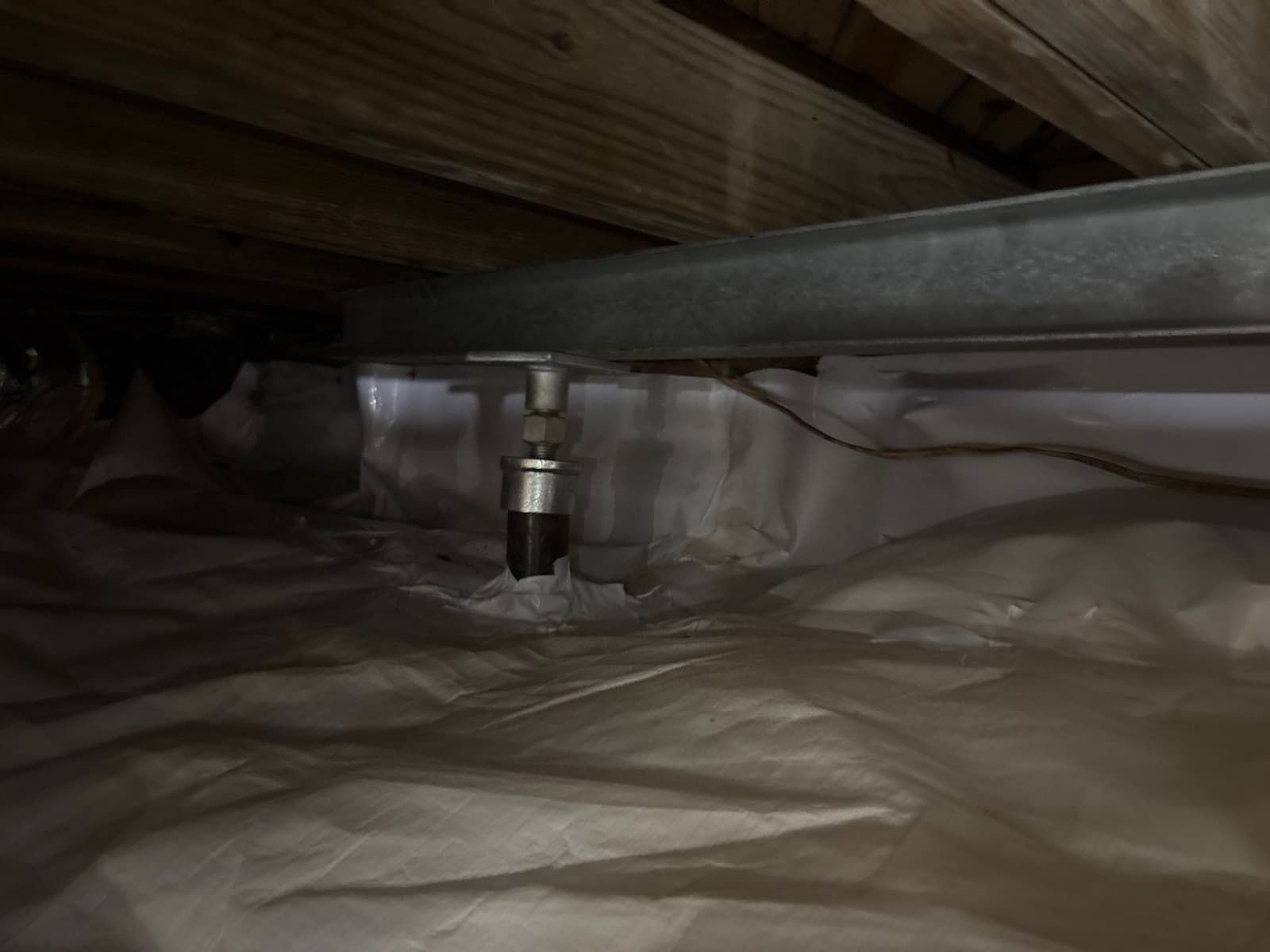
Beam Repair
When a beam or girder under your home softens, rots, or sags, the floor above follows.
Learn More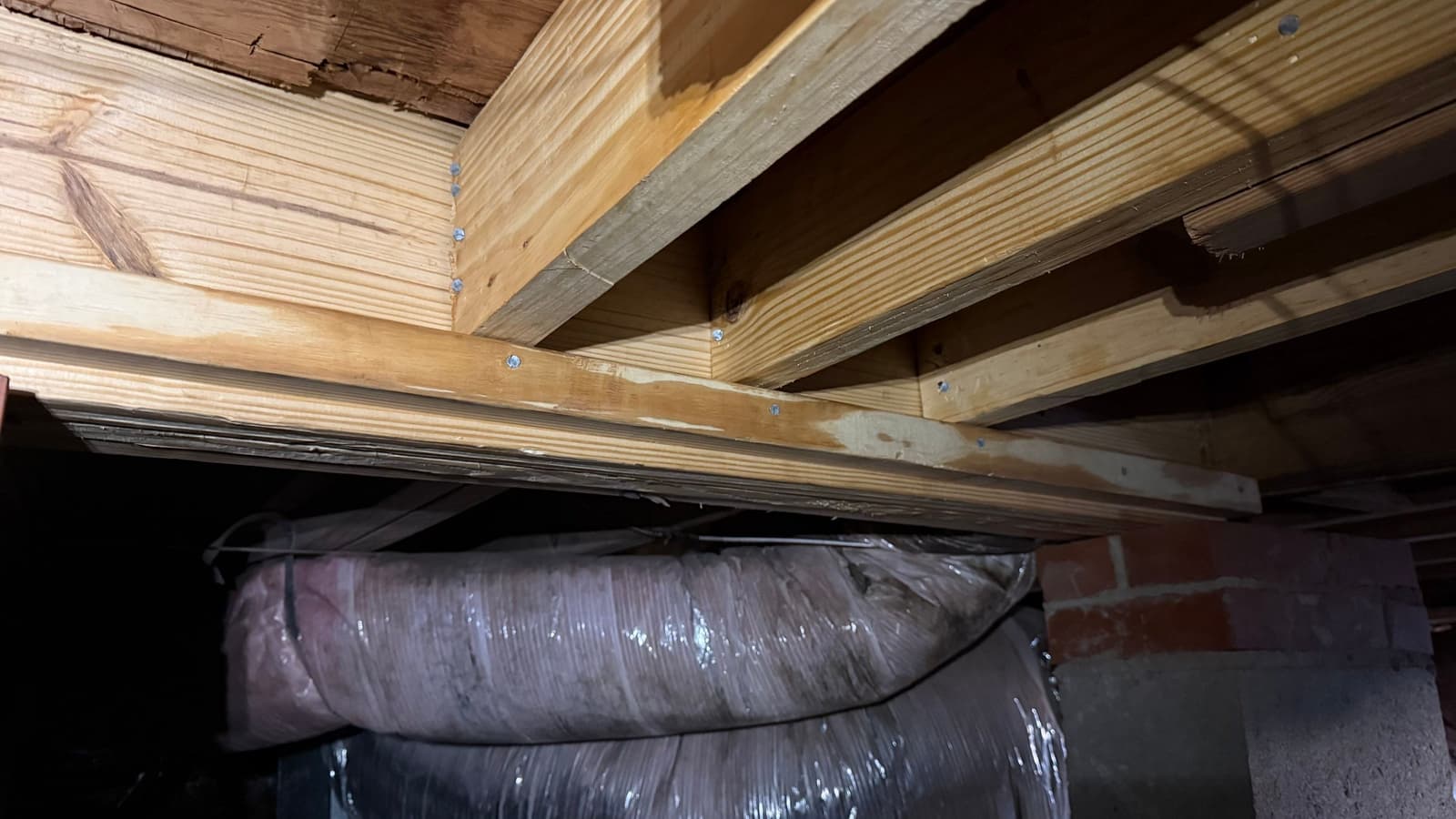
Carrier Beam Repair & Replacement
When the central support beam under your home sags, rots, or loses its footing, the floors above start to dip and bounce.
Learn More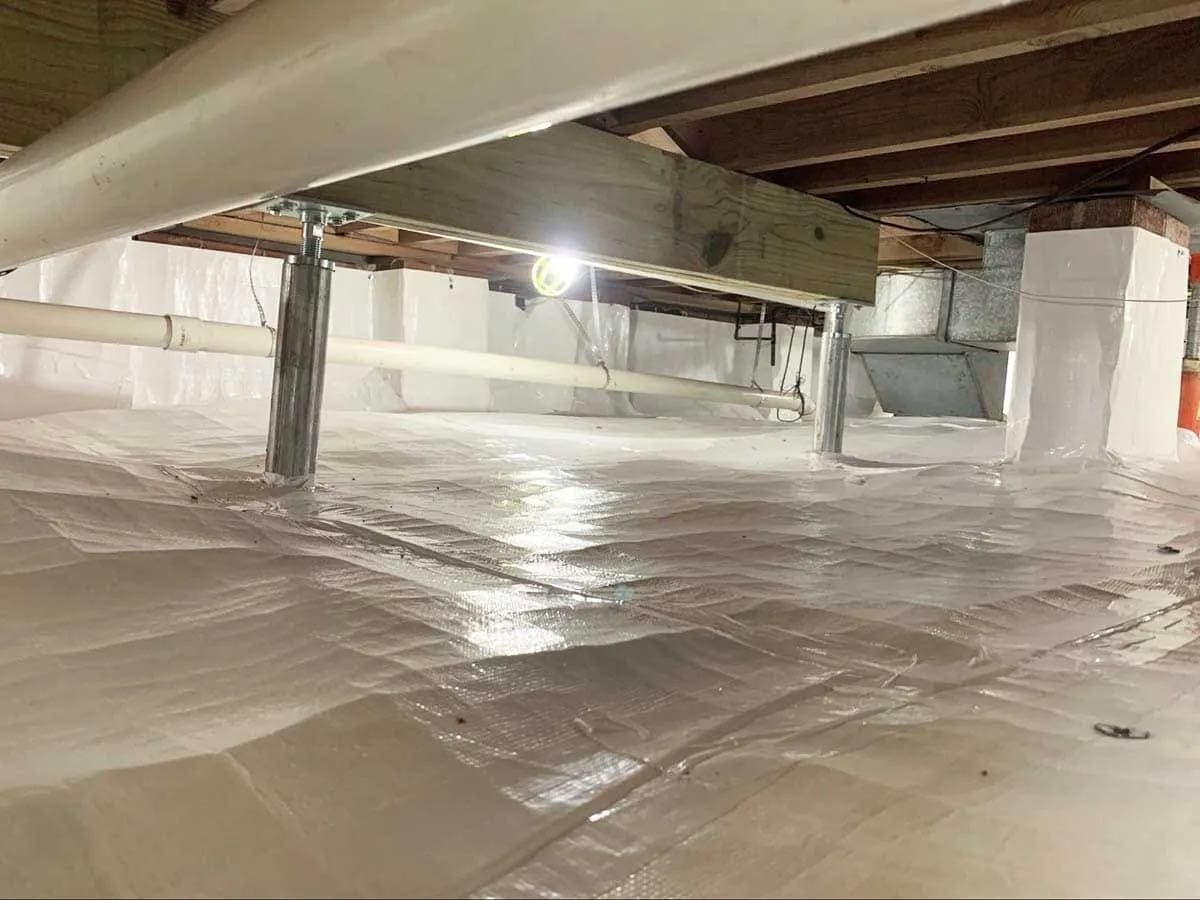
Crawl Space Jack Installation
When the framing under your floor loses its support, adjustable steel jacks are installed in the crawl space to carry the beams and joists again, stabilizing and lifting a sagging floor.
Learn More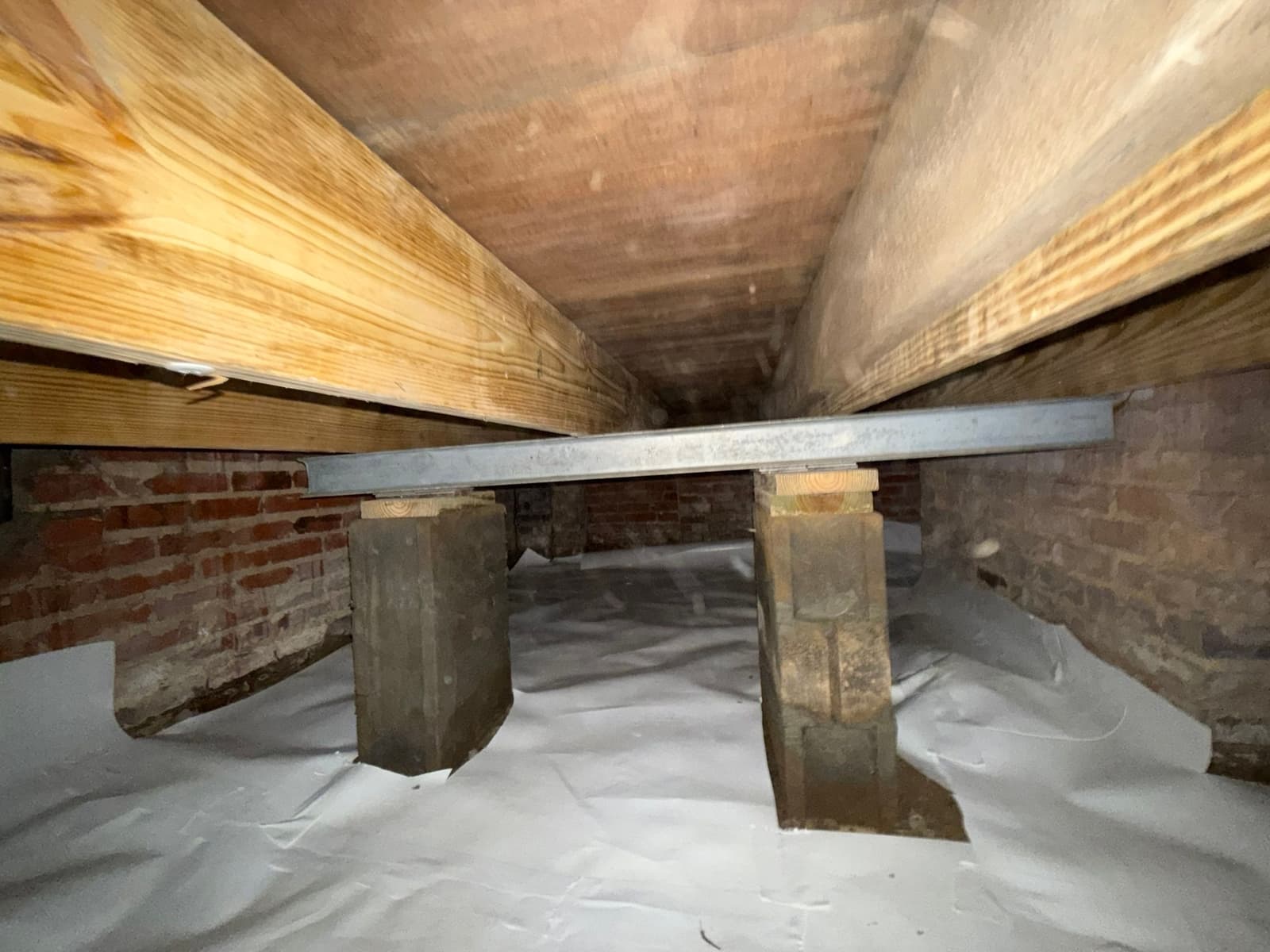
Floor Leveling Services & Shims
When the support under your floor settles, the framing dips and the floor slopes.
Learn More
Foundation Jack Installation
Adjustable steel foundation jacks installed in the crawl space carry the beams and joists that hold up your floor, so a settling, sagging area is supported and stabilized.
Learn MoreFloor Joist Repair Plates & Strengthening
Galvanized steel repair plates fasten across a split, sagging, or rotted floor joist to bridge the weak point and restore its strength, a targeted way to strengthen floor framing.
Learn MoreGuides and Answers
More Reading on Floor Framing
An article from our team about floor framing and the repairs we make.
Crawl Space Repair
Floors That Feel Uneven
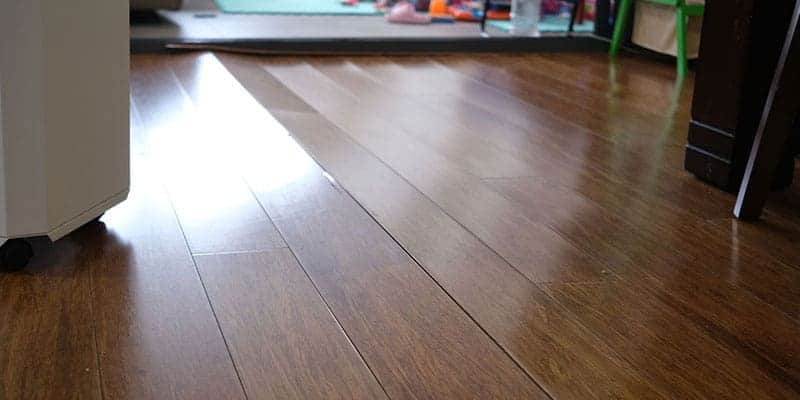
A floor that feels uneven when walking usually points to uneven foundation settlement or a weakened subfloor.

Get the Free Framing Repair Guide
A free guide for homes in North and South Carolina: what holds up your floors, how moisture under a home can damage the wood framing, the signs worth writing down, and how framing repairs work, in plain language.
- A floor and crawl space checklist to walk your home with
- How joists, beams, sill plates and support posts carry your floors
- How sistering, crawl space jacks and other framing repairs work
- Five questions worth asking any contractor, including us
1,300+ Verified Google Reviews (4.9 Stars)
Before you choose a contractor for joist sistering, read how homeowners across North Carolina and South Carolina rate our work.
How Do I Book a Free Inspection?
Pick your own time online, or fill out our quick online form and we will book a convenient time to assess your home, no cost, no pressure.
- A free inspection of your home
- Every finding explained in plain language
- A written estimate at no cost
- No obligation
Not Sure Which Service You Need?
A free inspection covers all of it: one visit, clear findings, and a written estimate at no cost.