A trained inspector (not a salesperson) will look at your home, explain what they find in plain language, and send a written estimate.
Crawl Space Encapsulation · North and South Carolina
Crawl Space Drainage System Installation Across the Carolinas
A vapor barrier handles moisture in the air and soil. When water actually pools on the ground, you need a way to collect it and move it out. Looking for a reliable crawl space encapsulation contractor? You're in the right place. Read on to learn more.
A crawl space drainage system is an interior drain that collects water reaching the crawl space floor and carries it to a sump pump, which pumps it out and away from your home. It sits beneath the sealed liner, so water is removed while the crawl space stays dry. Drainage is for liquid water; a crawl space that is only humid is handled with a liner, sealed vents, and a dehumidifier.
For liquid water on the crawl space floor
Interior drain to a sump pump
Sits under the sealed liner
Installed as part of a larger project
North Carolina · South Carolina
Get a Free Inspection
Two ways to start. Both are free, with no obligation.
Interior drainage along the perimeter or low points of the crawl space
A sump pump that discharges water away from the home
Drainage installed beneath the vapor barrier
If water reaches the crawl space because of a drainage issue outside the home, we will say so, so you can take it to the right trade.
Diagnosis First
Is It a Water Problem or a Humidity Problem?
Drainage is for water you can see; humidity needs sealing and a dehumidifier.
Drainage is for liquid water. Humidity is handled by sealing the crawl space and controlling the air. The two can look alike from the rooms above, since both bring a musty smell and damp air, but the fix is different. Standing water after storms, water lines on the soil, or ground that stays wet in coastal and low areas point to drainage. A dry floor with damp air points to humidity.
Pools, water lines, or staining on the groundStanding Water After Storms
Water is entering the crawl space. Interior drainage and a sump pump collect it and move it out.
A crawl space drainage system is an interior drain that collects water reaching the crawl space floor and carries it to a sump pump, which pumps it out and away from your home. It sits beneath the sealed liner, so water is removed while the crawl space stays dry. Drainage is for liquid water; a crawl space that is only humid is handled with a liner, sealed vents, and a dehumidifier.
What Affects the Cost of a Crawl Space Drainage System?
In Depth
What Does This Guide Cover?
What a homeowner should understand about this repair, explained in plain language.
Would You Like the Guide by Email?
The Homeowner's Guide to Crawl Spaces, sent free to your inbox.
Free Homeowner Guide
The Homeowner’s Guide to Crawl Spaces
Where crawl space moisture comes from, a checklist of the signs, and how repair and encapsulation work.
HydroHelp911
North and South Carolina
Free Guide
Get the Free Crawl Space Guide
A free guide for homes in North and South Carolina: where crawl space moisture comes from, the signs worth writing down, and how crawl space repair and encapsulation work, in plain language.
A crawl space checklist to walk your home with
Where crawl space moisture comes from, from the mountains to the coast
How a vapor barrier and full encapsulation differ
Questions to ask about a crawl space estimate
Check your inbox
Your guide is on its way. If it has not arrived in a few minutes, check your spam folder, then add us to your contacts so the next one lands where it should.
Some crawl spaces have more than a humidity problem. They take on water that pools on the ground after heavy rain or during wet seasons, and a vapor barrier alone cannot manage standing water. Around Asheville and the mountains, heavy rainfall and slope runoff push groundwater toward hillside crawl spaces. Along the coast near Wilmington and Brunswick County, a high water table keeps saturated soils close to the surface.
Even in Piedmont clay around Charlotte and Greensboro, water that collects against and under the foundation can find its way in. Standing water in the crawl space is the clearest sign. When water is physically entering, the crawl space needs a system to collect it and carry it away.
Average Yearly Rainfall Near Our Eight Offices
Wilmington, NC60.2 inches
Greenville, SC50.7 inches
Columbia, SC46.3 inches
Greensboro, NC45.9 inches
Dallas, NC44 inches
Huntersville, NC43.6 inches
Asheville, NC40.6 inches
Matthews, NC37.9 inches
Average yearly precipitation from NOAA U.S. Climate Normals 1991 to 2020, at the station nearest each office. Each figure is a station average, not a forecast for any one address. Stations:
Wilmington, Wilmington International Airport (USW00013748); Greenville, the Greenville weather station (USC00383735); Columbia, the Sandhill Research (Elgin) weather station (USC00387666); Greensboro, the Greensboro Water Treatment Plant weather station (USC00313625); Dallas, the Gastonia weather station (USC00313356); Huntersville, Charlotte Douglas Airport (USW00013881); Asheville, the Asheville weather station (USW00013872); Matthews, Monroe Airport (USW00053872).
CH 02
What Are the Signs a Crawl Space Needs Drainage?
The clearest sign is water pooling under the house after heavy rain. Others are water lines or silt marks on the soil and foundation walls, soil that stays muddy long after the weather dries, and a liner that holds puddles on top of it.
From inside the home, the signs overlap with humidity problems: a musty smell, damp air, and floors that feel cool. The difference is in the crawl space itself, which is why we look at the floor, the walls and the low points during the inspection.
CH 03
How Does an Interior Crawl Space Drainage System Work?
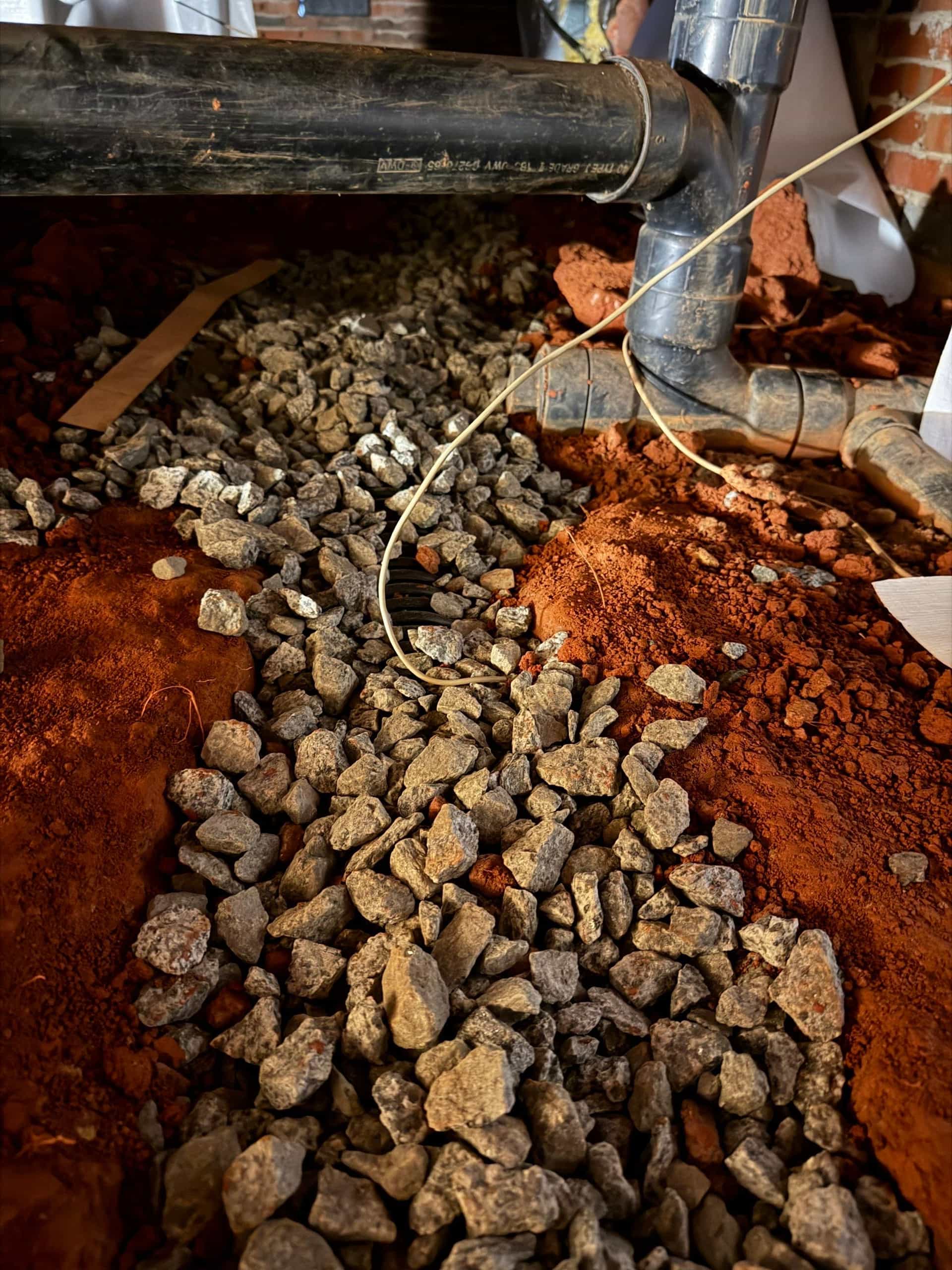
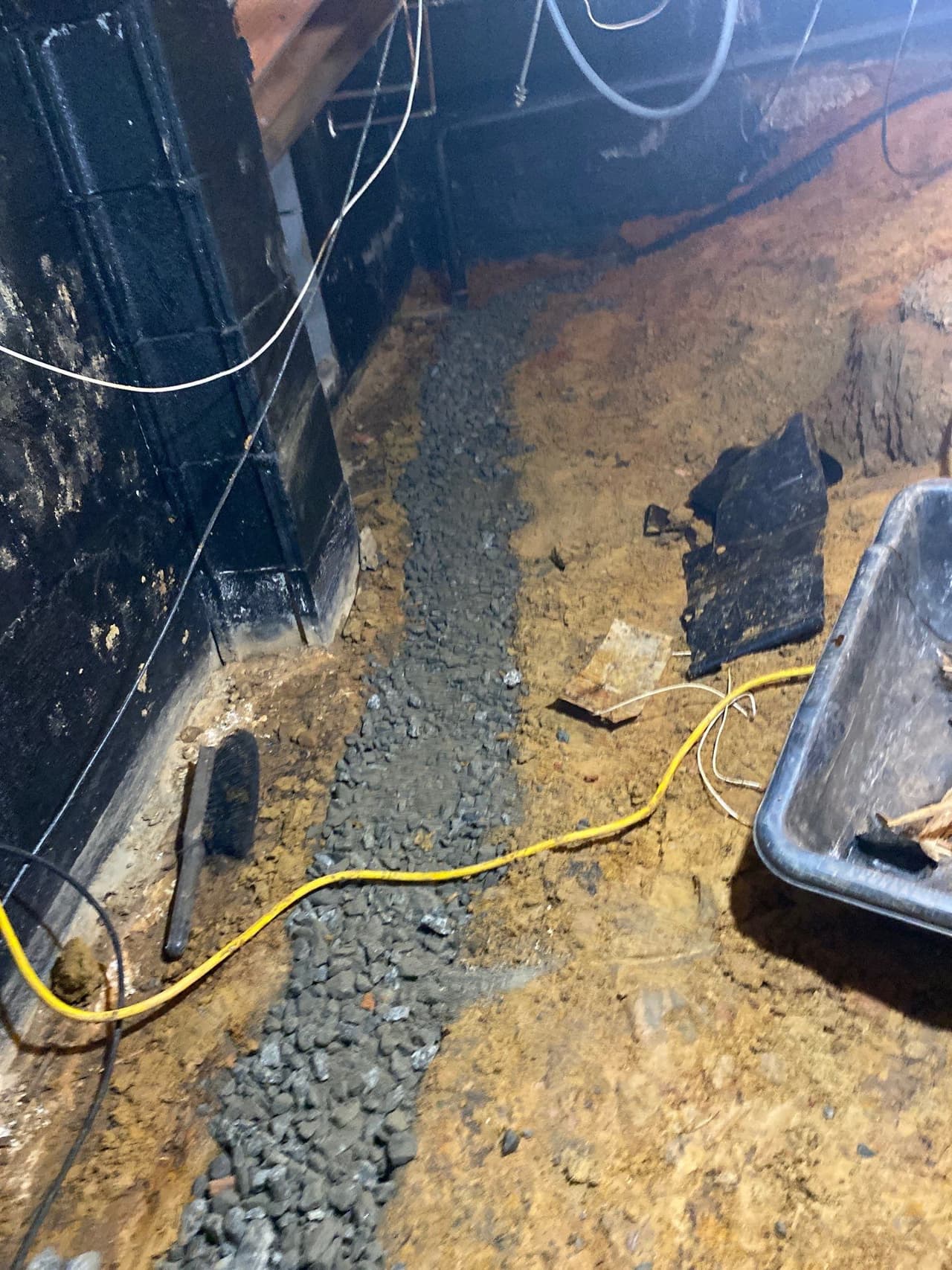
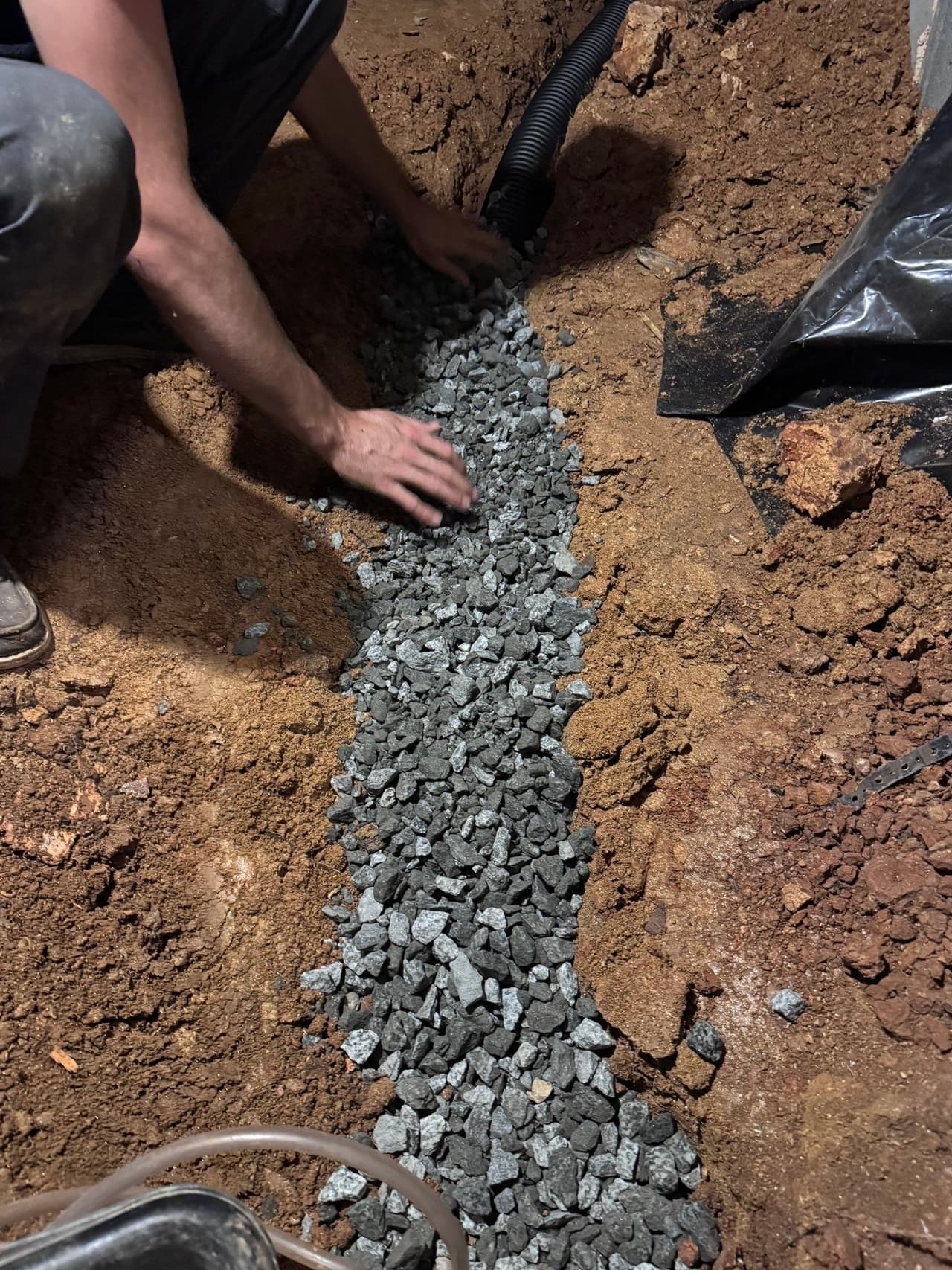
We install drainage channels, typically a perforated drain set in gravel along the interior perimeter or low points of the crawl space, that collect water reaching the floor and route it to a low collection point. From there a crawl space sump pump lifts the water and discharges it away from the home.
The drainage layer sits beneath the sealed liner, so the two work together: water that reaches the crawl space is captured and pumped out, while the barrier keeps the sealed space dry. This is interior crawl space drainage, installed beneath the home. The encapsulation drainage system shows each step.
CH 04
How Is an Interior Crawl Space Drainage System Installed?
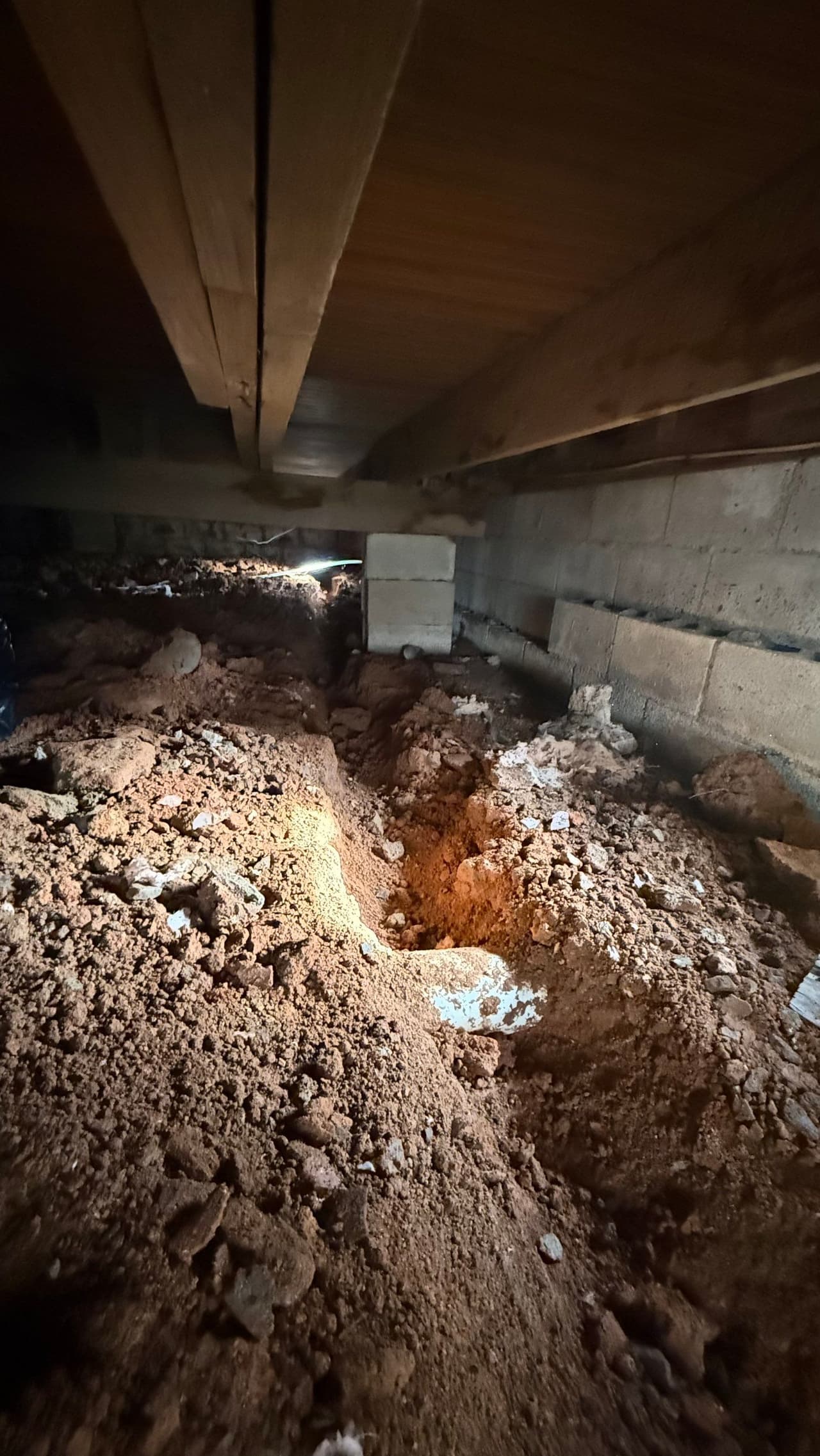
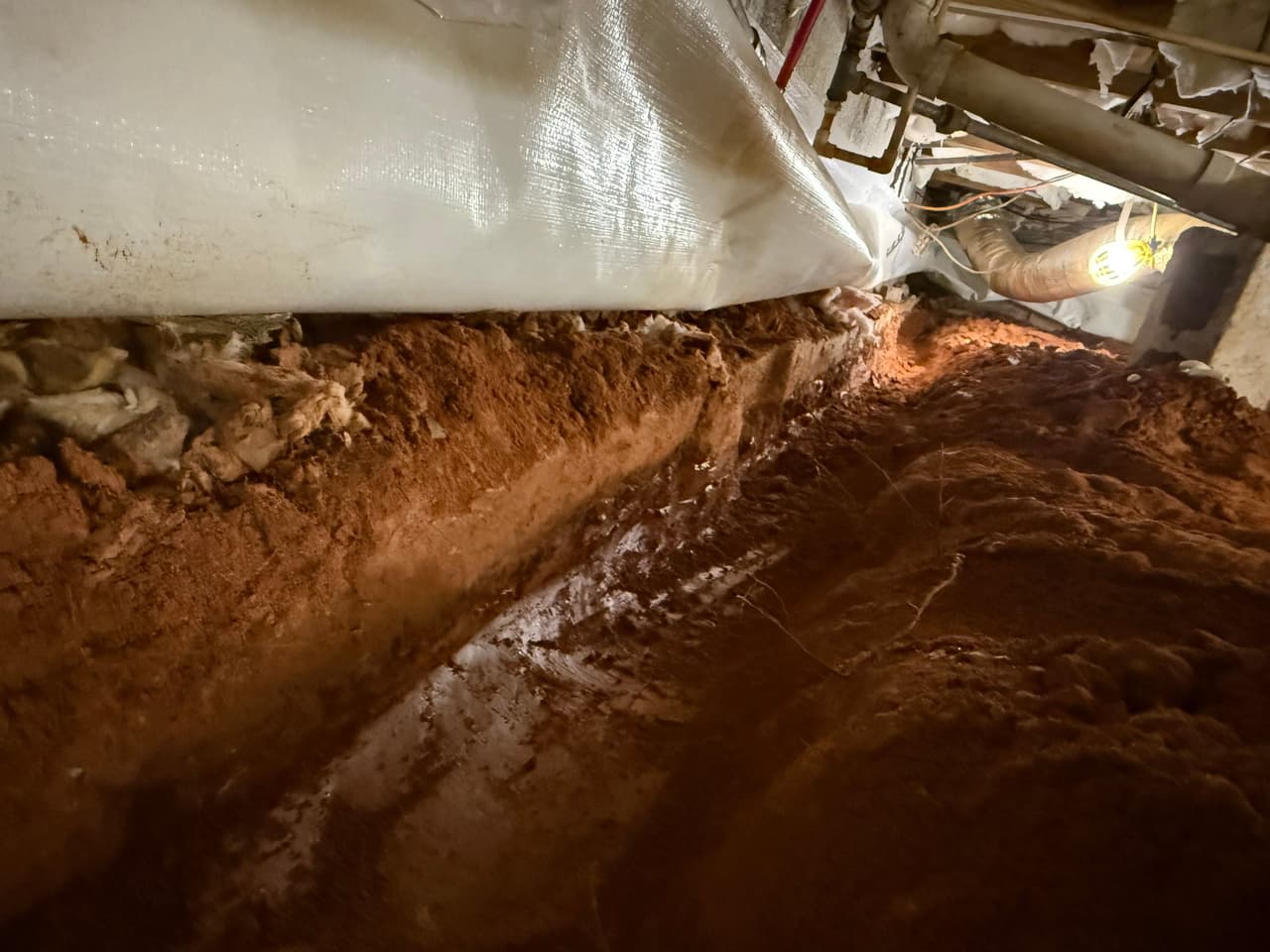
We start by tracing where water enters and where it collects. A shallow trench is dug along the interior perimeter or through the low points of the crawl space, a perforated drain is set in it with gravel, and the drain is pitched toward a sump basin at a low point. If large rock or roots are found during the dig, additional fees may apply.
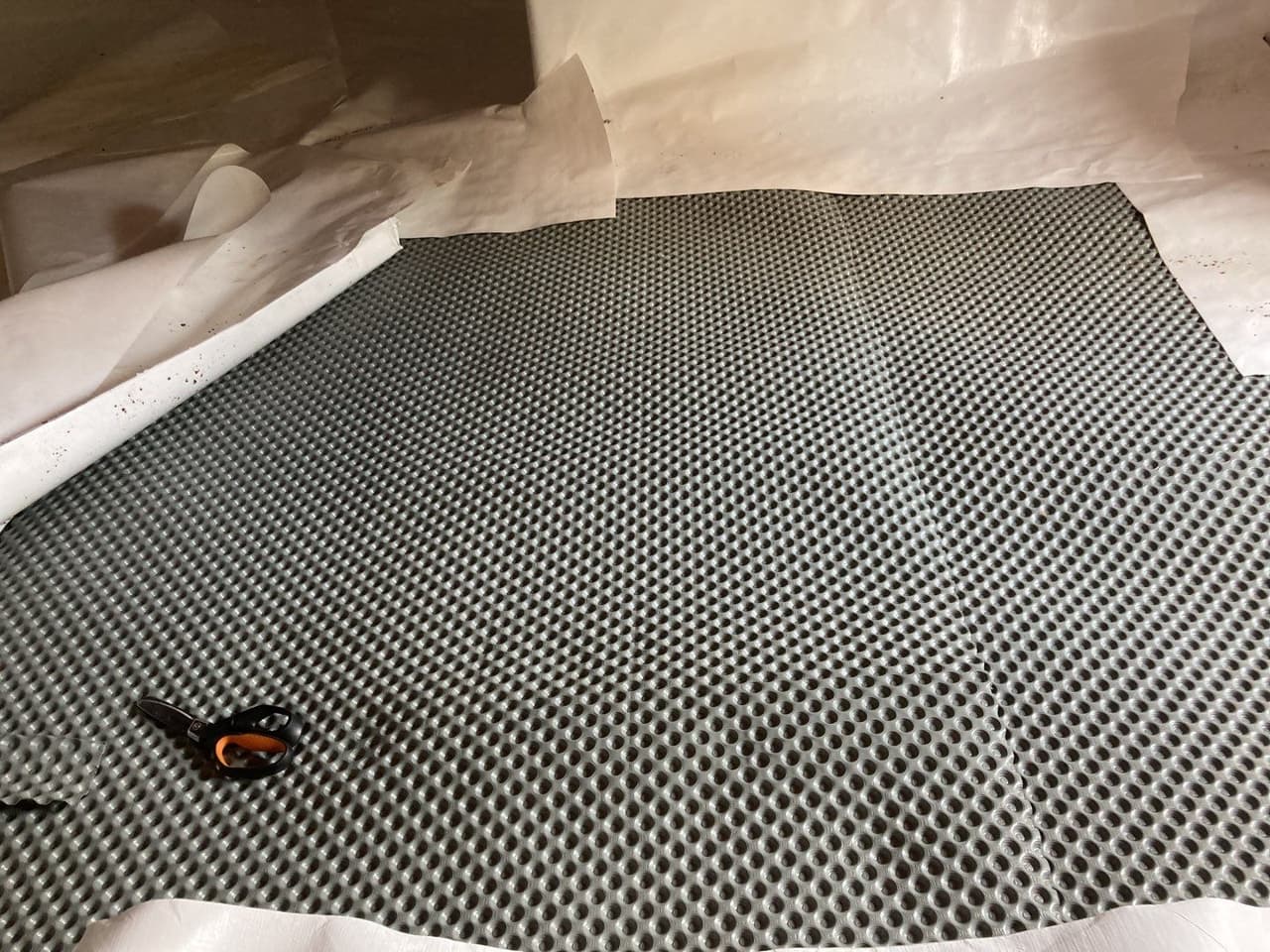
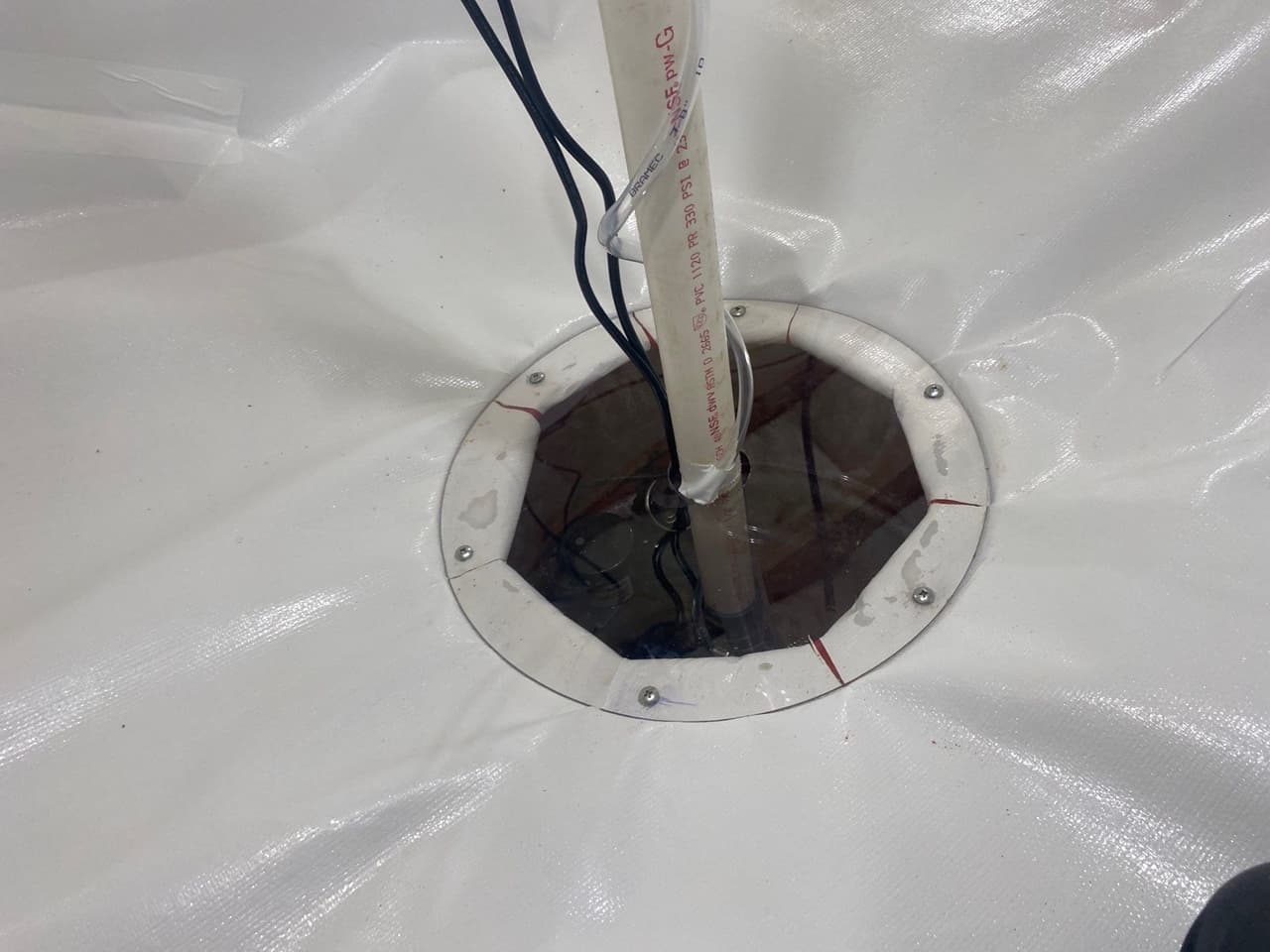
A sump pump in the basin lifts the collected water and discharges it away from the foundation. The vapor barrier then goes over the drainage, so water under the liner has a path to the pump while the sealed space above stays dry. Where water spreads across the soil, a drainage mat under the liner can help move it toward the drain.
CH 05
Why Does Drainage Need a Sump Pump?
The drain collects water and carries it to a low point, but water does not leave a crawl space on its own. The sump pump lifts it out and sends it away from the home. Without a pump, the water would collect in the basin and sit there.
We size the pump to the amount of water the crawl space takes on, so it can keep up during heavy rain. The sump pump carries its own warranty: 3 years on parts only, with the option to extend to lifetime parts and labor through the annual maintenance program at the owner's expense.
CH 06
When Is Drainage Needed With Encapsulation?
A drainage system is the right solution when water is actually entering the crawl space. A crawl space that stays dry and only needs its moisture controlled is well served by a vapor barrier, closed foundation vents, and a dehumidifier without the added cost of drainage.
The clearest signs drainage is needed are standing water, water lines or staining on the ground, or a space that floods after storms. Drainage coverage requires a sump pump that stays operational and annual sump pump maintenance at the owner's expense, and the interior drainage warranty terms list every condition.
CH 07
Crawl Space Drainage Warranty
Interior crawl space drainage carries a lifetime warranty for the life of the structure once the final invoice is paid in full, and it requires the sump pump to remain operational at all times and annual sump pump maintenance at the owner's expense. The annual maintenance program is $250 a year.
The warranty covers standing water within the perimeter of the installed drain only. Plumbing leaks, mechanical failures, power outages, and GFCI or breaker trips are not covered. The drainage warranty in full lists every condition.
CH 08
What Does Crawl Space Drainage Cost?
Interior crawl space drainage is installed as part of a larger crawl space project rather than on its own, so it is priced with that project. The length of drain line, the sump it feeds and access change the estimate, and your free inspection ends with a written estimate.
How hard the crawl space is to work in and what the dig turns up also change the estimate. Financing is available.
Which Solution Is Right?
Which Water Management Method Fits Your Crawl Space?
Alternatives to a sump pump include keeping gutters and downspouts clear and adding an interior drainage system.
Read the Guide
Project Photos
Photos From Our Crawl Space Encapsulation Job Sites
Photos from our own crews and projects. Swipe or use the arrows to see more.
01 of 06
Why Choose HydroHelp911
Care and Expertise From a Team Serving the Carolinas Since 2017
HydroHelp911 handles crawl space encapsulation and related structural and moisture work across North and South Carolina. Every repair recommendation starts with a free inspection of the whole home.
01
Trained inspectors, not salespeople.
An inspector looks at your home, finds the source of the problem, and explains each finding in plain language. There is no obligation.
02
Locally owned in Gaston County.
We are headquartered in Dallas, North Carolina, with eight offices across North and South Carolina.
03
Serving the Carolinas since 2017.
Foundation repair, crawl space repair and encapsulation, basement waterproofing, framing repair, and concrete leveling are the whole focus of the team.
04
Rated 4.9 stars on Google.
We have 1,300+ verified Google reviews (4.9 stars) from homeowners across the Carolinas and are BBB A+ Accredited.
05
Written warranty terms.
For example, helical and push piers carry a lifetime warranty that no additional settlement will occur in the area of installed piers, once the final invoice is paid in full. Read the warranty terms.
06
Financing is available.
Ask your inspector about financing when you get your written estimate. See financing options.
Cory ParksOWNER & PRESIDENT
Recent Work
Recent Crawl Space Encapsulation Projects
Finished crawl space encapsulation jobs from our crews, photographed on site. Open any project to see the full photo set and what we did.
Not Sure Drainage System Installation Is What You Need?
Answer three quick questions about your home. We'll match what you see to the most likely cause and point you to the right next step.
1
Symptom
2
History
3
Your Result
Location: Crawl Space
What Are You Seeing in Your Crawl Space?
Pick the symptom that best describes it.
Frequently Asked Questions
Common Questions About Drainage System Installation
Don't see your question here? Call or fill out our quick online form, and our team will help.
A crawl space drainage system is an interior system that collects water reaching the crawl space floor and moves it out from under the home. It typically uses a perforated drain set in gravel along the interior perimeter or low points to capture water and route it to a collection point, where a sump pump discharges it away from the house. It is designed for crawl spaces that take on actual water, and it works beneath the vapor barrier so the sealed space stays dry.
The drainage channels give water a path to follow, so it does not sit on the crawl space floor. Water that reaches the floor flows into the perforated drain, travels to the lowest collection point, and is then lifted by a sump pump and discharged away from the foundation. By continuously collecting and removing water as it arrives, the system keeps it from pooling under the structure, which is what protects the framing above from sustained contact with water.
In most crawl spaces, yes. Drainage channels collect water and carry it to a low point, but that water still has to be lifted up and out of the crawl space, and a sump pump is what moves it away from the home. Without a pump, the collected water would simply sit at the low point. We size the pump to the amount of water the crawl space takes on so it can keep up during heavy rain and wet seasons.
Our drainage work is interior crawl space drainage, designed to collect and remove water that reaches the crawl space floor and to support encapsulation. During the inspection we focus on what is happening inside the crawl space and recommend an interior drainage system and sump pump when water is genuinely entering the space.
For crawl spaces that take on water, an interior drainage system paired with a sump pump is the solution designed to stop standing water by collecting it and pumping it out before it can accumulate. A vapor barrier alone cannot do this, because it controls moisture and does not remove liquid water. We confirm during the inspection that water intrusion is the issue, and when it is, interior drainage is what keeps the crawl space dry through the wet season.
Interior crawl space drainage is installed as part of a larger crawl space project rather than on its own, so it is priced with that project. The length of drain line, the sump it feeds and access change the estimate. Your free inspection gives you a written estimate for your home.
Pricing & Scope
How Is Your Repair Priced?
Every home is different, so every estimate is written for the home in front of us. A free inspection at your home gives you a written estimate at no cost, based on your scope, access, and conditions.
How Pricing Works
Interior crawl space drainage is installed as part of a larger crawl space project rather than on its own, so it is priced with that project. The length of drain line, the sump it feeds and access change the estimate. You receive a written estimate after a free inspection.
When Is This Not the Right Fix?
A drainage system is not needed in a crawl space that stays dry and only has humid air. A liner, sealed vents, and a dehumidifier handle that without the added cost of drainage.
What Does the Free Inspection Include?
Your inspector explains every finding in plain language, and you get written documentation at no cost, typically an estimate with photographs.
Two ways to start. Both are free, with no obligation.