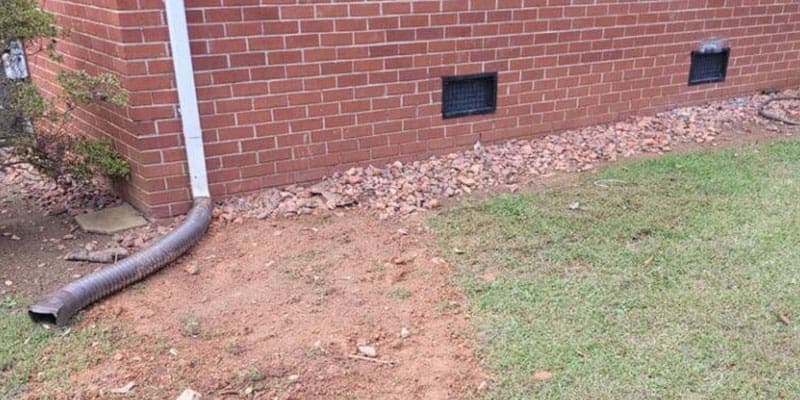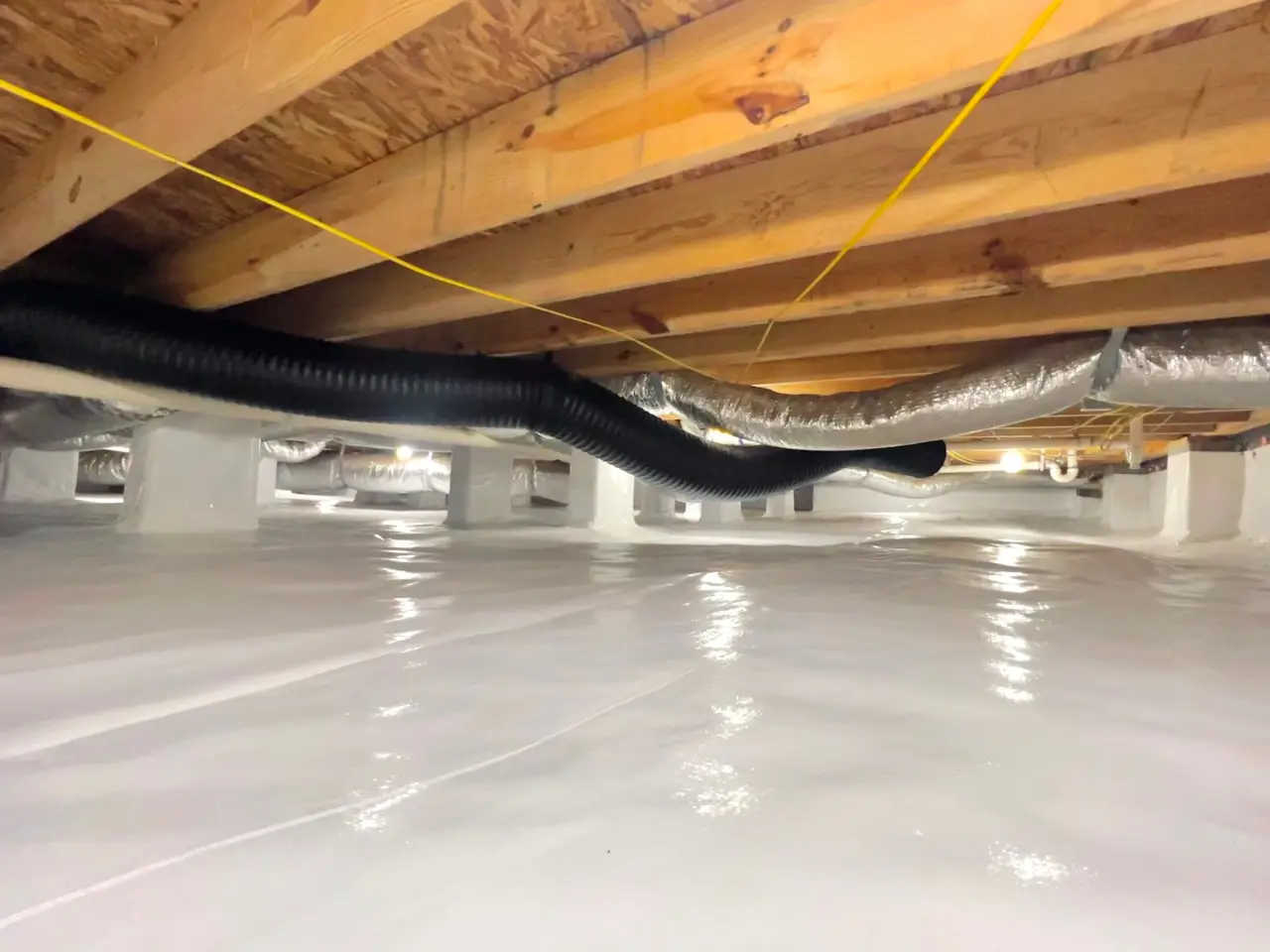

The most common crawl space problems are standing water, high humidity, mold, pests, sagging floors, failed insulation, wood rot, open vents and musty smells. Most of them trace back to moisture, so the usual fixes are drainage, encapsulation and a dehumidifier, with structural repair where the floor framing has weakened.
Your crawl space is out of sight, but its condition affects the rest of your home. This guide covers the most common crawl space problems and how they are fixed, with no scare tactics.
Moisture and Standing Water
A crawl space that holds water after every rain can lead to mold, wood rot, pests and structural problems.
What causes it?
- Rain and roof water that does not drain away from the house
- Cracked foundation walls
- Groundwater seepage
- A missing or failed vapor barrier
What is the fix?
- An interior drainage system: an interior crawl space drainage system (interior French drain) and a sump pump carry water out of the crawl space.
- Encapsulation: a heavy liner and a dehumidifier help keep ground moisture out of the air under your floors.
High Humidity
Even without standing water, high humidity can damage a crawl space over time. Humid air can lead to mold, musty smells and poorer air quality that reaches the rooms above.
What causes it?
- Open vents
- Poor air circulation
- No dehumidification
- Moisture from the ground below
What is the fix?
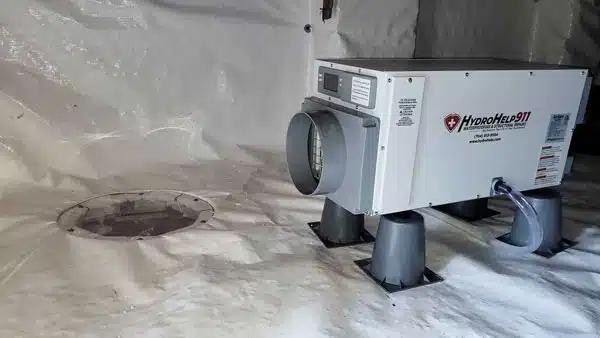
- A dehumidifier for an encapsulated crawl space to control the moisture level
- Sealed vents and doors to keep humid outside air out
- Encapsulation to block ground moisture at the source
Why it matters: Some of the air in your home comes up from the crawl space, so a drier crawl space helps the air upstairs.
Crawl Space Mold
Mold grows in damp, dark places like a crawl space. It is a symptom of moisture, and it can affect the air quality in your home.
What causes it?
- Long term moisture
- Little air movement
- High humidity and wood to grow on
What is the fix?
- Long term moisture control with encapsulation and a dehumidifier
- Replacing damaged insulation or wood where needed
Rodents and Pests
Mice, snakes, insects and other animals can move into a crawl space that has a way in.
What causes it?
- Gaps around vents, pipes and doors
- Damaged crawl space walls
- Easy access from outside
What is the fix?
- Sealing entry points with proper covers
- Pest resistant vent covers
- Encapsulating and closing off the crawl space, which leaves animals fewer ways in and less shelter
Tip: A sealed crawl space can help keep pests out.
Sagging Floors Above
A floor that bounces or dips can point to the support system under it.
What causes it?
- Floor joists weakened by moisture
- Support beams that are too few or failing
- Soil settling under the piers
What is the fix?
- Crawl space jack posts to support sagging areas
- Replacing damaged wood or framing
- Fixing the moisture problem first, so the new support is not working against damp wood
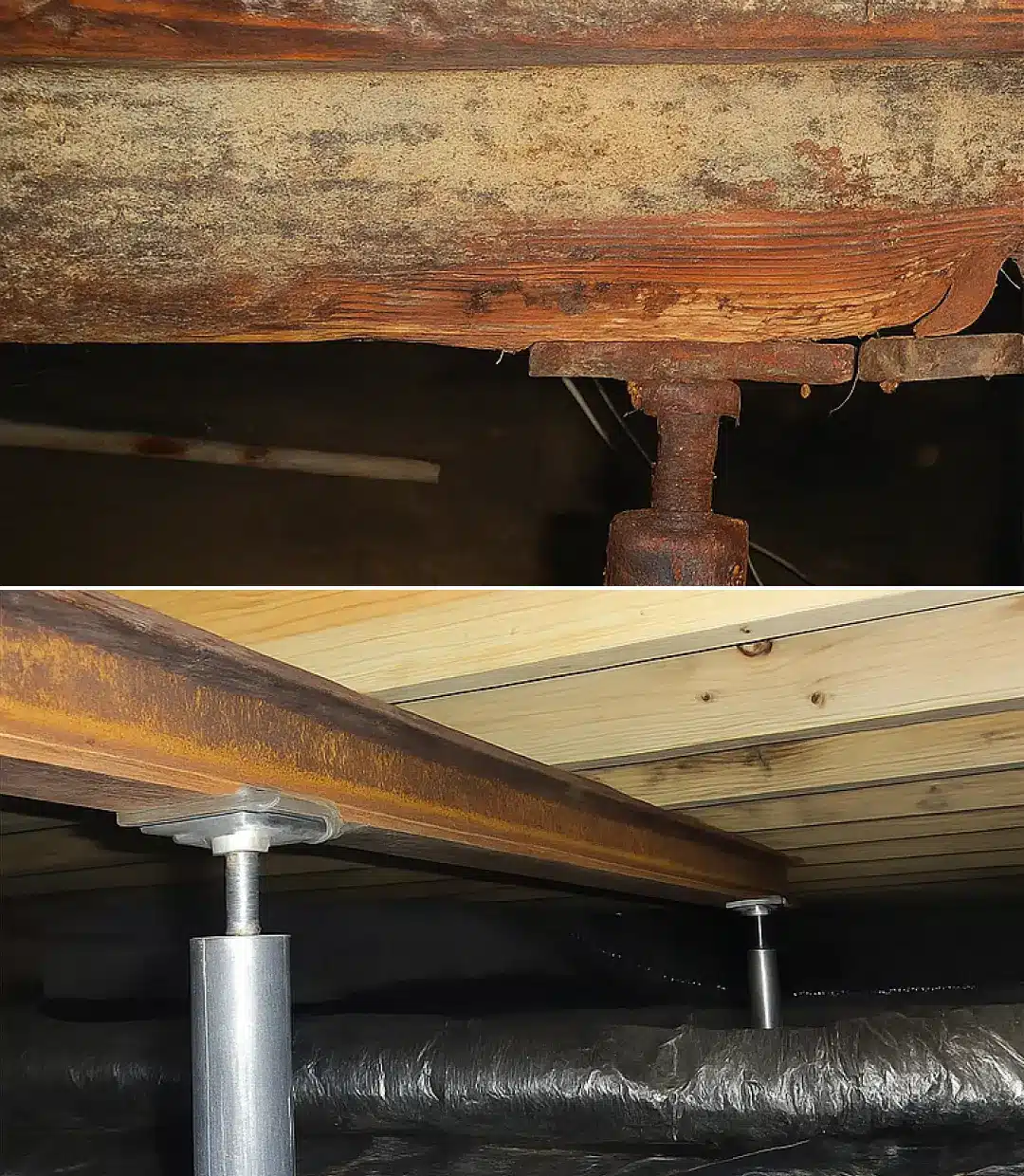
Insulation Failure
Old insulation can absorb moisture. Once it is wet, it can sag, fall and lose its insulating value, and sometimes grow mold.
What causes it?
- Moisture
- Rodents nesting in it
- Age and wear
What is the fix?
- Removing the old insulation
- Encapsulating the crawl space to control moisture
- Using insulation suited to crawl spaces, such as rigid board insulation on the walls
Tip: Failing insulation can raise energy bills. A dry, sealed crawl space can help your heating and cooling system work less.
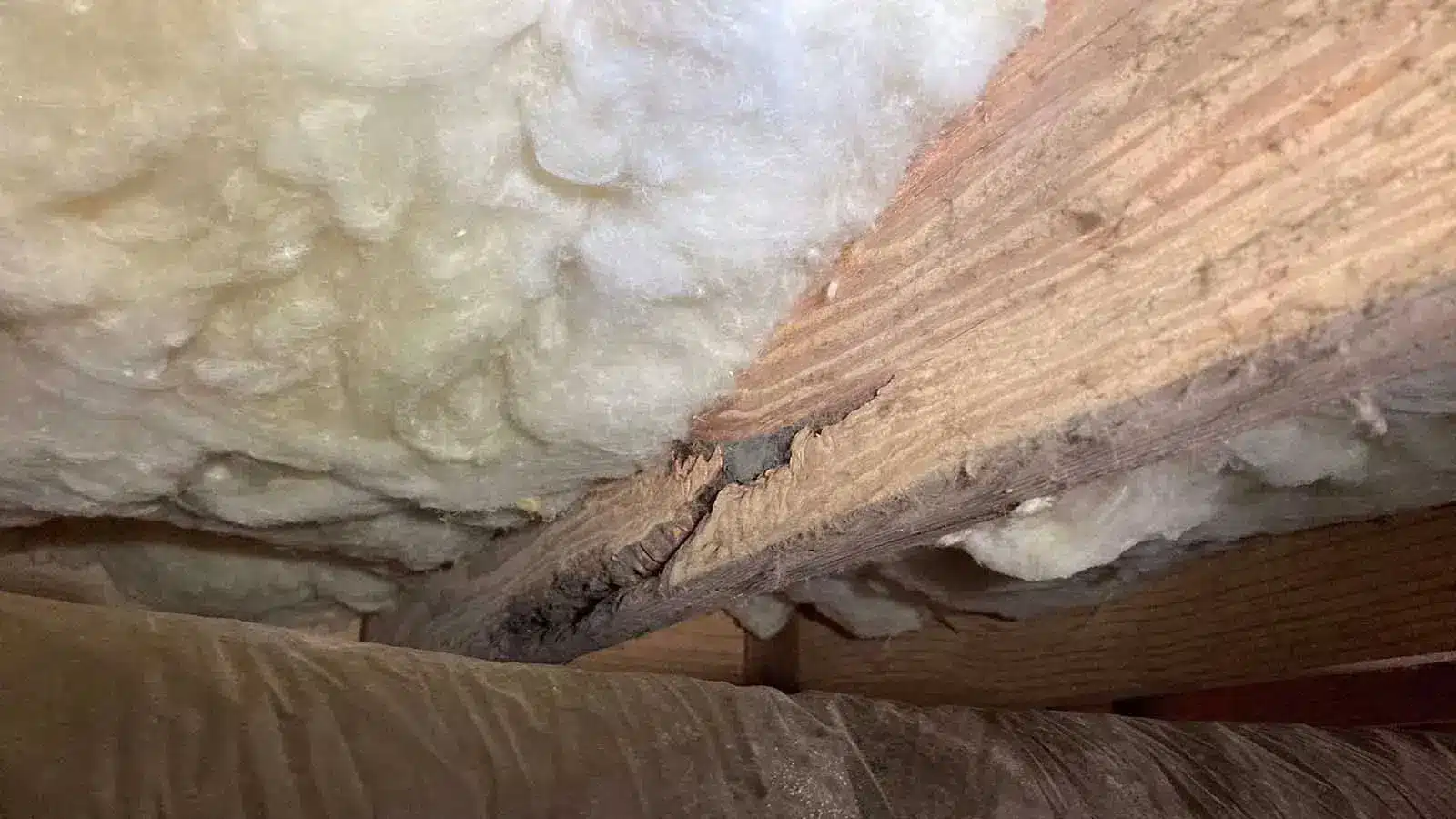
Wood Rot
Wood rot in a crawl space can weaken beams and joists over time, and it can be hard to see from above.
What causes it?
- Long term moisture
- Fungus growing on damp wood
- No drainage or moisture control
What is the fix?
- Replacing rotted wood
- Fixing the source of the moisture
Open Crawl Space Vents
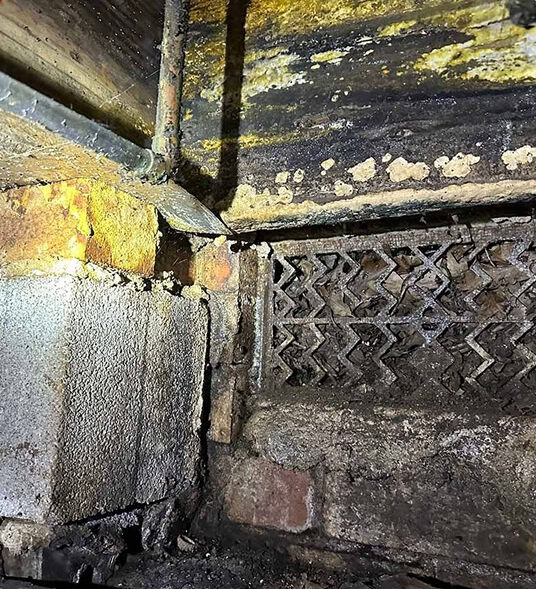
Many older crawl spaces were built with vents meant to let them breathe. Those vents can also let in humid air, pests and temperature swings.
What causes it?
- Open crawl space vents
- No control over the air coming in
What is the fix?
- Sealing the crawl space vents once the crawl space is encapsulated
- Encapsulation to keep the air clean and dry
- A dehumidifier to manage the air inside
Bottom line: With full encapsulation and a dehumidifier, the vents stay closed.
Musty Smells
A musty odor in your living room can come from the crawl space. Mold, mildew or animal droppings can cause it.
What causes it?
- Mold and mildew
- Rotting insulation or other materials
- Standing water or pest waste
What is the fix?
- Removing wet, decaying materials
- Encapsulation and moisture control to help prevent odors
How Do You Fix Crawl Space Problems?
At HydroHelp911, we see sagging beams, flooded crawl spaces and animals that have moved in. Here is how our process works:
- Free Crawl Space Inspection: We check the whole crawl space and show you what we find.
- Repair Plan for Your Home: We match the repair to your crawl space.
- Permanent Solutions, Not Patch Jobs: Encapsulation, drainage, jacks and dehumidifiers that address the cause, so the crawl space stays drier and cleaner.
Our warranty terms and their conditions are on our warranties page.
What Can Happen If Crawl Space Problems Continue?
When the cause is not addressed, crawl space problems can grow over time. If you have noticed a sagging floor, a musty smell or signs of moisture under your house, a free inspection can show what is causing it. Book your crawl space inspection online.
Next Step
Schedule a Free Inspection
Call or fill out our quick online form. We'll book a convenient time to assess your home at no cost.
Learn more about our crawl space encapsulation services.
Found this useful? Share it with someone working on their home.
Written by
Cory Parks
Owner & President, HydroHelp911
Cory Parks founded HydroHelp911 and leads its structural and moisture repair work for homeowners across North and South Carolina, from the clay soils of the Piedmont to the saturated, sandy ground along the coast.
More about CoryGet a Free Inspection
Two ways to start. Both are free, with no obligation.
Pick your own day in our calendar. You save $250 if you go ahead with the work.
Send a short form, and our office will call to book a time that suits you.
For new customers who book online through our website and then sign a contract.