
I-Beam Wall Bracing: Holding a Bowing Basement Wall Against the Soil Pushing on It
When clay or saturated soil presses a foundation wall inward, steel I-beams brace it from the inside and stop further movement, across North and South Carolina.
Get a Free Inspection
Two ways to start. Both are free, with no obligation.
Pick your own day in our calendar. You save $250 if you go ahead with the work.
Send a short form, and our office will call to book a time that suits you.
For new customers who book online through our website and then sign a contract.
What to Know About I-Beam Wall Bracing
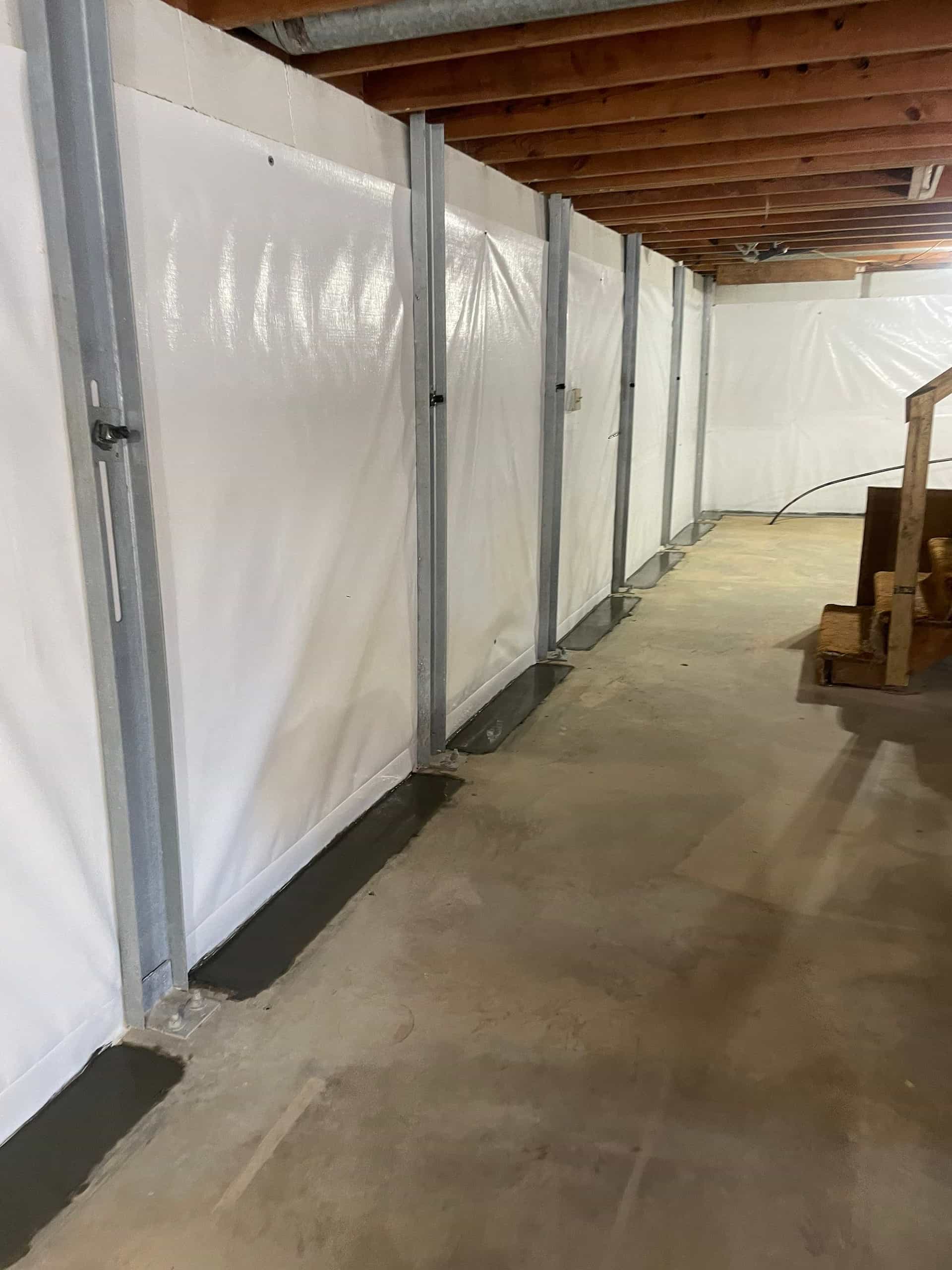
I-beam wall bracing counters sideways soil pressure with a stiff vertical member the wall can lean against. A steel I-beam, anchored at the floor and at the framing above, gives the wall a rigid backstop along its height, so the beam carries the load that was bending the wall inward.
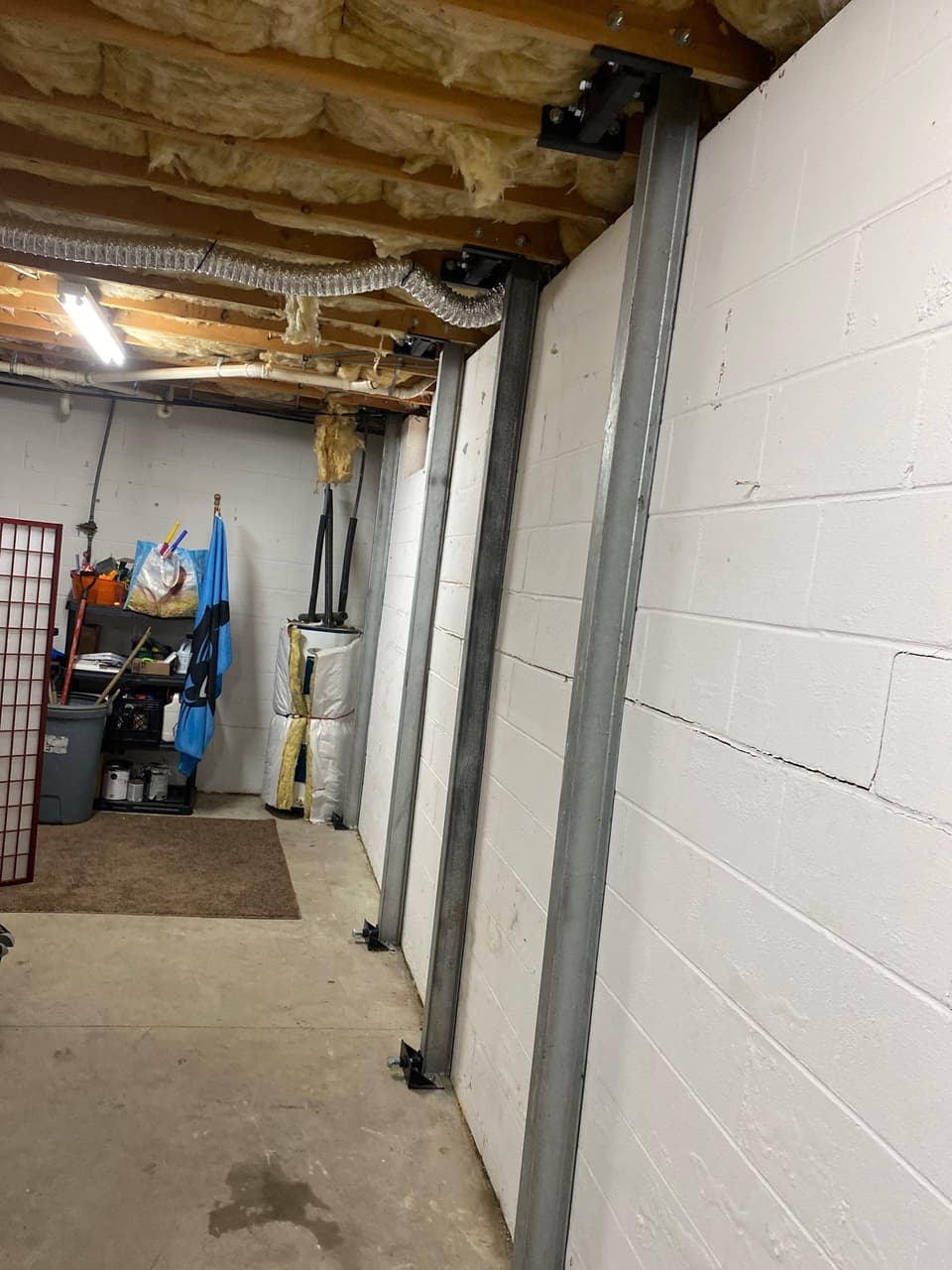
Beams are spaced along the affected wall, with spacing and size set by the wall height, how far it has moved, and the soil pressure. Each beam is secured to the slab at its base and tied into the floor joists or a structural member at the top, giving the force a clear path into the framing. The beams then hold a wall leaning or bowing inward in its current position.
The beams go in from inside the basement, so the method suits homes where digging up the yard is impractical. Bracing holds the wall where it is and is not designed to straighten it. It does not remove the water behind the pressure, so the inspection looks at how water reaches the foundation and confirms whether bracing or thin carbon fiber straps fits better.
The symptoms that usually lead to I-beam wall bracing are on the foundation repair problem signs page, alongside the other signs that point to the same underlying cause.
How We Install I-Beam Wall Bracing
Free Inspection and Diagnosis
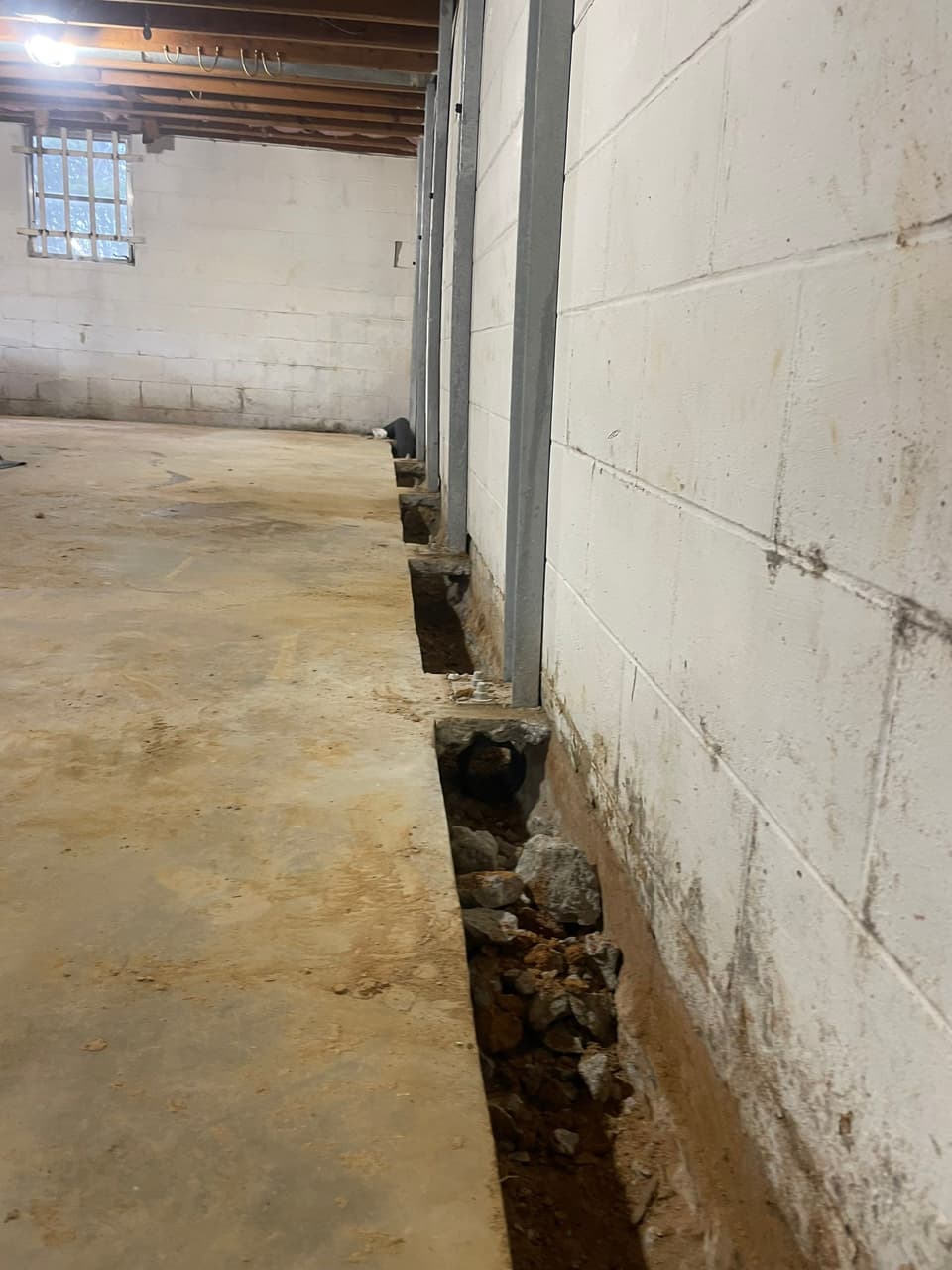
We confirm that sideways soil pressure is the actual problem and measure how far the wall has moved. We look at the bow or lean, a horizontal crack along the wall if there is one, and how water reaches the wall. In Piedmont clay that swells and shrinks with the seasons or on an Asheville hillside loaded by runoff, the source of the pressure shapes the recommendation, and we will tell you if bracing is not the right fit.
Confirm I-Beam Bracing Is the Right Reinforcement
I-beam bracing suits walls where an interior brace can stop the movement and digging up the yard is impractical. Minor bowing may be better served by carbon fiber, and heavier or ongoing pressure by wall anchors reaching into soil beyond the wall. A settled footing may need piers. We confirm which method or combination fits, then explain the beam layout and spacing before any work begins.
Position and Anchor the Beams at the Slab
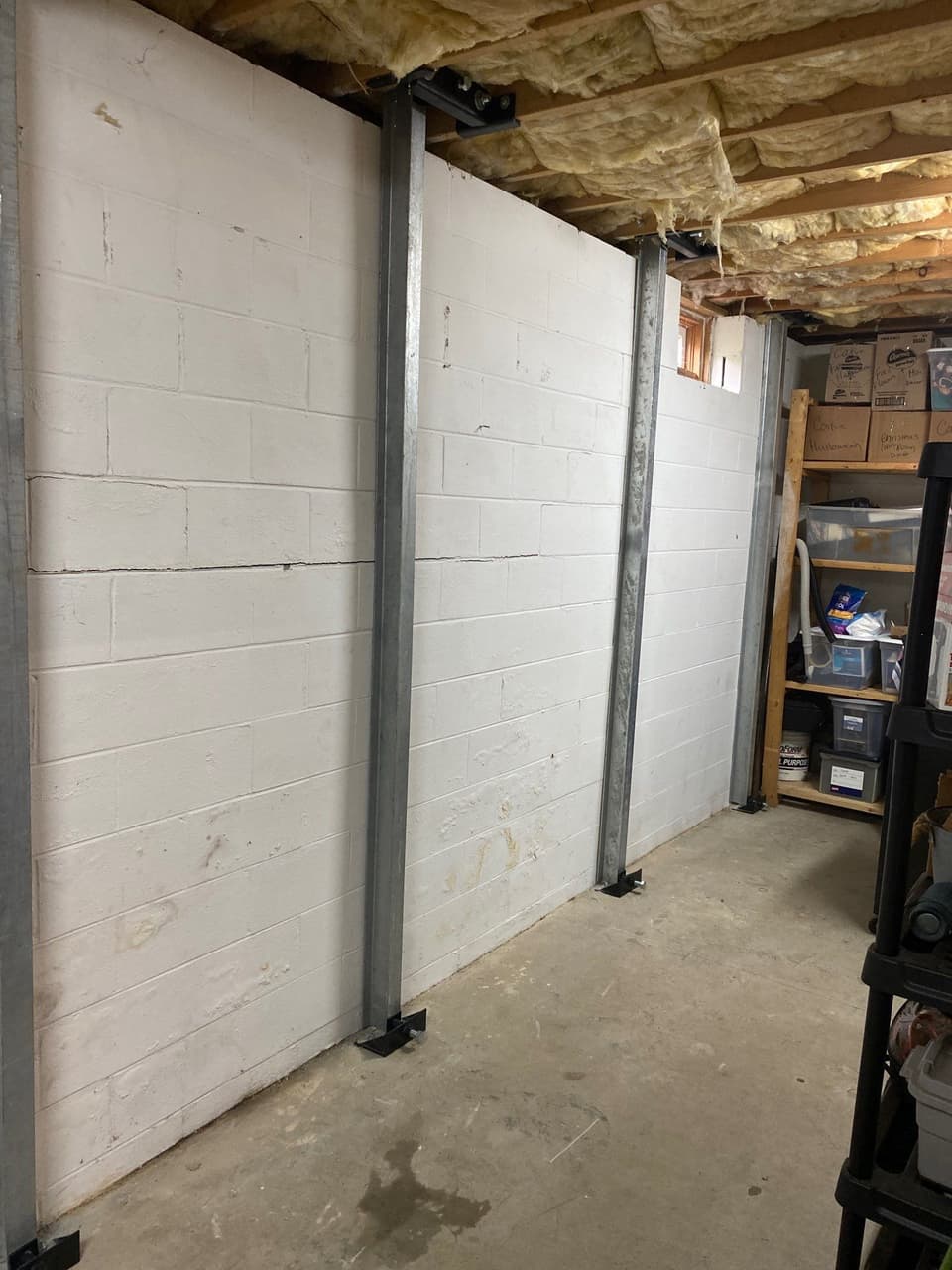
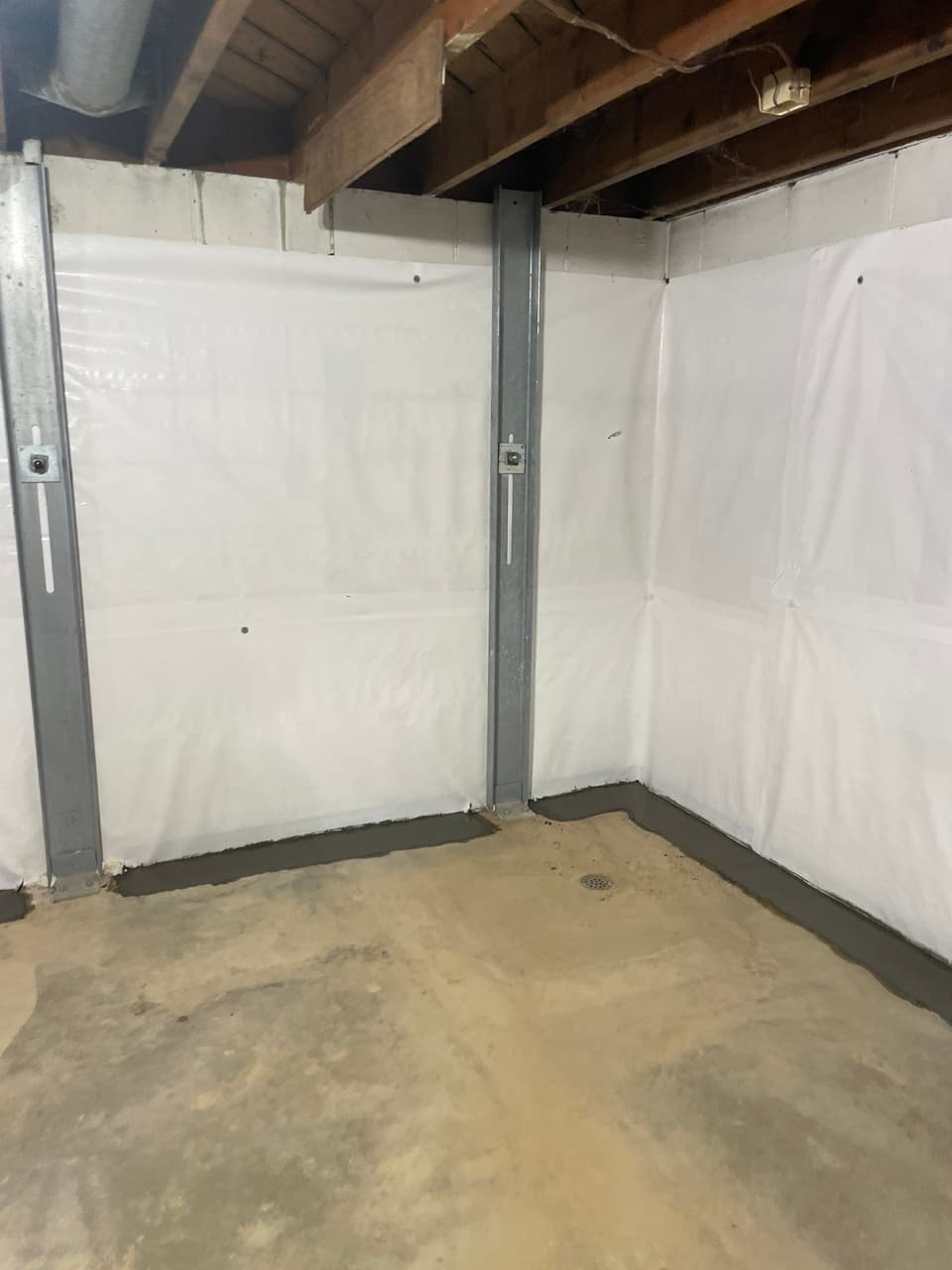
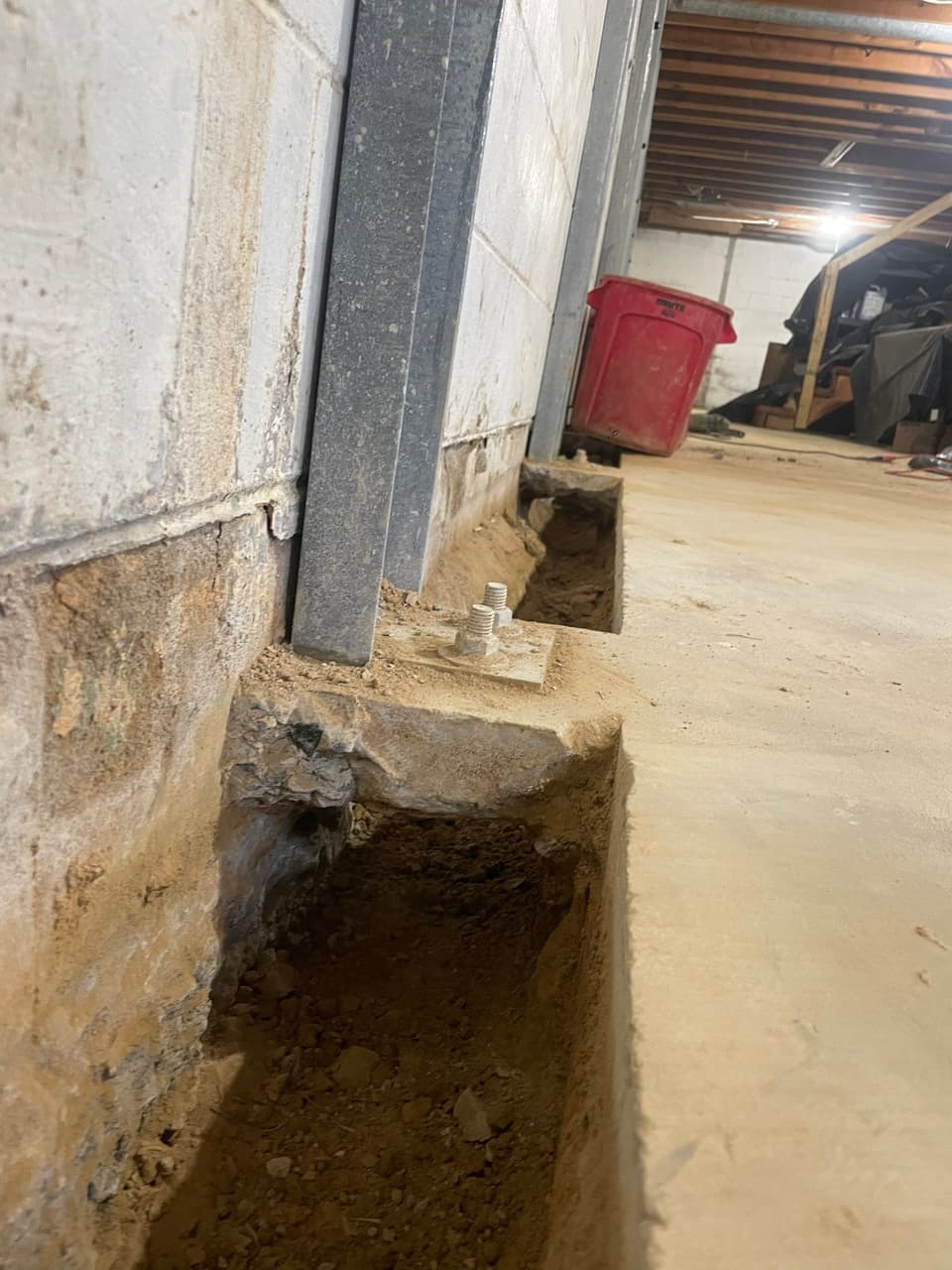
Steel I-beams are positioned vertically against the inside face of the wall along the affected section, including any cracked block courses in the wall, spaced according to the wall height, the degree of movement, and the soil load. The base of each beam is anchored securely to the concrete floor slab, making the lower connection that will carry part of the sideways force.
Tie the Beams Into the Floor Framing Above
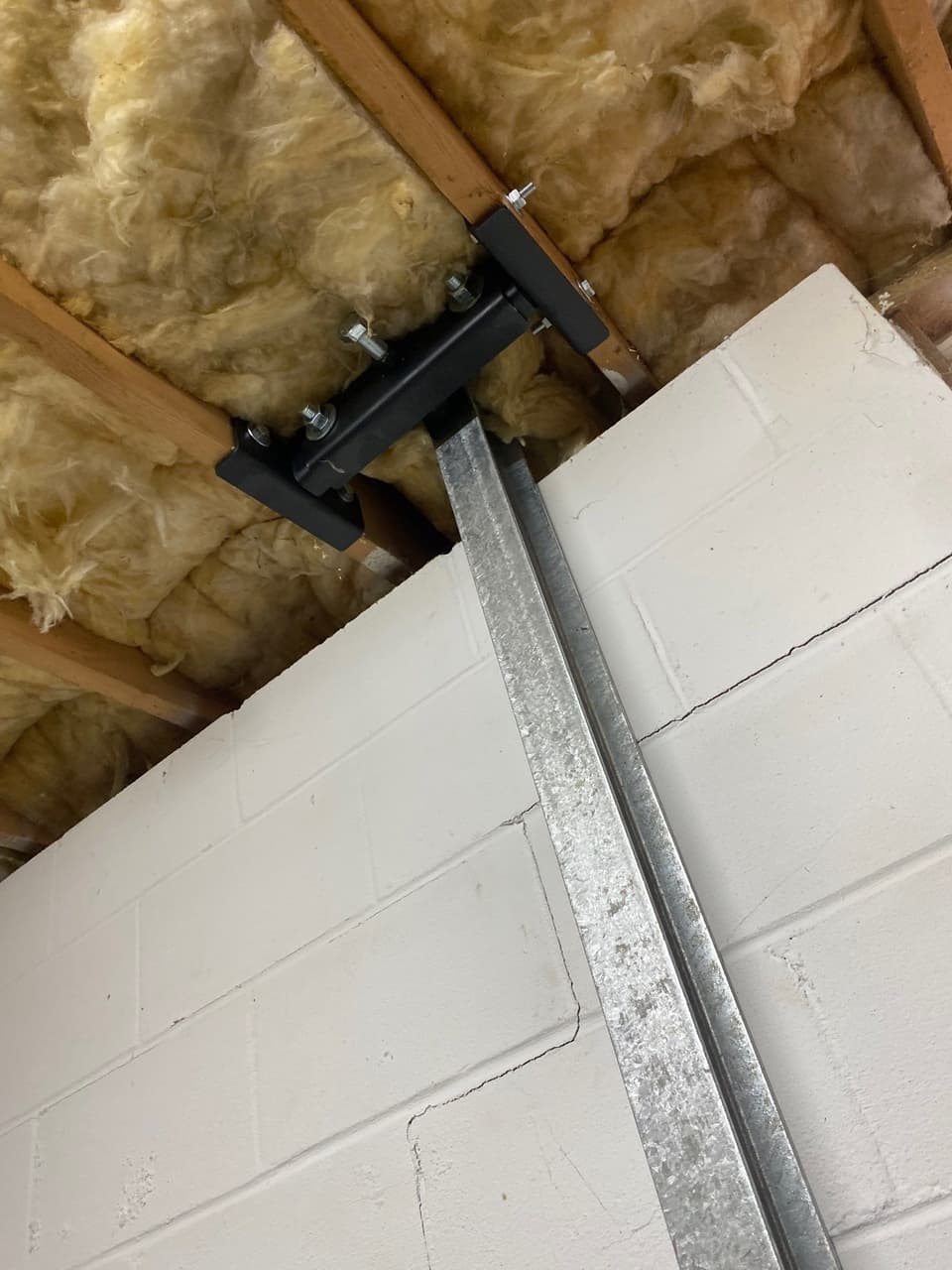
The top of each beam is connected to the floor joists or a structural member overhead, completing the load path so the pressure on the wall is transferred into the framing of the house. With both ends anchored, the beams engage and hold the wall against the soil load, stopping the inward movement.
Review the Result and How Water Reaches the Wall
We review the braced, stabilized wall with you and explain what comes next. Sideways pressure is often driven by water in the soil, so we go over what the inspection found about how water reaches the foundation. You get a clear picture of the cause, the repair, and what it does.
How Does I-Beam Bracing Hold a Bowing Basement Wall?
Steel I-beams stand against the inside face of the wall, anchored to the floor slab at the bottom and tied into the floor framing at the top. The beam gives the wall a rigid backstop, so the load that was bending it inward is carried by the beam.
I-Beam Wall Bracing on Our Job Sites
Photos from our own crews and projects. Swipe or use the arrows to see more.
Care and Expertise From a Team Serving the Carolinas Since 2017
When the fix is I-beam wall bracing, our own crews do the work. HydroHelp911 handles foundation repair and related structural and moisture work across North and South Carolina.
An inspector looks at your home, finds the source of the problem, and explains each finding in plain language. There is no obligation.
We are headquartered in Dallas, North Carolina, with eight offices across North and South Carolina.
Foundation repair, crawl space repair and encapsulation, basement waterproofing, framing repair, and concrete leveling are the whole focus of the team.
We have 1,300+ verified Google reviews (4.9 stars) from homeowners across the Carolinas and are BBB A+ Accredited.
For example, helical and push piers carry a lifetime warranty that no additional settlement will occur in the area of installed piers, once the final invoice is paid in full. Read the warranty terms.
Ask your inspector about financing when you get your written estimate. See financing options.
Common Questions About I-Beam Wall Bracing
Don't see your question here? Call or fill out our quick online form, and our team will help.
I-beam wall bracing uses steel beams installed vertically against the inside face of a bowing or leaning basement wall. Each beam is anchored to the floor slab at the bottom and tied into the floor framing at the top, which gives the wall a rigid backstop along its height. The beams resist the sideways pressure from the soil that is pushing the wall inward, stopping further movement and holding the wall in place. Because the work is done from inside the basement, it does not require digging up the yard behind the wall.
Which Foundation Repair Problem Signs Can I-Beam Wall Bracing Help With?
A sign can trace to more than one cause. These are the foundation repair signs that can point to a cause this method addresses; the inspection shows which cause is at work in your home.
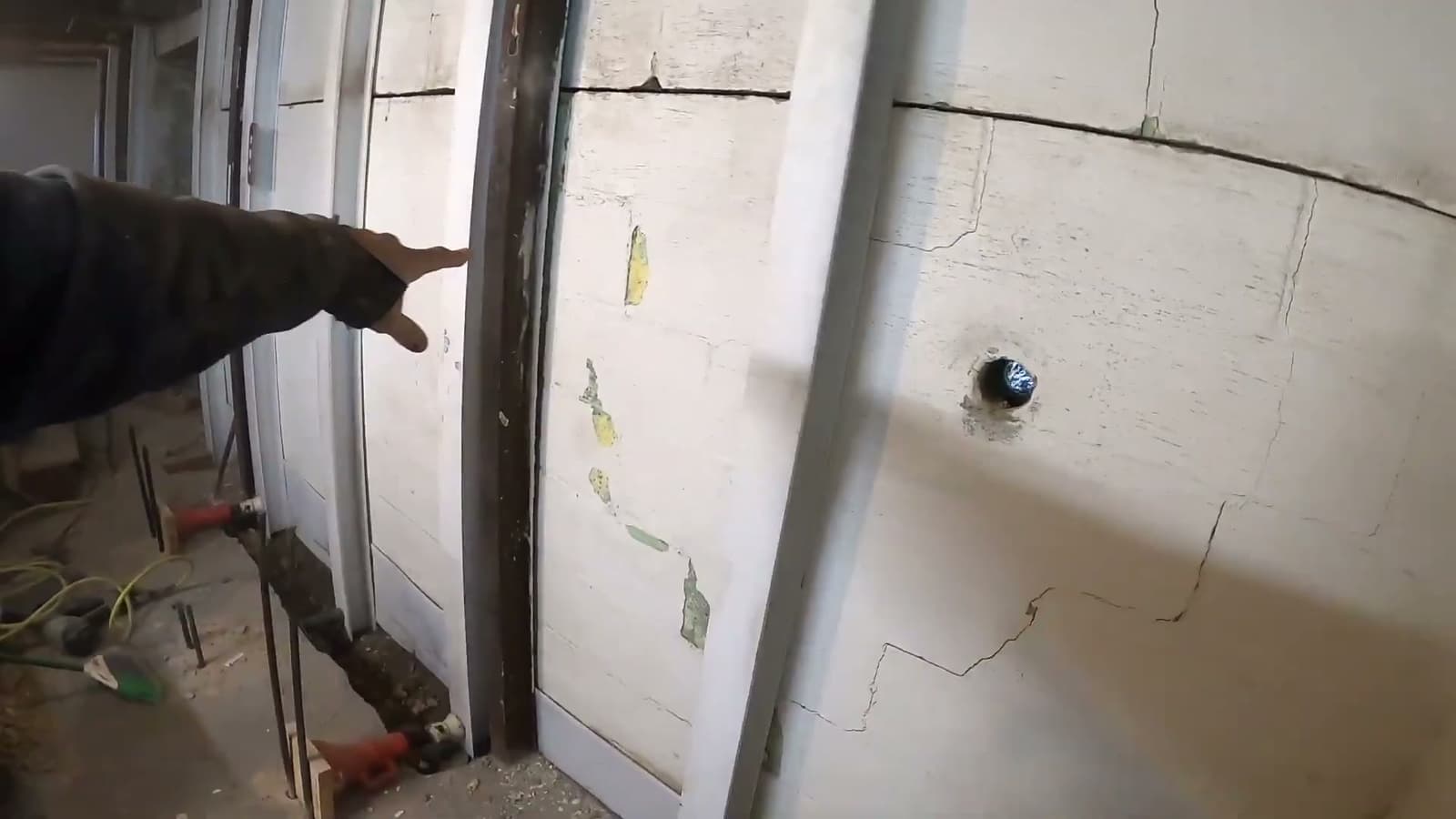
Bowing Walls
When a basement or foundation wall curves, leans, or bulges, the soil outside is pushing harder than the wall was built to resist.
Learn More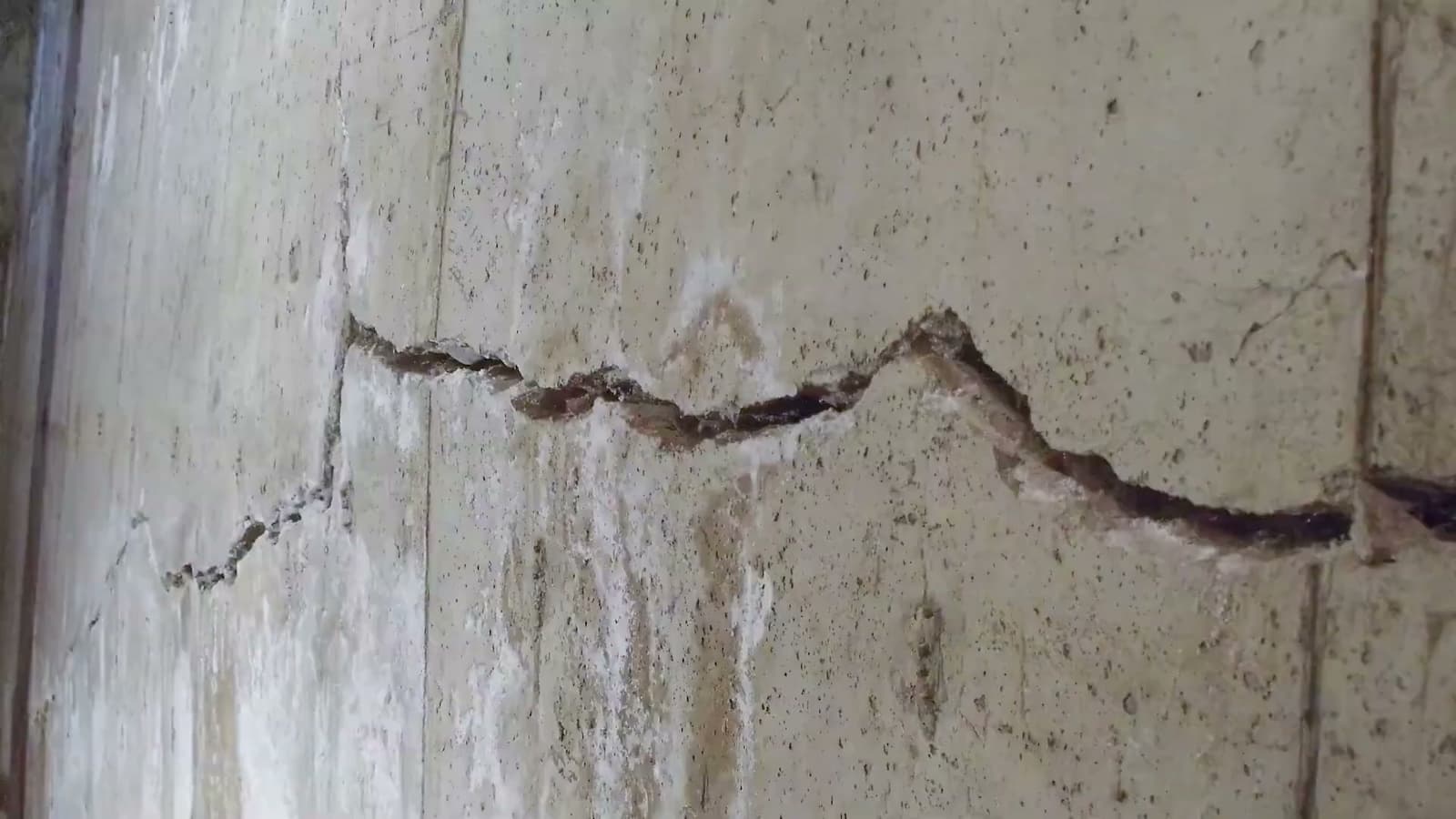
Large Cracks From Shifting or Water Pressure
A wide or growing crack is often more than a surface flaw.
Learn More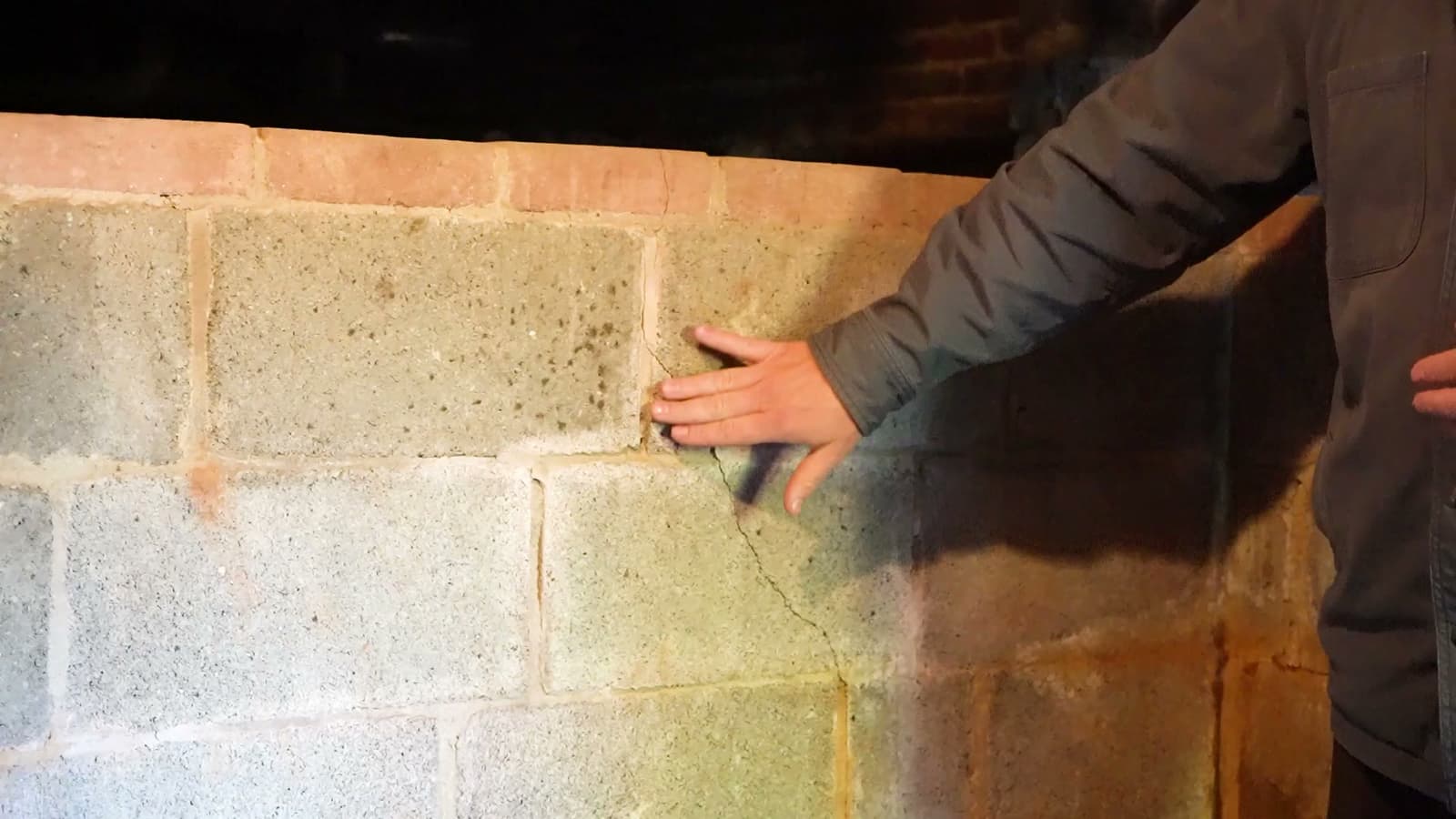
Cracked Block Foundation
When a concrete block foundation cracks, the wall is telling you that either the footing beneath it has settled or soil outside it is pushing inward.
Learn MoreExpansive Soil
Expansive soil changes volume as it gains and loses moisture. When that movement is uneven, it can lift, drop, and rack a foundation.
Learn MoreOther Foundation Repair Solutions We Install
Each solution fits a different cause. The inspection shows which one your home needs.
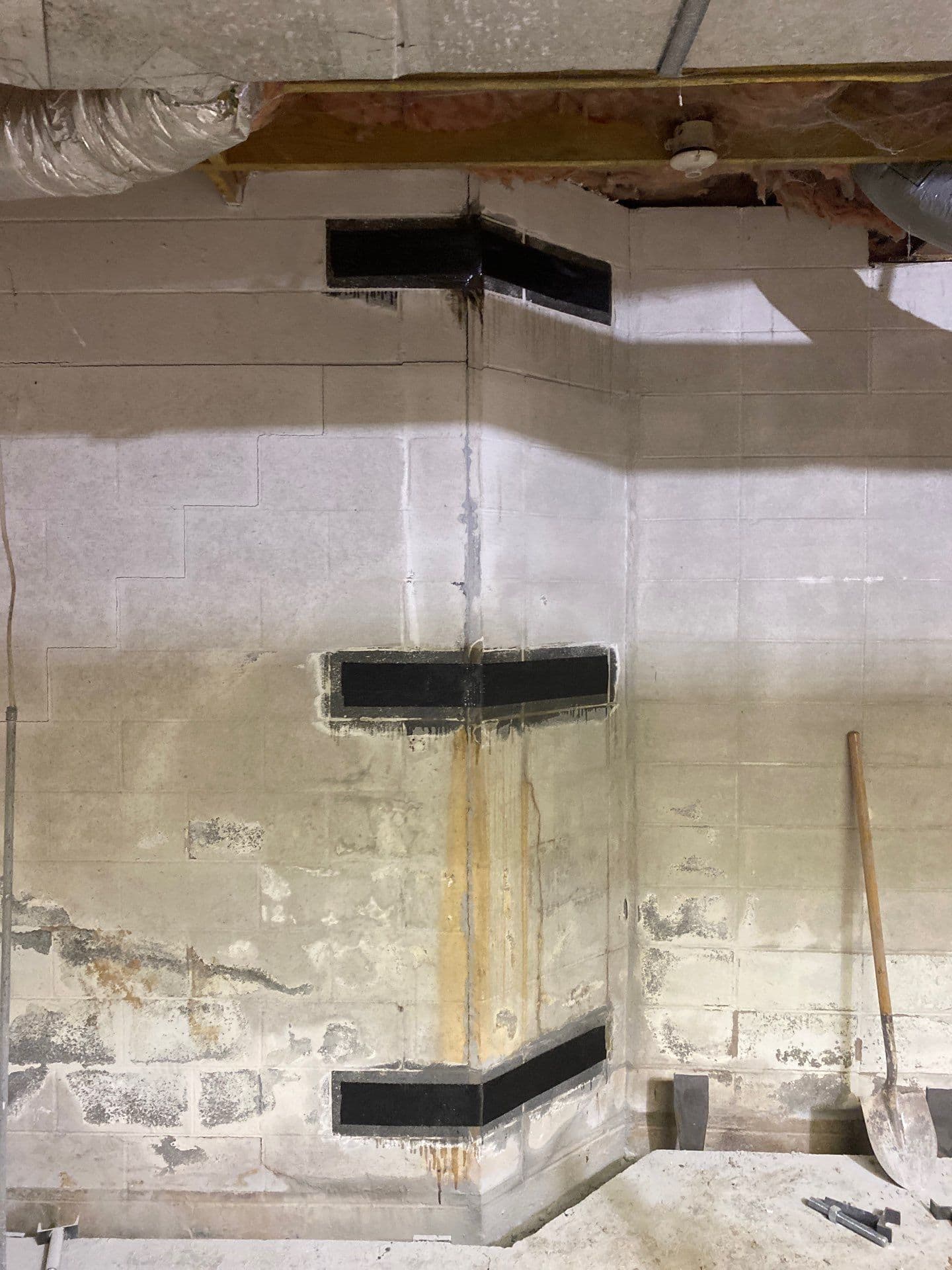
Carbon Fiber Reinforcement
When soil and water pressure starts pushing a foundation wall inward, carbon fiber straps bond to the wall and resist that load, a slim repair for minor to moderate bowing.
Learn More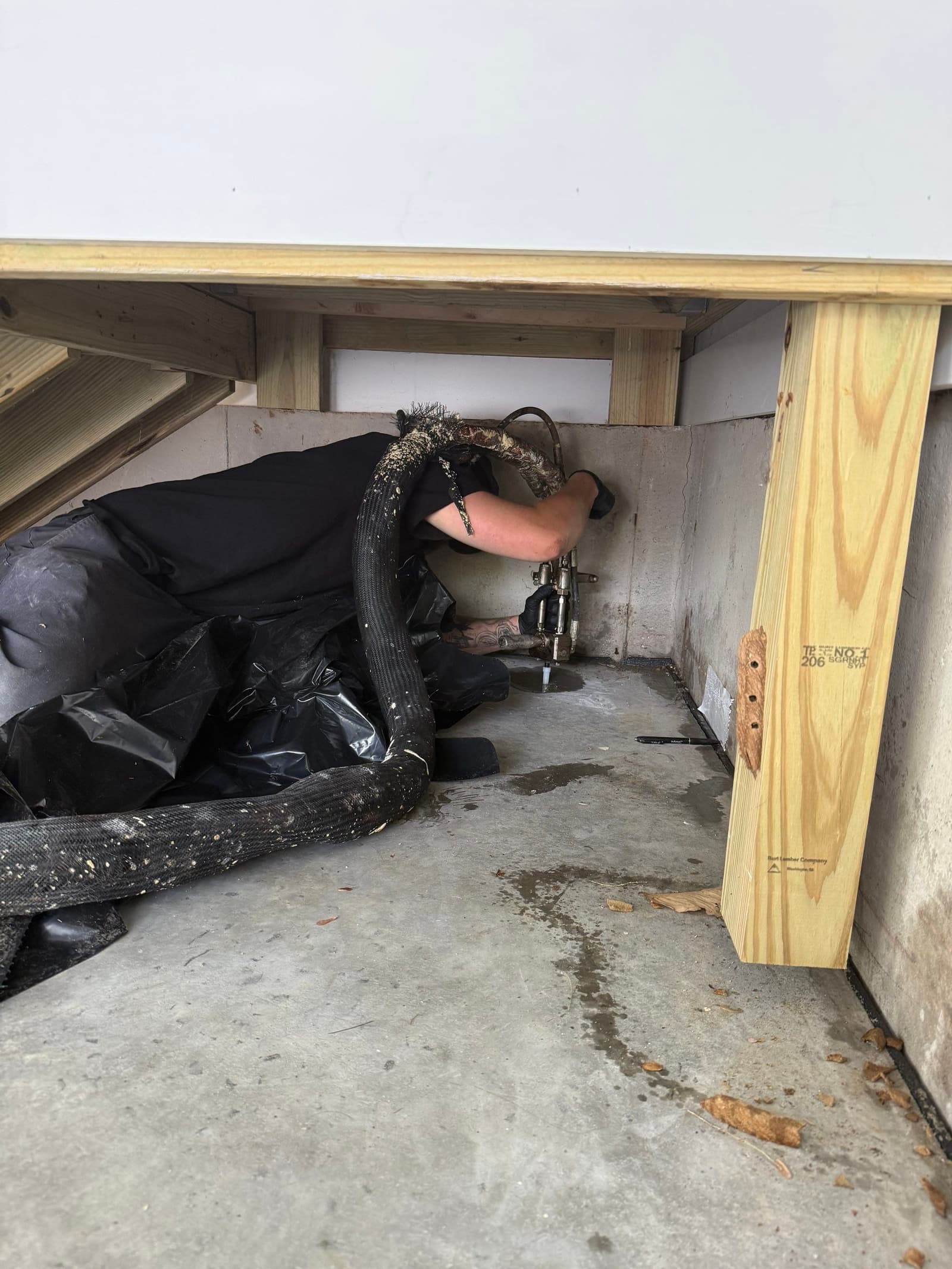
Epoxy or Polyurethane Crack Injection
A targeted way to seal cracks in poured concrete foundation walls and stop water seepage, paired with a careful look at what caused the crack in the first place.
Learn More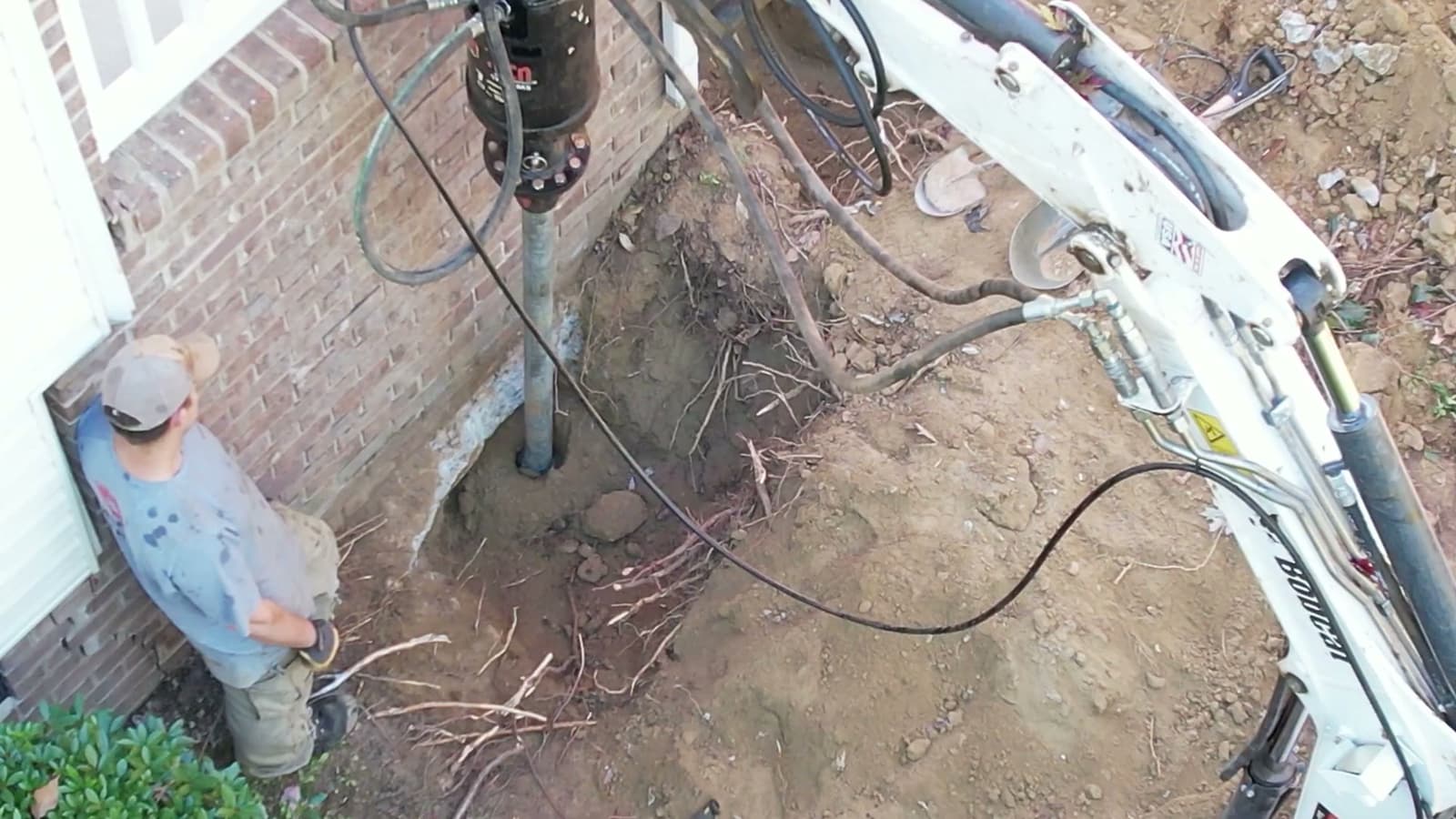
Foundation Underpinning
When the soil near the surface can no longer carry your foundation, underpinning reaches deeper ground to stabilize the structure.
Learn More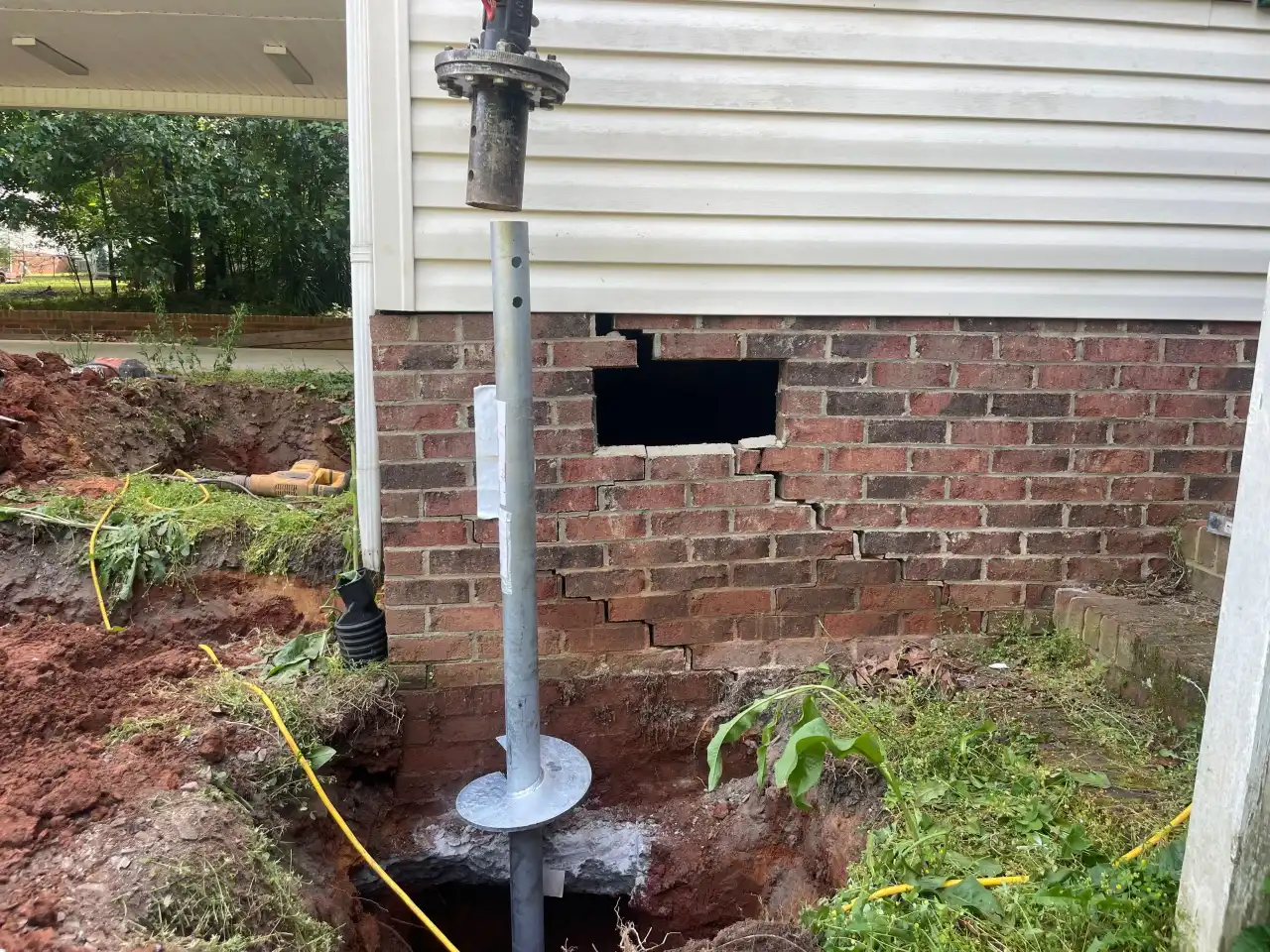
Helical Piers
Steel piers shaped like large screws, turned down below the active surface soil to support and, where possible, lift a settling foundation.
Learn MoreDeep Foundation Systems
When the soil near the surface keeps moving, we install piers that carry your home's weight down to ground that holds, and only after a free inspection.
Learn MoreGrout Injection (Chemical Grouting)
A targeted way to fill voids and firm up weak or shifting soil under foundations and slabs, so settlement has less room to continue.
Learn MoreGuides and Answers
More Reading on Foundations
An article from our team about foundations and the repairs we make.
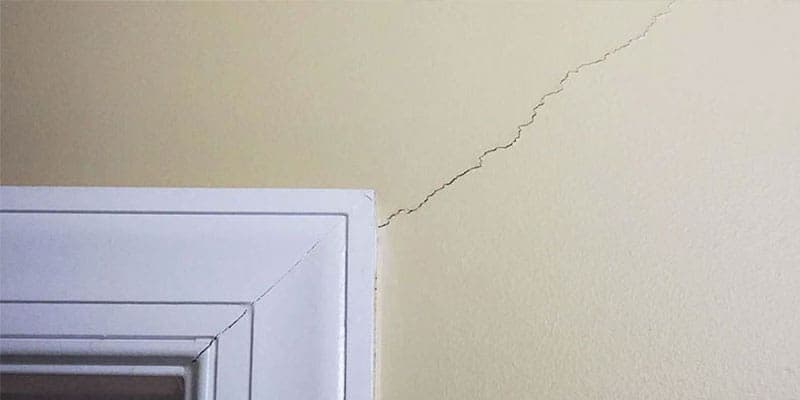
Foundation Crack Repair
Foundation Crack Repair Methods
The best foundation crack repair method depends on the crack: epoxy for dry, stable cracks, polyurethane for leaks, carbon fiber for bowing walls and piers for settlement.

Get the Free Foundation Repair Guide
A free guide for homes in North and South Carolina: what can move a foundation here, the signs worth writing down, and how foundation repairs work, in plain language.
- A room by room checklist to walk your home with
- Why foundations move in Piedmont clay, on hillsides and near the coast
- How piers, wall anchors and other repairs work
- Five questions worth asking any contractor, including us
1,300+ Verified Google Reviews (4.9 Stars)
Before you choose a contractor for I-beam wall bracing, read how homeowners across North Carolina and South Carolina rate our work.
How Do I Book a Free Inspection?
Pick your own time online, or fill out our quick online form and we will book a convenient time to assess your home, no cost, no pressure.
- A free inspection of your home
- Every finding explained in plain language
- A written estimate at no cost
- No obligation
Not Sure Which Service You Need?
A free inspection covers all of it: one visit, clear findings, and a written estimate at no cost.