Concrete Leveling · Problem Signs

Tripping hazards from misaligned concrete: what they mean, why they happen in the Carolinas, and how they get leveled

A raised or sunken slab edge along a walkway, driveway, or patio is rarely a concrete defect. The soil under the slab moved, and the concrete followed it. Here is how to read that, and what a no-pressure inspection looks at before any repair.

North Carolina · South Carolina BBB A+ Rated

Let's take the first step toward a healthy home.

A local specialist will inspect your foundation, walk you through the findings, and send a clear estimate. no cost, no pressure.

Book instantly with Driive
BBB Accredited
Fully Insured
"By Your Side" Guarantee
What this symptom means

Tripping Hazards: diagnosed and explained.

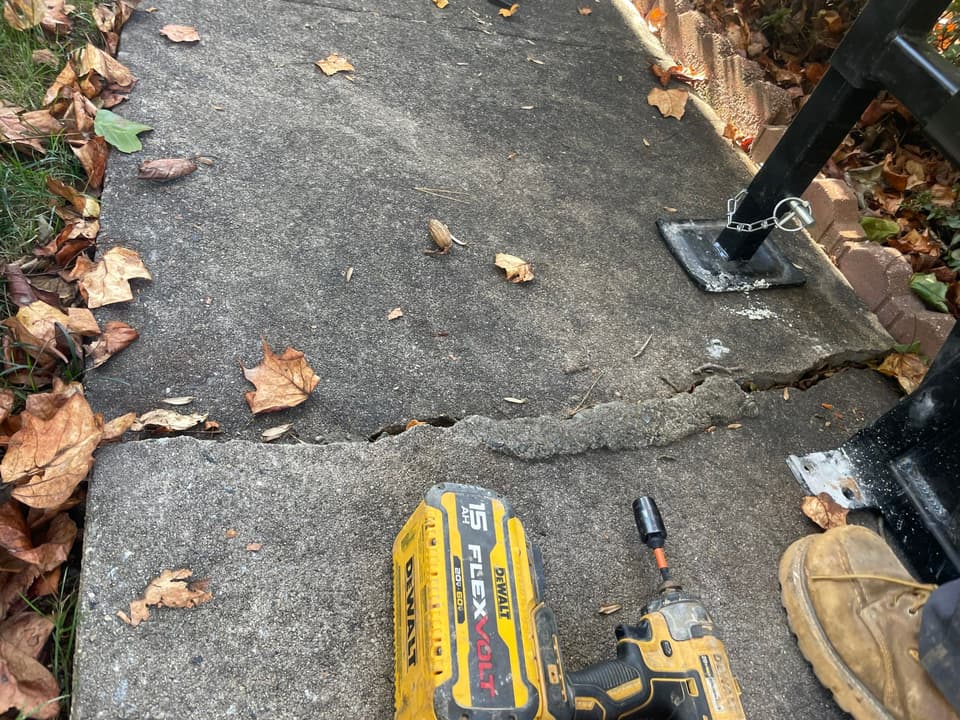
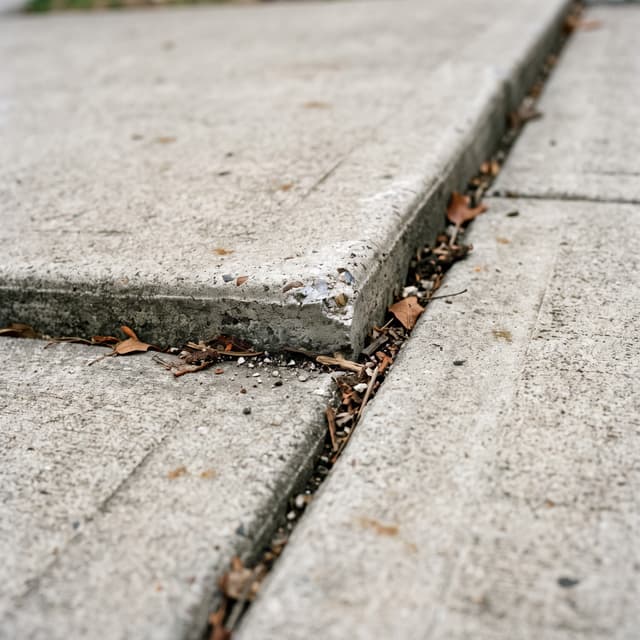
A tripping hazard from concrete is a spot where one section of flatwork has shifted out of plane with the section next to it, creating a raised or dropped edge a foot can catch on. It shows up most often where two slabs meet: a sidewalk panel that has lifted above its neighbor, a driveway section that has dropped at the seam, a patio square that sits proud of the one beside it, or a garage apron that has settled below the floor. Flatwork like walkways, driveways, patios, porches, and pool decks is poured directly on grade, so it depends entirely on the soil beneath it to stay aligned. When that soil compacts, washes out, swells, or shrinks, the slab loses even support and tilts or settles, and the offset at the joint becomes the lip people trip over. The concrete itself is usually still sound. What has changed is the support underneath, which is why a trip hazard is a symptom of a soil condition rather than a concrete failure. Because the cause sits below the surface, the reliable way to know what is driving it is a concrete inspection that reads the slab and the soil together, checks the direction of the displacement, and looks at drainage before any repair is recommended.

Catch It Early

Signs that often show up with concrete trip hazards

01

A raised or dropped edge at a joint

Where two slab sections meet, one sitting higher or lower than the other creates the lip people catch a foot on. Offset joints on sidewalks, driveways, walkways, and pool decks are the clearest sign that one section has settled or heaved out of alignment with its neighbor.

02

An offset that keeps growing over time

A lip that was barely noticeable a year ago and is now an obvious step usually means the underlying soil is still moving. A displacement that widens season to season points to an active cause worth having evaluated rather than waiting.

03

Pooling water next to the displaced section

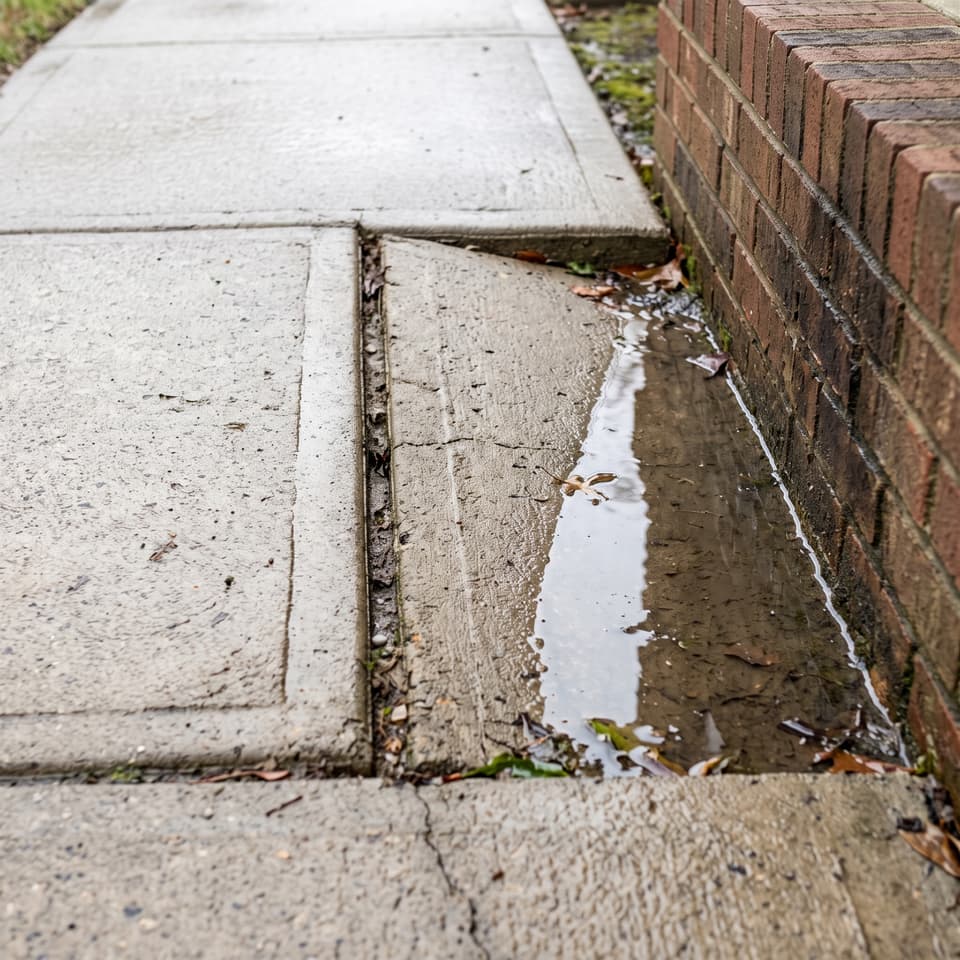
Water collecting where the surface used to drain often appears alongside a settled section, because the slab has dropped below its original grade. Standing water is both a sign of the movement and a contributor, since it can keep working soil out from under the concrete and deepen the offset.

04

Cracks running near the misaligned edge

When a slab loses support across part of its span, the unsupported area can crack as it flexes under load. Cracking that lines up with a raised or dropped edge often reflects the void beneath the slab rather than ordinary surface wear.

05

A slab that rocks or a noticeable dip underfoot

A walkway panel that rocks slightly when stepped on, or a driveway that dips toward the seam, signals uneven support below. These point to the same soil movement that produced the trip edge, even where the lip itself is small.

Most Common Causes

What causes tripping hazards in Carolinas homes.

Soil compaction and consolidation under the slab
Concrete poured over soil that was never fully compacted keeps settling as that loose ground consolidates under its own weight and foot traffic. Backfill placed against a foundation during construction is frequently the least compacted soil on the property, so walkways, porches, and steps poured over it tend to drop first, opening an offset where they meet a fixed structure. Driveways and patios built on a filled and leveled pad settle the same way as the fill compacts, often within the first years after the home is finished, leaving one section lower than the next.
Seasonal clay swell and shrink in Piedmont soils
Across the Piedmont, including Charlotte, Huntersville, Matthews, Greensboro, Winston-Salem, and the Triangle, the soil is clay-rich. Clay absorbs water and swells during wet seasons, then contracts as it dries through the summer. That repeated swell-and-shrink cycle lifts and drops slabs unevenly and opens voids beneath them, so adjacent sections end up at different heights. A panel that rises in a wet spring and does not fully return in the dry season can leave a standing trip edge at the joint.
Water erosion and washout beneath the slab
Water moving under or alongside flatwork carries away the fine soil particles that support it, leaving voids the slab then drops into. A downspout draining against a sidewalk edge, splash-out around a pool deck, or runoff across a sloped lot near Asheville can all wash out the subgrade over time. When one section loses its support and its neighbor keeps theirs, the difference in height between them is the hazard. This is the cause homeowners often suspect where a slab has dropped near a downspout or along a drainage path.
Tree roots and localized heaving
Roots growing beneath a sidewalk or patio section can push that slab upward, lifting one panel above the next and creating a raised lip even when nothing has settled. Unlike a slab that dropped, this is the concrete being heaved up. An active root may keep pushing, so the offset can grow, which is something an inspection identifies so the right approach can be chosen rather than simply grinding the edge down.
Sandy soil movement in the Sandhills and on the coast
In the Sandhills near Fayetteville and Pinehurst, sandy soils drain fast and shift under load differently than Piedmont clay, and fines can wash out as water moves through them, loosening the support below a slab. Along the coast near Wilmington, Leland, and Brunswick County, a high water table and saturated, sandy soils create their own movement that reduces the ground's ability to hold a slab in plane. The misalignment here traces to water saturation and shifting sandy ground rather than clay shrink-swell.
Permanent Solutions

How concrete leveling specialists actually fix tripping hazards.

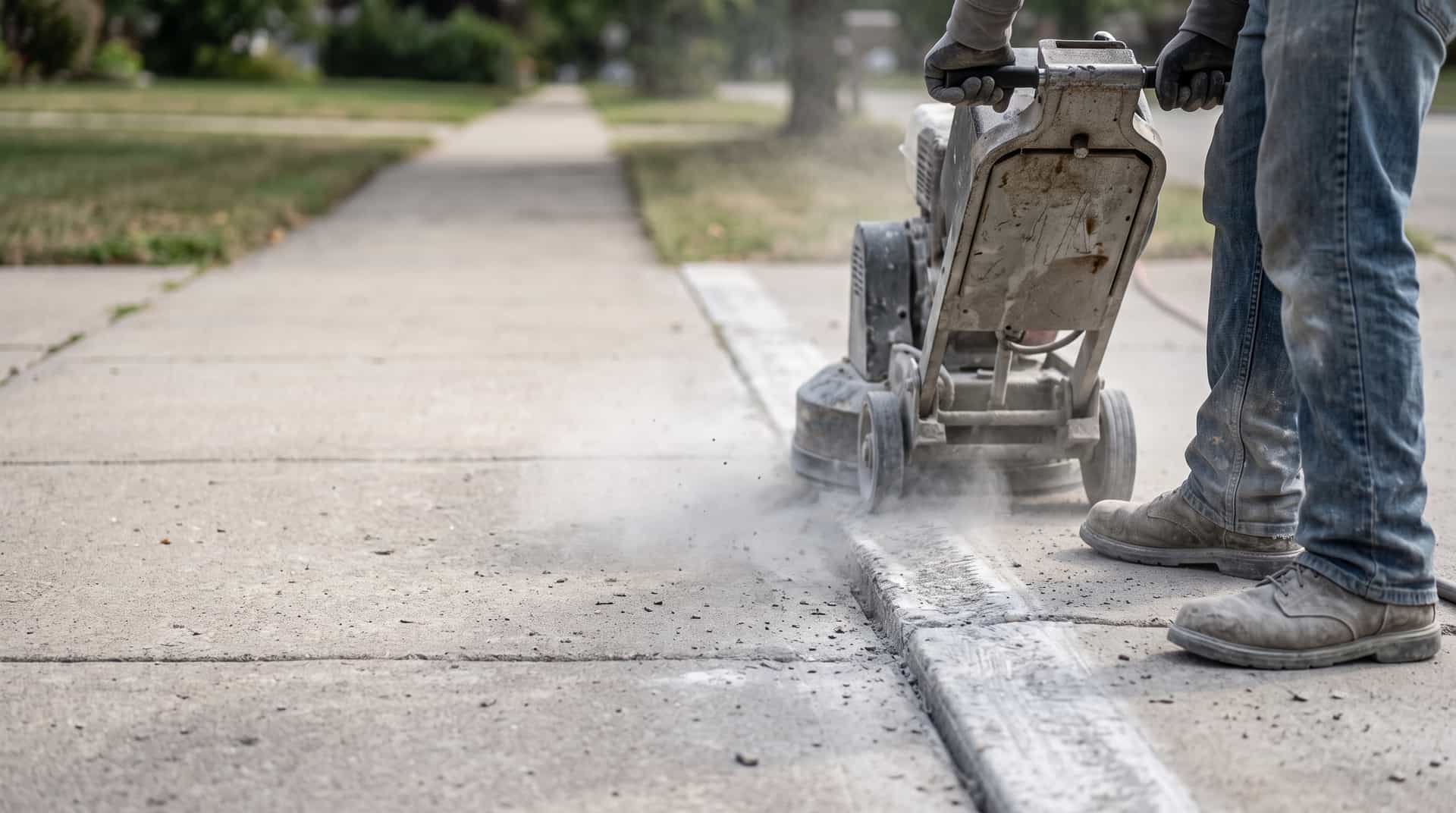
Solving tripping hazards means addressing the underlying soil, pressure, or settlement cause. Not just patching the visible damage. Below are the engineered solutions we install most often for this symptom in Carolinas homes.

Concrete Leveling solutions
Related Solutions

Engineered concrete leveling solutions for this problem.

Each method is matched to a specific failure mode and soil profile. Browse the toolkit we draw from when diagnosing your home.

Regional Context

Why settled concrete across the Carolinas returns without a soil fix

Most settled driveways, sidewalks, and patios across our markets sit over soil that gave way after water reached it. In the Piedmont, clay subgrade shrinks back from a slab during dry spells and leaves it unsupported. In the Sandhills and along the coast, sandy soil erodes and consolidates under the concrete after heavy rain or a long-running downspout. Lifting the slab without treating that soil column lets it settle again within a season or two. Our team levels the concrete and addresses the soil under it, not just the surface elevation.

Piedmont
Clay-rich soil belt
Charlotte to the Triad
Wet / dry
Seasonal moisture swing
Soil expands, then contracts
Coastal
High water table & salt air
Wilmington & Brunswick County
NC + SC
Local, no-pressure crews
Offices across the Carolinas

Piedmont clay and the crack patterns it produces

Much of the Piedmont, from Charlotte through the Triad, sits on clay-rich soil that holds water. Clay absorbs moisture in wet seasons and swells, then contracts in dry periods. That cycle pulls pressure on and off a foundation, pulling away from footings, creating voids beneath slabs, and producing the vertical and diagonal settlement cracks we see most frequently across the region.

Homes built on uncompacted clay backfill show the highest incidence of progressive settlement cracking in our inspection work. The same clay that looks stable through a normal year can move enough during a long wet spring or a hard summer drought to open a crack that keeps widening.

Coastal and Sandhills soils behave differently

In Wilmington, Brunswick County, and Leland, high water tables, saturated and sandy soils, and salt air drive a different set of failure modes than inland clay. Lateral water pressure, erosion, and corrosion are the drivers here, which is why coastal foundation and seawall work needs an approach that inland techniques don't account for.

Across the Sandhills near Fayetteville and Pinehurst, sandy soils drain differently again, and in the mountains around Asheville, hillside foundations, slopes, and heavy rainfall change the picture once more. We diagnose to the soil and climate of the specific home, not to the Carolinas generically.

"When someone calls about a trip hazard on their walkway or driveway, the first thing we do is figure out which section moved and why, because in our Carolina soils that is what determines whether the fix lasts. Most of the time the concrete is perfectly good and the dirt under one section settled or washed out. We fill that void, lift the slab back into line with the one next to it, and look at the drainage that let it happen. If a slab is too far gone to lift, we will tell you that too. No pressure, no upsell."
CP
Cory Parks
Owner, HydroHelp911
Why Choose HydroHelp911

Care and expertise from a team that does this every day.

HydroHelp911 is locally owned and operated, with crews dedicated exclusively to foundation, basement, and concrete work across the Carolinas.

Specialized expertise.

Foundation repair, waterproofing, and concrete leveling are our entire focus. not a sideline.

Locally owned and operated.

Deep experience with Carolinas soils, basements, and weather conditions.

BBB A+ rated.

Accredited with an A+ rating and thousands of homeowner reviews across the Carolinas.

Warrantied solutions.

Lifetime warranties available on many services, backed by the original installer.

HYDROHELP911

Why hire HydroHelp911.

MEET THE TEAM · 2 MIN
Frequently Asked Questions

Answers to common questions about Tripping Hazards.

Don't see your question here? Our team is happy to help. Reach out anytime.

Almost always because the soil beneath one section of the slab moved, not because the concrete failed. Flatwork is poured directly on grade, so it follows the ground below it. When loosely compacted soil consolidates, water washes out the subgrade, or Piedmont clay swells and shrinks with the seasons, one section settles or heaves while the one next to it stays put. The difference in height at the joint becomes the lip you trip on. A concrete inspection identifies which of these is at work on your slab.

Pricing ranges above are general estimates only and are not project quotes. A precise figure is provided on each written estimate after on-site inspection.
Related Problem Signs

Other concrete leveling warning signs to watch for.

If you see one, it's worth checking for the others. Most foundation problems show up as more than one symptom.

01

Broken Sidewalk

A broken sidewalk is a walkway whose panels have cracked, dropped, tilted, or lifted out of their original plane because the ground supporting them changed underneath. A sidewalk is flatwork, poured directly on grade in separate sections, so each panel relies entirely on the soil below to stay level and on the joints between panels to absorb small movement. When that ground swells, shrinks, washes out, or a tree root grows beneath it, a panel loses even support and either settles into the void or gets heaved upward, and the concrete cracks where it can no longer bridge the change. You might notice one section sitting lower than the next, a panel that has lifted into a raised lip at a joint, a crack running diagonally across a slab, or a stretch of walk that now pitches toward the house. The concrete itself is often still sound. What moved is the support beneath it, which is why a broken sidewalk is usually a symptom of a soil condition or a root rather than a defect in the concrete. Because the cause sits below the surface, the reliable way to know what is driving it is a concrete inspection that reads the sidewalk and the soil together, checks the direction and pattern of the movement, looks at nearby trees and how water drains across the walk, and confirms the cause before any repair is recommended.

Learn More
02

Cracked Concrete

Cracked concrete shows up on the surfaces you walk and park on every day. You might see a thin line tracking across a garage floor, a crack splitting a driveway or sidewalk panel, a patio or porch slab breaking near a joint, or a hairline crack telegraphing through tile or flooring over an interior slab. Not every crack is a problem. Concrete shrinks as it cures, and a thin, stable hairline crack with both sides at the same height is often cosmetic. What matters is whether the crack appeared suddenly, is widening over time, has a vertical offset where one side sits higher or lower than the other, or shows up alongside a slab that has settled, tilted, or pulled away from the house. A crack is a symptom, not the root cause. The slab is reacting to what is happening beneath it, most often a void where the supporting soil has settled or washed out, drainage moving water under the concrete, or movement in the ground itself. Because the cause sits below the surface, the reliable way to know what is happening is to inspect the slab, check how it sits relative to the rest of the home, and evaluate the soil and drainage conditions around it. That is what a no-pressure inspection is for.

Learn More
03

Cracked driveway

A cracked driveway can look like one of several things. You might see a single line tracking across the slab, a web of fine surface cracks, cracks radiating from a low spot where the concrete has dipped, or a crack at a joint where one section now sits higher or lower than the next. Not every crack means trouble. Concrete is expected to develop some cracking as it cures and shrinks, and a thin, stable hairline crack with no height difference across it is often cosmetic. What matters is whether the crack appeared suddenly, is widening over time, has a vertical offset where one side sits higher than the other, or shows up alongside a section of the driveway that has clearly settled below grade. When those signs are present, the crack is usually the slab responding to what the soil beneath it is doing. The most common drivers across the Carolinas are seasonal clay movement, a poorly compacted or eroded subgrade, and tree roots growing under the slab and heaving it upward. Because the cause sits under the concrete where you cannot see it, the reliable way to know what is happening is a concrete inspection that reads the slab, the pattern and direction of the cracking, and the soil and drainage conditions around the driveway. That is what a no-pressure inspection is for, and it is how HydroHelp911 distinguishes a cosmetic crack from a slab that has lost its support.

Learn More
04

Cracked Garage Floor

A cracked garage floor is a slab-on-grade concrete floor that has fractured because the soil supporting it changed underneath, the slab moved, or the concrete shrank as it cured. Unlike a finished basement floor, a garage slab carries vehicle weight and is poured directly on grade, so it depends entirely on even support from the soil below. Some cracks are cosmetic. A thin, hairline crack that has not moved is often simple shrinkage from the concrete curing and rarely signals a problem. Other cracks matter more. When one side of a crack sits higher than the other, when a crack widens over time, or when a section of the floor has dropped, that usually means the soil beneath the slab settled, eroded, or lost support and the concrete followed it. You might notice a crack running across the floor with a lip you can feel, a corner of the slab that has sunk, a crack that has opened wider than it used to be, or a low spot where water now collects. Because a garage floor is flatwork resting on soil, a cracked garage floor is most often a symptom of a soil or moisture condition rather than a defect in the concrete itself. The reliable way to know which kind of crack you have is a concrete inspection that reads the slab and the soil together, checks whether the crack has displaced or is still moving, and looks at drainage before any repair is recommended.

Learn More
05

Uneven Concrete Slabs

An uneven concrete slab is a slab that has dropped, tilted, or shifted out of its original plane because the soil supporting it changed underneath. Flatwork like driveways, sidewalks, patios, porches, garage floors, and pool decks is poured directly on grade, so it relies entirely on the ground below to stay level. When that ground swells, shrinks, washes out, or compresses, the slab loses even support and follows the soil. You might notice one driveway section sitting lower than the next, a patio that now slopes back toward the house, a sidewalk panel that has lifted into a raised edge, or a garage floor that dips toward one corner. The concrete itself is usually still sound. What has moved is the support beneath it, which is why an uneven slab is a symptom of a soil condition rather than a concrete defect. Because the cause sits below the surface, the reliable way to know what is driving it is a concrete inspection that reads the slab and the soil together, checks the direction and pattern of settlement, and looks at drainage before any repair is recommended.

Learn More
Service Areas

Serving North Carolina & South Carolina.

Local crews based in offices across the Carolinas, dispatched daily. If your town isn't listed, call us. we likely serve your area.

Top cities we serve
Check Your Service Area
Our Process

Take the first step toward a healthy home.

A straightforward path from initial inspection to completed repairs.

Step 01

Schedule your inspection.

A local specialist visits your home, evaluates the foundation, and answers your questions on site. No cost, no obligation.

Step 02

Receive an estimate based on your needs.

We provide a clear, written estimate with a scope of work tailored to your home's specific issues. Typically within one business day.

Step 03

Get your repairs.

Our certified crews complete the work on schedule and back it with product warranties of up to 25 years.

Customer Reviews

Over 1,750 homeowners have shared their experience.

A 4.9-star average across Google, with verified reviews from homeowners throughout North and South Carolina.

Free Estimate

Two ways to start: book instantly, or request an estimate.

Schedule your inspection in seconds with our Driive booking tool, or share a few details and a local specialist will follow up within one business day.

What to expect
  • A local foundation specialist on site
  • A complete walk-through of the findings
  • A written estimate within one business day
  • No cost, no obligation, no high-pressure sales
Prefer to call
704-610-4399
North Carolina · South CarolinaBBB A+ Rated
HydroHelp911

Let's take the first step toward a healthy home.

A local specialist will inspect your foundation, walk you through the findings, and send a clear estimate. no cost, no pressure.

Book instantly with Driive
BBB Accredited
Fully Insured
"By Your Side" Guarantee
Our Locations

Local offices across the Carolinas.

See all service areas
Dallas, NC
HydroHelp911
111 Iron Station Rd
Dallas, NC 28034
704-610-4399
Huntersville, NC
HydroHelp911
14936 Brown Mill Rd Ste 9
Huntersville, NC 28078
704-610-4399
Matthews, NC
HydroHelp911
11145 Monroe Rd Ste 105
Matthews, NC 28105
704-610-4399
Asheville, NC
HydroHelp911
34 Wall St #805D
Asheville, NC 28801
704-610-4399
Wilmington, NC
HydroHelp911
201 N Front St Ste 214
Wilmington, NC 28401
704-610-4399
Greensboro, NC
HydroHelp911
1515 W Cornwallis Dr Suite 201-B
Greensboro, NC 27408
704-610-4399
Greenville, SC
HydroHelp911
7 Brendan Way #13
Greenville, SC 29615
704-610-4399
Columbia, SC
HydroHelp911
1122 Lady St Suite 208
Columbia, SC 29201
704-610-4399