A trained inspector (not a salesperson) will look at your home, explain what they find in plain language, and send a written estimate.
Foundation Repair · North and South Carolina
Leaning Chimney Repair That Stabilizes the Footing Underneath
A chimney pulling away from the house is usually a foundation problem, and that is where we start. Looking for a reliable foundation repair contractor? You're in the right place. Read on to learn more.
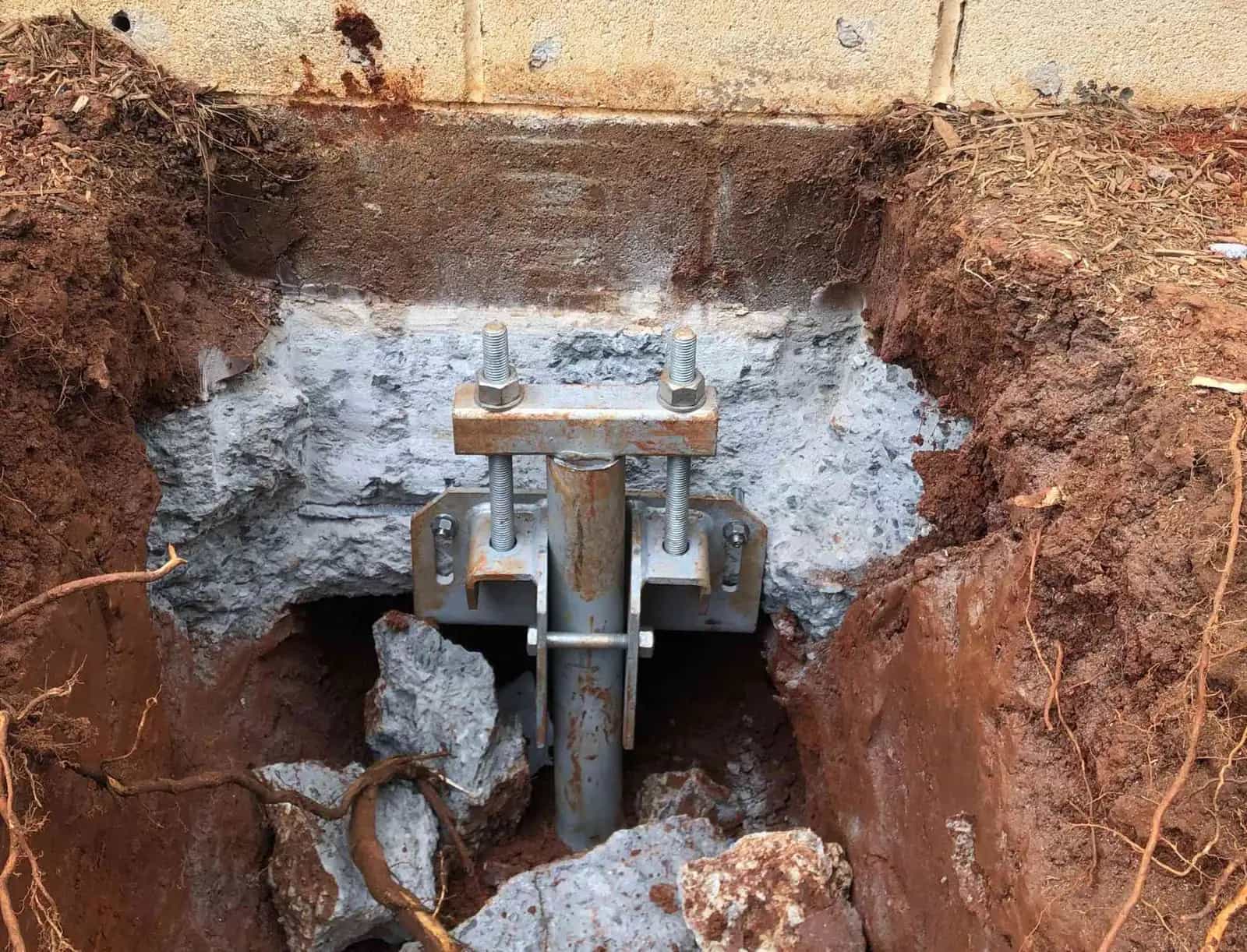
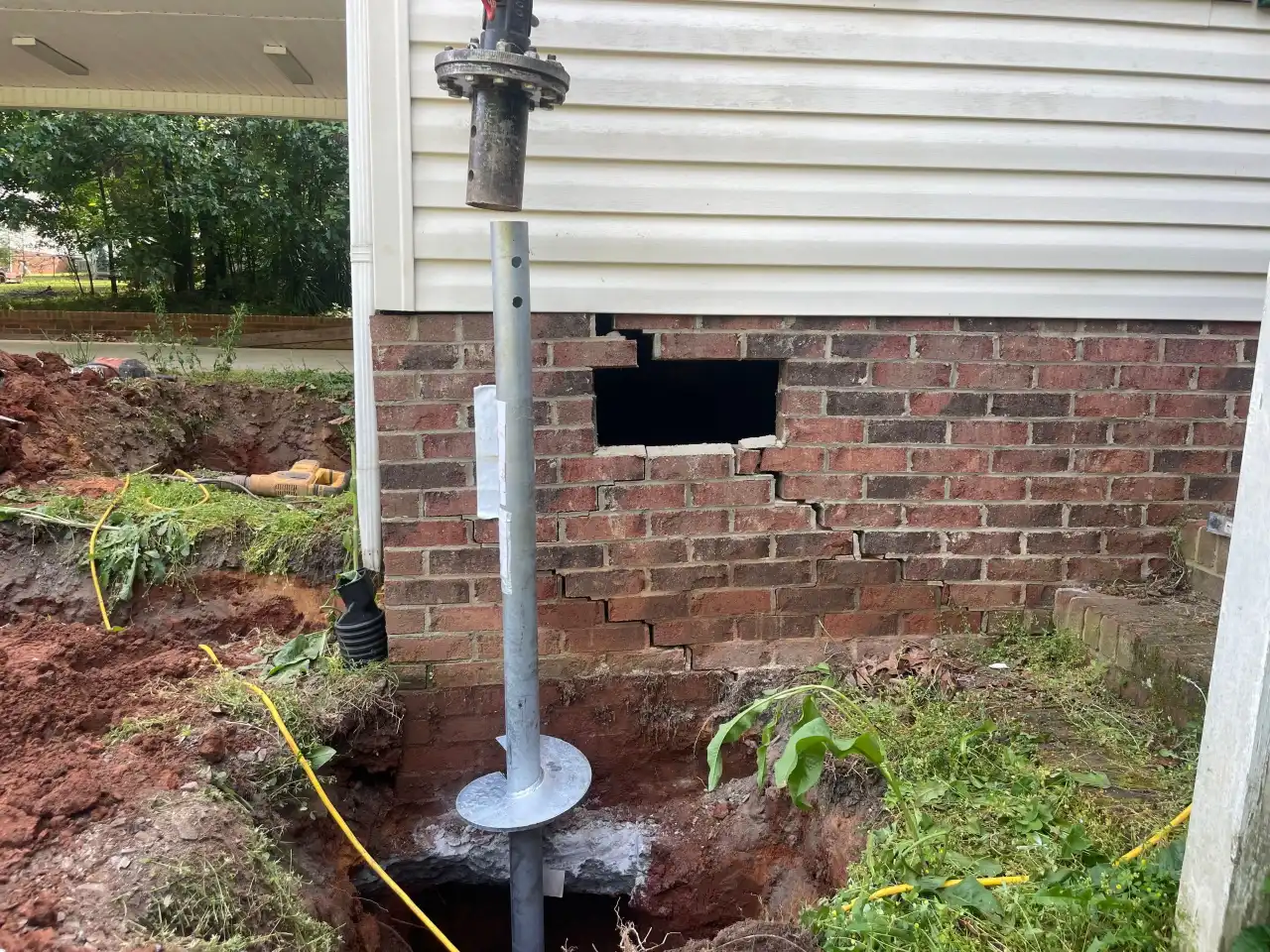
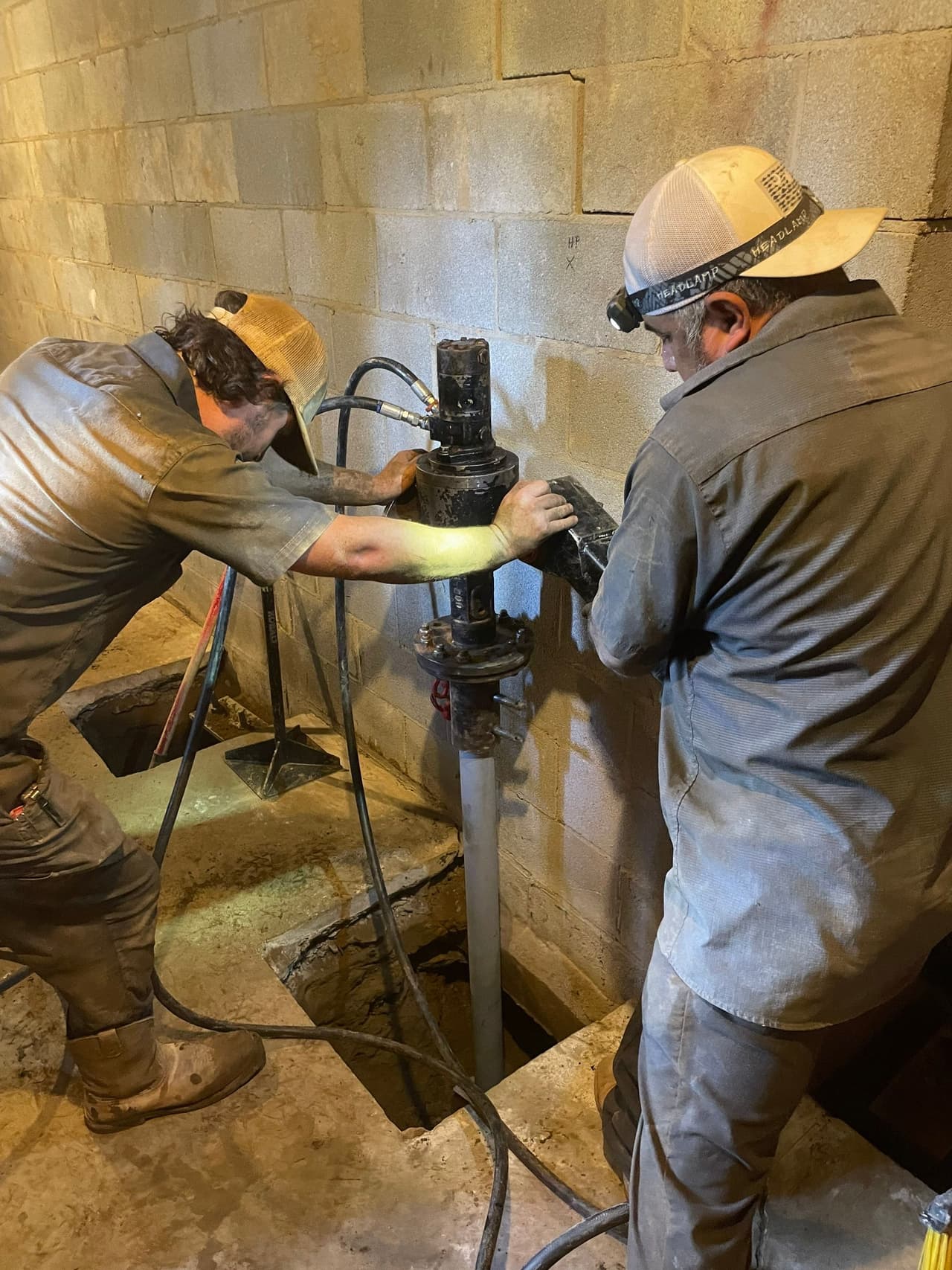
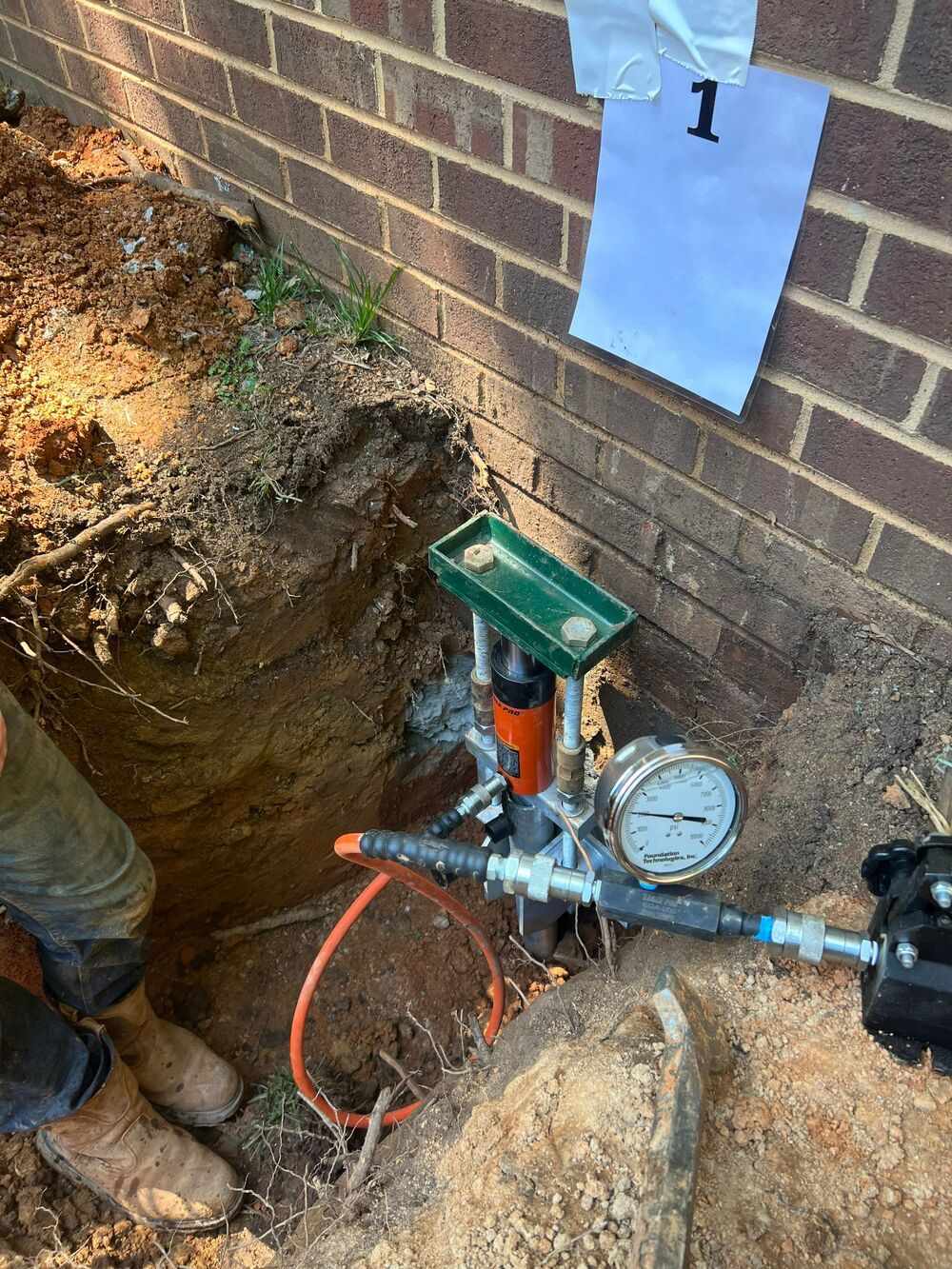
A masonry chimney is heavy and often sits on its own shallow footing, apart from the main foundation. When the soil under that footing settles or moves, the chimney tilts and can pull away from the house. We support the footing with helical or push piers, and once it is supported the chimney can often be brought back toward its original position.
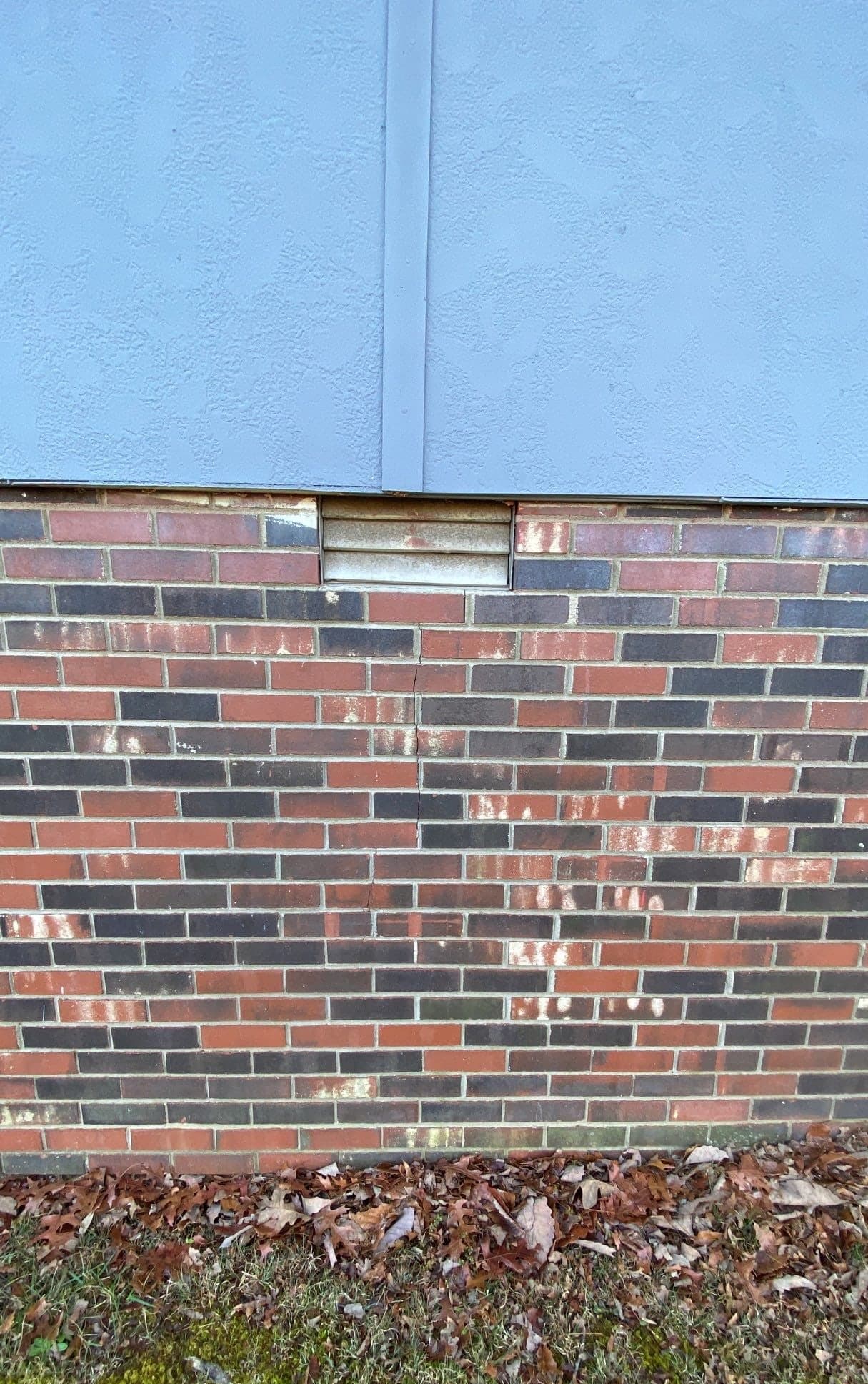
A gap at the siding, cracked brick or a visible tilt are the usual signs
Piers carry the weight of the chimney down to firmer soil
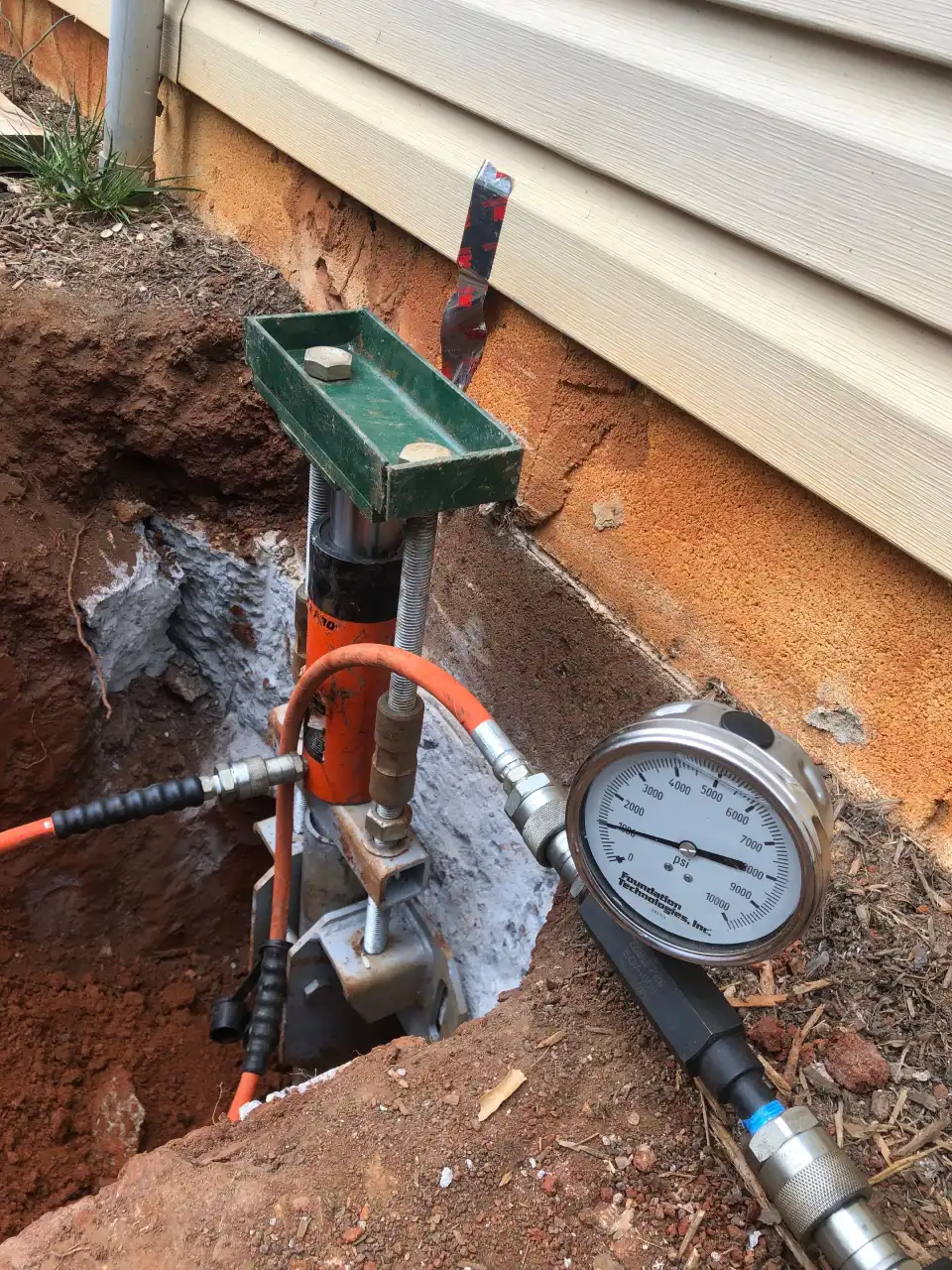
How much correction is possible depends on the chimney and how far it moved
A free inspection and a written estimate before any work
North Carolina · South Carolina
Get a Free Inspection
Two ways to start. Both are free, with no obligation.
The three signs below are the ones homeowners usually notice first. The inspection measures the lean and looks at the soil around the footing.
A chimney that leans or pulls away from the house usually has a footing that settled or moved with the soil under it. Here are three signs homeowners often notice and the repairs that may fit.
Open space where the chimney meets the siding or brickA Gap Between the Chimney and the House
A gap that is wider at the top can mean the chimney is tilting away from the house. Sealing the gap without supporting the footing hides the movement.
The chimney sits out of line with the wallA Visible Lean
A chimney that visibly leans is treated as a foundation question first, because its footing rides the same soil as the rest of the house. Piers under the footing can carry its weight down to firmer soil.
What a homeowner should understand about this repair, explained in plain language.
Would You Like the Guide by Email?
The Homeowner's Guide to Foundation Repair, sent free to your inbox.
Free Homeowner Guide
The Homeowner’s Guide to Foundation Repair
Why Carolinas homes move, a room by room checklist of the signs, and how repairs work.
HydroHelp911
North and South Carolina
Free Guide
Get the Free Foundation Repair Guide
A free guide for homes in North and South Carolina: what can move a foundation here, the signs worth writing down, and how foundation repairs work, in plain language.
A room by room checklist to walk your home with
Why foundations move in Piedmont clay, on hillsides and near the coast
How piers, wall anchors and other repairs work
Five questions worth asking any contractor, including us
Check your inbox
Your guide is on its way. If it has not arrived in a few minutes, check your spam folder, then add us to your contacts so the next one lands where it should.
A masonry chimney is heavy, and it often sits on its own shallow footing, separate from the main foundation.
When the soil under that footing settles or moves, the chimney tilts and can begin to pull away from the wall of the house.
In older homes built on Piedmont clay, in markets like Charlotte, Huntersville, and Greensboro, the seasonal shrink and swell of the clay is a frequent cause, because the chimney footing rides those moisture changes just like the rest of the foundation. That is why a chimney that leans away is treated as a foundation question first.
A gap opening between the chimney and the siding, cracked brick at the chimney, or a visible tilt are the signs homeowners usually notice first.
Why a Chimney Leans Away From the House
1A gap can open between the chimney and the house as the chimney leans.
2The chimney sits on its own footing, which can settle or tilt with the soil under it.
3Piers set under the chimney footing can reach firmer soil and carry its weight.
Once the footing is supported, hydraulic lifting can often bring the chimney back toward its original position. How much correction is possible depends on the chimney and how far it has moved.
CH 03
Helical Piers or Push Piers: Which Goes Under a Chimney?
Both carry the weight of the chimney down to firmer soil, but they install differently. Push piers are driven straight down using the weight of the structure as the force that pushes them, so they work best under heavier loads. Helical piers are screwed into the ground and can be a better fit for lighter structures or certain soil conditions. We choose based on the chimney, the soil, and the access around it.
CH 04
Does a Leaning Chimney Mean the Whole Foundation Has Problems?
We measure the lean, look at the soil around the footing, and explain what is happening before recommending anything. It starts with a free chimney and foundation inspection.
Why Choose HydroHelp911
Care and Expertise From a Team Serving the Carolinas Since 2017
HydroHelp911 handles foundation repair and related structural and moisture work across North and South Carolina. Every repair recommendation starts with a free inspection of the whole home.
01
Trained inspectors, not salespeople.
An inspector looks at your home, finds the source of the problem, and explains each finding in plain language. There is no obligation.
02
Locally owned in Gaston County.
We are headquartered in Dallas, North Carolina, with eight offices across North and South Carolina.
03
Serving the Carolinas since 2017.
Foundation repair, crawl space repair and encapsulation, basement waterproofing, framing repair, and concrete leveling are the whole focus of the team.
04
Rated 4.9 stars on Google.
We have 1,300+ verified Google reviews (4.9 stars) from homeowners across the Carolinas and are BBB A+ Accredited.
05
Written warranty terms.
For example, helical and push piers carry a lifetime warranty that no additional settlement will occur in the area of installed piers, once the final invoice is paid in full. Read the warranty terms.
06
Financing is available.
Ask your inspector about financing when you get your written estimate. See financing options.
Cory ParksOWNER & PRESIDENT
Three Quick Questions
Not Sure Leaning Chimney Repair Is What You Need?
Answer three quick questions about your home. We'll match what you see to the most likely cause and point you to the right next step.
1
Symptom
2
History
3
Your Result
Location: Foundation
What Are You Seeing in Your Foundation?
Pick the symptom that best describes it.
Frequently Asked Questions
Common Questions About Leaning Chimney Repair
Don't see your question here? Call or fill out our quick online form, and our team will help.
A chimney leans when the soil beneath its footing settles or shifts. Because chimneys are heavy and often sit on a shallow, separate footing, they are sensitive to soil movement. In the Piedmont, clay that swells and shrinks with the seasons is a common cause.
A chimney that is tilting or separating from the home is a sign the footing beneath it has moved, and it is worth having inspected. The inspection measures the lean, looks at the soil and footing, and explains what the chimney needs, so you can decide with the findings in hand.
In many cases, yes. Once the footing is stabilized with helical or push piers, hydraulic lifting can often bring the chimney back toward its original position. How much correction is possible depends on the chimney and how far it has moved.
Not necessarily for the whole house, since the chimney often has its own footing. But it is the same soil and moisture conditions at work, so it is worth checking whether the main foundation shows related signs during the inspection.
Most leaning chimney repair projects fall between $5,000 and $25,000. Cost depends on the size and weight of the chimney, the depth required to reach stable soil, the number of piers, and access around the chimney. We provide a written estimate after a free inspection, and financing options are available. These figures are example ranges, not a quote.
Every home is different, so every estimate is written for the home in front of us. A free inspection at your home gives you a written estimate at no cost, based on your scope, access, and conditions.
Example Pricing
How Pricing Works
Most leaning chimney repair projects fall between $5,000 and $25,000. Cost depends on the size and weight of the chimney, the depth required to reach stable soil, the number of piers, and access around the chimney. We provide a written estimate after a free inspection, and financing options are available.
Example ranges from the HydroHelp911 price sheet, shown for planning only. They are not a quote. Your price is set after a free inspection of your home and confirmed in your written estimate.
When Is This Not the Right Fix?
Sealing or caulking the gap between a chimney and the house is not a real fix when the footing is settling. The soil and footing have to be stabilized first, or the chimney keeps moving.
What Does the Free Inspection Include?
Your inspector explains every finding in plain language, and you get written documentation at no cost, typically an estimate with photographs.
Two ways to start. Both are free, with no obligation.