A trained inspector (not a salesperson) will look at your home, explain what they find in plain language, and send a written estimate.
Foundation Repair · North and South Carolina
Foundation Crack Repair That Addresses the Cause
A clear guide to what your foundation cracks mean in Carolinas soil, and how we seal them once we know what opened them. Looking for a reliable foundation repair contractor? You're in the right place. Read on to learn more.
Most foundation cracks come from concrete shrinking as it cures or from the soil moving under the footing. Thin vertical cracks are often cosmetic, while horizontal and stair step cracks often point to soil pressure or settlement. We find what opened the crack, then seal it with epoxy or polyurethane injection, or stabilize the movement first when the crack is a symptom.
Shrinkage, settlement, lateral pressure and stair step cracks each have a different cause
The four patterns below are common in foundation walls. Each one can have a different cause and a different repair.
Shrinkage cracks are thin vertical cracks left as concrete cures and dries. Settlement cracks are vertical or diagonal and vary in width, and they come from one section of the foundation moving more than the section beside it. Lateral pressure cracks run sideways near the outside soil line, where soil and water can push against the wall. Stair step cracks follow the mortar joints in block or brick. A free inspection identifies which pattern is on your wall and what may be causing it.
Shrinkage Cracks. Hairline, vertical, in poured concrete
Settlement Cracks. Vertical or diagonal, varying width
Lateral Pressure Cracks. Horizontal, near soil grade line
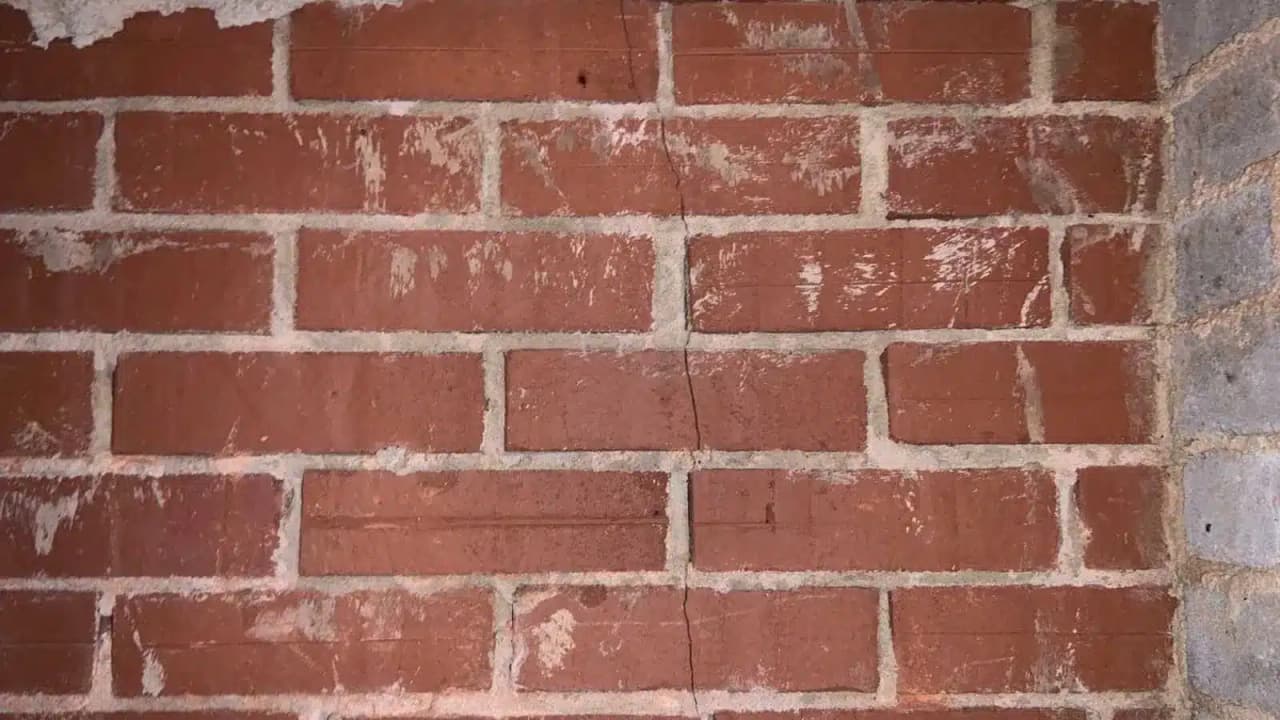
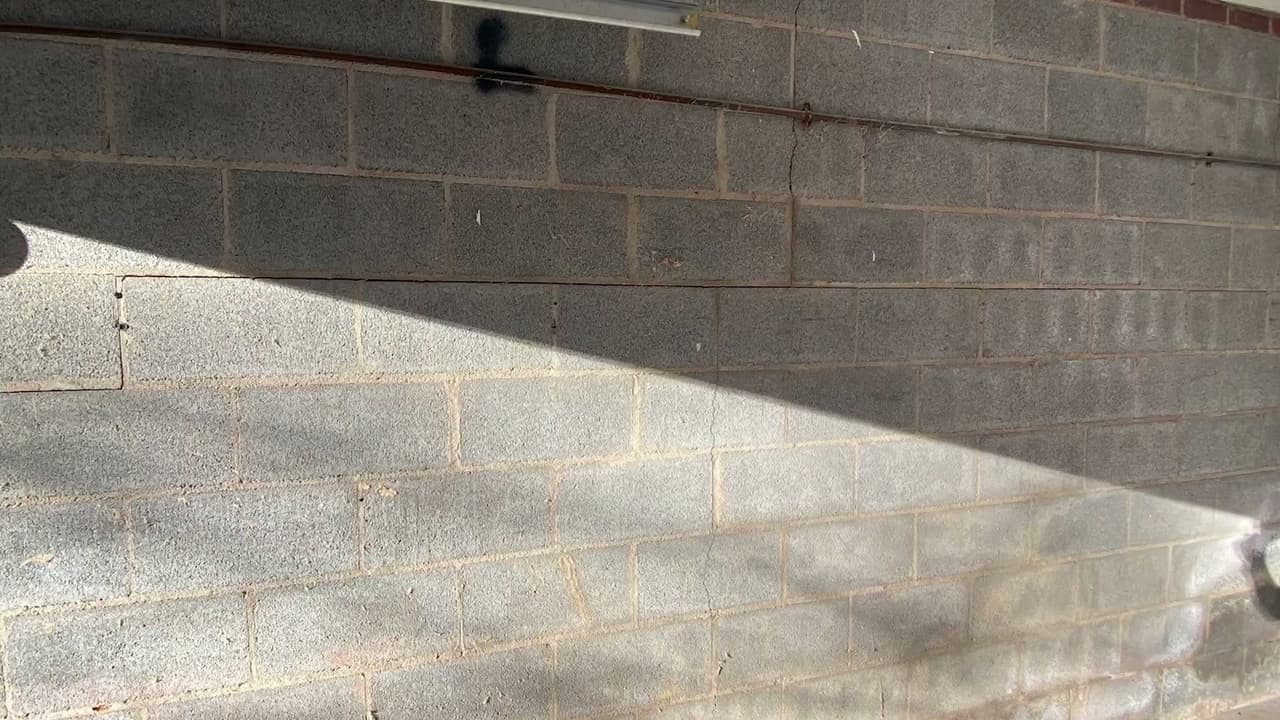
Stair Step Cracks. Along mortar joints in block or brick
Shrinkage Cracks
Shrinkage cracks often form as poured concrete cures and dries. They are usually thin and vertical, and on their own they do not usually mean the foundation has moved. They can still let moisture in, which is one reason homeowners have them sealed. An inspector can confirm whether a crack is shrinkage or something else.
Settlement Cracks
Settlement cracks can form when one part of the foundation moves more than the part beside it, often because the soil underneath has compressed or shifted. The width, whether it is changing, and whether the wall has moved all help explain the cause. A free inspection looks at each of these.
Lateral Pressure Cracks
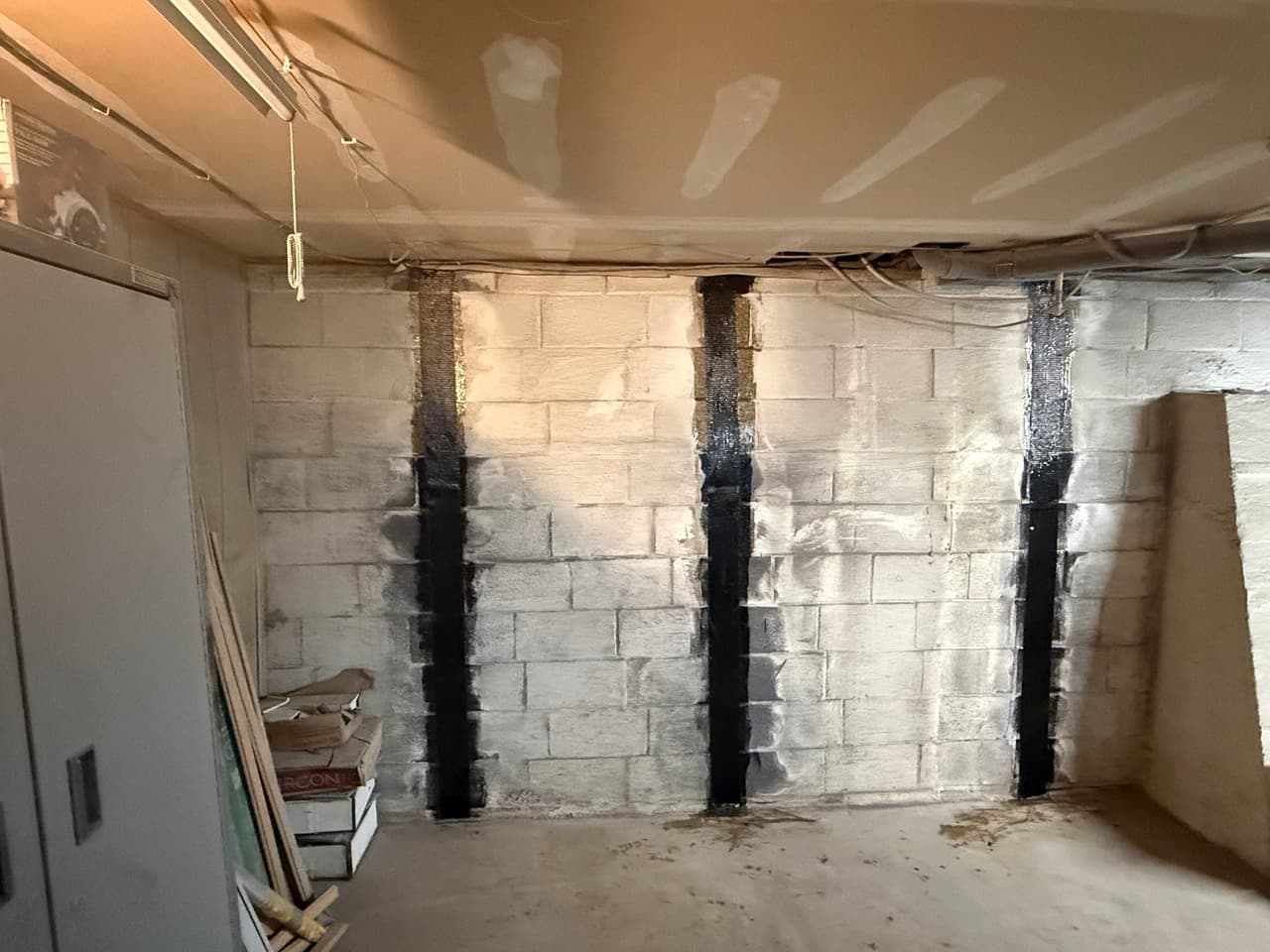
Horizontal cracks near the outside soil line can mean the soil and water outside are pushing the wall inward. An inspector looks at how far the wall has moved and whether it is still moving. Carbon fiber, wall anchors, and I beam bracing are common ways to stabilize a wall, depending on the wall and the soil.
Stair Step Cracks
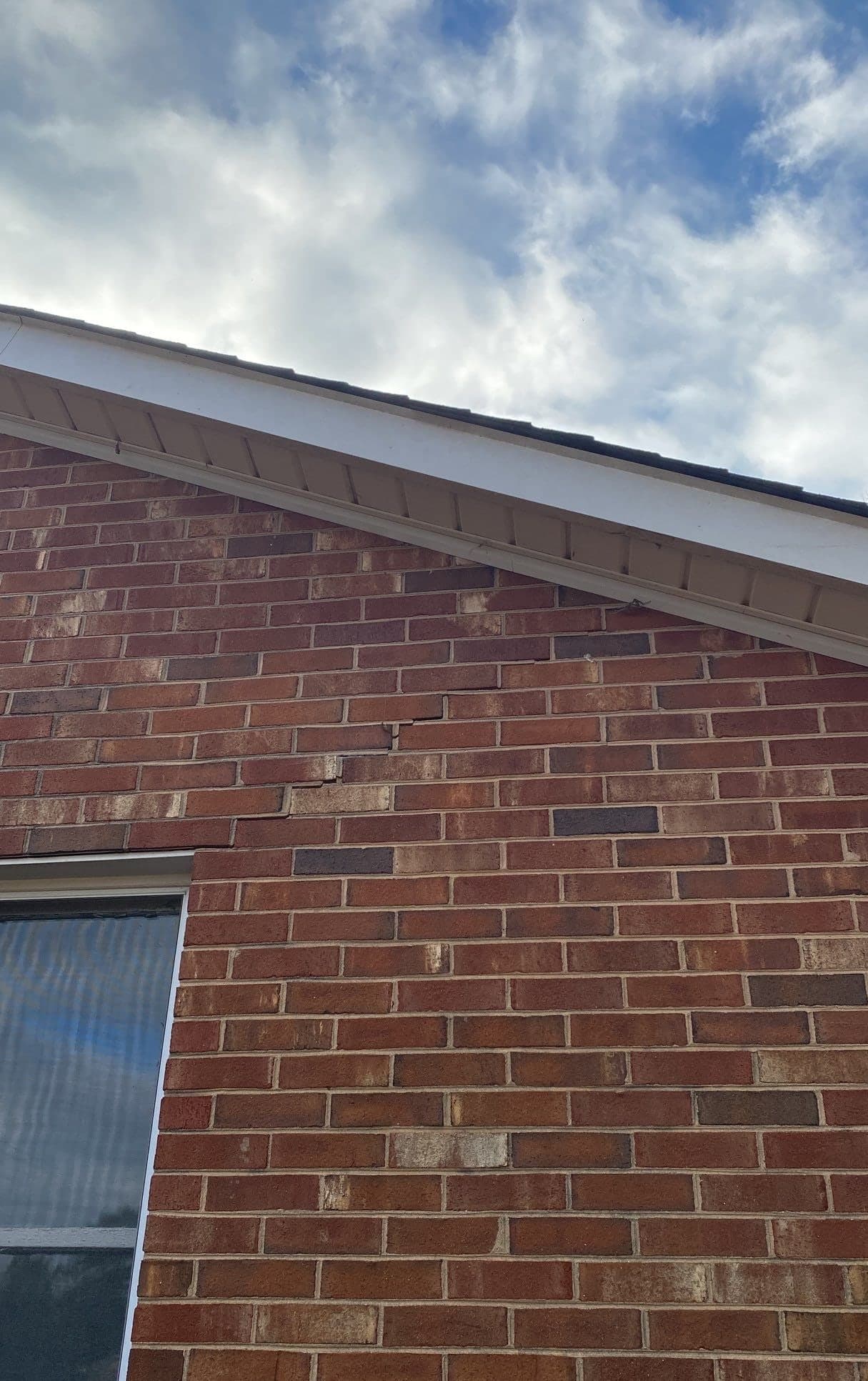
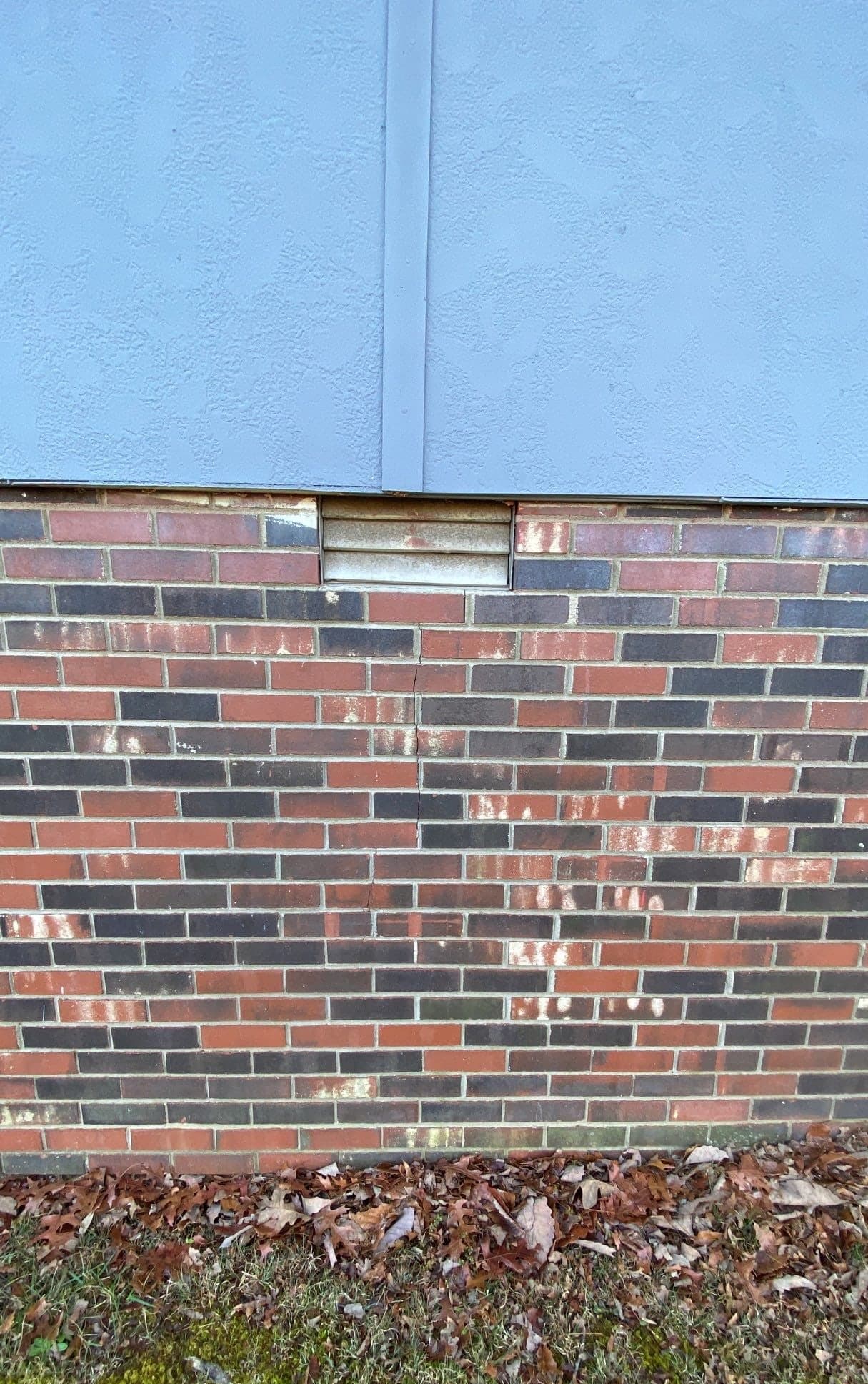
Stair step cracks follow the mortar joints in block or brick and can point to settlement under that part of the wall. In much of the Carolinas, clay soil that swells when wet and shrinks when dry is a common cause. Piers that reach firmer soil are one common repair, and an inspection shows whether they fit your home.
Watch
A Closer Look at Foundation Crack Repair
A crack in your foundation can be unsettling, and its shape and location help show what caused it. Most homes develop one or two over the years, and many of them are cosmetic. The job is to read the crack correctly, understand what opened it, and match the repair to the cause.
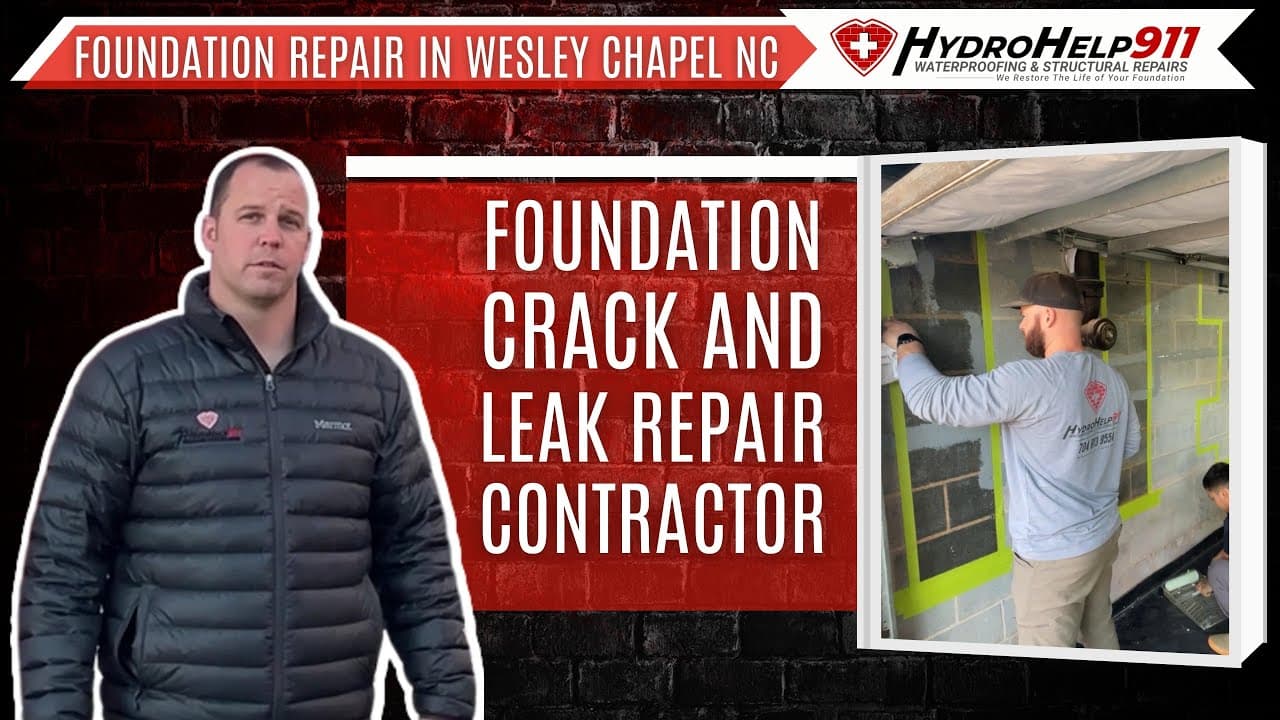
Foundation Crack and Leak Repair in Wesley Chapel, NC
In Depth
What Does This Guide Cover?
What a homeowner should understand about this repair, explained in plain language.
Would You Like the Guide by Email?
The Homeowner's Guide to Foundation Repair, sent free to your inbox.
Free Homeowner Guide
The Homeowner’s Guide to Foundation Repair
Why Carolinas homes move, a room by room checklist of the signs, and how repairs work.
HydroHelp911
North and South Carolina
Free Guide
Get the Free Foundation Repair Guide
A free guide for homes in North and South Carolina: what can move a foundation here, the signs worth writing down, and how foundation repairs work, in plain language.
A room by room checklist to walk your home with
Why foundations move in Piedmont clay, on hillsides and near the coast
How piers, wall anchors and other repairs work
Five questions worth asking any contractor, including us
Check your inbox
Your guide is on its way. If it has not arrived in a few minutes, check your spam folder, then add us to your contacts so the next one lands where it should.
A foundation crack is a break or split in the concrete or masonry that supports your home. Cracks are not all the same, and their shape and direction usually say something about what caused them. Four patterns are the most common.
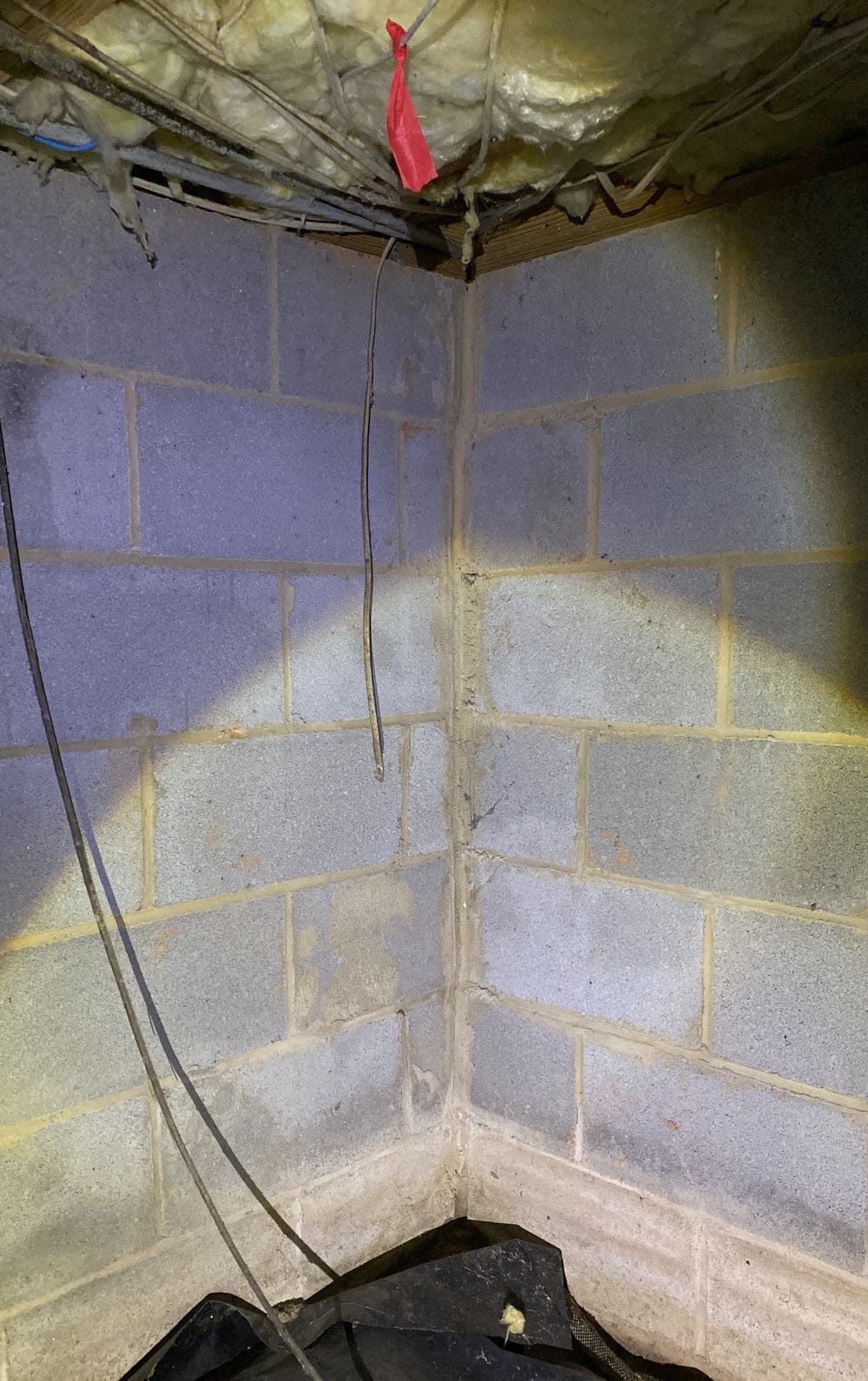
Hairline cracks are very thin and often vertical. They usually come from concrete shrinking as it cures and are often cosmetic. Vertical cracks run up and down the wall, sometimes the full height, and a narrow one that stays the same size is often not a structural concern.
Horizontal cracks run side to side and are worth having inspected, because they often mean soil or water pressure is pushing on the wall from outside, which can leave a basement wall bowing inward. Cracks like these are covered in more depth in our guide to basement wall repair.
A zigzag crack along the mortar joints of a brick or block wall usually points to differential settlement, which means one part of the foundation has moved more than another. Cracks are not the only signal. Doors and windows that suddenly stick, sloping or bouncy floors, and gaps where walls meet ceilings can all trace back to the same movement.
Four Common Foundation Crack Patterns
1Shrinkage crack: thin and vertical, often left as poured concrete cures and dries.
2Settlement crack: vertical or diagonal, often wider at one end than the other.
3Lateral pressure crack: horizontal, near the outside soil line, where soil and water push on the wall.
4Stair step crack: follows the mortar joints in a block or brick wall.
CH 02
Are Foundation Cracks Normal?
In many cases, yes. Homes settle, concrete shrinks as it cures, and Carolinas weather swings between wet and dry seasons. Thin vertical cracks are often the result of normal curing or minor settling, especially in the first few years after construction.
Cracks that tend to be lower concern are thin, dry, and stay the same over time. Cracks that are worth a professional look are usually wider, horizontal, stair stepped, leaking water, or clearly growing, especially when they show up alongside sticking doors or floors that slope toward one side.
Most foundation cracks trace back to the soil. In the Piedmont, clay that swells and shrinks with the seasons pushes and pulls on a foundation year after year. Loose or sandy soils in the Sandhills and along the coast can shift or wash out from under a footing.
Clay soil exposed beside a footing during a foundation repair.
Water adds pressure. When the soil around a foundation is saturated it gets heavy and pushes against the walls, which can open larger cracks from water pressure, a frequent pattern on Asheville hillsides and in coastal Wilmington and Leland, where the water table is high.
Construction matters too: weak footings, poor quality concrete, or soil that was not compacted well can crack a foundation within a few years, so a newer home is not automatically exempt. Shrinkage as concrete cures produces thin cracks that are usually cosmetic.
How Clay Soil Moves Around a Footing Through the Year
1Wet season: clay soil takes on water and swells, pressing on the footing and the foundation walls.
2Dry season: the same clay shrinks and pulls back, and the soil under the footing can drop.
CH 04
What Happens If a Foundation Crack Is Left Alone?
Some cracks do not need repair, and we will tell you when yours is one of them. The cracks that do matter can become more involved over time. Even a thin crack can let moisture into a basement or crawl space, which may lead to dampness and, over the years, rot in nearby wood framing.
If the soil is still moving, a crack can keep opening, and related signs such as bowing walls or sloping floors can follow. A crack found while it is small is often a straightforward injection, while a wall that has kept moving may need reinforcement or piers, which is a larger project.
CH 05
Epoxy vs. Polyurethane Crack Injection: What Is the Difference?
For a stable crack that needs sealing, injection is the standard approach. Both materials are injected under pressure, but they behave differently once they are inside the wall.
Epoxy is rigid. It cures into a bond that is typically stronger than the surrounding concrete, which is why we use injected epoxy on dry, stable cracks in poured concrete. It does not flex, so it is not the right choice for a crack that is actively leaking or a wall that is still moving.
Polyurethane is flexible. It reacts with moisture and expands to fill the crack, forming a watertight seal that can move slightly with the wall. That makes it useful for cracks that let water in, which is common where the water table is high, like Wilmington and Leland. It seals out water well but does not add structural strength.
How Crack Injection Seals a Wall From the Inside
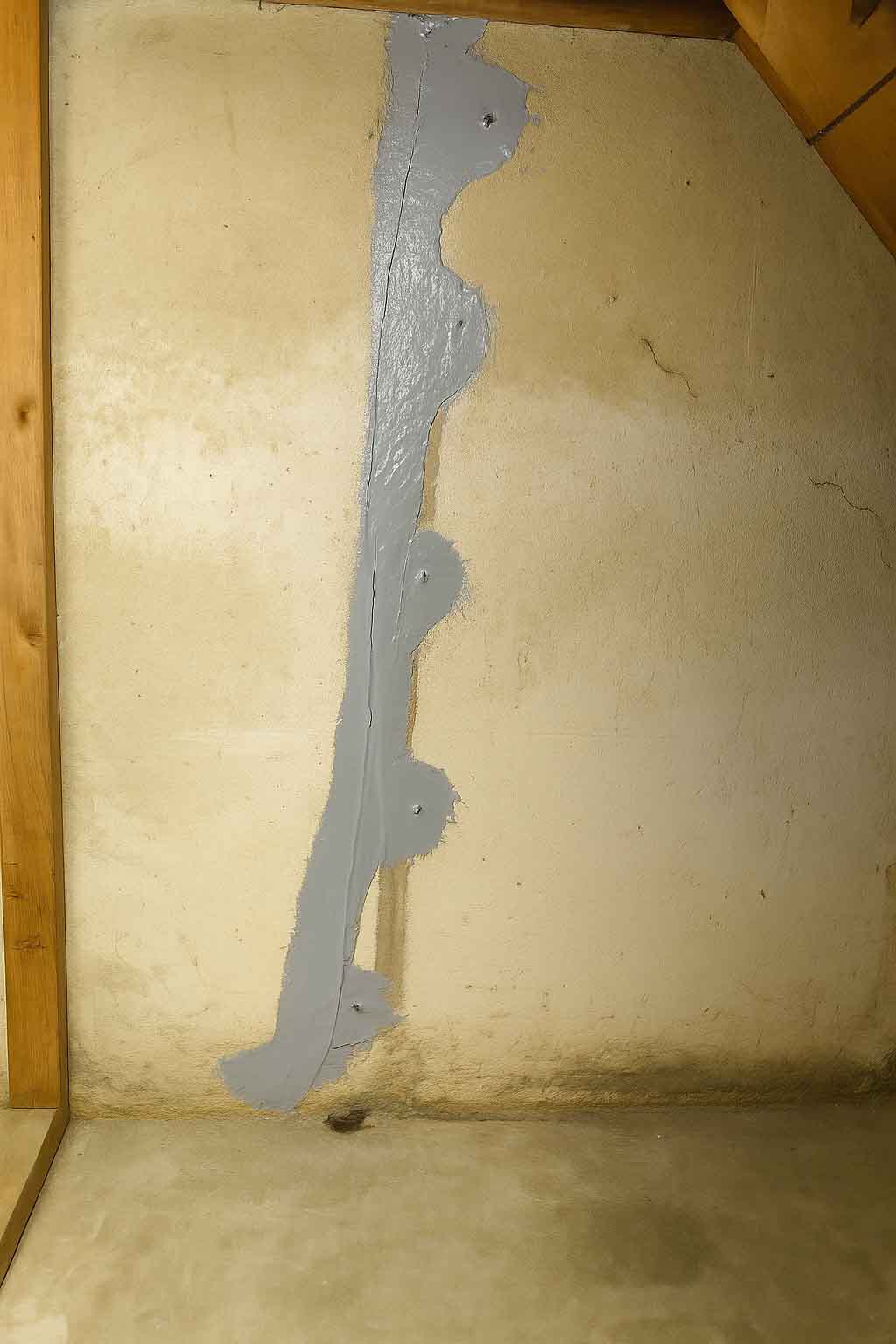
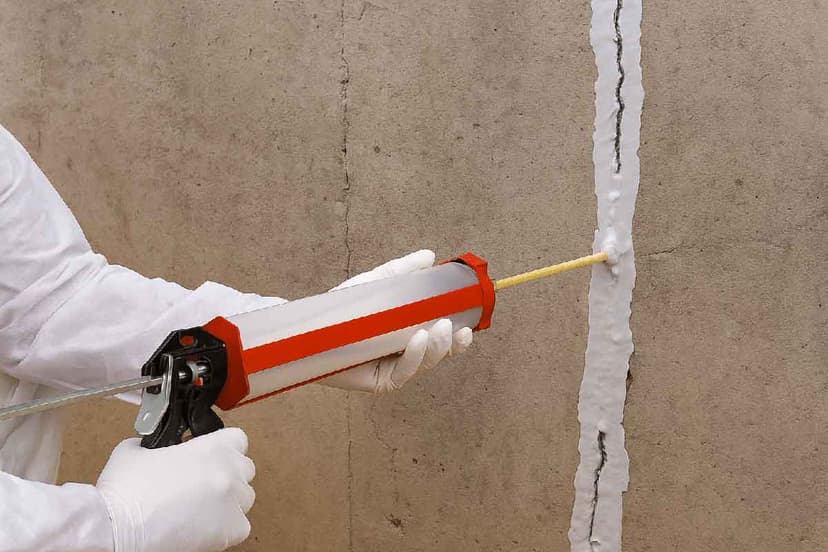
1Injection ports are set along the crack on the inside face of the wall.
2The material is injected until it fills the crack through the thickness of the wall.
3The soil side of the wall is left in place, so there is no digging.
CH 06
When Does a Foundation Crack Need More Than Injection?
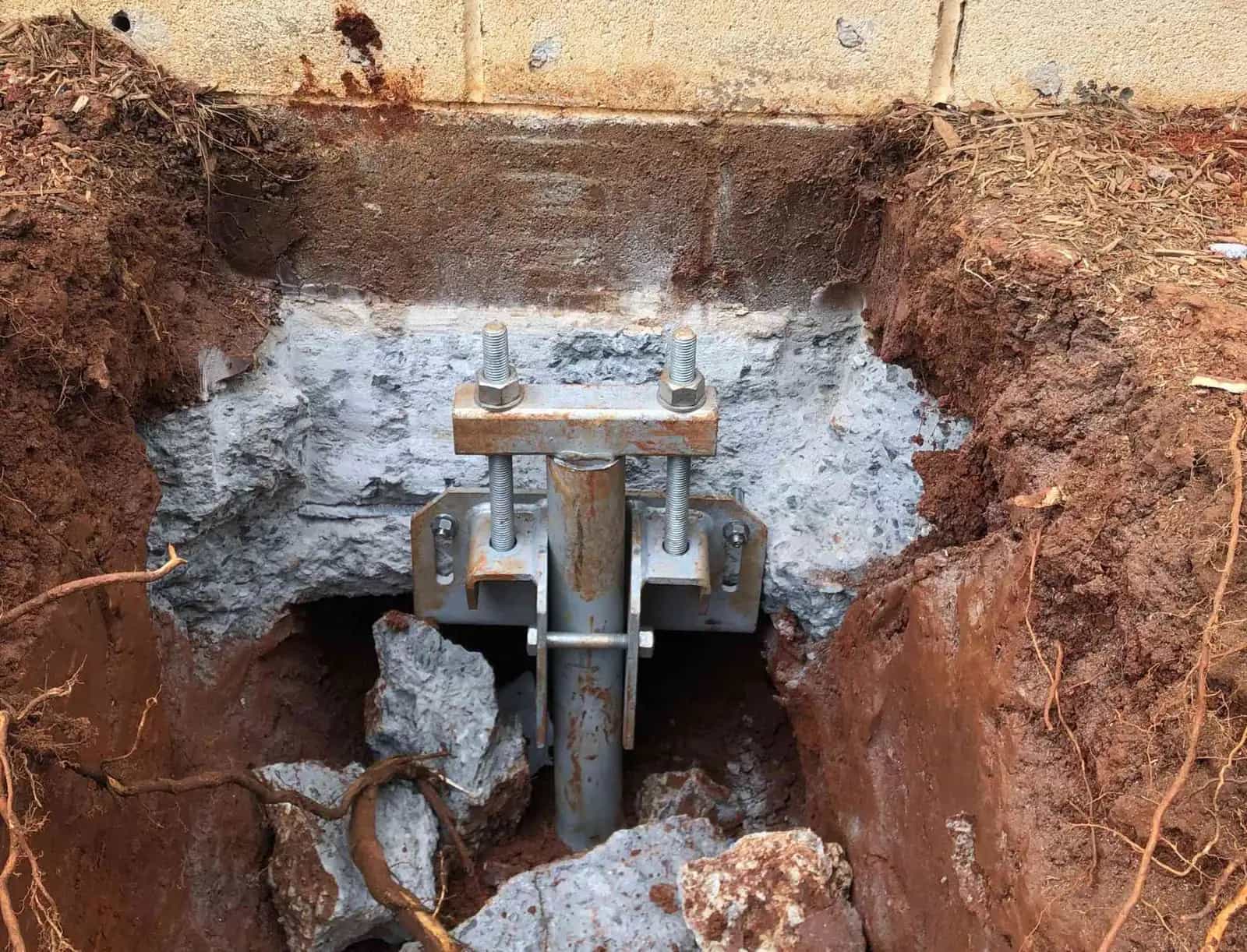
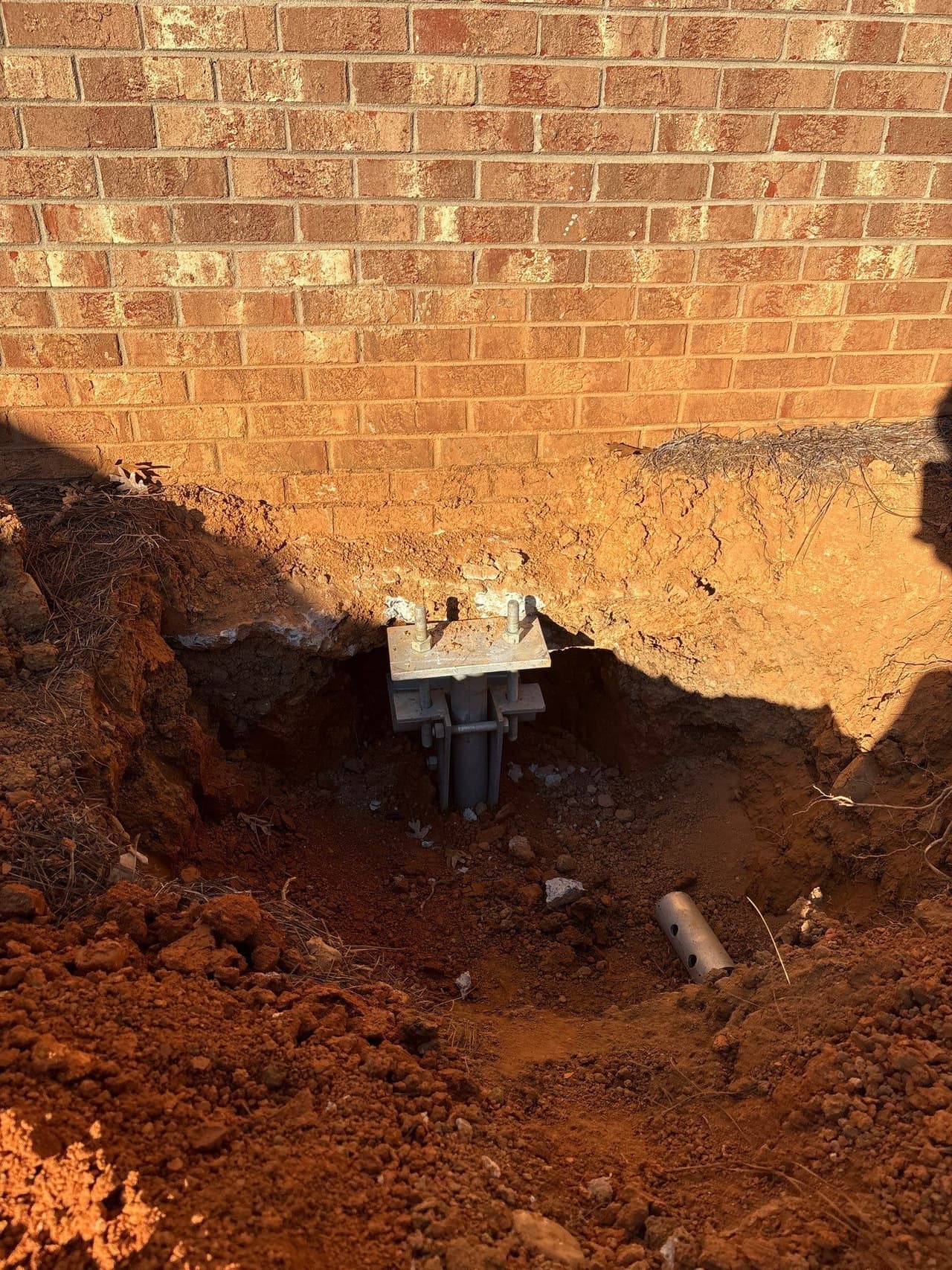
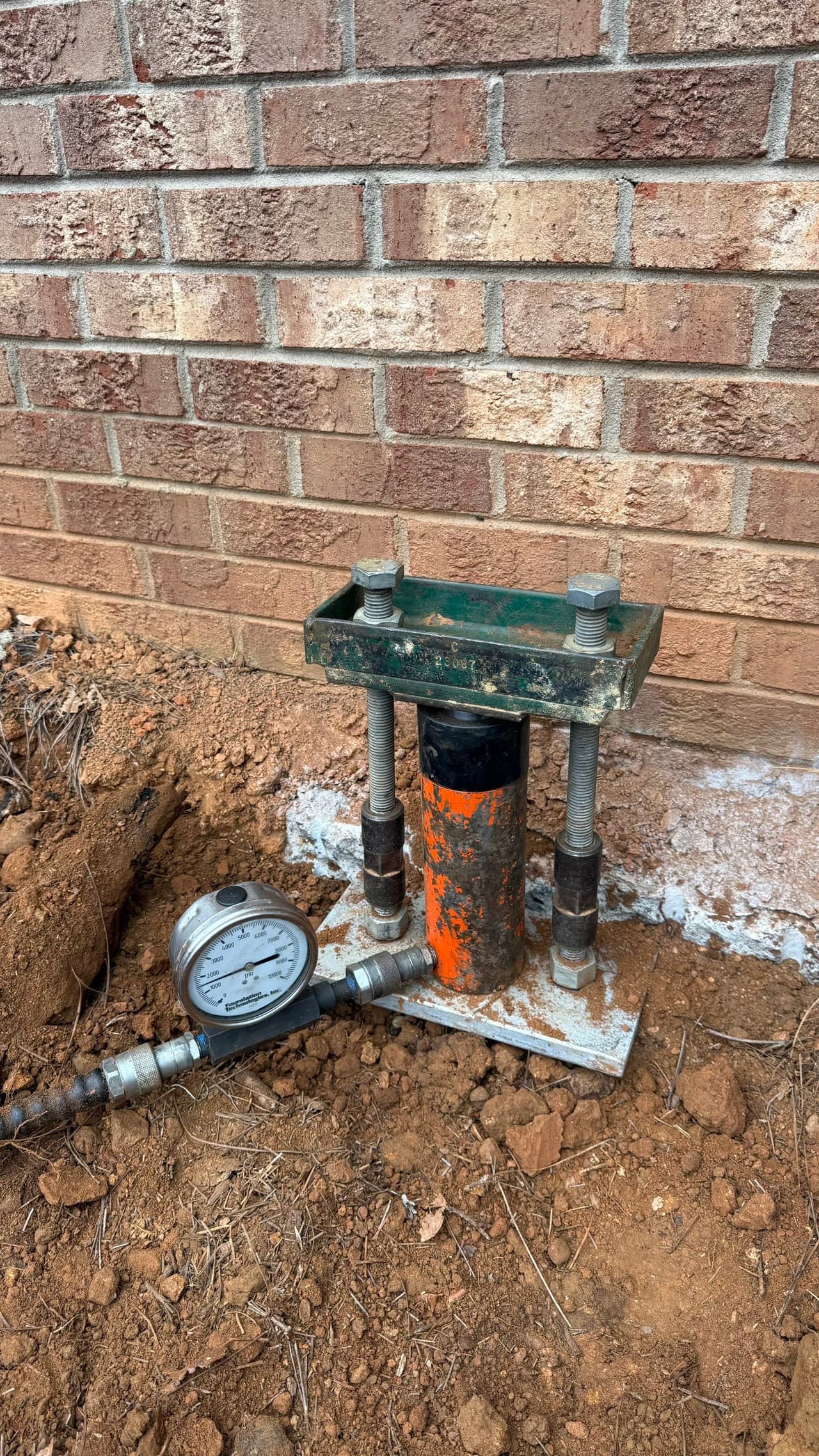
When a crack is a symptom of active settlement, sealing it alone will not hold, because the movement that opened it keeps going. The movement is stabilized first. A settling footing is usually supported with steel piers driven to firmer soil, and a wall that is bowing inward may be reinforced with carbon fiber bonded to the wall or held with anchors set in the soil beyond the wall.
Many cracks can be repaired from inside. Hairline and vertical cracks in poured concrete are good candidates for interior repair, sealed with injection from inside the wall with no digging. Horizontal and stair step cracks usually signal structural movement or soil pressure, so an interior seal may not be the whole answer on its own.
How a Steel Pier Carries a Settling Footing
1A steel bracket is fastened to the footing.
2A steel pier passes down through the weaker soil near the surface.
3The pier reaches firmer soil, which can carry the weight of that part of the home.
CH 07
Can I Repair a Foundation Crack Myself?
A small crack that is dry, stable, and not paired with sticking doors or sloping floors can be a reasonable homeowner project with a sealant kit from a hardware store.
The harder part is the diagnosis. A crack that looks minor can be a symptom of soil movement or water pressure, and sealing it without addressing the cause can hide the problem while the movement continues. Sealing a crack the wrong way can also trap moisture in the wall. If you are unsure which kind of crack you have, an inspection is a simple way to find out.
CH 08
What Does Foundation Crack Repair Cost?
There is no flat price, because the cost follows the cause and the method. A simple injection on a stable crack sits at the low end. A crack that turns out to be a symptom of settlement costs more, because the movement has to be stabilized first.
The main factors are the length and type of crack, whether epoxy or polyurethane is used, and whether underlying movement needs to be addressed. After a free inspection we provide a written estimate, and financing options are available.
Which Solution Is Right?
Which Crack Repair Method Fits Your Wall?
The right repair depends on how the crack behaves as well as how it looks.
Here is how three common crack repair methods compare. Your free inspection confirms which one fits.
A plain comparison of repairing a foundation crack yourself and hiring a professional.
Read the Guide
Why Choose HydroHelp911
Care and Expertise From a Team Serving the Carolinas Since 2017
HydroHelp911 handles foundation repair and related structural and moisture work across North and South Carolina. Every repair recommendation starts with a free inspection of the whole home.
01
Trained inspectors, not salespeople.
An inspector looks at your home, finds the source of the problem, and explains each finding in plain language. There is no obligation.
02
Locally owned in Gaston County.
We are headquartered in Dallas, North Carolina, with eight offices across North and South Carolina.
03
Serving the Carolinas since 2017.
Foundation repair, crawl space repair and encapsulation, basement waterproofing, framing repair, and concrete leveling are the whole focus of the team.
04
Rated 4.9 stars on Google.
We have 1,300+ verified Google reviews (4.9 stars) from homeowners across the Carolinas and are BBB A+ Accredited.
05
Written warranty terms.
For example, helical and push piers carry a lifetime warranty that no additional settlement will occur in the area of installed piers, once the final invoice is paid in full. Read the warranty terms.
06
Financing is available.
Ask your inspector about financing when you get your written estimate. See financing options.
Cory ParksOWNER & PRESIDENT
Three Quick Questions
Not Sure Foundation Crack Repair Is What You Need?
Answer three quick questions about your home. We'll match what you see to the most likely cause and point you to the right next step.
1
Symptom
2
History
3
Your Result
Location: Foundation
What Are You Seeing in Your Foundation?
Pick the symptom that best describes it.
Frequently Asked Questions
Common Questions About Foundation Crack Repair
Don't see your question here? Call or fill out our quick online form, and our team will help.
Often, yes. Thin, vertical hairline cracks are usually the result of normal concrete curing or minor settling and are typically cosmetic. The cracks worth having inspected are usually wider, horizontal, stair stepped, leaking water, or clearly growing, especially alongside sticking doors or sloping floors.
Soil movement is the most common cause. Expansive Piedmont clay swells when wet and shrinks when dry, cycling pressure on the foundation, while coastal sandy soils and a high water table create lateral pressure and erosion. Poor compaction during construction, seasonal moisture swings, and ordinary concrete shrinkage are other common causes.
It depends on the crack. Polyurethane injection stays flexible and is suited to stopping water, which matters in high water table areas like Wilmington and Leland. Epoxy injection is rigid and bonds dry, stable cracks back together. If the crack is caused by settlement, the movement is stabilized first, with piers or anchors, before the crack is sealed.
Epoxy is rigid and bonds the concrete back together, and it is used on dry, stable cracks. Polyurethane is flexible and expands to form a watertight seal that moves with the wall, which makes it the better choice for leaking cracks or cracks that may still move. Epoxy adds strength; polyurethane keeps water out. We match the material to the crack.
Many can. Hairline and vertical cracks in poured concrete, and many leaking cracks, can be sealed with injection from inside the wall with no excavation. Horizontal or stair step cracks that signal structural movement may need reinforcement as well. The inspection determines which approach fits.
A small, dry, stable crack that is not structural can be a reasonable homeowner project with a sealant kit. The risk is misreading the crack: sealing one that is actually a symptom of soil movement hides the cause while it continues. Professional repair reads the whole foundation and matches the material to the crack. When in doubt, a free inspection answers the question.
When the crack is stable and the right material is used, injection usually provides a durable seal. If the foundation is still moving, injection alone will not hold, which is why we look for the cause and stabilize any active movement before relying on injection. Warranty terms, with their conditions, are listed on our warranties page.
There is no set price for a crack repair. The cost depends on the length and type of the crack, whether epoxy or polyurethane injection is used, and whether the crack is a sign of movement that needs stabilizing first. The inspection is free and ends with a written estimate, which is the price for your home.
Pricing & Scope
How Is Your Repair Priced?
Every home is different, so every estimate is written for the home in front of us. A free inspection at your home gives you a written estimate at no cost, based on your scope, access, and conditions.
How Pricing Works
Cost depends on the length and type of crack, whether epoxy or polyurethane injection is used, and whether the crack is a sign of larger movement that needs stabilization first. A stable crack sealed with injection sits at the low end; a crack driven by settlement that needs piers first sits higher. We provide a written estimate after a free inspection, and financing is available.
When Is This Not the Right Fix?
Crack injection alone is not the right fix when the crack is being driven by active foundation settlement. In that case the underlying movement is stabilized first, or the crack will simply reopen.
What Does the Free Inspection Include?
Your inspector explains every finding in plain language, and you get written documentation at no cost, typically an estimate with photographs.
Two ways to start. Both are free, with no obligation.
Pick your own day in our calendar. You save $250 if you go ahead with the work.
Send a short form, and our office will call to book a time that suits you.
For new customers who book online through our website and then sign a contract.
The Process
How We Approach Foundation Crack Repair
Four steps, from your free inspection to the finished repair.
Step 01
Inspect and Diagnose
We examine the crack, check for related signs of movement, and work out whether it is cosmetic, caused by water, or structural.
Step 02
Match the Material
We select epoxy to bond dry, stable cracks or flexible polyurethane to keep water out, based on what we find.
Step 03
Inject and Seal
The crack is cleaned, injection ports are set, and the material is pumped in under pressure so the repair fills the full depth of the crack as well as the surface.
Step 04
Confirm and Document
We check the seal, document the work with photos, and explain the warranty terms that apply to your repair.