CH 01
Why Does a Crawl Space Need a Vapor Barrier?
The ground under your home is never fully dry. Bare soil in a crawl space releases water vapor all the time, and across the Carolinas the amount can be significant. Piedmont clay soils around Charlotte, Greensboro, and the Triangle hold moisture and give it off for much of the year.
Coastal soils near Wilmington and Brunswick County sit close to a high water table, and even sandy Sandhills ground around Fayetteville and Pinehurst carries moisture upward in humid weather.
That rising vapor keeps a crawl space damp, raises the humidity around the framing and ductwork, and creates the conditions for rot and musty odors in the home. In many homes, high humidity readings under the house trace back to it. A vapor barrier is the layer that stops it.
CH 02
What Are the Signs a Crawl Space Needs a Vapor Barrier?
Most homeowners never see the crawl space, so the first signs usually show up in the rooms above it. A musty smell that is stronger in summer, floors that feel damp or cool, and humidity that stays high inside the home can all trace back to moisture rising from bare soil under the house.
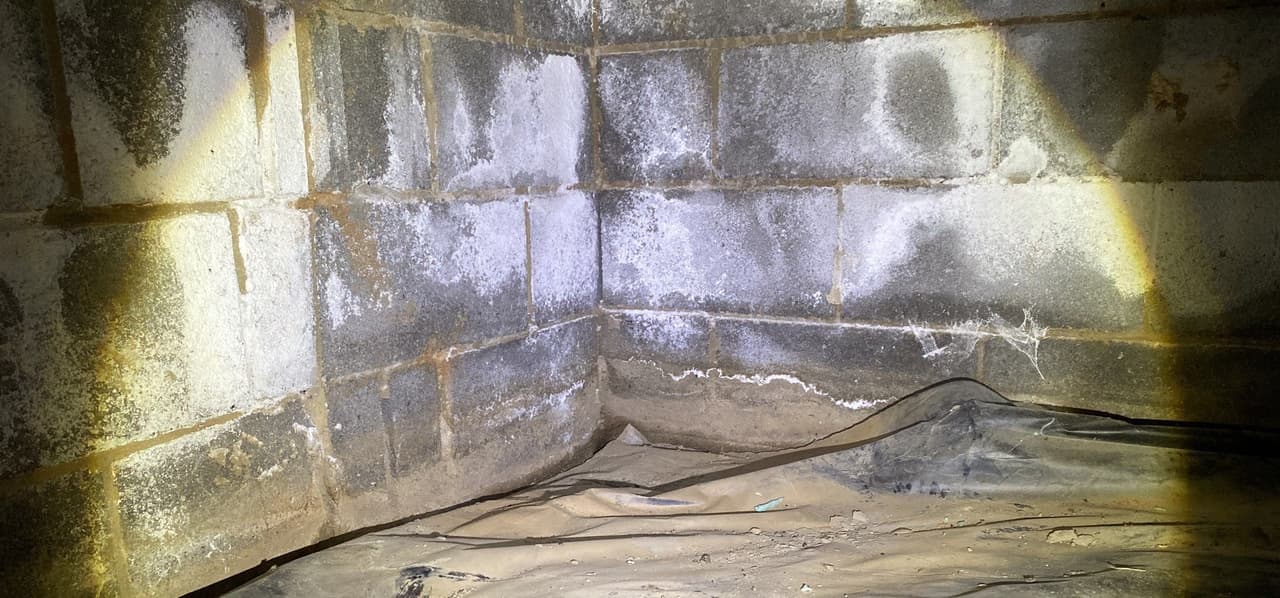
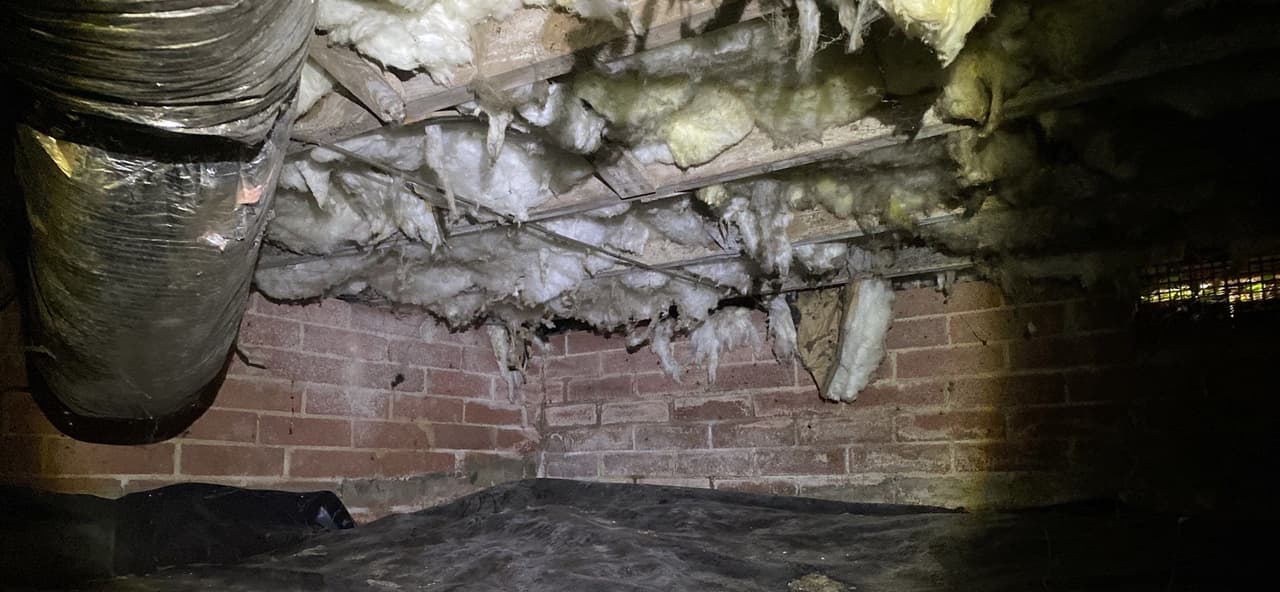
Inside the crawl space, the signs are easier to read. The soil looks dark and damp even in dry weather, ducts sweat in the summer heat, insulation sags between the joists, and wood feels damp to the touch. An old, torn sheet of plastic that leaves soil exposed is another common finding. Any one of these is worth having inspected, because the same signs can also come from open vents or water entering the space.
CH 03
Vapor Barrier vs. Full Encapsulation: What Is the Difference?
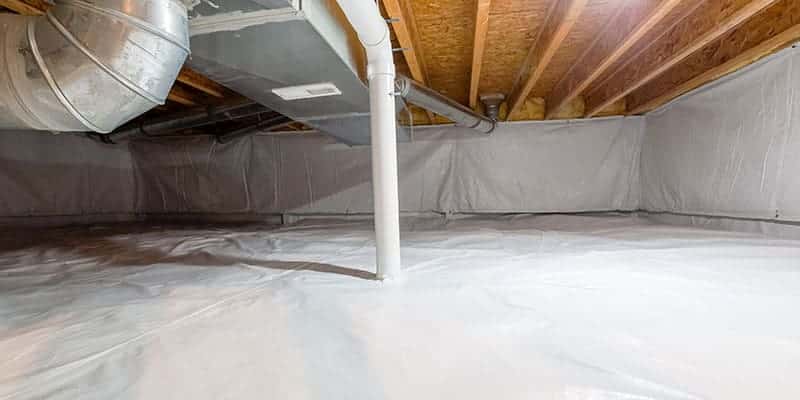
The two terms are often used as if they mean the same thing, but they describe different levels of work. A basic vapor barrier is plastic sheeting laid on the ground only. The seams are overlapped, not taped, and the sheet stops at the base of the walls. It is typically 6 to 10 mil thick. A mil is one thousandth of an inch, so a higher number means a thicker, tougher sheet.
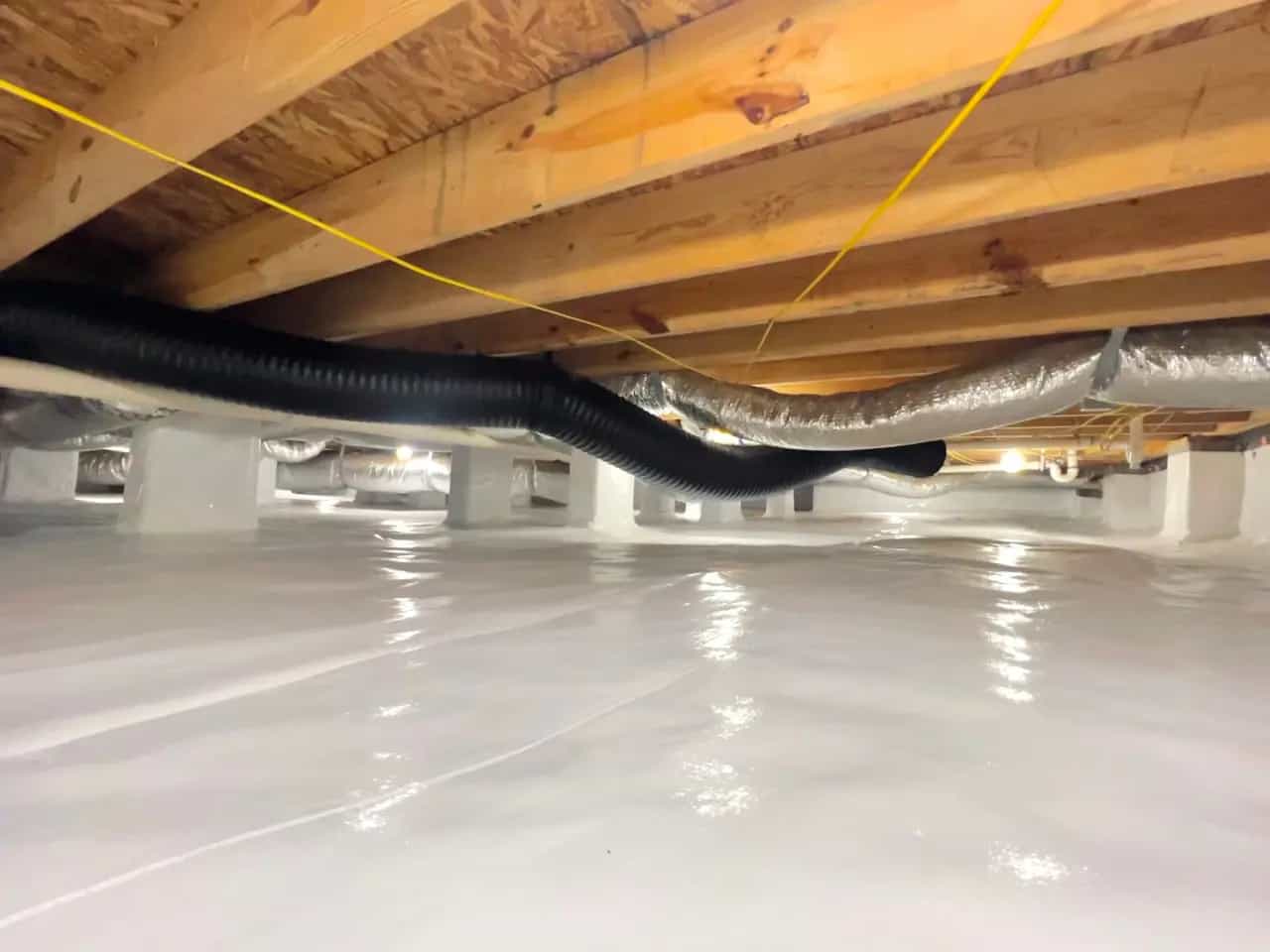
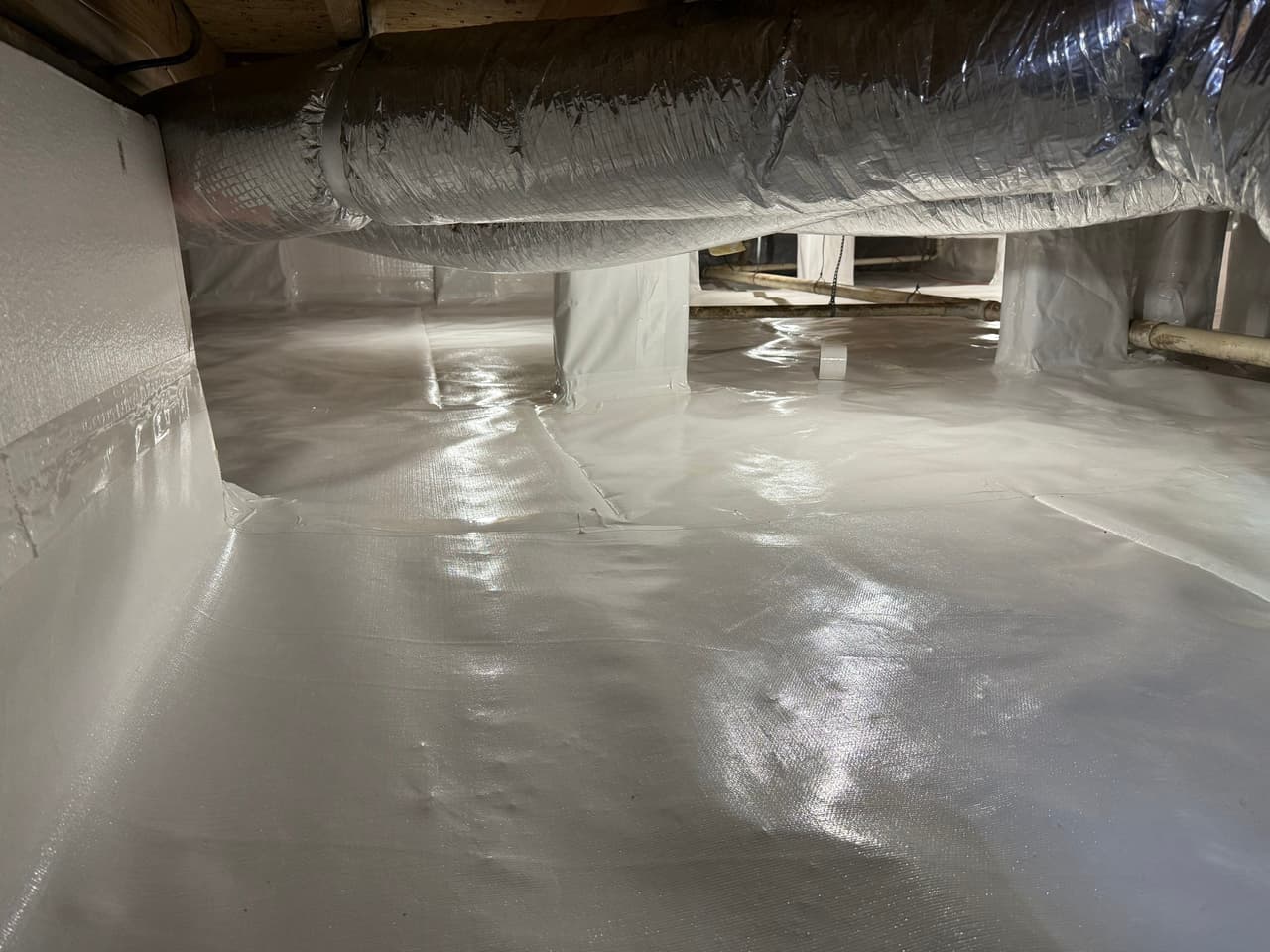
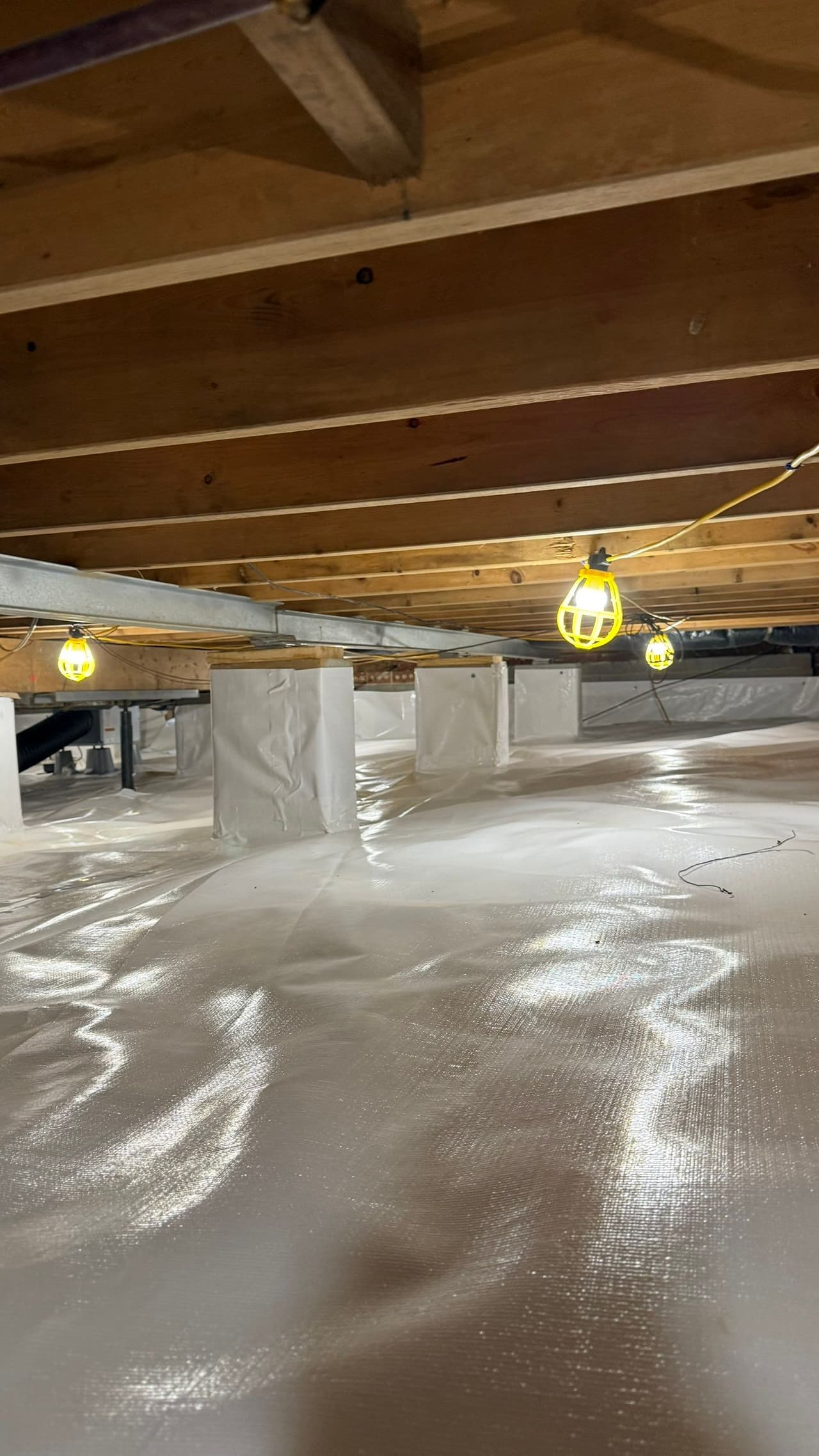
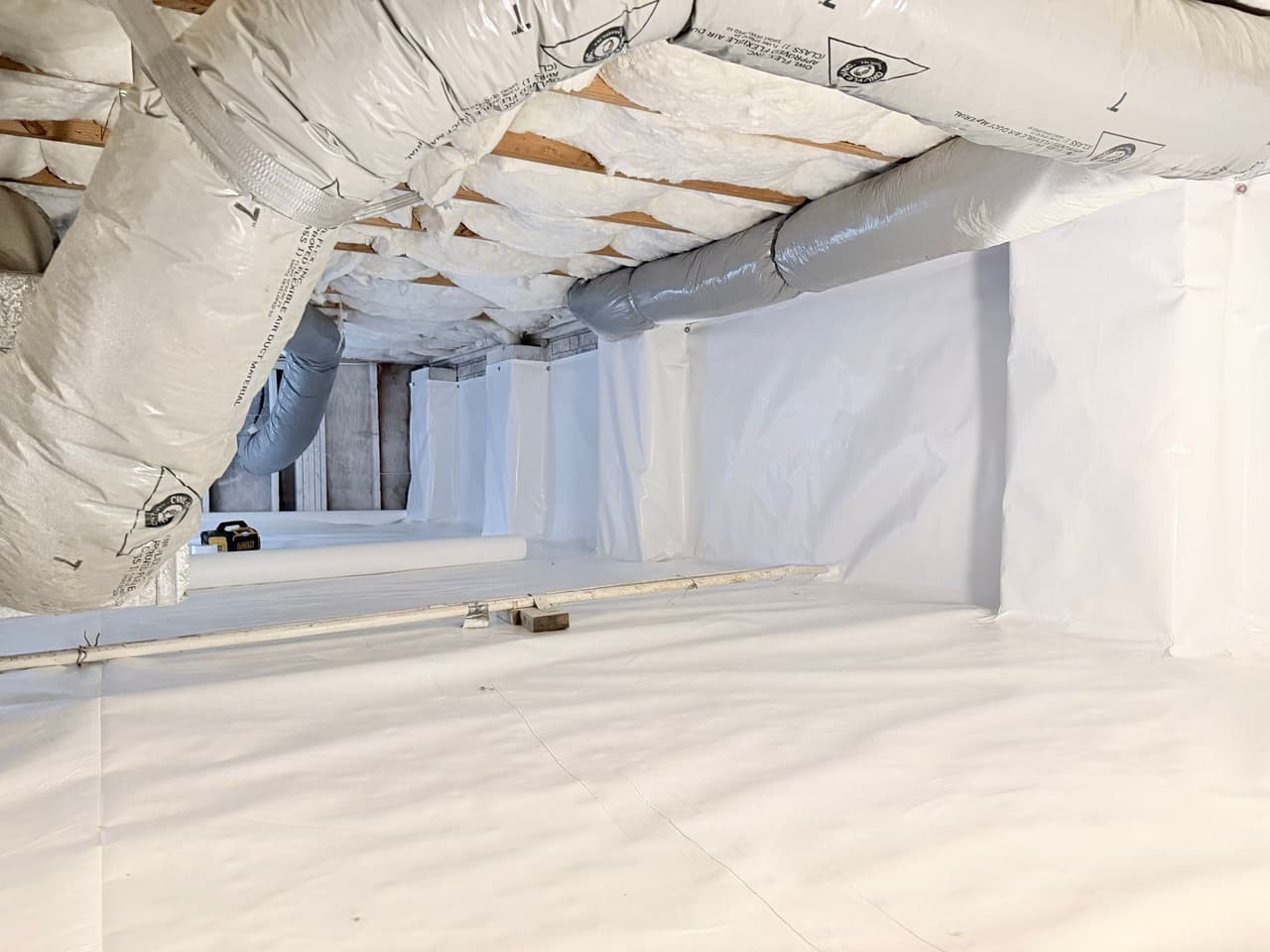
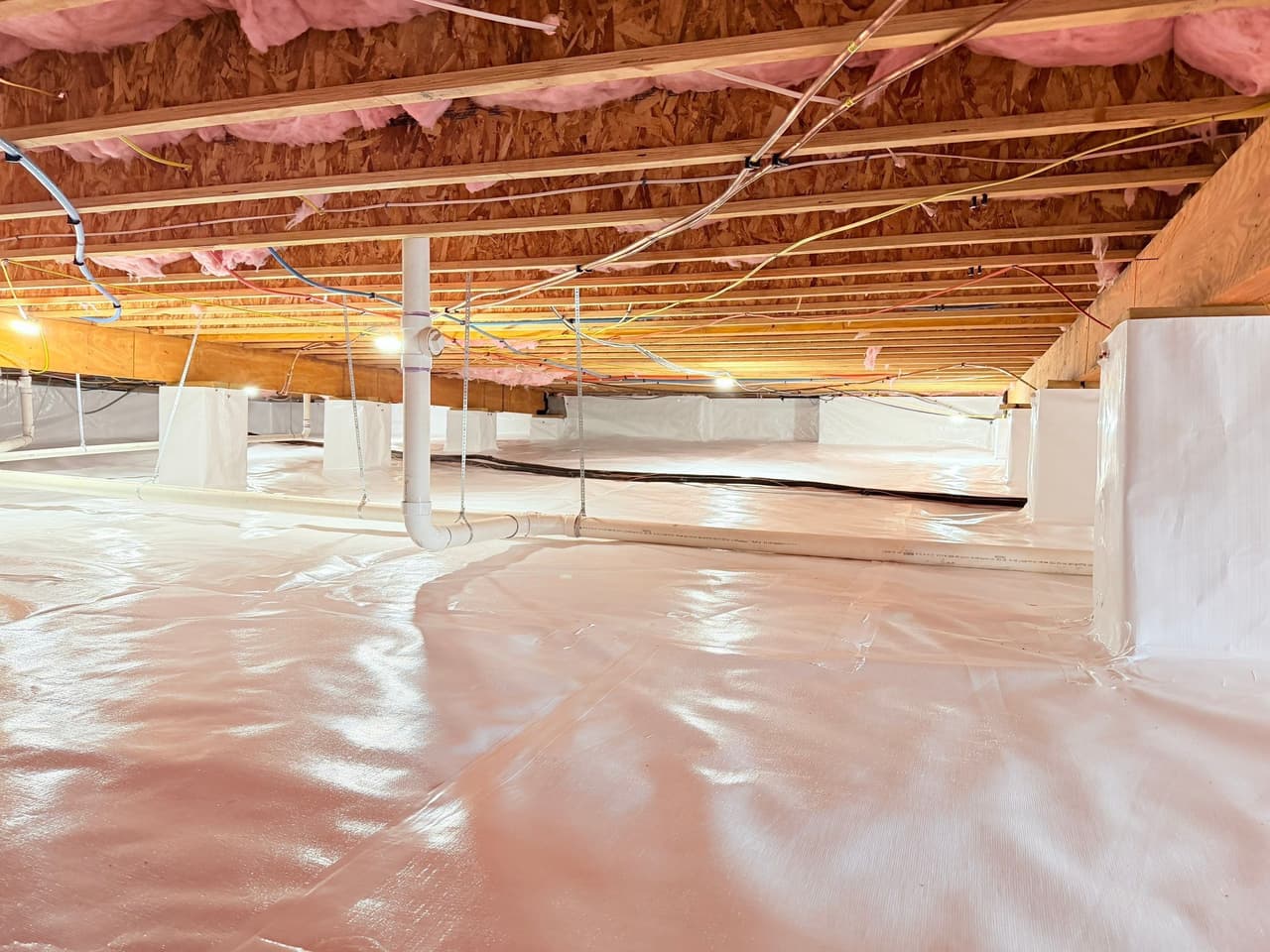
HydroHelp911 full encapsulation uses a liner 14 to 20 mil thick that covers the ground, runs up the foundation walls and wraps the piers, with every seam taped. Encapsulation also seals the vents and, where the humidity calls for it, adds a sealed space dehumidifier. A heavier liner also holds up better in a crawl space that service crews and homeowners crawl through over the years.
In a full encapsulation, the barrier ties into sealed crawl space vents to create one continuous moisture break. On its own, a properly installed vapor barrier is often one of the biggest improvements a damp crawl space can get, and it addresses several of the crawl space encapsulation warning signs at once.
CH 04
How Is a Crawl Space Vapor Barrier Installed?
Installation starts with preparation. We clear debris, remove old plastic and any insulation that has fallen, and deal with standing water first, because a liner laid over a wet floor traps the water under it. If the space needs it, a crawl space cleanout happens before the liner goes down.
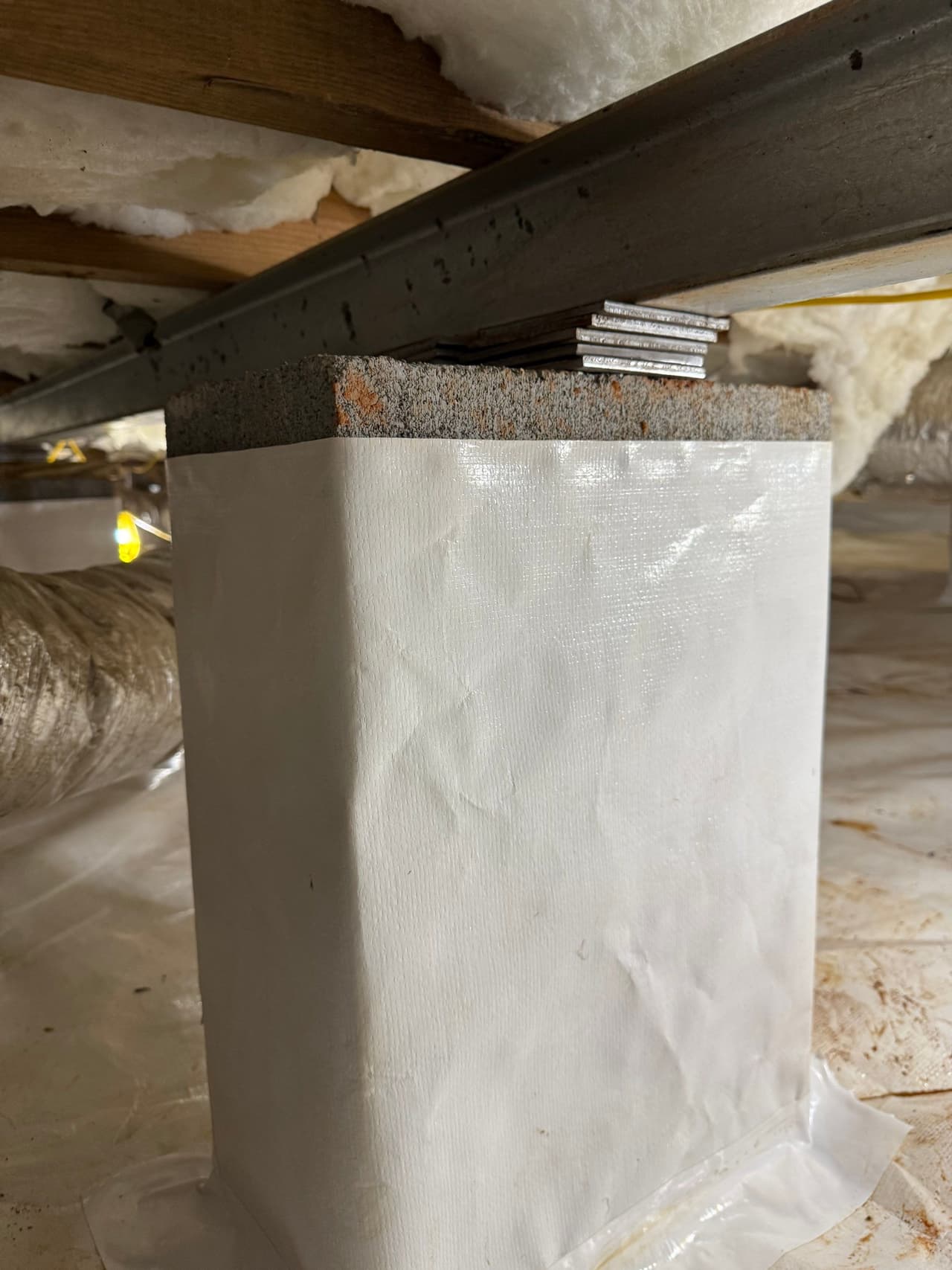
The liner is then rolled out over the ground and fitted around piers, pipes and other obstacles. In a full encapsulation it runs up the foundation walls and is fastened near the top of the wall, it wraps each pier, and every seam is taped so the soil is closed off from the air. The vents and the access door are sealed as part of the same work, so the barrier and the openings make one continuous moisture break.
CH 05
Is a Vapor Barrier Enough on Its Own?
A vapor barrier is the right starting point for many crawl space moisture problems, but it is not always the whole answer. If humid air also comes in through open vents, or water pools on the ground after rain, the barrier needs to be paired with vent sealing, a dehumidifier for the sealed space, or interior drainage under the liner.
During the inspection we tell you whether a vapor barrier alone will do the job or whether it is one piece of a larger system. Liner coverage requires annual inspection and maintenance at the owner's expense, and the liner warranty terms list every condition.
CH 06
Can I Install a Crawl Space Vapor Barrier Myself?
Laying plastic over the ground in a small, dry crawl space can be a homeowner project. The work is cramped and slow, and the result depends on the sheet, how it is fastened, and whether the seams stay closed.
The harder part is knowing what the crawl space needs. A barrier laid over a floor that takes on water can hold that water against the soil, and a barrier in a space with open vents still leaves humid air moving under the home.
Taping every seam, running the liner up the walls and wrapping the piers also takes time and the right materials. If you are not sure where your moisture is coming from, an inspection answers that before any plastic goes down.
CH 07
How Long Does a Crawl Space Vapor Barrier Last?
A heavy liner that is fastened well, taped at every seam and kept free of standing water is built to last for many years. What shortens its life is usually damage from foot traffic, seams that were never taped, or water pooling on top of it.
The liner carries a lifetime warranty for the life of the property, and that coverage requires annual inspection and maintenance at the owner's expense. Ground moisture beneath the liner is normal and is not a warranty claim, and standing water is not covered where no drainage system is installed.
No warranty activates until the final invoice is paid in full, and our full liner warranty terms list every condition. The annual maintenance program is $250 a year.
CH 08
What Does Vapor Barrier Installation Cost?
Most vapor barrier installation projects fall between $3,000 and $8,000. The price depends on the square footage of the crawl space, how much preparation the space needs, how many piers and obstacles the liner has to fit around, and whether the job is a basic barrier or part of a full encapsulation. These figures are a range, not a quote. You receive a written estimate after a free inspection, and financing is available.