CH 01
Why Does Crawl Space Insulation Fail in the Carolinas?
Crawl space insulation affects comfort and energy bills, but in the Carolinas it only works if the moisture under the home is handled first. A poorly insulated crawl space lets conditioned air escape and outdoor temperatures through, which can show up as cold floors in winter and an HVAC system that runs longer through the long cooling season.
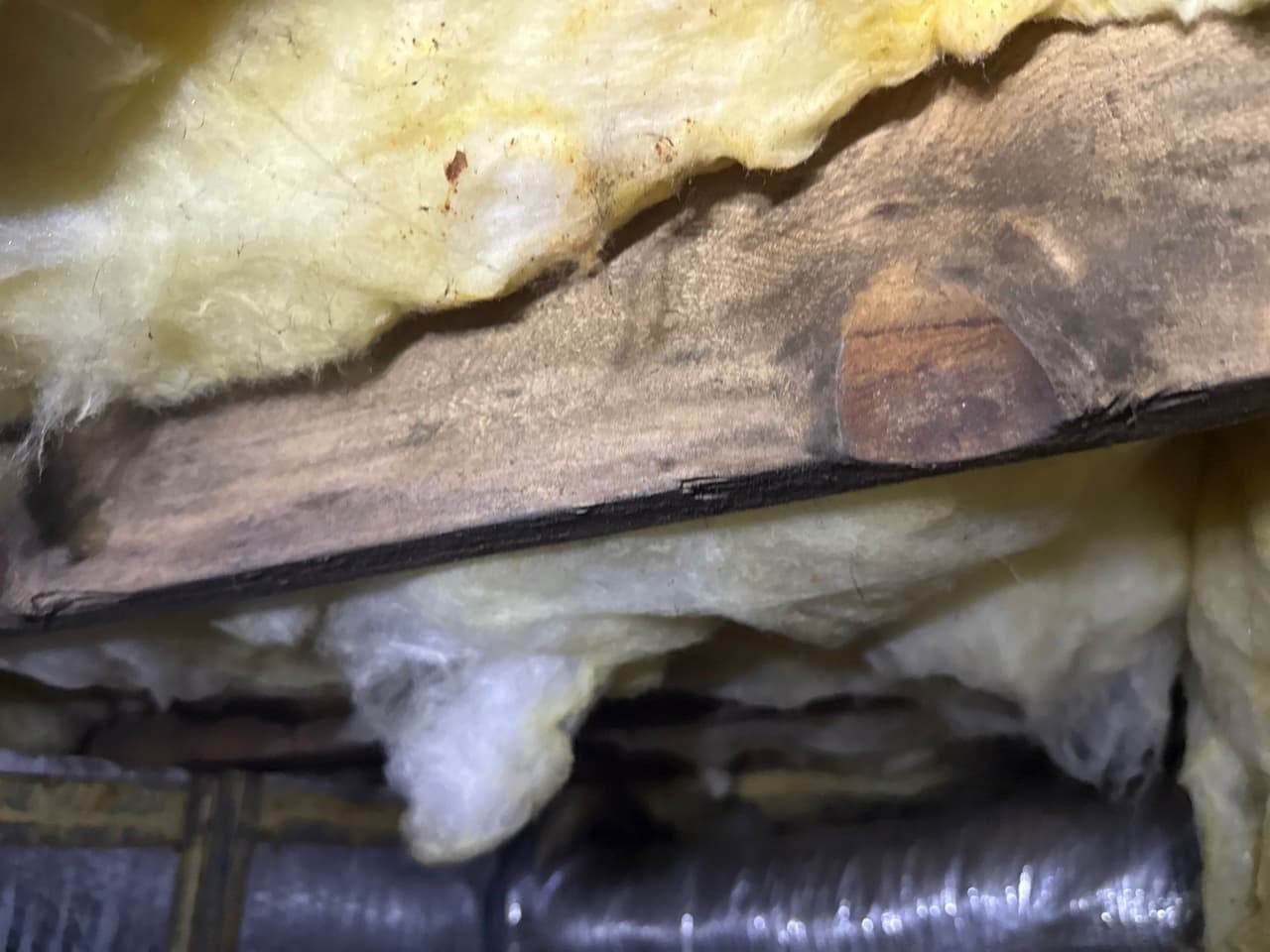
Fiberglass batts stapled to the underside of the subfloor often fail in a damp Carolina crawl space. They absorb humidity, grow heavy, and fall away from the floor, and once wet they stop insulating and hold moisture against the wood they touch. That is what sagging, deteriorating insulation usually means, and it often comes with higher heating and cooling costs.
CH 02
What Are the Signs of Failing Insulation Under the Floor?
Indoors, the signs are floors that feel cold in winter, rooms over the crawl space that are hard to heat and cool, and energy bills that rise without a clear reason. Some homeowners also notice a musty smell, since damp insulation holds moisture.
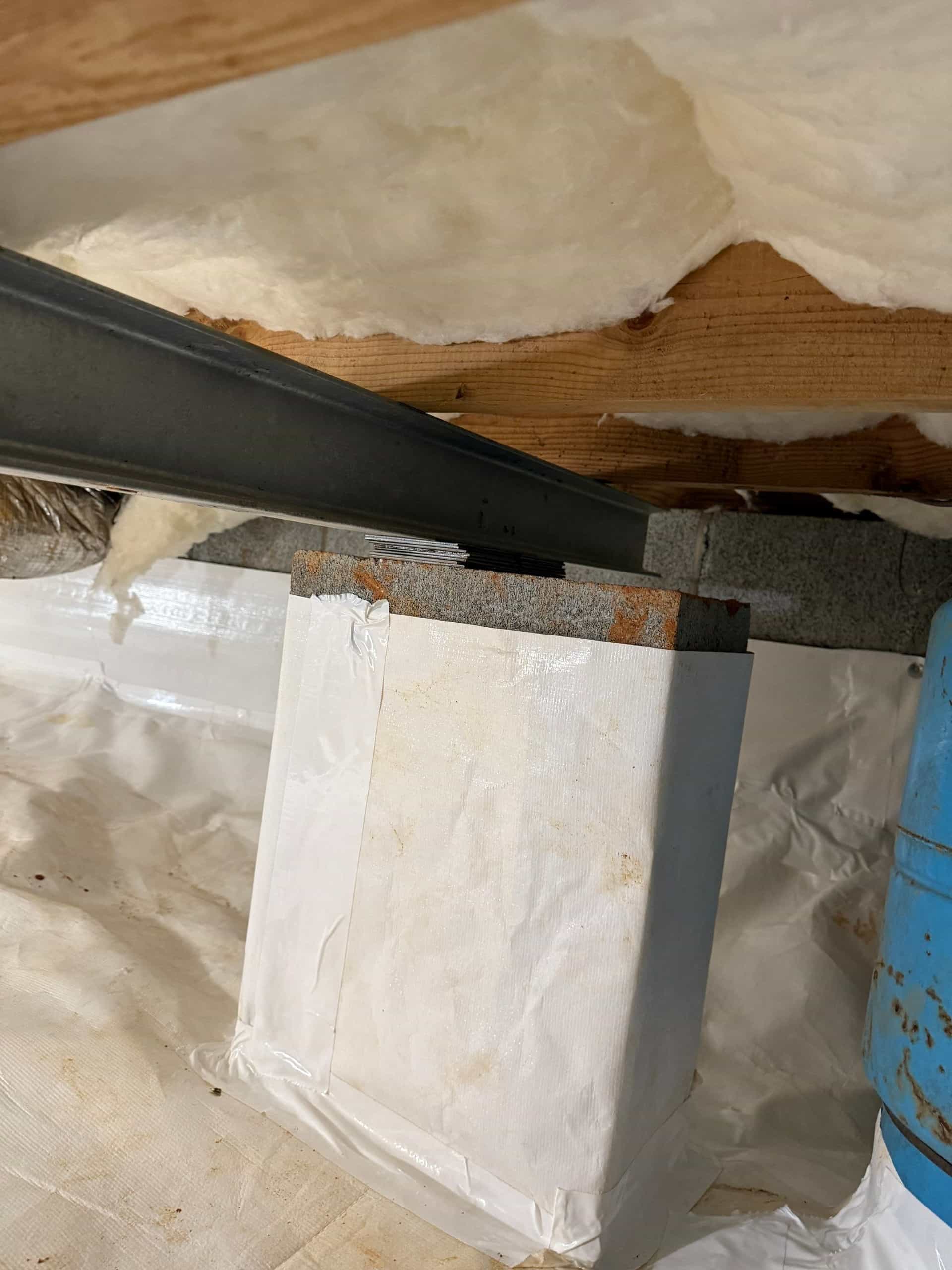
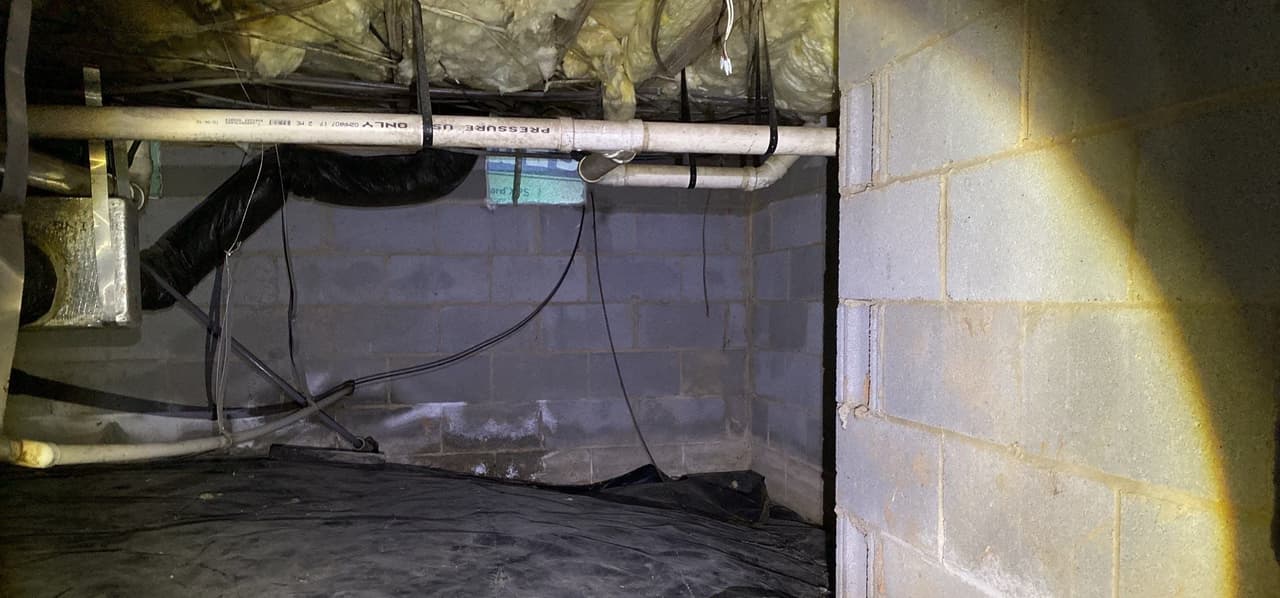
Under the house, failed insulation is easy to spot: batts hanging loose or lying on the soil, fiberglass that is dark and matted, wire supports that have pulled away, and bare subfloor where sections are missing. Insulation disturbed by animals is another common finding.
CH 03
Where Should Crawl Space Insulation Go?
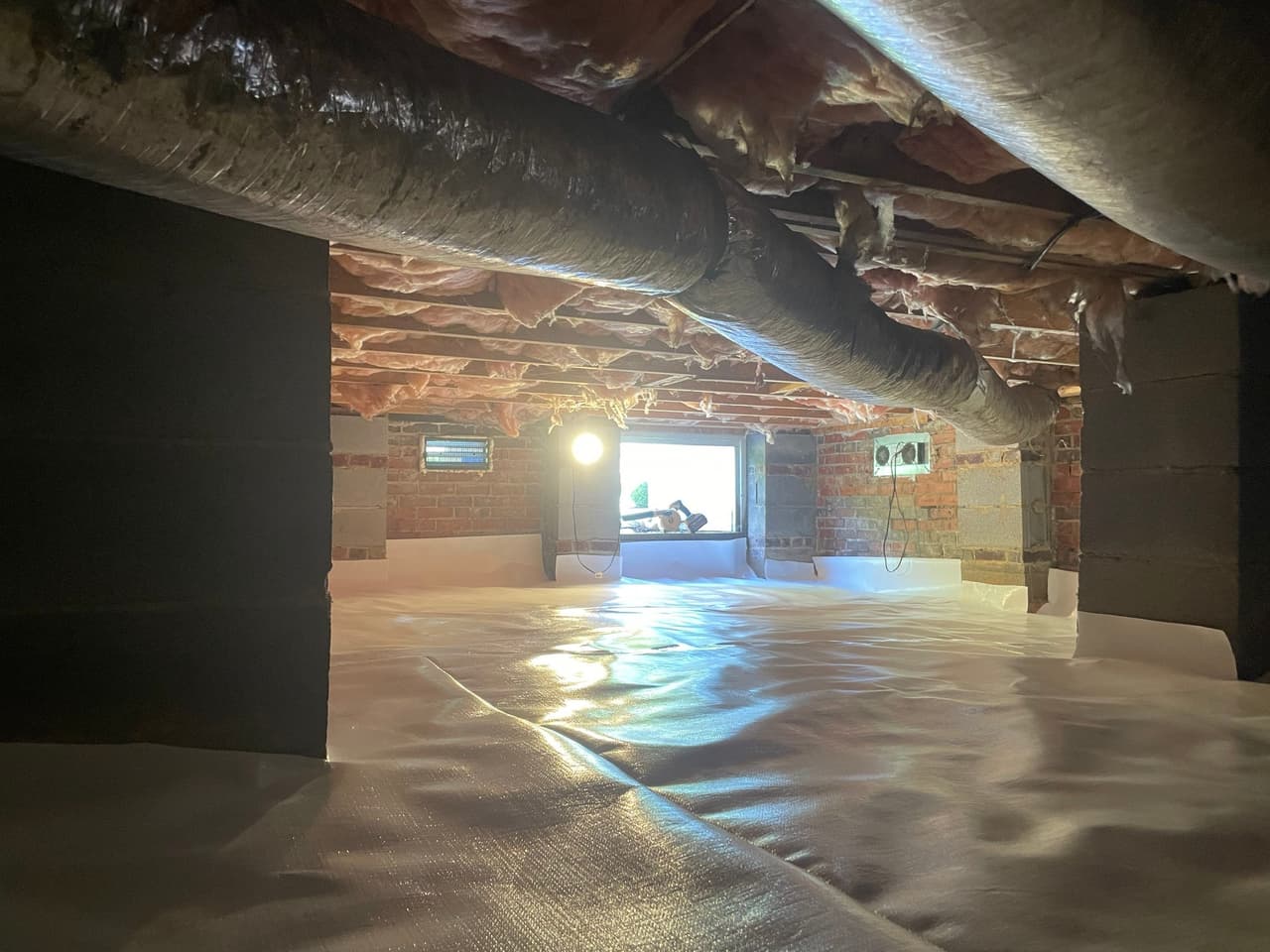
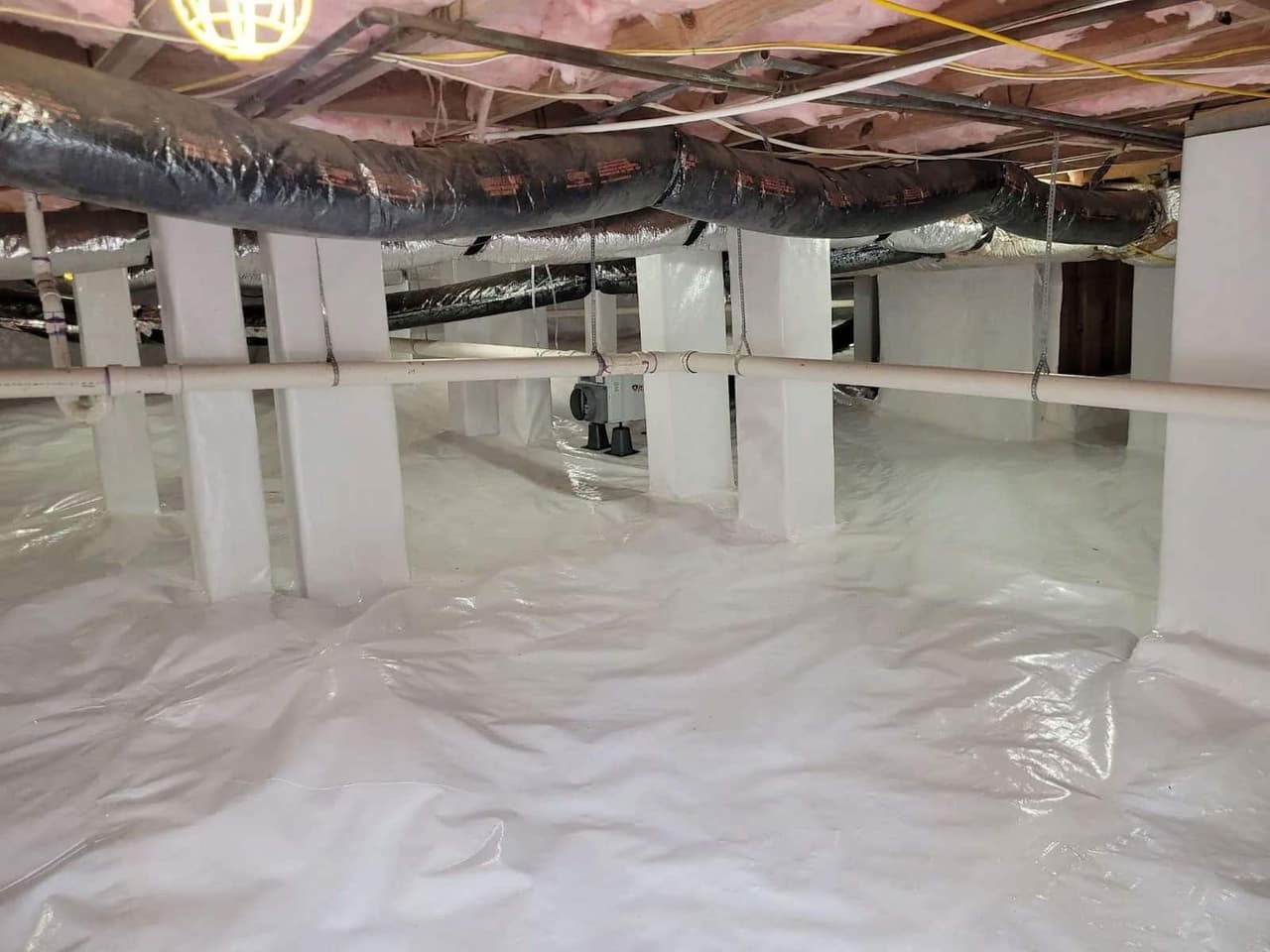
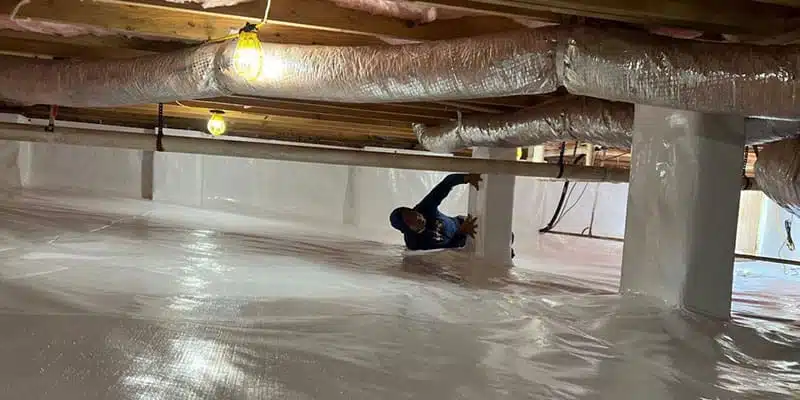
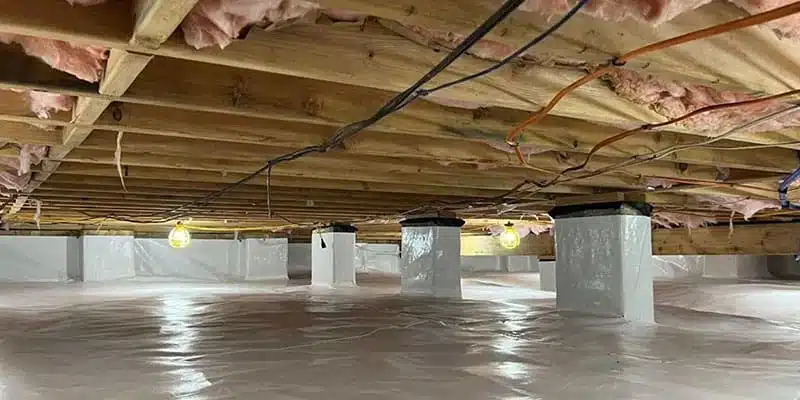
In a sealed crawl space, insulating the perimeter walls is often a more durable approach than insulating the subfloor, because the walls stay dry inside a conditioned space and the crawl space becomes part of the thermal envelope of the home. Where subfloor insulation fits, materials that resist moisture hold up far better than standard fiberglass batts. The sealed approach is covered under wall insulation for encapsulated crawl spaces.
Either way the work starts with a dry space: a vapor barrier to stop ground moisture and, where needed, interior drainage for the crawl space and a dehumidifier, so the insulation goes into conditions where it keeps working.
CH 04
Should Old Crawl Space Insulation Be Removed First?
During the inspection we look at the existing insulation: whether it is wet, sagging, or contaminated and should come out. If old insulation is dry and intact, we will say so and not replace it. When new insulation is needed, the insulation installation process matches the material and method to a dry space so it can keep performing.
Clearing out failed insulation is often part of crawl space cleaning before new work goes in.
CH 05
How Is Old Crawl Space Insulation Removed?
Failed insulation is pulled down, bagged in the crawl space, and carried out, so the loose fibers and debris do not spread through the space. Fasteners and wire supports that held it are removed too. Damp insulation can be heavy, and the work is done in tight quarters, which is part of why removal is often its own step in the estimate.
Once the old material is out, the subfloor and joists are easier to inspect, and any damp or damaged wood shows clearly. That is often where we find the moisture source that ruined the insulation in the first place.
CH 06
Is Insulation Still Needed After a Crawl Space Is Sealed?
Insulation under the floor is there because a vented crawl space is open to outside air. Once the crawl space is encapsulated and air sealed with a dehumidifier, the homeowner benefits right away even before insulation goes back, and insulation is technically no longer needed.
Building code still requires insulation, so HydroHelp911 insulates even when the space is encapsulated, usually on the foundation walls. A fully sealed crawl space is where that wall insulation stays dry and keeps working.
CH 07
What Does Crawl Space Insulation Installation Cost?
Most crawl space insulation projects fall between $2,500 and $8,000. The main factors are the square footage, how much failed insulation has to come out first, where the new insulation goes, and whether moisture work is needed before it is installed. These figures are a range, not a quote. You receive a written estimate after a free inspection, and financing is available.