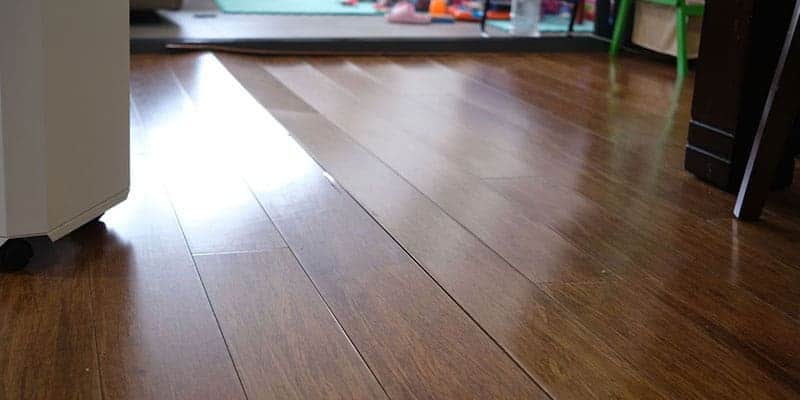

If your floor feels uneven when walking, the two most common causes are a foundation that has settled unevenly and a subfloor that has weakened, often from moisture in the crawl space. Both can be repaired once an inspection shows which one you have.
This guide covers the main reasons a floor feels uneven, how to tell sloping from sagging, and how each problem is usually fixed.
Why Does My Floor Feel Uneven When I Walk on It?
If walking through your home makes you feel unsteady, or your step feels bouncy, you may be dealing with uneven floors.
The two main causes of uneven floors are uneven settlement and subfloor problems.
Common Cause 1: Differential Settlement
It is common for a home’s foundation to settle gradually into the soil.
When one part of the foundation settles more than the rest, it is called differential settlement, and it can lead to sloping floors.
If your floor feels uneven when walking, this may be the reason. Differential settlement can happen for several reasons:
- Soil that shrinks and swells: In the Carolina Piedmont, clay rich soils absorb water in wet seasons and shrink in dry periods, and that cycle can move a foundation unevenly. Soil that erodes can also leave gaps under part of the foundation.
- Tree roots: Large trees near the house can dry out the soil under a foundation, which can lead to uneven settlement.
- Nearby construction: Work close to the house can disturb the soil under the foundation.
- Saturated soil: Heavy rain that soaks the ground around a foundation can soften soil that was supporting it.
How Can You Tell If Differential Settlement Is Causing Uneven Floors?
If the foundation is settling unevenly, you may notice sloping floors along with some of these signs. An inspector can tell you what they mean for your home.
- Cracks: Cracks in ceilings, in walls or where drywall seams meet, often around corners, windows and doors or on the outside of the house.
- Foundation damage you can see: cracks in the walls of the foundation, bowing or bulging, or water coming through.
- Sticking windows or doors: Windows and doors that become hard to open and close can point to uneven settling that is shifting the frame of the house.
- Gaps around the deck and other exterior features: New gaps around a deck, stairs, porch or chimney can mean the foundation is moving unevenly.
- A musty odor: An unpleasant smell can point to a moisture problem in the crawl space, which can lead to mold.
Common Cause 2: Subfloor Issues
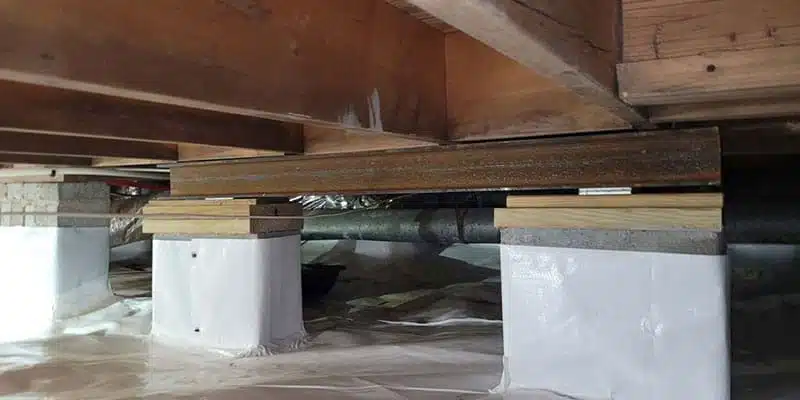
Homes built over a crawl space rely on a floor system of supports, joists and beams.
When that system is damaged, the floor can feel uneven when walking or start to sag. Common causes include:
- Moisture problems: Water from any source can cause the wood to decay or bend, which weakens its support.
- Installation problems: Mistakes during construction, or materials that do not hold up to moisture, can wear out early.
- Wood eating insects: Wood boring beetles, carpenter ants and termites eat away at the wood and can weaken the floor framing.
- Age: Years of daily use and exposure can gradually wear down the floor framing.
What Is the Difference Between a Sloping and Sagging Floor?
Knowing whether your floors are sagging or sloping helps point to the cause.
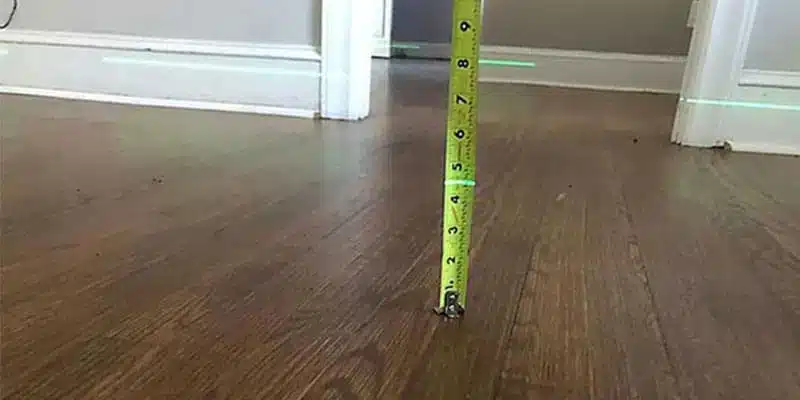
A sloping floor runs downhill at a fairly even angle, often across several connected rooms. That pattern usually points to the foundation.
A sagging floor dips in spots and can feel spongy underfoot. That pattern usually points to the joists, beams or supports under that part of the floor.
How Can You Spot a Sloping Floor?
A simple test is to set a small ball on the area you think is sloping. If the ball rolls away on its own, the floor slopes.
Another sign is a gap between the wall or baseboards and the floor that grows over time.
How Can I Fix Uneven Floors?
The first step is to find out why the floor feels uneven when walking. A self leveling compound can hide the dip without fixing what caused it, so start with an inspection that finds the cause.
There are three common types of repair:
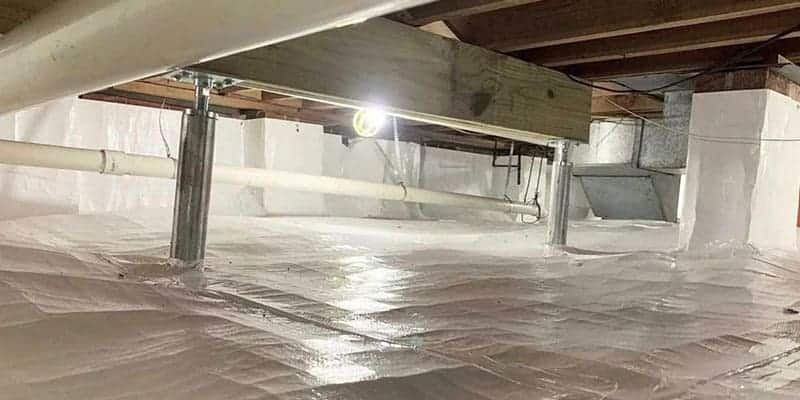
- Crawl space support: Repairing or replacing damaged floor supports, and where it helps, setting adjustable steel crawl space jacks under low areas.
- Basement wall reinforcement: Stabilizing cracked or bowed basement walls with carbon fiber straps or wall anchors.
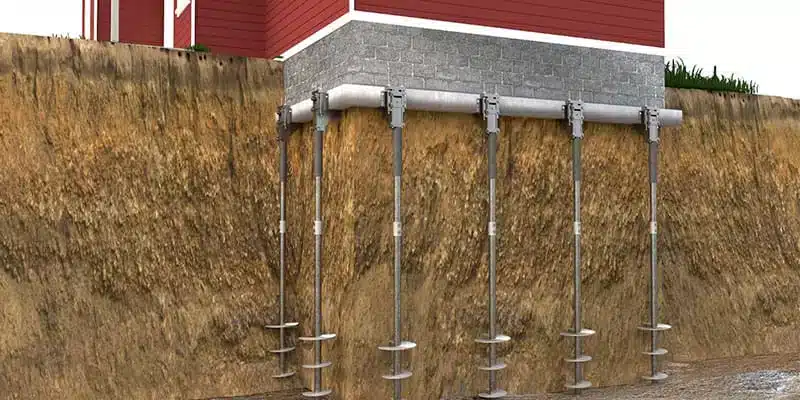
- Foundation stabilization: When the cause is uneven settlement, the usual repair is underpinning with helical piers, push piers or slab piers that reach more stable soil.
Once piers carry the load, they can often be used to lift the foundation back toward its original position. How much lift is practical depends on the house and the soil, and the inspector sets expectations before the work starts.
How Can You Help Prevent Uneven Floors?
A few homeowner habits help keep water and roots from working against the foundation. These are tasks a homeowner or another trade looks after.
- Homeowner tip, gutters: Clean the gutters regularly so they do not overflow and soak the soil next to the house.
- Homeowner tip, trees: Plant new trees well away from the house so their roots stay clear of the foundation.
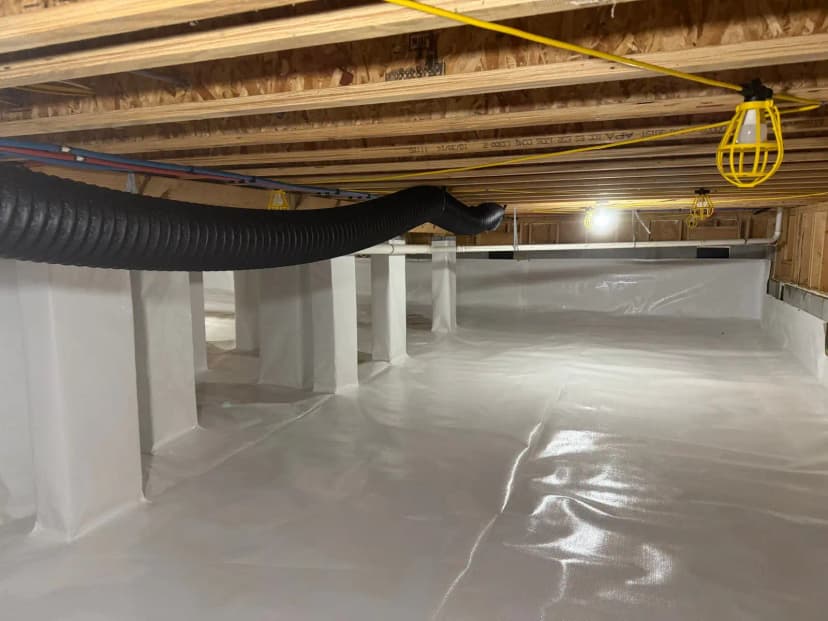
- Interior drainage: In a crawl space or basement that takes on water, an crawl space drainage with a sump can carry groundwater out before it collects under the house.

If your floor feels uneven when walking, a foundation inspection can show the cause.
Next Step
Schedule a Free Inspection
Call or fill out our quick online form. We'll book a convenient time to assess your home at no cost.
Learn more about our crawl space repair services.
Found this useful? Share it with someone working on their home.
Written by
Cory Parks
Owner & President, HydroHelp911
Cory Parks founded HydroHelp911 and leads its structural and moisture repair work for homeowners across North and South Carolina, from the clay soils of the Piedmont to the saturated, sandy ground along the coast.
More about CoryGet a Free Inspection
Two ways to start. Both are free, with no obligation.
Pick your own day in our calendar. You save $250 if you go ahead with the work.
Send a short form, and our office will call to book a time that suits you.
For new customers who book online through our website and then sign a contract.