Wet drywall in a finished basement is a sign water is getting through the wall
Finished basement walls hide what is happening behind them. Here is how to read the warning signs and what is usually causing them in Greater Charlotte area homes.
Let's take the first step toward a healthy home.
A local specialist will inspect your foundation, walk you through the findings, and send a clear estimate. no cost, no pressure.
Wet Drywall in Finished Basements: diagnosed and explained.
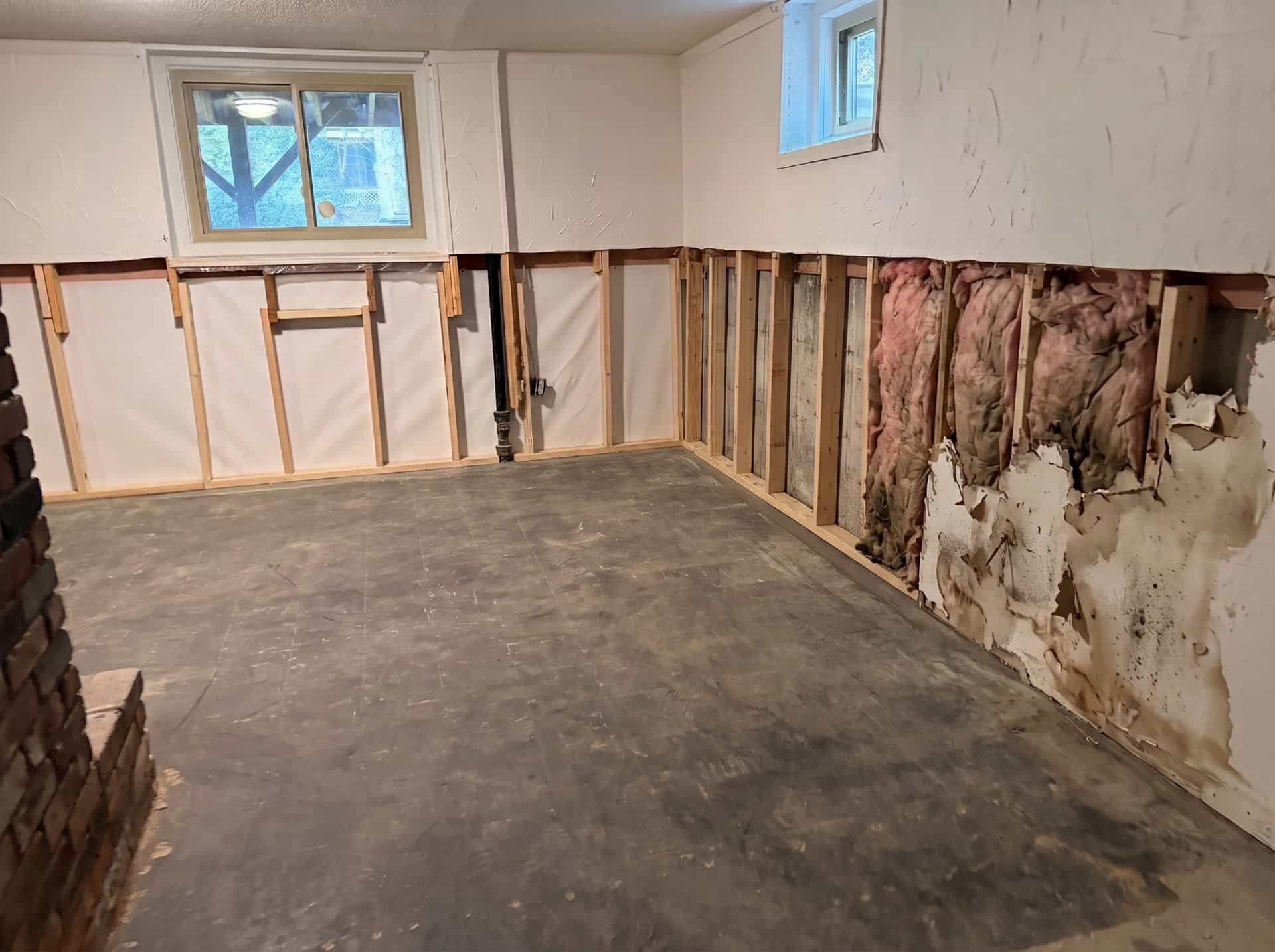
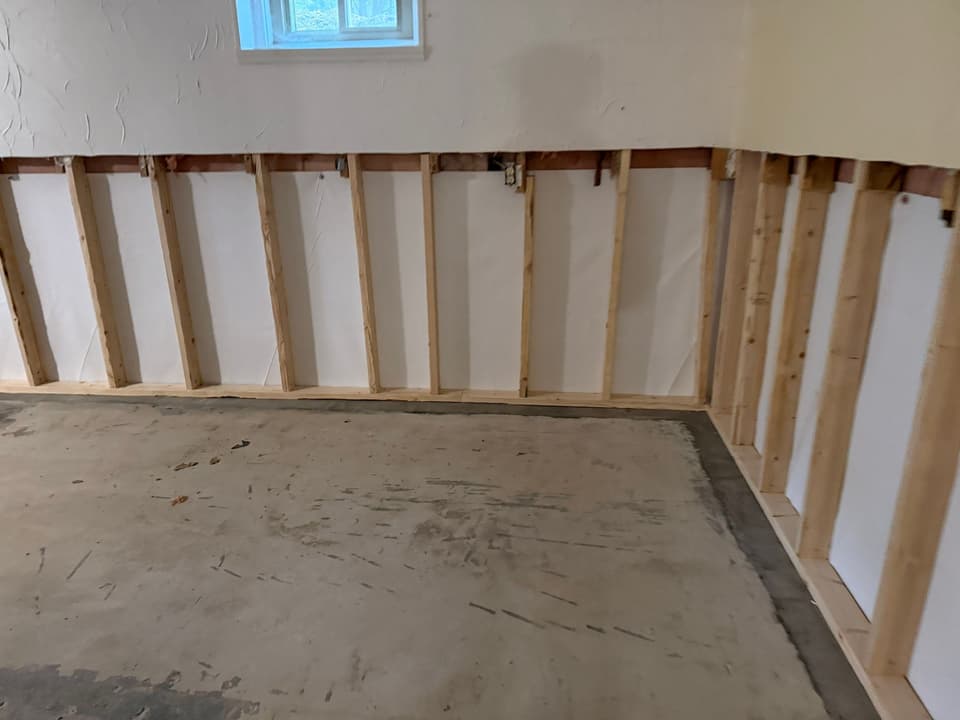
When a basement is finished, drywall covers the concrete or block foundation wall behind it. Drywall is gypsum wrapped in paper, and both layers absorb water like a sponge. So when moisture reaches the back of the wall, the drywall draws it in and holds it. You may notice a soft or spongy spot, paint that bubbles or peels, a tide line of discoloration near the floor, or a musty smell that does not go away. By the time the front face of the drywall looks wet, water has usually been moving through the wall cavity for a while. The drywall itself is the messenger. The real issue is water finding its way to the inside of the foundation wall, and that is what a basement waterproofing assessment is built to locate.
What to look for before the damage spreads
Bubbling, blistering, or peeling paint
Paint lifts away from drywall when moisture builds behind the surface. A patch that bubbles or flakes, especially low on the wall, usually means the gypsum behind it is already damp.
Soft, spongy, or sagging drywall
Press gently near the floor. Drywall that gives, feels soft, or bows outward has absorbed enough water to lose its structure. This is a clear sign water has been present for some time.
Staining or a tide line near the baseboard
A brown or yellow horizontal line a few inches up from the floor marks how high water has wicked into the wall. It is one of the most reliable indicators of recurring intrusion at the base of the wall.
A persistent musty or damp smell
Finished basements that smell musty even after they are aired out often have moisture trapped behind the drywall. The odor frequently shows up before any visible staining does.
Cool, clammy walls or visible condensation
If the lower walls feel damp to the touch or you see beads of moisture on hard surfaces in summer, humid air is condensing against cool below-grade walls and keeping the drywall wet from the inside.
What causes wet drywall in finished basements in Carolinas homes.
How basement waterproofing specialists actually fix wet drywall in finished basements.
Solving wet drywall in finished basements means addressing the underlying soil, pressure, or settlement cause. Not just patching the visible damage. Below are the engineered solutions we install most often for this symptom in Carolinas homes.
Engineered basement waterproofing solutions for this problem.
Each method is matched to a specific failure mode and soil profile. Browse the toolkit we draw from when diagnosing your home.
Why basement and below-grade water across the Carolinas needs a regional fix
Water reaches your walls for reasons that track the local ground and climate. In the Piedmont, clay backfill holds rainfall against below-grade walls and builds hydrostatic pressure every time the soil swells in a wet season. Near the coast around Wilmington and Leland, a high water table and tropical rainfall keep sandy soils saturated, so water pushes up from below as much as in from the sides. In the foothills of the SC Upstate around Greenville and the Midlands around Columbia, heavy summer storms saturate clay quickly and overwhelm grading that worked the rest of the year. A generic approach fails here because it ignores the soil and rainfall that put water against your wall in the first place.
Piedmont clay and the crack patterns it produces
Much of the Piedmont, from Charlotte through the Triad, sits on clay-rich soil that holds water. Clay absorbs moisture in wet seasons and swells, then contracts in dry periods. That cycle pulls pressure on and off a foundation, pulling away from footings, creating voids beneath slabs, and producing the vertical and diagonal settlement cracks we see most frequently across the region.
Homes built on uncompacted clay backfill show the highest incidence of progressive settlement cracking in our inspection work. The same clay that looks stable through a normal year can move enough during a long wet spring or a hard summer drought to open a crack that keeps widening.
Coastal and Sandhills soils behave differently
In Wilmington, Brunswick County, and Leland, high water tables, saturated and sandy soils, and salt air drive a different set of failure modes than inland clay. Lateral water pressure, erosion, and corrosion are the drivers here, which is why coastal foundation and seawall work needs an approach that inland techniques don't account for.
Across the Sandhills near Fayetteville and Pinehurst, sandy soils drain differently again, and in the mountains around Asheville, hillside foundations, slopes, and heavy rainfall change the picture once more. We diagnose to the soil and climate of the specific home, not to the Carolinas generically.
"When we see wet drywall in a finished basement, we treat it as a clue, not a verdict. The drywall is telling us water is getting to the wall. Our job is to find exactly where and why, then give that water a managed way out. We would rather walk a homeowner through what is actually happening than hand them a worst-case story."
Care and expertise from a team that does this every day.
HydroHelp911 is locally owned and operated, with crews dedicated exclusively to foundation, basement, and concrete work across the Carolinas.
Foundation repair, waterproofing, and concrete leveling are our entire focus. not a sideline.
Deep experience with Carolinas soils, basements, and weather conditions.
Accredited with an A+ rating and thousands of homeowner reviews across the Carolinas.
Lifetime warranties available on many services, backed by the original installer.
Answers to common questions about Wet Drywall in Finished Basements.
Don't see your question here? Our team is happy to help. Reach out anytime.
Other basement waterproofing warning signs to watch for.
If you see one, it's worth checking for the others. Most foundation problems show up as more than one symptom.
Serving North Carolina & South Carolina.
Local crews based in offices across the Carolinas, dispatched daily. If your town isn't listed, call us. we likely serve your area.
- Charlotte, NC
- Huntersville, NC
- Matthews, NC
- Greensboro, NC
- Winston-Salem, NC
- Asheville, NC
- Wilmington, NC
- Fayetteville, NC
- Greenville, SC
- Columbia, SC
Take the first step toward a healthy home.
A straightforward path from initial inspection to completed repairs.
Schedule your inspection.
A local specialist visits your home, evaluates the foundation, and answers your questions on site. No cost, no obligation.
Receive an estimate based on your needs.
We provide a clear, written estimate with a scope of work tailored to your home's specific issues. Typically within one business day.
Get your repairs.
Our certified crews complete the work on schedule and back it with product warranties of up to 25 years.
Over 1,750 homeowners have shared their experience.
A 4.9-star average across Google, with verified reviews from homeowners throughout North and South Carolina.
Two ways to start: book instantly, or request an estimate.
Schedule your inspection in seconds with our Driive booking tool, or share a few details and a local specialist will follow up within one business day.
- A local foundation specialist on site
- A complete walk-through of the findings
- A written estimate within one business day
- No cost, no obligation, no high-pressure sales