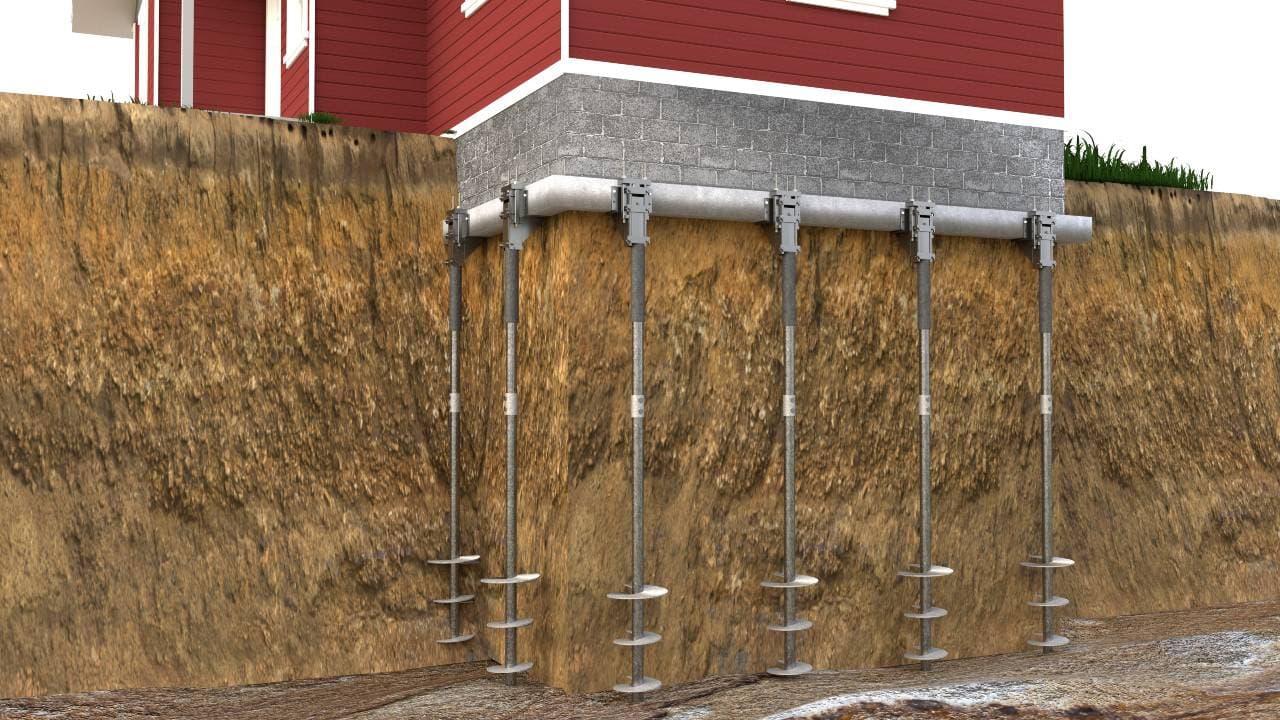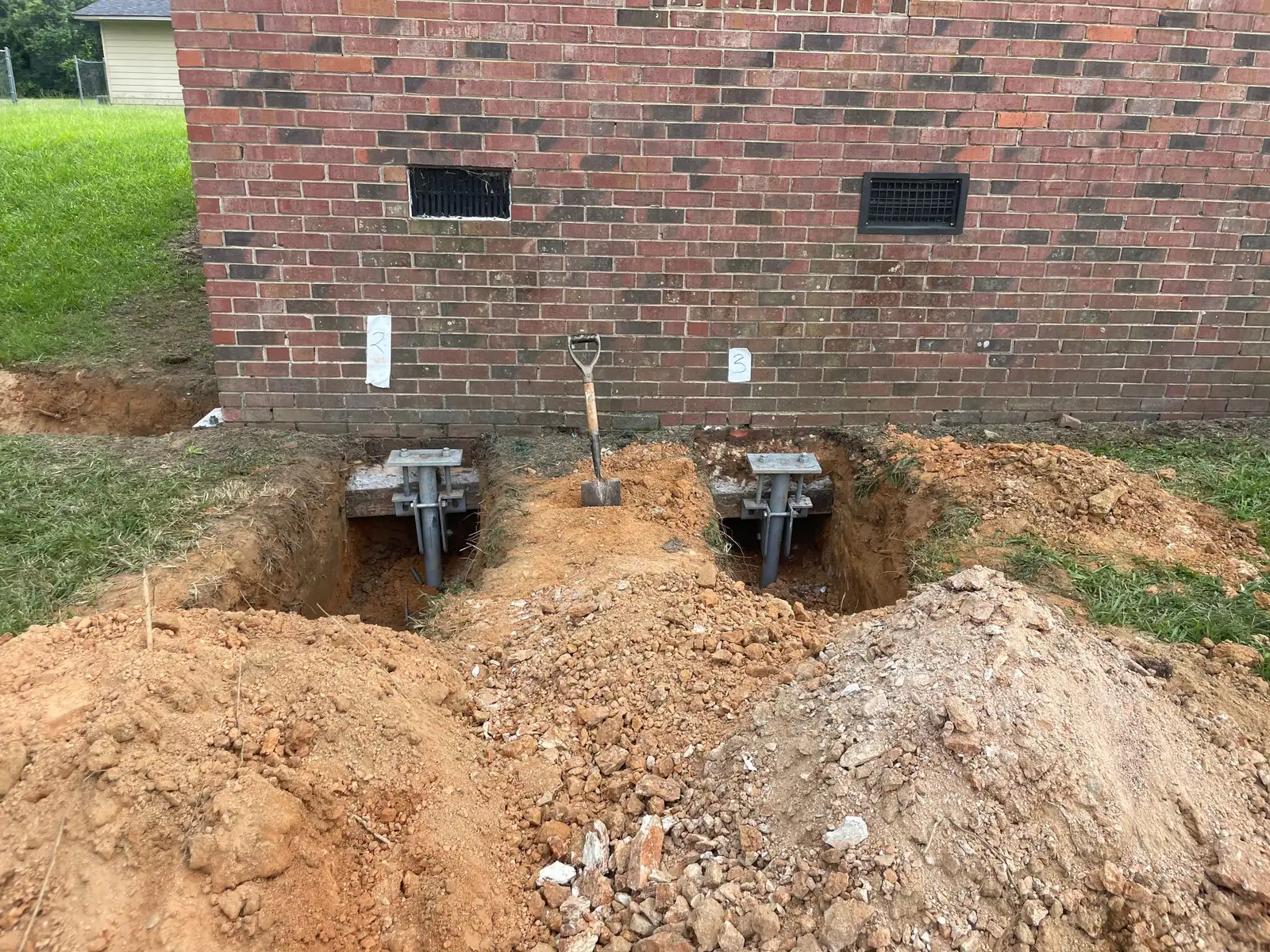

A tieback anchor is a steel anchor that holds a bowing, leaning or tilting wall against the soil pushing on it. It reaches back through the wall into firmer soil beyond the soil that is pressing in, and a plate on the inside face ties the wall to it. A helical tieback is one common type: a steel shaft with helical plates, shaped like a screw, turned into the ground at an angle. Homeowners often come across tiebacks while reading about bowing basement walls.
The sideways pressure behind a bowing wall usually comes from soil and water. Across the Piedmont, from Greensboro and Winston-Salem to the Triangle, clay soils take on water in wet seasons and swell, then shrink in dry spells, and that repeated cycle presses on basement walls. On mountain lots around Asheville, slopes and heavy rain soak the soil against a wall. In the SC Upstate and Midlands, foothill clay and summer storms load walls in much the same way.
HydroHelp911 stabilizes bowing walls with wall anchors, I-beam wall bracing and carbon fiber reinforcement, and this page explains tiebacks so you can compare them with those methods. Every wall repair starts with a free inspection that measures how far the wall has moved and looks at what is pushing on it.
What to Know About Tieback Anchors / Helical Tiebacks and How the Method Works
HydroHelp911 stabilizes bowing walls with wall anchors set in the yard, steel I-beam braces and carbon fiber, and this page explains tiebacks so you can compare them. A tieback counters sideways pressure: the soil right behind the wall pushes harder than the wall can hold, so the anchor reaches past that soil to firmer ground.
With a helical tieback, the shaft is turned into the soil at an angle from inside the wall until it reaches the holding capacity the design calls for. It connects to a steel plate on the inside face, and tightening the connection holds the wall against the load. A wall anchor with a buried plate does a similar job, and steel I-beams set against the wall hold it from inside without reaching into the soil.
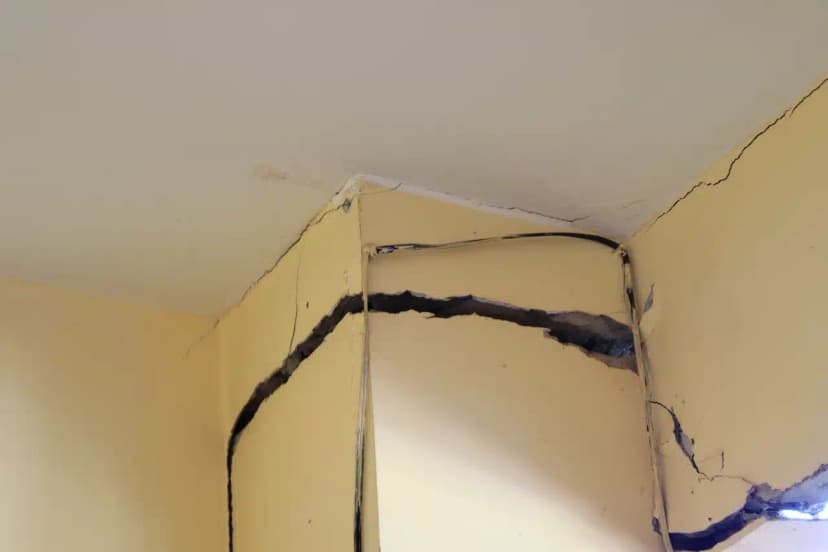
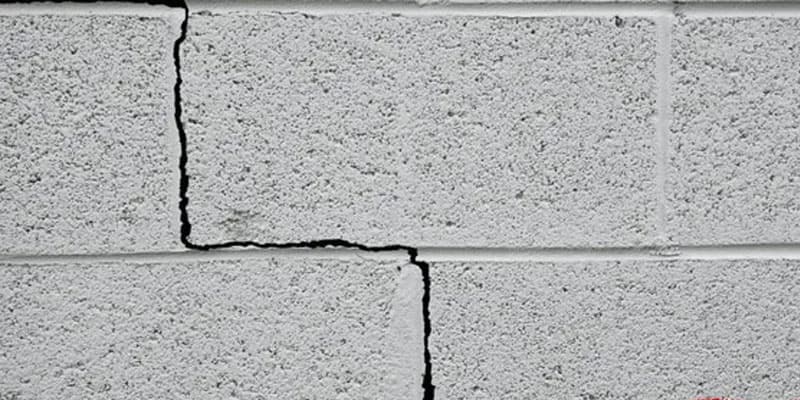
Any anchor or brace is meant to stabilize a basement wall bowing inward against further movement, and none of them straightens the wall. None of them removes the water that adds to the pressure either, which can show up as wide cracks with water seeping through, so the inspection also looks at how water reaches the wall.
Common Questions About Tieback Anchors / Helical Tiebacks
What Is a Tieback Anchor and How Is It Different From a Wall Anchor?
A tieback anchor ties a wall to firmer soil beyond the soil pushing on it, using a steel anchor that extends back through the wall. A helical tieback is turned into the ground like a screw. A wall anchor works on a similar idea but uses an anchor plate buried in the yard, connected by a steel rod to a plate on the inside of the wall. HydroHelp911 stabilizes bowing walls with wall anchors, I-beam wall bracing and carbon fiber reinforcement, and the inspection shows which of those fits your wall.
Which Bowing Wall Repairs Does HydroHelp911 Install?
HydroHelp911 installs wall anchors, I-beam wall bracing and carbon fiber reinforcement for bowing and leaning basement walls. Carbon fiber straps often suit early, minor bowing. Wall anchors and I-beam braces suit walls under heavier pressure. If the wall is cracking because the footing below has settled, piers may be part of the plan. The free inspection measures how far the wall has moved and what is driving it.
Can Tieback Anchors Straighten a Wall That Is Already Bowing?
Tiebacks, like wall anchors, are used to stabilize a wall, which means holding it against further inward movement. They are not a method for straightening a wall. The same is true of the wall anchors HydroHelp911 installs: they stabilize a wall and do not straighten it.
Do Tieback Anchors Fix the Water Pressure Behind the Wall?
Not by themselves. An anchor holds the wall against the load, but it does not remove the water in the soil that adds to that load. In the Carolinas, much of that pressure comes from water, whether rain soaking a slope near Asheville or Piedmont clay swelling after a wet stretch. For a basement wall, an interior drainage system may be part of the conversation at the inspection.
How Much Do Tieback Anchors Cost?
There is no set price for tieback anchors, because the cost follows the wall, the soil behind it and how far the wall has moved. In general, the number of anchors, how deep each must reach and access to the wall shape the cost of any wall anchoring system. HydroHelp911 stabilizes bowing walls with wall anchors, I-beam wall bracing and carbon fiber, and the free inspection ends with a written estimate at no cost before any work is scheduled.
Next Step
Schedule a Free Inspection
Call or fill out our quick online form. We'll book a convenient time to assess your home at no cost.
Learn more about our foundation repair services.
Found this useful? Share it with someone working on their home.
Written by
Cory Parks
Owner & President, HydroHelp911
Cory Parks founded HydroHelp911 and leads its structural and moisture repair work for homeowners across North and South Carolina, from the clay soils of the Piedmont to the saturated, sandy ground along the coast.
More about CoryGet a Free Inspection
Two ways to start. Both are free, with no obligation.
Pick your own day in our calendar. You save $250 if you go ahead with the work.
Send a short form, and our office will call to book a time that suits you.
For new customers who book online through our website and then sign a contract.