Bowing walls: why a foundation wall bends inward in the Carolinas and how it gets stabilized
When a basement or foundation wall curves, leans, or bulges instead of standing straight, the soil outside is pushing harder than the wall was built to resist. Here is what drives that pressure across the Carolinas and what a no-pressure evaluation looks at.
Let's take the first step toward a healthy home.
A local specialist will inspect your foundation, walk you through the findings, and send a clear estimate. no cost, no pressure.
Bowing Walls: diagnosed and explained.
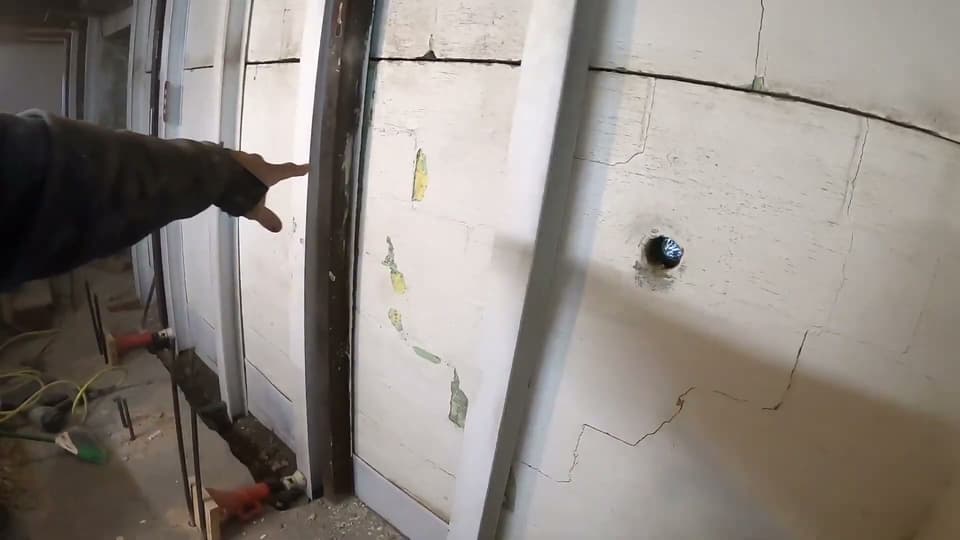
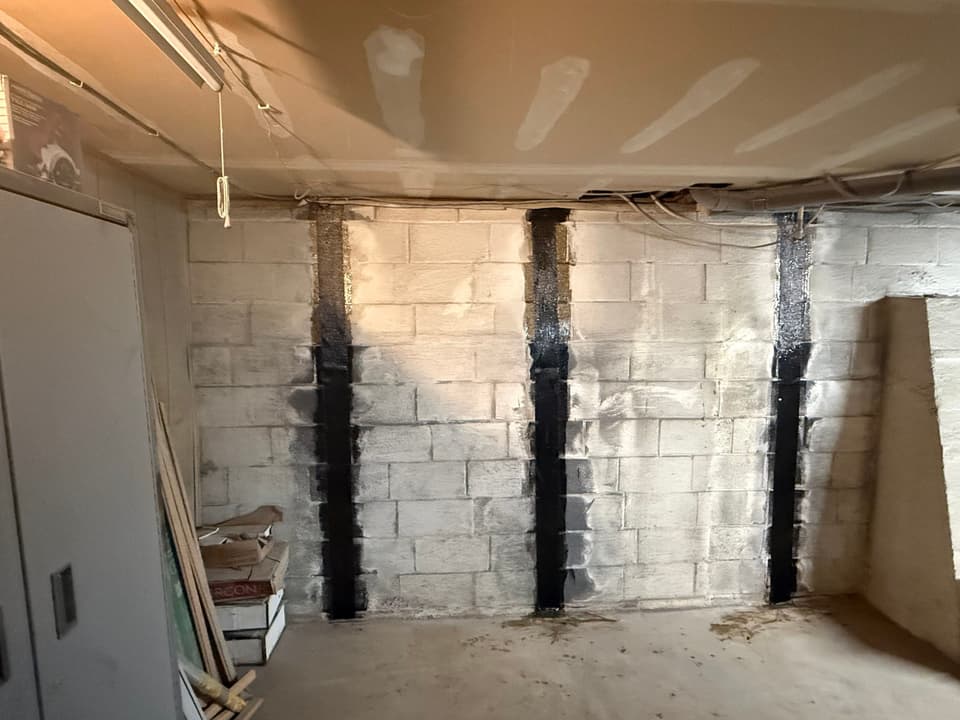
A bowing wall is a foundation or basement wall that has bent, curved, or leaned out of its original vertical plane under sideways pressure from the soil behind it. Foundation walls are built to hold back the earth and carry the weight of the house above, but they are far stronger against downward load than against sideways, or lateral, force. When the soil outside the wall pushes inward harder than the wall can resist, the wall begins to give. On a poured concrete wall this often shows as a horizontal crack across the middle and an inward bulge. On a concrete block or brick wall it usually shows as a horizontal or stair step crack along the mortar joints, with the wall leaning in at the top, sliding in at the base, or bulging through the center. Bowing is different from a sinking or settling foundation. Settlement is the footing dropping straight down, while bowing is the wall being pushed sideways, and the two are stabilized in different ways. The amount a wall has moved matters a great deal. A wall that is out of plumb by a small amount and has been stable for years is a different situation than one that is visibly bulging, has a widening horizontal crack, or has shifted more than an inch or two. Because the force comes from the soil and water on the outside of the wall, you cannot judge from inside the basement alone how far the wall has moved or whether it is still moving. A no-pressure inspection measures the wall's deflection, examines the soil and drainage conditions around it, and identifies the cause before any repair is discussed.
Signs that often show up alongside a bowing wall
A horizontal crack across the middle of the wall
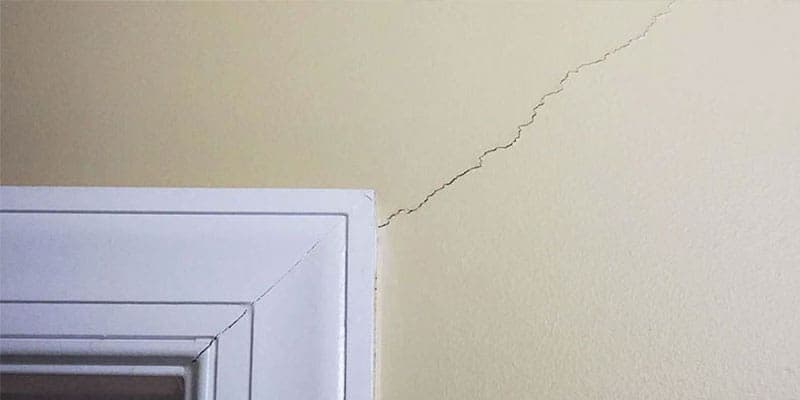
A long horizontal crack running across a poured concrete or block wall, often near the middle height, is one of the clearest signs of lateral pressure. Unlike a vertical or diagonal crack, a horizontal crack means the wall is being pushed inward rather than settling downward, and it frequently runs along the line where the wall is bending the most.
A wall that is visibly leaning, bulging, or out of plumb
A foundation wall that curves inward through the center, leans in at the top, or slides in at the base is no longer straight. Holding a level against the wall or sighting down its length can reveal a bulge or lean that is easy to miss at a glance. A wall that is out of plumb is a sign the lateral pressure has moved it.
Stair step cracks along the mortar joints of a block wall
On a concrete block or brick foundation wall, lateral pressure can crack the wall in a diagonal stair step pattern that follows the mortar joints, sometimes together with a horizontal crack. The cracking concentrates where the wall is bending and is a sign the masonry is failing under the sideways load.
Blocks or courses shifting out of alignment
When a block wall is being pushed inward, the rows of block can shift so they no longer line up flush, with the upper courses tipping in or the lower courses sliding inward. A wall where the block is no longer aligned indicates the movement has progressed beyond a surface crack.
Water intrusion or dampness along the cracks
Because bowing is so often tied to water in the soil, the same cracks that form under lateral pressure can let water seep through into the basement or crawl space. Damp spots, staining, or active seepage along a horizontal or stair step crack point to both the pressure and the moisture conditions driving it.
Doors and windows in the basement that stick
As a foundation wall moves out of plane, it can rack nearby door and window frames slightly out of square. Basement doors or windows that begin to stick or drag can accompany a wall that is bowing, since the framing is tied to the wall that is moving.
What causes bowing walls in Carolinas homes.
How foundation repair specialists actually fix bowing walls.
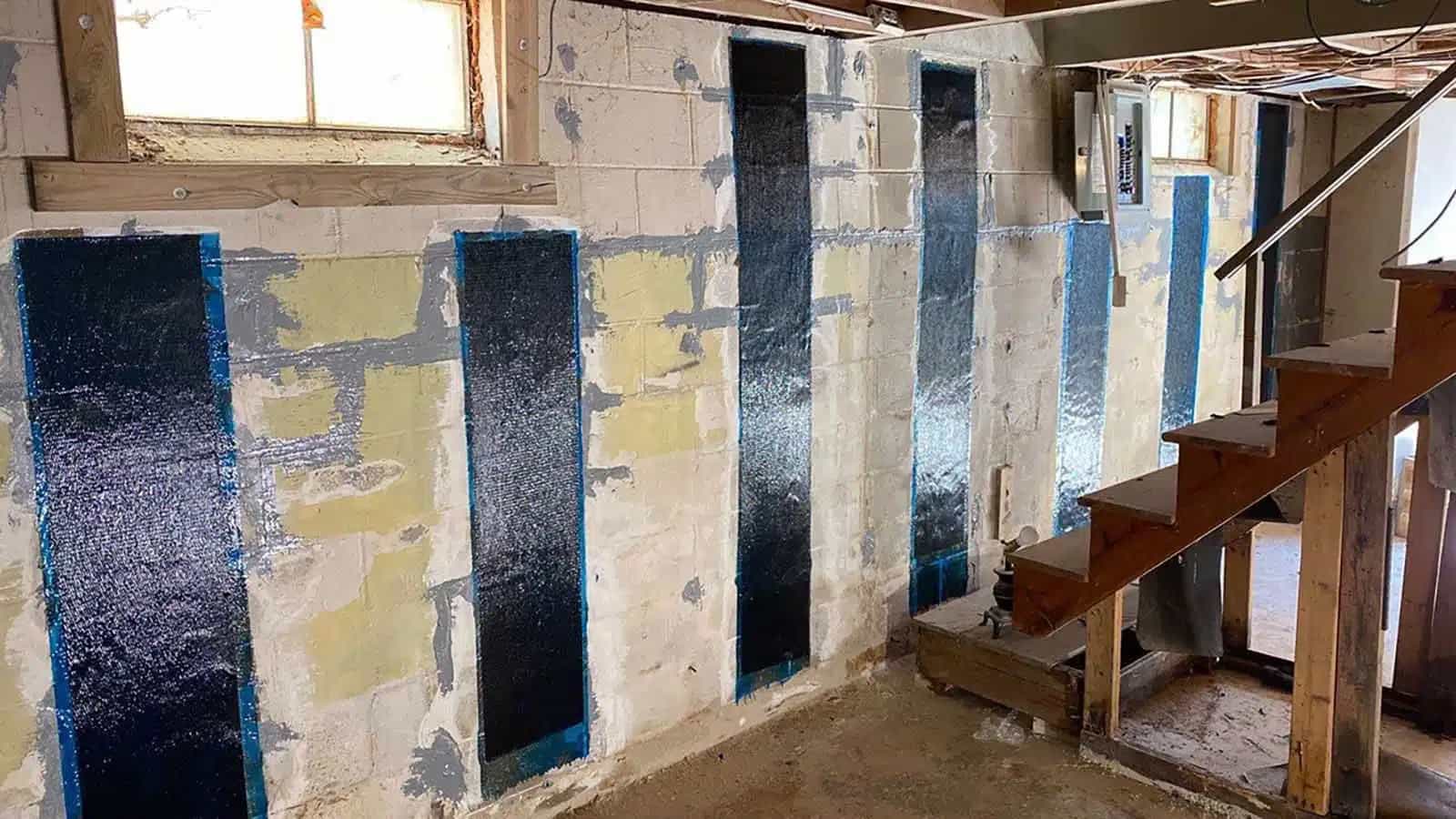
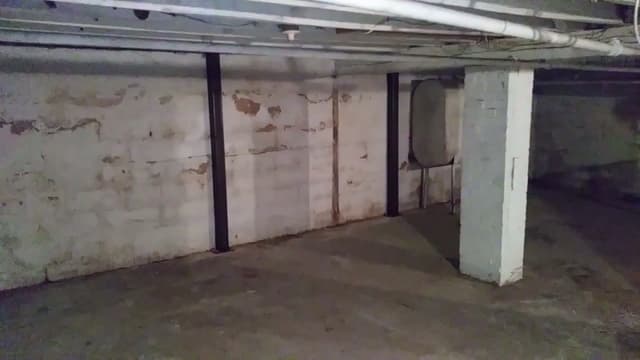
Solving bowing walls means addressing the underlying soil, pressure, or settlement cause. Not just patching the visible damage. Below are the engineered solutions we install most often for this symptom in Carolinas homes.
Engineered foundation repair solutions for this problem.
Each method is matched to a specific failure mode and soil profile. Browse the toolkit we draw from when diagnosing your home.
Why foundation movement across the Carolinas needs a regional diagnosis
Foundation movement behaves differently depending on where your home sits. In the Piedmont around Charlotte, Greensboro, Winston-Salem, and the Triangle, clay-rich soils absorb water in wet seasons and pull away from foundations as they dry, cycling pressure on your footings year after year. On the coast around Wilmington, Brunswick County, and Leland, a high water table and sandy, saturated soils create lateral pressure and settlement that inland clay never produces. In the mountains around Asheville, hillside lots and runoff load one side of a foundation more than the other. That is why our team starts with the soil and slope under your home, not just the crack on the wall.
Piedmont clay and the crack patterns it produces
Much of the Piedmont, from Charlotte through the Triad, sits on clay-rich soil that holds water. Clay absorbs moisture in wet seasons and swells, then contracts in dry periods. That cycle pulls pressure on and off a foundation, pulling away from footings, creating voids beneath slabs, and producing the vertical and diagonal settlement cracks we see most frequently across the region.
Homes built on uncompacted clay backfill show the highest incidence of progressive settlement cracking in our inspection work. The same clay that looks stable through a normal year can move enough during a long wet spring or a hard summer drought to open a crack that keeps widening.
Coastal and Sandhills soils behave differently
In Wilmington, Brunswick County, and Leland, high water tables, saturated and sandy soils, and salt air drive a different set of failure modes than inland clay. Lateral water pressure, erosion, and corrosion are the drivers here, which is why coastal foundation and seawall work needs an approach that inland techniques don't account for.
Across the Sandhills near Fayetteville and Pinehurst, sandy soils drain differently again, and in the mountains around Asheville, hillside foundations, slopes, and heavy rainfall change the picture once more. We diagnose to the soil and climate of the specific home, not to the Carolinas generically.
"When a wall is bowing, the wall itself is not the real problem, the soil and water pushing on it from outside are. That is a completely different situation than a foundation settling straight down, and it gets fixed a different way. We measure how far the wall has actually moved, figure out what is pressing on it, and then reinforce the wall and deal with the water behind it so the pressure does not just keep building. If your wall is stable, we will tell you that too. No pressure, no upsell."
Care and expertise from a team that does this every day.
HydroHelp911 is locally owned and operated, with crews dedicated exclusively to foundation, basement, and concrete work across the Carolinas.
Foundation repair, waterproofing, and concrete leveling are our entire focus. not a sideline.
Deep experience with Carolinas soils, basements, and weather conditions.
Accredited with an A+ rating and thousands of homeowner reviews across the Carolinas.
Lifetime warranties available on many services, backed by the original installer.
Answers to common questions about Bowing Walls.
Don't see your question here? Our team is happy to help. Reach out anytime.
Other foundation repair warning signs to watch for.
If you see one, it's worth checking for the others. Most foundation problems show up as more than one symptom.
Serving North Carolina & South Carolina.
Local crews based in offices across the Carolinas, dispatched daily. If your town isn't listed, call us. we likely serve your area.
- Charlotte, NC
- Huntersville, NC
- Matthews, NC
- Greensboro, NC
- Winston-Salem, NC
- Asheville, NC
- Wilmington, NC
- Fayetteville, NC
- Greenville, SC
- Columbia, SC
Take the first step toward a healthy home.
A straightforward path from initial inspection to completed repairs.
Schedule your inspection.
A local specialist visits your home, evaluates the foundation, and answers your questions on site. No cost, no obligation.
Receive an estimate based on your needs.
We provide a clear, written estimate with a scope of work tailored to your home's specific issues. Typically within one business day.
Get your repairs.
Our certified crews complete the work on schedule and back it with product warranties of up to 25 years.
Over 1,750 homeowners have shared their experience.
A 4.9-star average across Google, with verified reviews from homeowners throughout North and South Carolina.
Two ways to start: book instantly, or request an estimate.
Schedule your inspection in seconds with our Driive booking tool, or share a few details and a local specialist will follow up within one business day.
- A local foundation specialist on site
- A complete walk-through of the findings
- A written estimate within one business day
- No cost, no obligation, no high-pressure sales