CH 01
What Is a Basement Vapor Barrier?
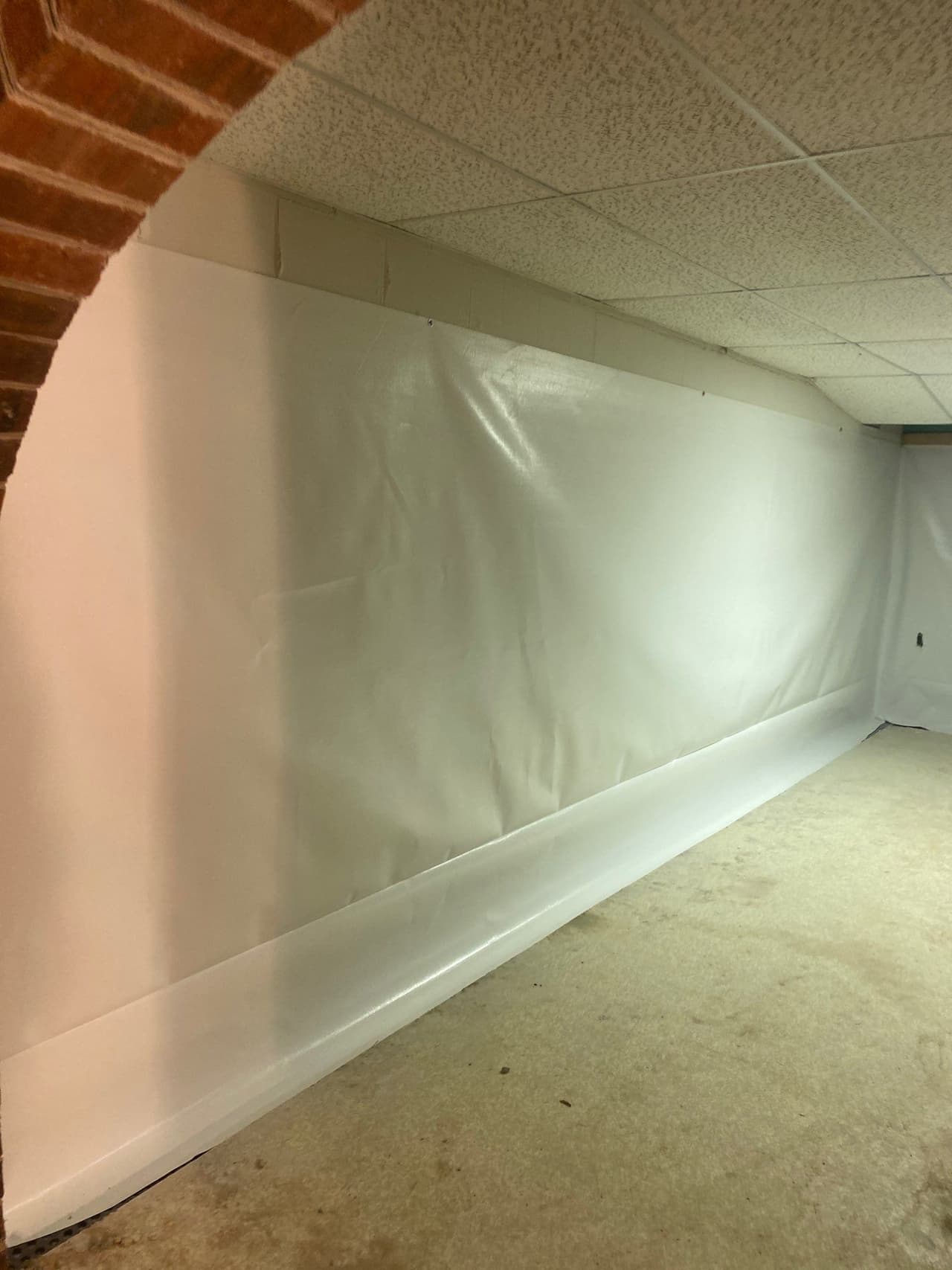
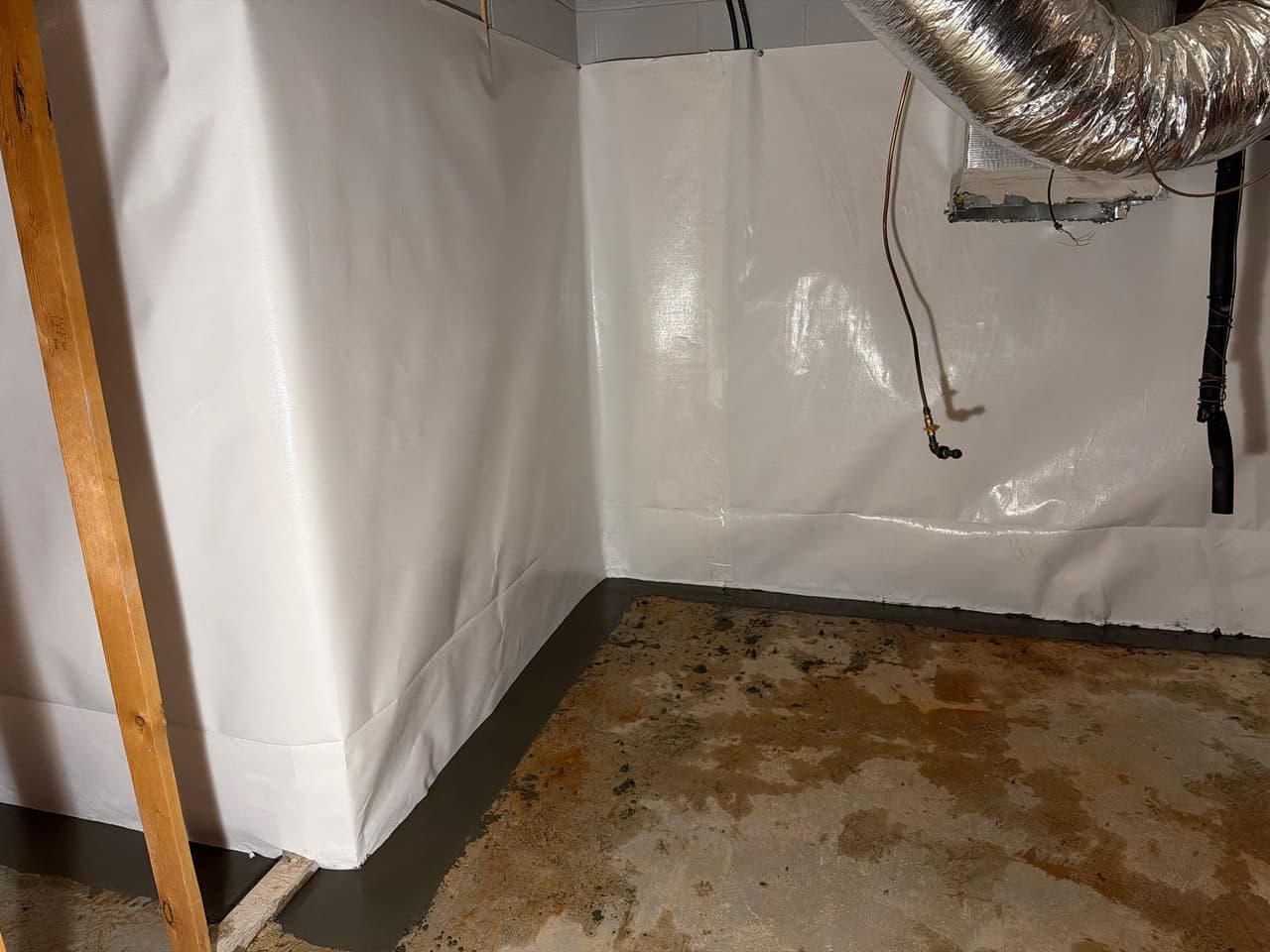
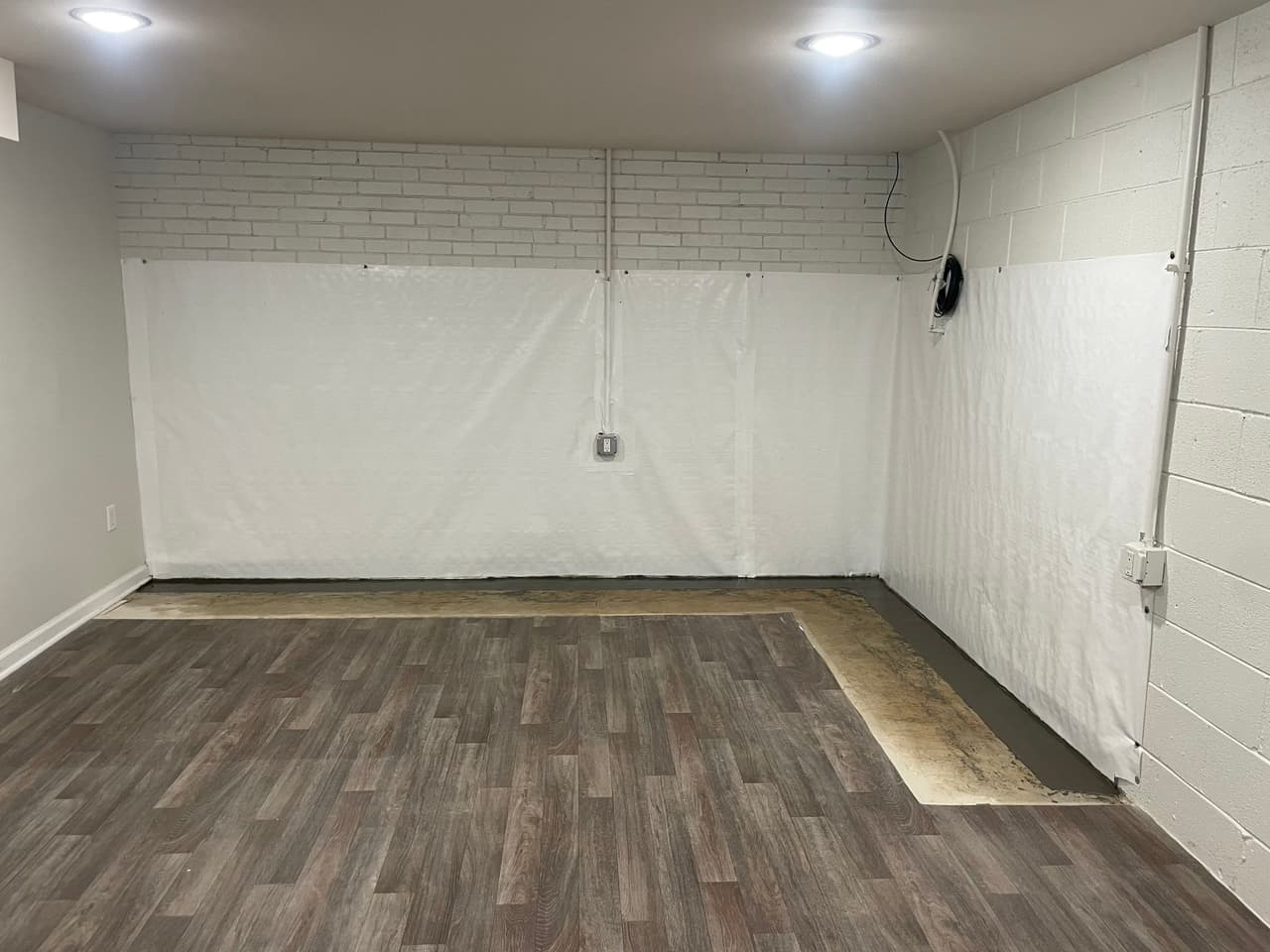
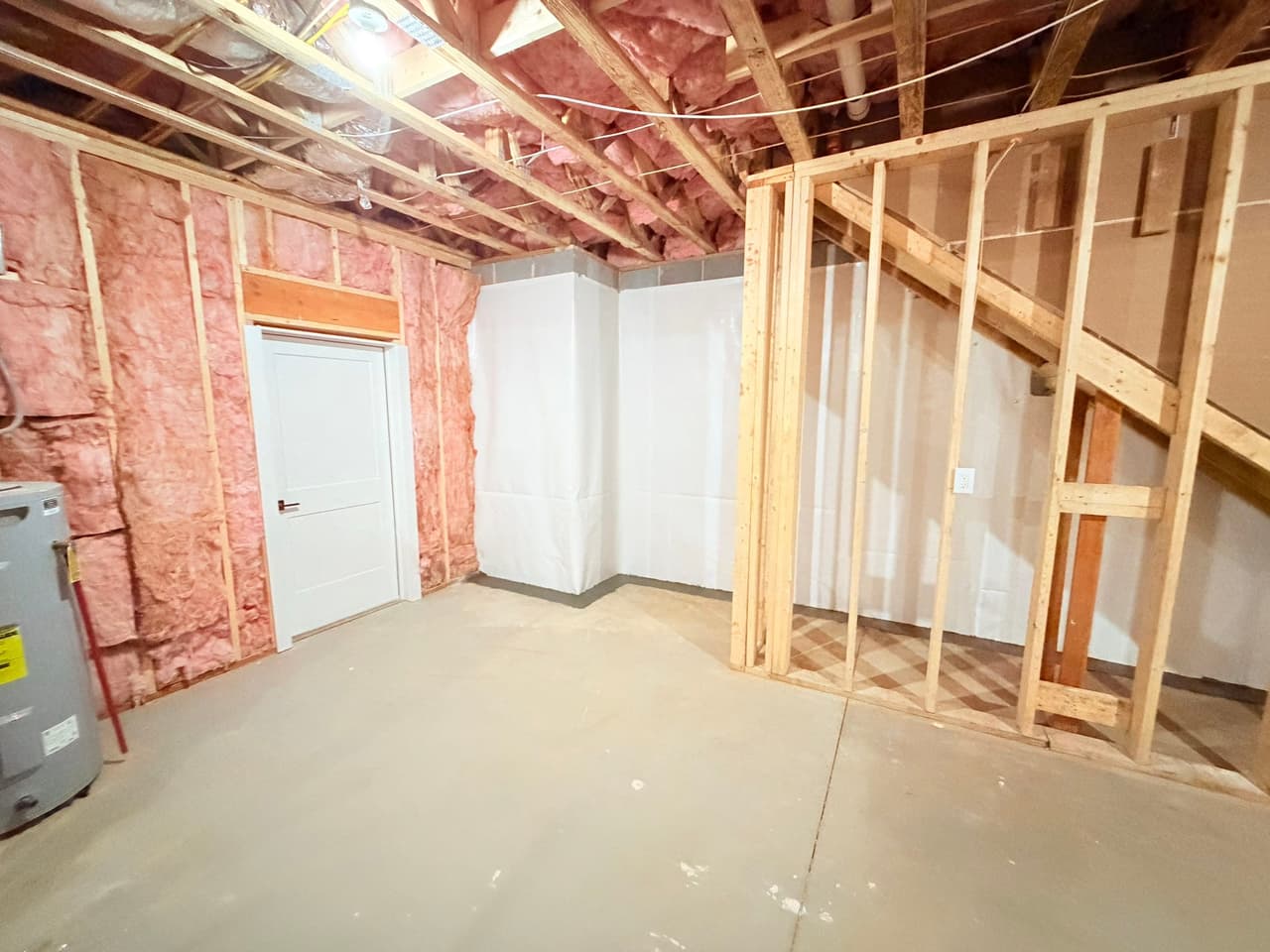
A basement vapor barrier is a layer that resists moisture, installed over the inside of the foundation walls and, where it fits, the floor. Soil around a basement holds moisture, and that moisture moves through concrete and block as vapor even when no water is running in. The barrier holds it at the wall so it does not raise the humidity in the room.
It is one of our basement waterproofing options, and the one that fits when the basement feels damp but does not leak.
CH 02
Why Is My Basement Humid Even Though It Never Floods?
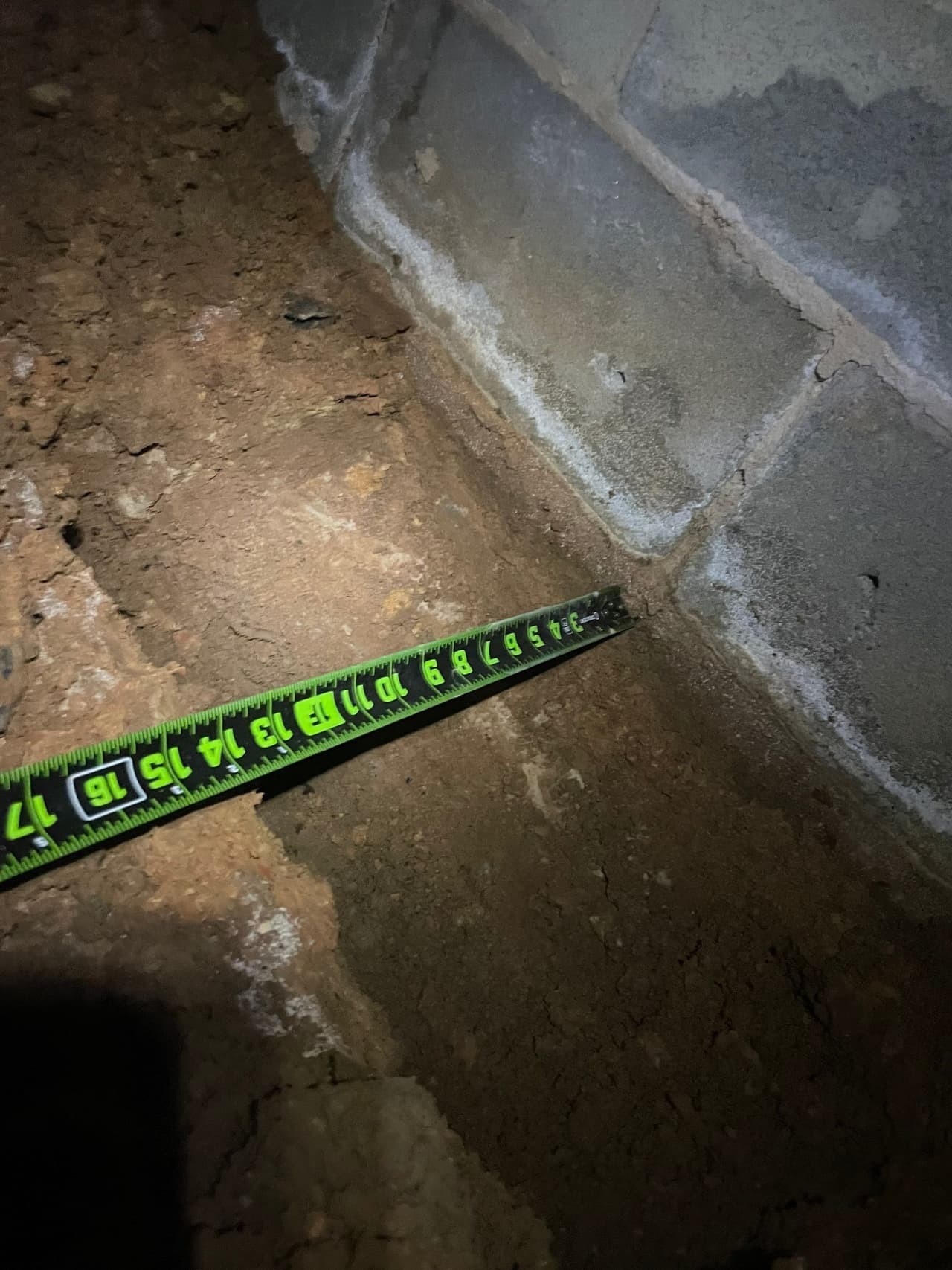
Concrete and block are porous, so moisture from the soil can pass through them as vapor. In Piedmont clay around Charlotte, Greensboro and the Triangle, the soil stays moist for long periods and keeps that vapor coming. Humid summer air adds to it, and when that air meets cool basement walls, moisture can condense on them.
The result is a basement that feels clammy, fogs its windows, and smells musty, all without a puddle on the floor. Condensation on basement windows and paint that peels from the walls are common signs.
CH 03
What Humidity Should a Basement Have?
The EPA recommends keeping indoor humidity between 30 and 50 percent. Basements in the Carolinas often run above that in summer, because damp soil and humid outdoor air both feed moisture into the space.
A vapor barrier lowers the amount of ground moisture reaching the room, which makes humidity easier to keep in that range. A simple humidity gauge can show you where your basement sits through the year, and we measure it during the inspection.
CH 04
How Is a Basement Vapor Barrier Installed?
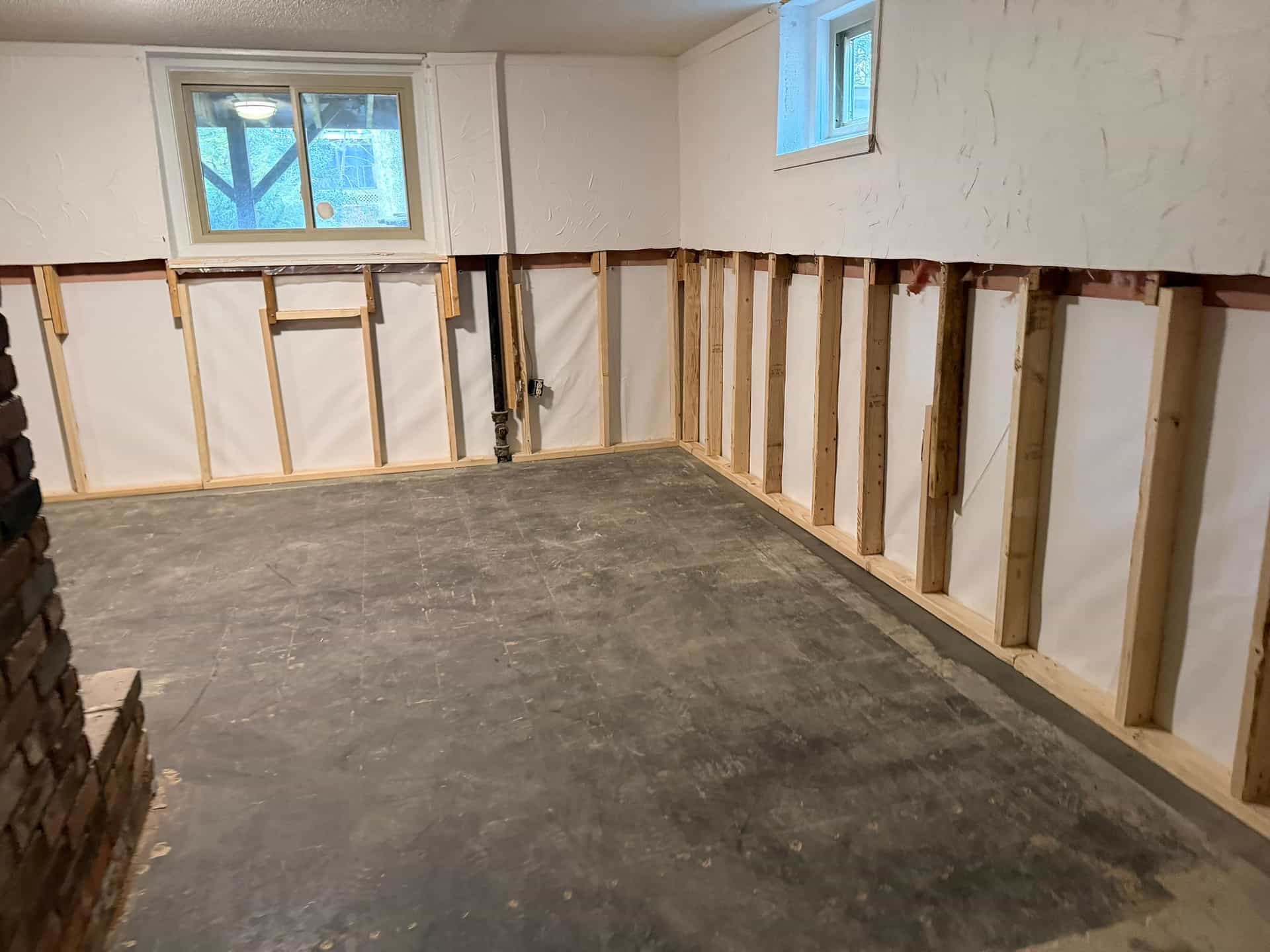
The walls are cleaned and checked first, because a barrier installed over active seepage traps water behind it. Where water is coming in, drainage is handled before the barrier goes up. The barrier is then fastened to the walls and sealed at its seams and edges so moisture cannot get around it.
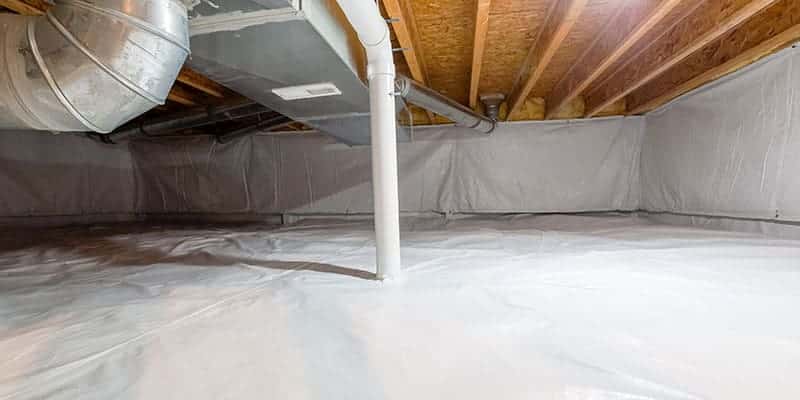
Where the floor is part of the plan, the barrier is laid and sealed to the walls so the walls and floor work as one surface. In a basement with an interior perimeter drain, the barrier is set so any water behind it runs down into the drain.
CH 05
What Is the Difference Between a Vapor Barrier and Waterproofing?
They handle two different kinds of moisture. Waterproofing with drainage and a sump pump manages liquid water that comes in at the walls, floor joint or cracks. A vapor barrier manages moisture that moves through the walls and floor as vapor and raises the humidity in the room.
A basement can have one problem or both. If water is flowing in, a barrier alone will not hold it back, and if the basement is only damp, drainage alone will not lower the humidity. The inspection separates the two.
CH 06
Will a Vapor Barrier Help a Finished Basement?
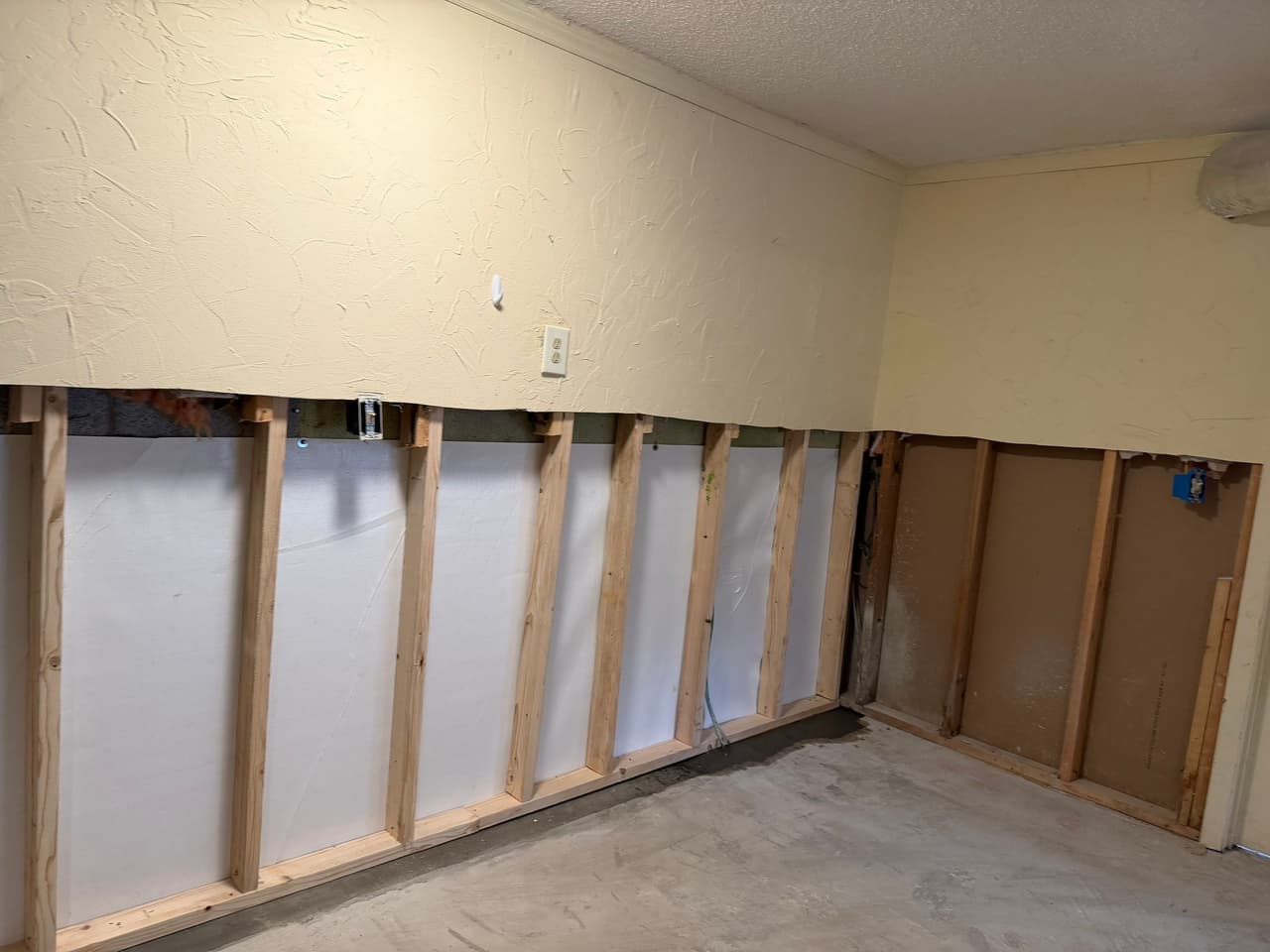
Often, yes. In a finished basement, moisture coming through the foundation can collect behind drywall and under flooring, where it is hard to see. Drywall that stains or softens near the floor is a common sign of moisture behind finished walls. A barrier on the foundation walls helps keep that moisture out of the finished space.
Adding a barrier to a basement that is already finished usually means opening walls, so it is often planned during a remodel. We tell you what access the work needs before it begins.