A trained inspector (not a salesperson) will look at your home, explain what they find in plain language, and send a written estimate.
Foundation Repair · North and South Carolina
Soil Stabilization That Treats the Ground
When the soil under a home is too weak or too active to hold it steady, we strengthen the soil itself. Looking for a reliable foundation repair contractor? You're in the right place. Read on to learn more.
Soil stabilization strengthens the ground a home sits on. Grout injected into the soil fills voids and packs loose material, so the foundation sits on steadier support. It fits loose or washed out soil and clay that moves with moisture; a home that has already settled usually needs piers as well.
Grout injected into the soil fills voids and packs loose material
Little excavation, because the material is injected
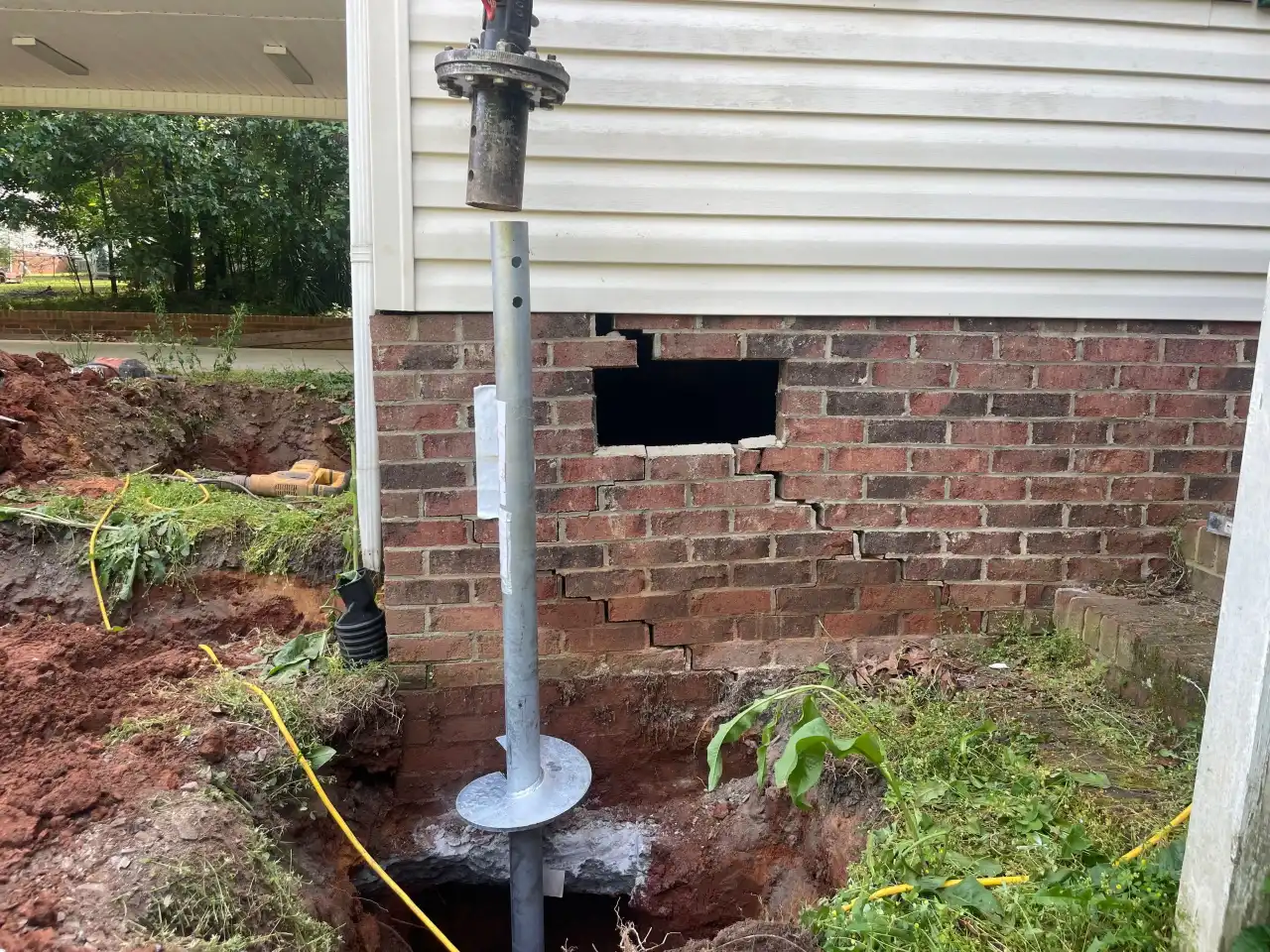
Often paired with piers when the home has already settled
A free inspection and a written estimate before any work
North Carolina · South Carolina
Get a Free Inspection
Two ways to start. Both are free, with no obligation.
Soil stabilization fits when the ground itself is the problem: voids, loose sand, or clay that moves with moisture. It is not a standalone fix for a home that has already settled and needs to be supported and releveled. Here are three situations and the repairs that may fit each; the inspection confirms which applies.
Sandhills or coastal soil that shifts or erodesLoose or Washed Out Soil Under the Foundation
Loose or washed out soil can often be filled and packed by injecting grout, without major excavation. The inspection looks at how deep the weak soil goes.
Cracks that open and close with wet and dry weatherClay That Swells and Shrinks With the Seasons
Grouting can reduce how much clay soil moves with moisture. If the foundation has already settled, piers usually carry the home while the soil around it is treated.
Sloping floors, stair step cracks, sticking doorsThe House Has Already Settled
Soil treatment alone does not lift a home that has settled. Piers support it and can often lift it back toward level, and soil stabilization may be paired with them.
Foundation problems usually start in the soil, so sometimes the most effective repair is to improve the soil itself. Soil stabilization fills voids and packs loose soil so the ground gives a foundation steadier support.
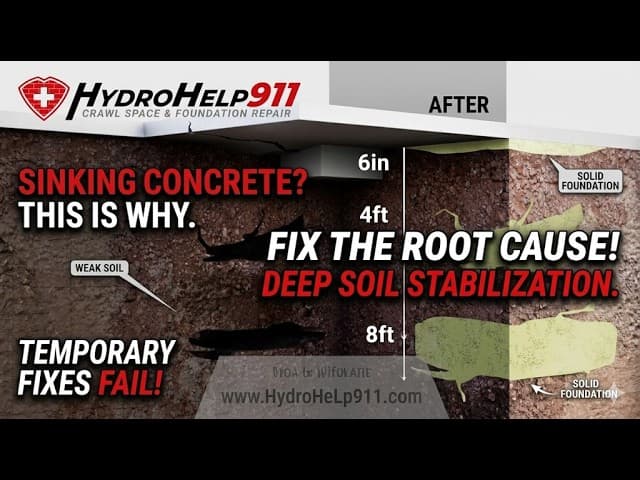
Settled Concrete: Deep Soil Stabilization Compared With Surface Repairs
In Depth
What Does This Guide Cover?
What a homeowner should understand about this repair, explained in plain language.
Would You Like the Guide by Email?
The Homeowner's Guide to Foundation Repair, sent free to your inbox.
Free Homeowner Guide
The Homeowner’s Guide to Foundation Repair
Why Carolinas homes move, a room by room checklist of the signs, and how repairs work.
HydroHelp911
North and South Carolina
Free Guide
Get the Free Foundation Repair Guide
A free guide for homes in North and South Carolina: what can move a foundation here, the signs worth writing down, and how foundation repairs work, in plain language.
A room by room checklist to walk your home with
Why foundations move in Piedmont clay, on hillsides and near the coast
How piers, wall anchors and other repairs work
Five questions worth asking any contractor, including us
Check your inbox
Your guide is on its way. If it has not arrived in a few minutes, check your spam folder, then add us to your contacts so the next one lands where it should.
Why Does the Soil Under a Foundation Need Stabilizing?
Foundation problems usually start in the soil, so sometimes the most effective foundation repair is to improve the soil itself.
The Carolinas present two very different challenges. Across the Piedmont and the SC Upstate around Greenville, clay that swells when wet and shrinks when it dries keeps changing volume and moving anything built on top of it.
In the Sandhills and parts of the coast, loose sandy soils lack the density to give steady support and can shift or wash out, which can lead to a foundation settling unevenly.
How Clay Soil Moves Around a Footing Through the Year
1Wet season: clay soil takes on water and swells, pressing on the footing and the foundation walls.
2Dry season: the same clay shrinks and pulls back, and the soil under the footing can drop.
CH 02
How Does Soil Stabilization Work?
Soil stabilization treats the ground directly. Injection grouting and compaction grouting flow into the soil, fill voids, pack loose material more densely, and reduce how much the soil moves with moisture. The goal is steady support, so the foundation is not riding the seasonal swings of Carolinas clay or settling into soft, sandy ground.
Because the material is injected, the work is done without major excavation. The main method is injecting grout into the soil, and we choose the material based on the soil we find during the inspection.
CH 03
Is Soil Stabilization Enough on Its Own?
Not always. Soil stabilization is not a standalone fix when a home has already settled and needs to be supported and releveled. In that case it is paired with, or follows, structural repair.
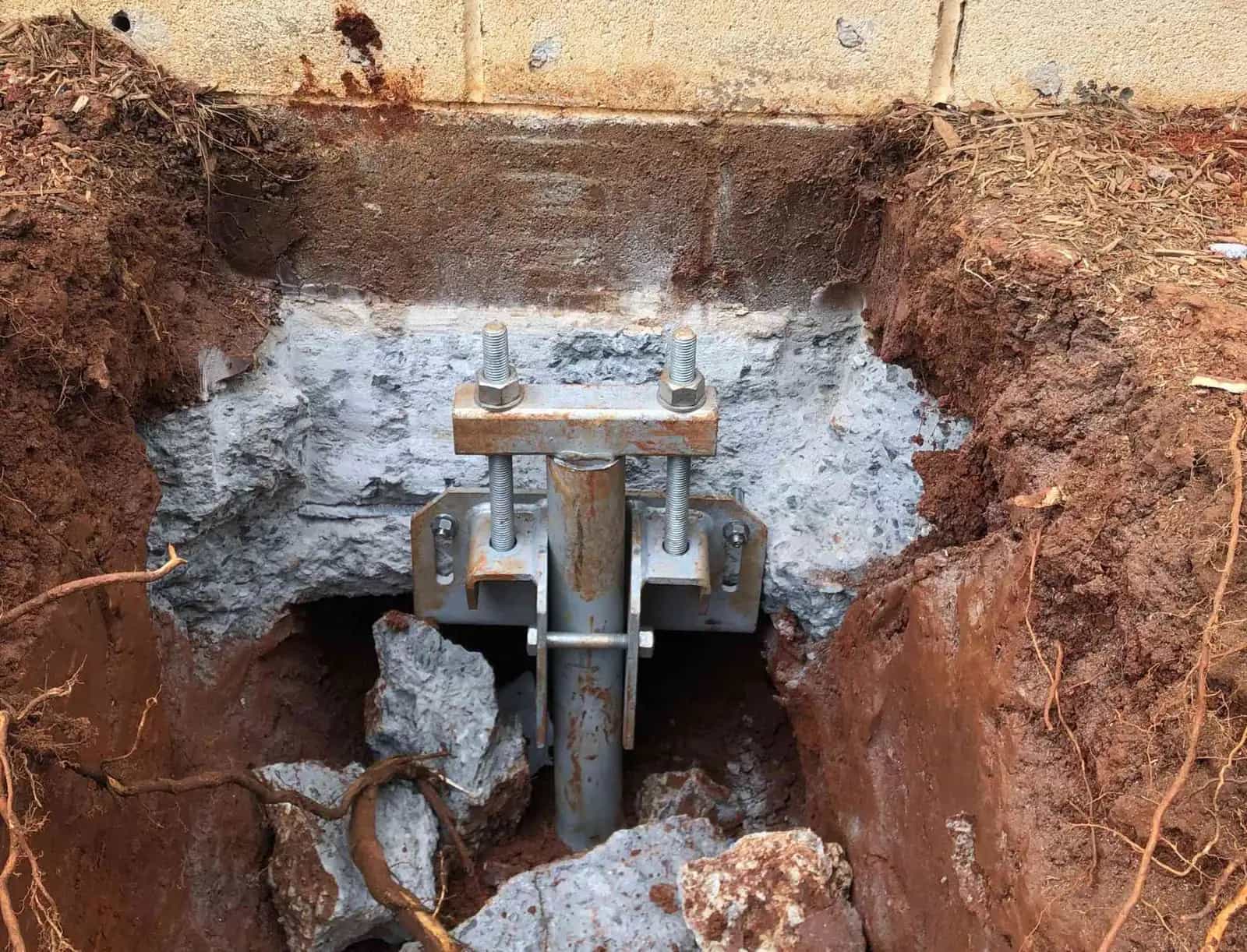
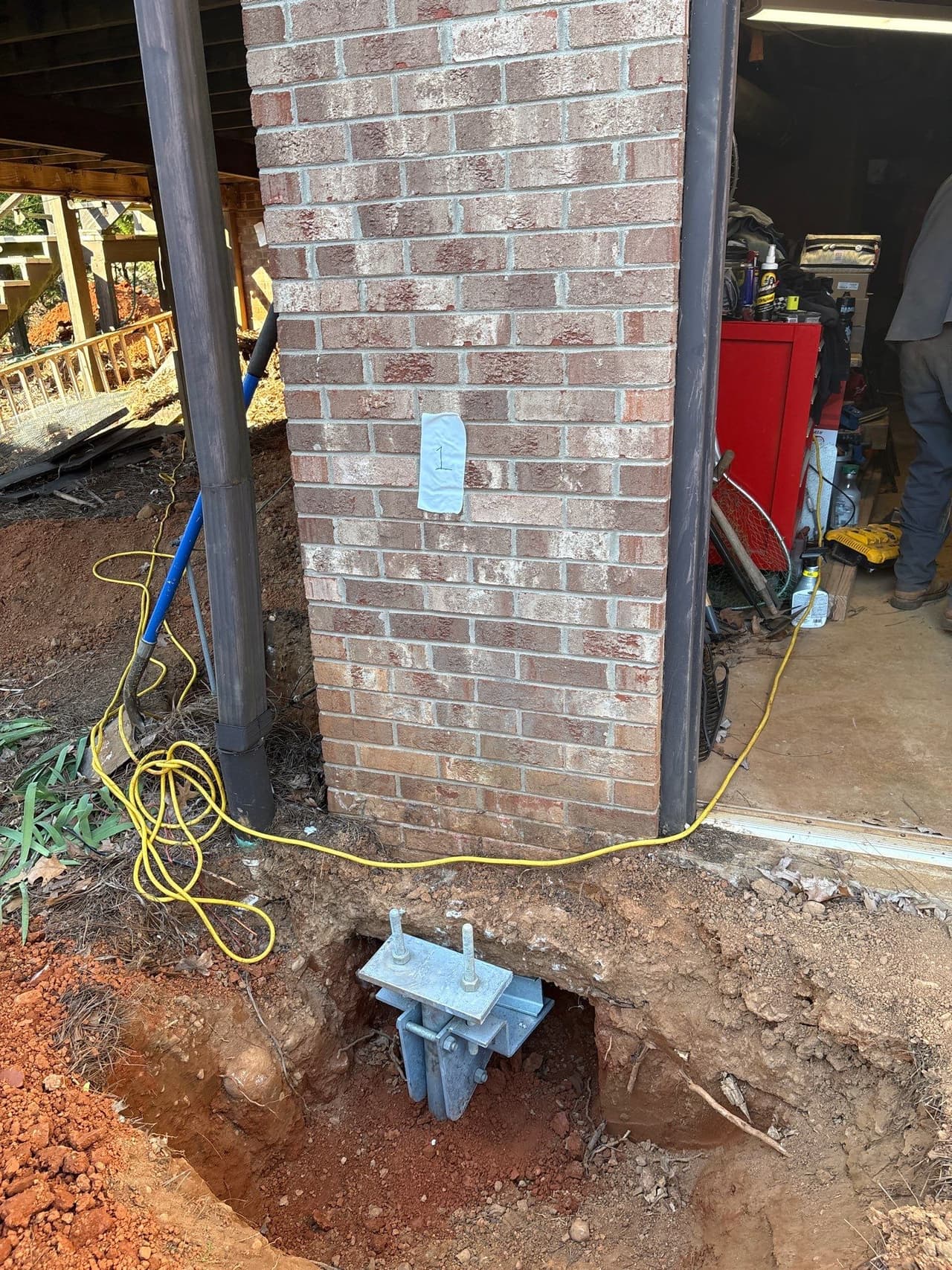
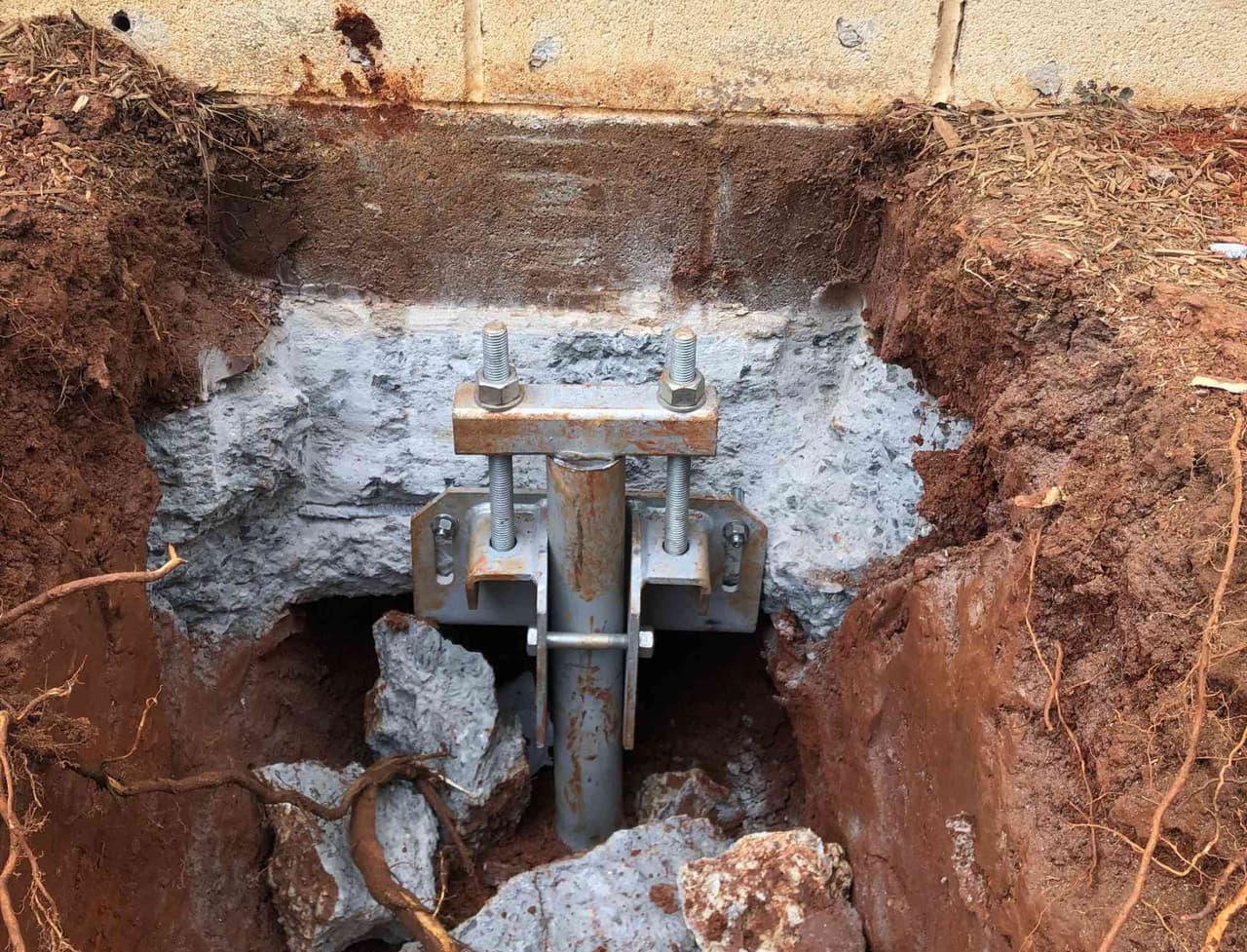
2A steel pier passes down through the weaker soil near the surface.
3The pier reaches firmer soil, which can carry the weight of that part of the home.
CH 04
What Does the Inspection Look at Before Soil Stabilization?
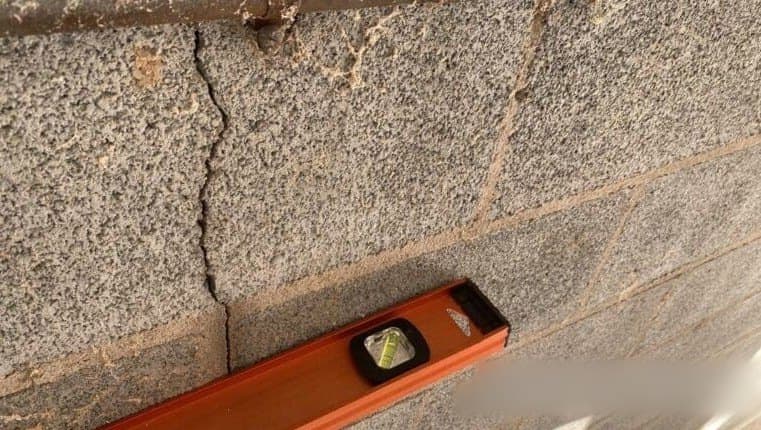
We look at how the soil behaves around your home and where the weak, loose, or eroding zones are. We also look for signs that settlement has already started, like a corner of the house sinking or diagonal cracks from door corners, because those change the plan from soil treatment alone to soil treatment paired with piers.
We explain how the pieces fit together for your home, and we never recommend treatment your home does not need. Every plan starts with a free inspection.
Soil movement, poor drainage, and construction flaws cause cracks. Understand the root issues so you can choose the right foundation repair.
Read the Guide
Why Choose HydroHelp911
Care and Expertise From a Team Serving the Carolinas Since 2017
HydroHelp911 handles foundation repair and related structural and moisture work across North and South Carolina. Every repair recommendation starts with a free inspection of the whole home.
01
Trained inspectors, not salespeople.
An inspector looks at your home, finds the source of the problem, and explains each finding in plain language. There is no obligation.
02
Locally owned in Gaston County.
We are headquartered in Dallas, North Carolina, with eight offices across North and South Carolina.
03
Serving the Carolinas since 2017.
Foundation repair, crawl space repair and encapsulation, basement waterproofing, framing repair, and concrete leveling are the whole focus of the team.
04
Rated 4.9 stars on Google.
We have 1,300+ verified Google reviews (4.9 stars) from homeowners across the Carolinas and are BBB A+ Accredited.
05
Written warranty terms.
For example, helical and push piers carry a lifetime warranty that no additional settlement will occur in the area of installed piers, once the final invoice is paid in full. Read the warranty terms.
06
Financing is available.
Ask your inspector about financing when you get your written estimate. See financing options.
Cory ParksOWNER & PRESIDENT
Three Quick Questions
Not Sure Soil Stabilization Is What You Need?
Answer three quick questions about your home. We'll match what you see to the most likely cause and point you to the right next step.
1
Symptom
2
History
3
Your Result
Location: Foundation
What Are You Seeing in Your Foundation?
Pick the symptom that best describes it.
Frequently Asked Questions
Common Questions About Soil Stabilization
Don't see your question here? Call or fill out our quick online form, and our team will help.
Soil stabilization improves weak, loose, or expansive soil so it can support a foundation without shifting. It is needed when the ground itself is the problem, such as Piedmont clay that swells and shrinks with the seasons or sandy Sandhills and coastal soils that lack steady bearing strength.
Common approaches include injection grouting and compaction grouting, which flow into the soil to fill voids and densify it, reducing movement. The right method depends on whether the issue is expansive clay, loose sand, or voids beneath the foundation, which we determine during the inspection. The work is done without major excavation.
By making the supporting soil more even and less likely to move with moisture, stabilization can reduce the conditions that cause settlement. It is often combined with structural repair such as piers when the home has already moved.
When the soil is treated and the source of moisture or movement has been addressed, the results can last for many years. Warranty terms, with their conditions, are listed on our warranties page.
Most soil stabilization projects fall between $2,500 and $10,000. Cost depends on the volume of soil treated, the depth, the method used, the soil conditions, and how accessible the area around the home is. We provide a written estimate after a free inspection, and financing options are available. These figures are example ranges, not a quote.
Every home is different, so every estimate is written for the home in front of us. A free inspection at your home gives you a written estimate at no cost, based on your scope, access, and conditions.
Example Pricing
How Pricing Works
Most soil stabilization projects fall between $2,500 and $10,000. Cost depends on the volume of soil treated, the depth, the method used, the soil conditions, and how accessible the area around the home is. We provide a written estimate after a free inspection, and financing options are available.
Example ranges from the HydroHelp911 price sheet, shown for planning only. They are not a quote. Your price is set after a free inspection of your home and confirmed in your written estimate.
When Is This Not the Right Fix?
Soil stabilization is not a standalone fix when a home has already settled and needs to be supported and releveled. In those cases it is paired with, or follows, structural repair such as piers.
What Does the Free Inspection Include?
Your inspector explains every finding in plain language, and you get written documentation at no cost, typically an estimate with photographs.
Two ways to start. Both are free, with no obligation.