CH 01
Why Does the Crawl Space Door Matter?
A crawl space door is a small part with a large role, because it is the one opening into a space you otherwise want sealed. An old, broken, poorly fitting, or missing door can undo much of the effort that goes into keeping a crawl space dry.
It can let humid Carolina air in through the gap, give pests an easy entrance, and on a coastal or low lot, let water work its way in. Where outdoor humidity is high for much of the year, an access point that does not seal adds to the moisture under the house.
CH 02
What Are the Signs a Crawl Space Door Needs Replacing?
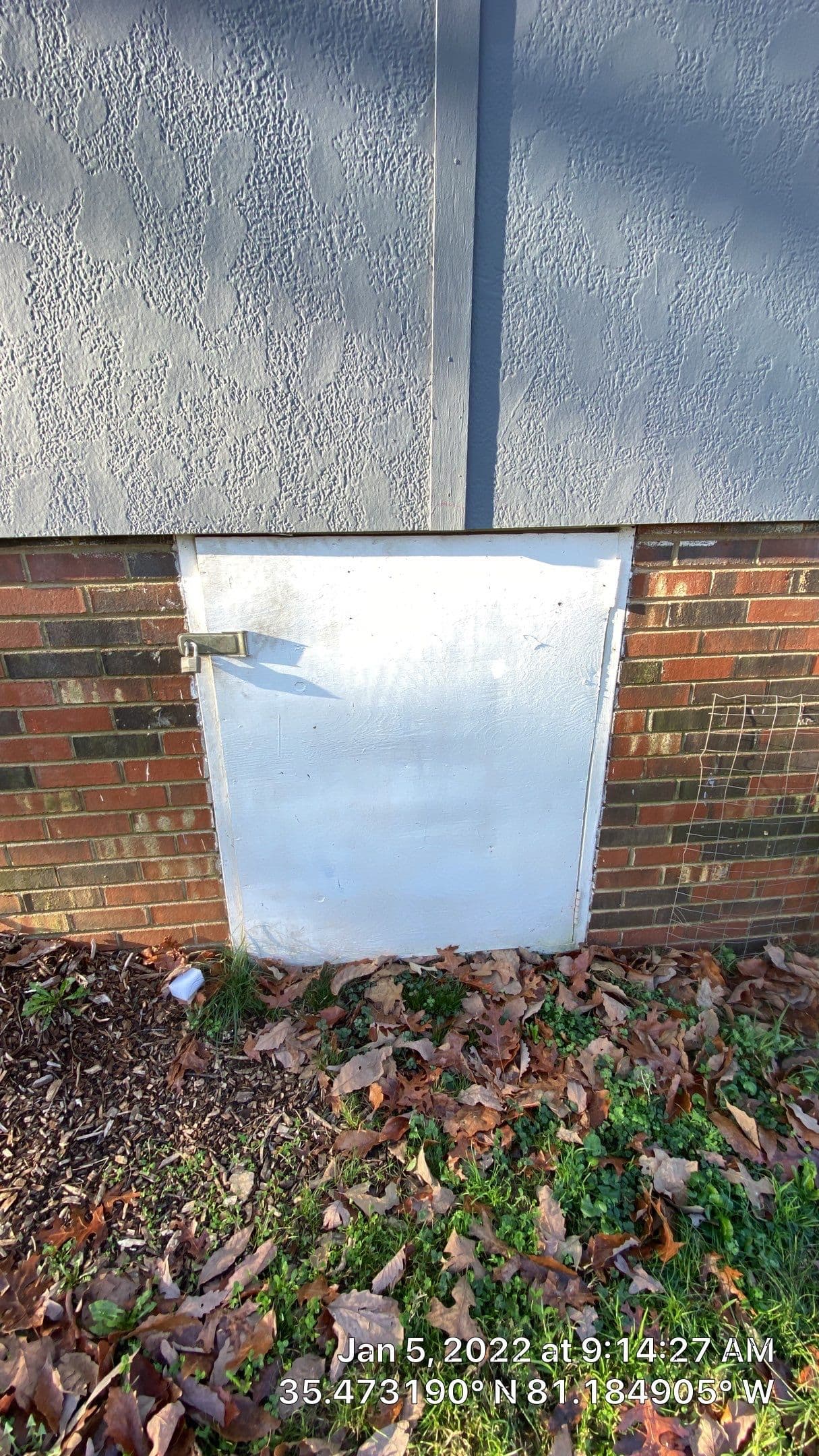
The most common signs are easy to see from the yard: a door that is warped, swollen or rotted at the bottom, a door that no longer latches or is held shut with a brick, and light showing around the edges when you look from inside. Some homes have only a piece of plywood or a screen over the opening.
Other signs show up under the house: leaves and debris just inside the opening, damp soil near the door after rain, and insulation pulled down near the access point. A door that lets water or animals in is working against the rest of the crawl space.
CH 03
What Makes a Good Crawl Space Door?
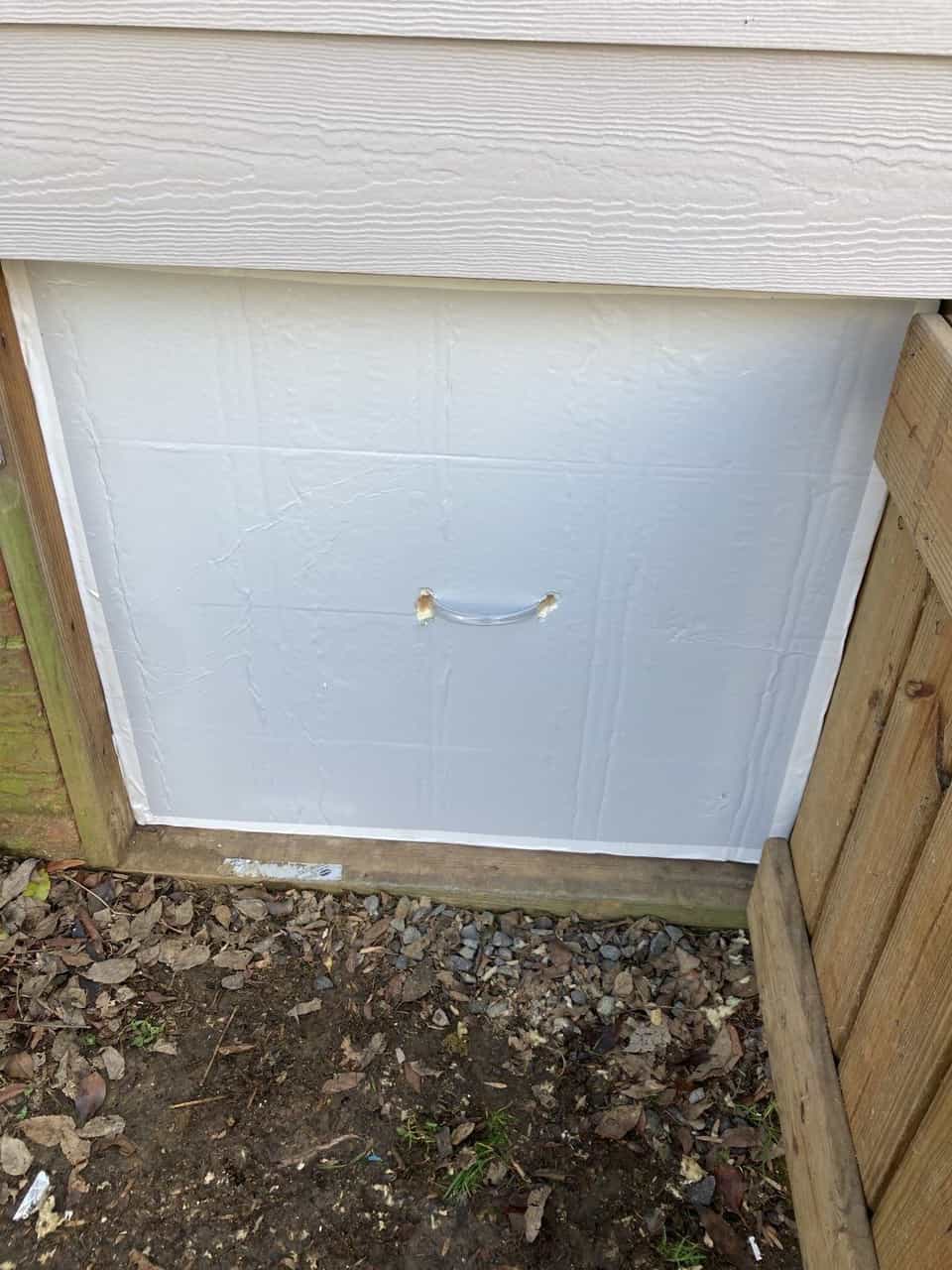
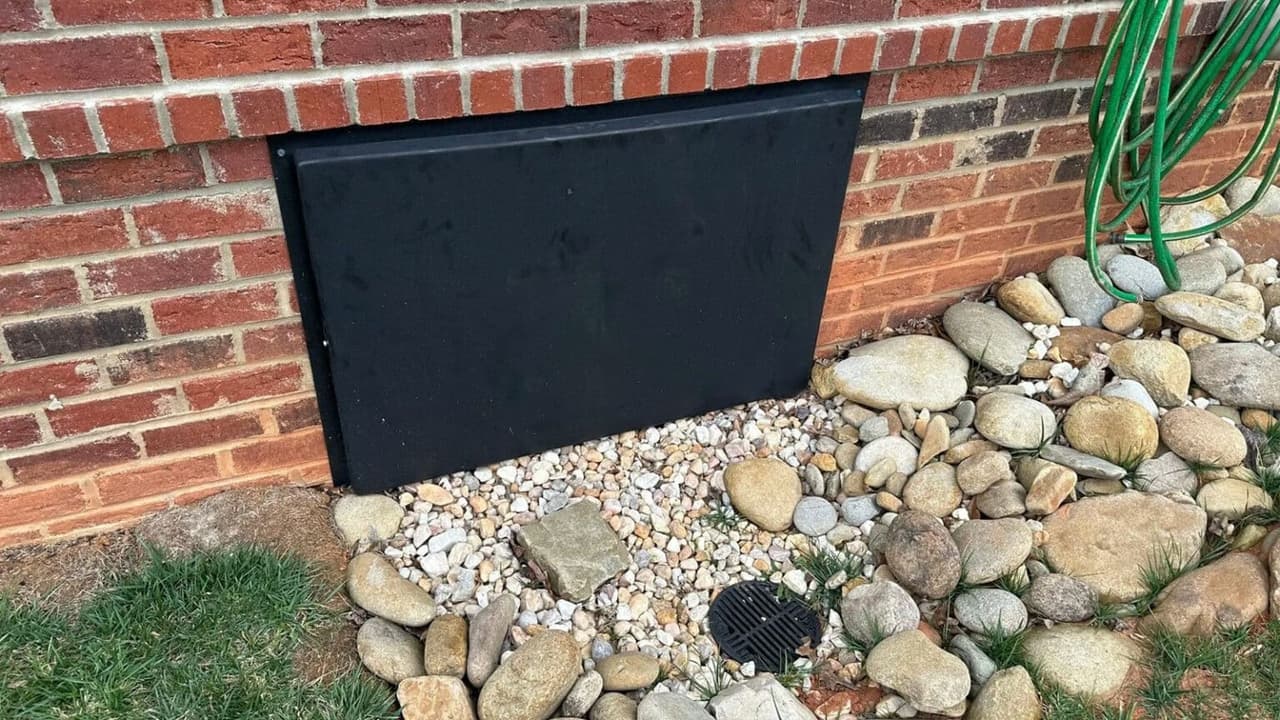
Installing one well means more than hanging a panel over a hole. We fit the door to the opening so it seals against air and moisture, set it with weatherstripping and a sealed frame, and choose a material suited to a damp crawl space. Steel, vinyl, and composite doors resist moisture and hold up better than wood, which can warp and rot.
Where the opening sits below the surrounding ground, a crawl space access well holds back soil and water in front of the door. The sealed crawl space door options cover fit, seals, and latches in more detail.
CH 04
Which Crawl Space Door Materials Last Longest?
Steel, vinyl and composite doors resist moisture and hold their shape in a damp crawl space opening. Wood and plywood doors absorb water, swell and rot, which is why so many older homes have doors that no longer close.
The frame and seal matter as much as the door. A sealed frame and weatherstripping are what keep humid air and water out, and a latch keeps the door pulled tight against the seal.
CH 05
Is a New Crawl Space Door Enough on Its Own?
A door is one piece of a sealed crawl space, working alongside closed vents, a vapor barrier, and humidity control. It makes the most sense as part of, or after, the broader moisture work, such as sealing the foundation vents and encapsulating the floor and walls.
If your current door is sound and seals well, we will tell you it does not need replacing. A sealed door also closes one of the openings pests use, which is part of keeping pests from moving in.
CH 06
What Does Crawl Space Door Installation Cost?
Most crawl space door installation projects fall between $750 and $1,200. The price depends on the size of the opening, the door that fits it, and whether the frame or the masonry around it needs work. An access well for an opening below grade is a separate item on the estimate. These figures are a range, not a quote. You receive a written estimate after a free inspection, and financing is available.