CH 01
Why Is Humidity Hard to Control in a Carolina Crawl Space?
In the Carolinas, air moisture is often the hardest part of a crawl space to control. Even after the ground is sealed under a vapor barrier, the air inside a crawl space can hold a lot of humidity, and long, humid summers keep pushing it back up. Around the Piedmont, relative humidity stays high for months at a time, and along the coast near Wilmington, salt air and a high water table keep the surroundings damp.
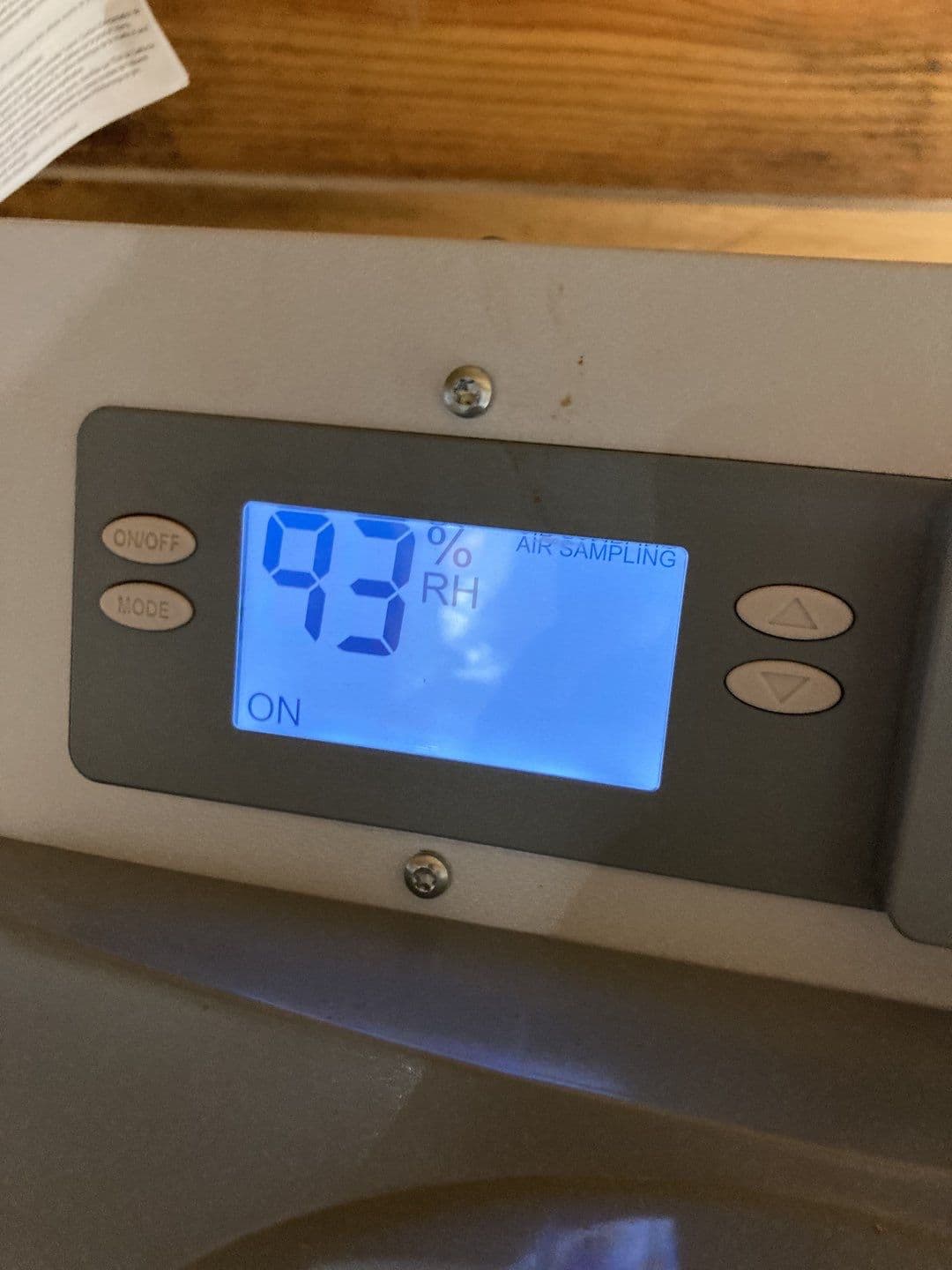
When humid air settles into a cooler crawl space, it condenses on ductwork, pipes, and framing, which is why sweating ducts and damp registers are a common sign. Wood that stays damp over time can rot. A dehumidifier holds the air at a stable, dry level that the rest of the system cannot reach on its own.
CH 02
What Are the Signs a Crawl Space Needs Humidity Control?
Humidity in a crawl space shows up in the house before most people go looking under it. A musty smell in the rooms above, especially in summer, is the most common sign. Others include damp feeling indoor air, floors that feel clammy, and wood floors that cup or gap with the seasons.
Under the house, the signs are condensation on ducts and pipes, damp or darkened wood, insulation that sags, and white or fuzzy growth on the framing. Mold depends on moisture, so humidity control helps limit the conditions it needs. If an inspection finds active mold, we will tell you.
CH 03
What Humidity Level Should a Crawl Space Stay At?
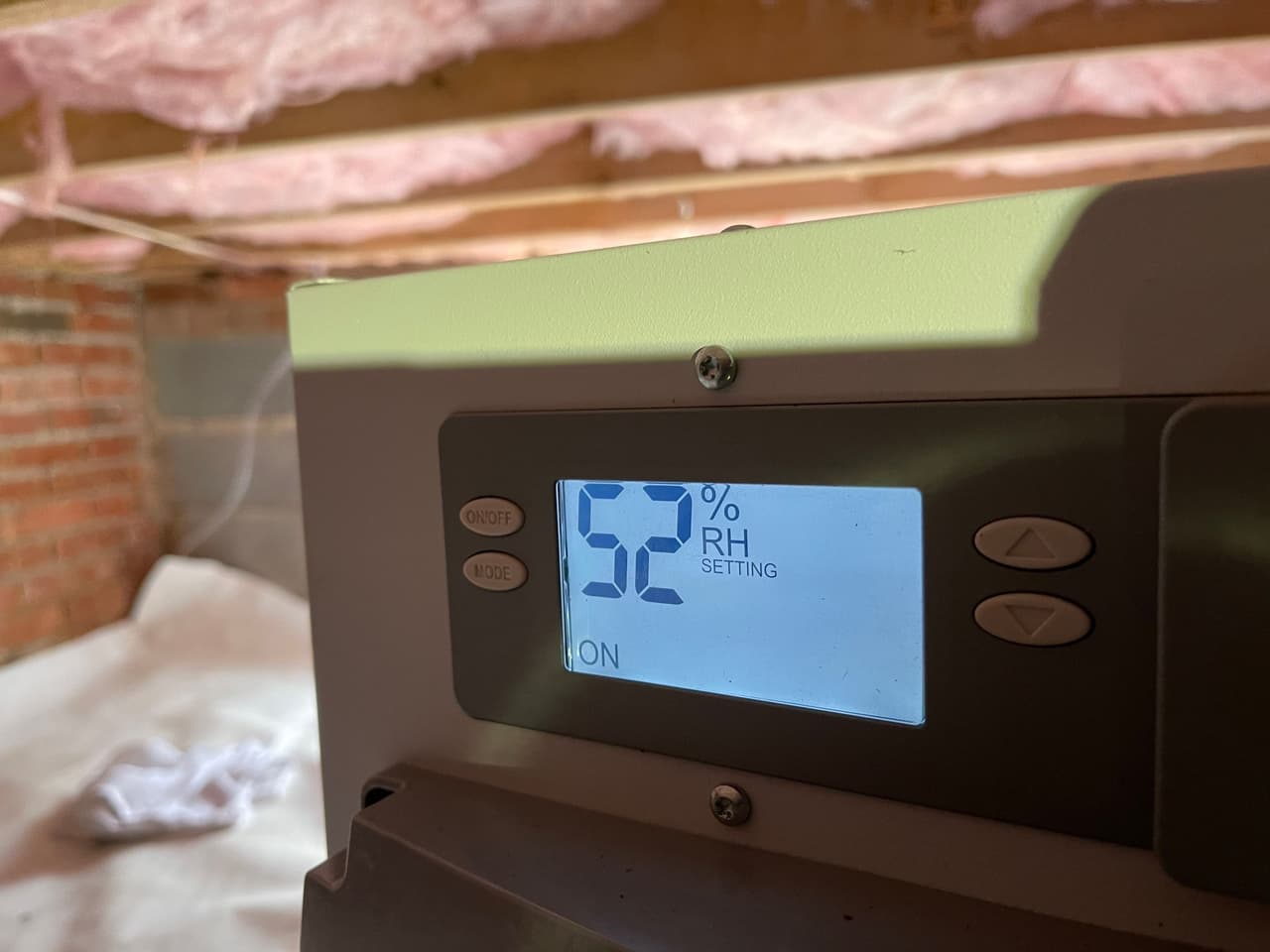
The EPA recommends keeping indoor relative humidity below 60 percent, ideally between 30 and 50 percent. A sealed crawl space is treated as part of the home, so the dehumidifier uses a humidistat to hold the air at a set target and cycles on and off to stay there.
Humidity matters because wood and insulation absorb moisture from the air around them. When the air under the home stays damp for weeks at a time, the framing stays damp too. Holding the humidity steady is what keeps the wood dry through a long Carolina summer.
CH 04
How Is a Crawl Space Dehumidifier Different From a Portable Unit?
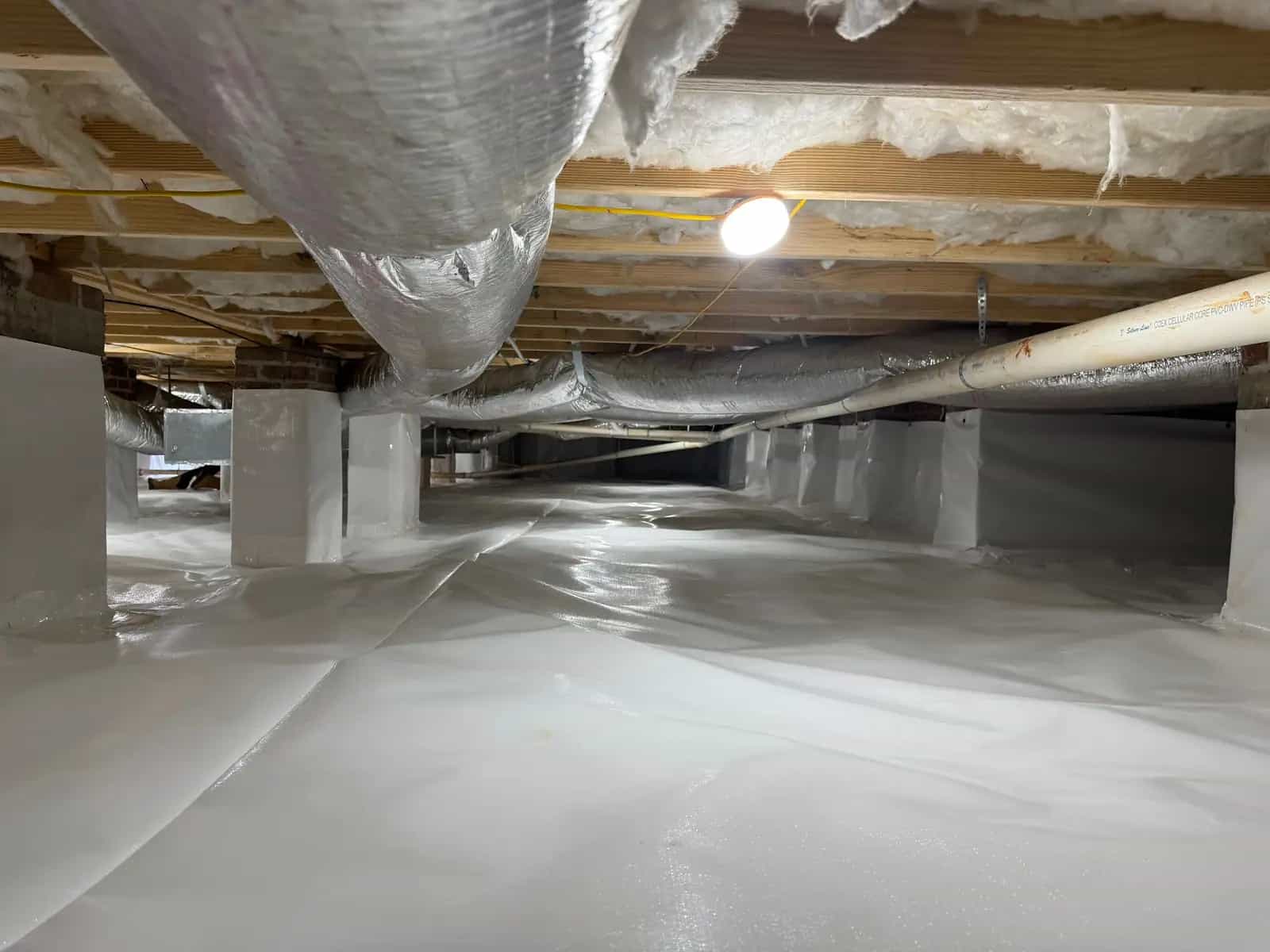
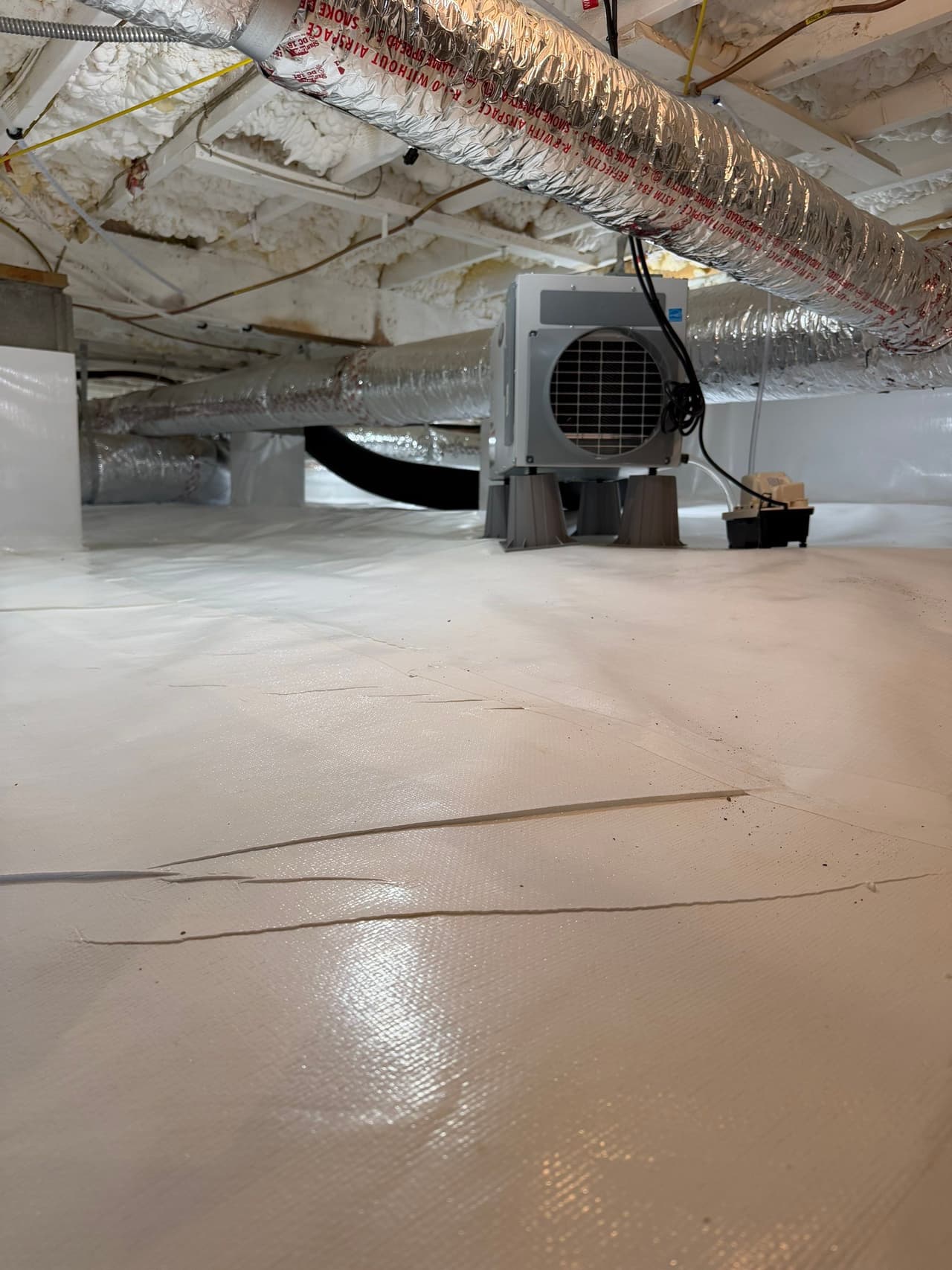
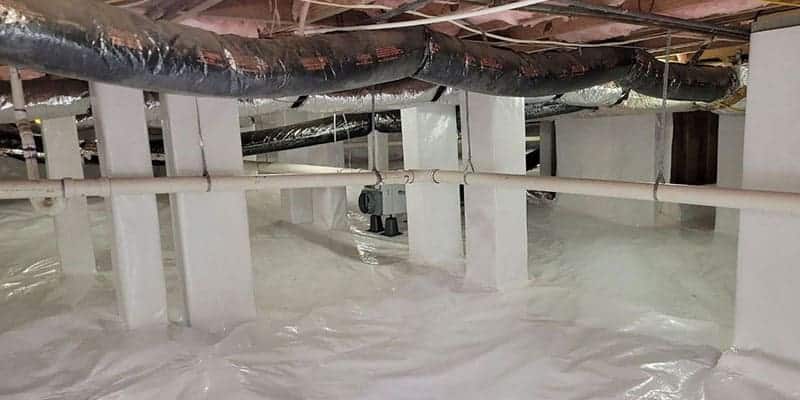
A crawl space dehumidifier is a dedicated unit sized for the space, installed to condition the sealed crawl space and drain automatically so no one has to empty a tank. In an encapsulated crawl space, where the foundation vents are sealed and the ground is covered, the dehumidifier becomes the active control that keeps humidity in its target range all year.
We size the unit to the volume of the space and its moisture load. A unit that is too small can run constantly and still fall behind, while the right size holds a dry, steady environment efficiently. The dehumidifier solution for sealed crawl spaces explains the humidistat and drain setup.
A portable unit made for a room can run in a crawl space, but it was not built for it. Most have a tank that must be emptied by hand, which is hard to keep up with in a space you have to crawl into, and many are not made to run in the cool, damp conditions found under a house.
CH 05
How Is a Crawl Space Dehumidifier Installed?
We start by measuring the space and its moisture load, then size a unit to match. The dehumidifier is set in the crawl space, usually raised off the liner, and wired to a dedicated power source. Its condensate line runs to a drain or to the sump so the water it collects leaves the crawl space automatically.
Some installations add ducting so the unit draws air from one part of the space and returns dry air to another, which helps in a long or divided crawl space. Once it is running, we set the humidistat and confirm the unit cycles the way it should. The dehumidifier works best with every vent closed off and the ground covered.
CH 06
Does Every Encapsulated Crawl Space Need a Dehumidifier?
Not every crawl space needs one, and we will say so when yours does not. A space that is well sealed and naturally dry may hold an acceptable humidity on the crawl space vapor barrier and sealed vents alone. The clearest sign a dehumidifier is warranted is humidity that stays high, condensation, or musty conditions that remain after the ground and vents are addressed.
Coverage for dehumidifiers differs from the coverage for the liner and drainage, and the dehumidifier coverage terms list every condition and exclusion.
CH 07
Dehumidifier Warranty and Maintenance
Standard coverage is a 5 year manufacturer warranty on materials only, and a lifetime warranty on parts and labor is available only through the annual maintenance program, which requires annual maintenance and inspection at the owner's expense. The program is $250 a year.
Low humidity conditions, loss of power, GFCI tripping and breaker trips are not covered, and no warranty activates until the final invoice is paid in full. The dehumidifier warranty details list every term.
CH 08
What Does a Crawl Space Dehumidifier Cost?
Dehumidifiers are not sold as a standalone install. They are part of a larger crawl space project, usually alongside the liner and sealed vents, so the cost depends on the whole plan for your crawl space. The size of the space, the moisture load, and how much sealing the space still needs all change the estimate. You receive a written estimate after a free inspection, and financing is available.