CH 01
What Causes Floor Joists to Fail?
Floor joists are the horizontal members that carry your floor between the beams and the foundation, and when they weaken, you feel it underfoot as bounce, slope, or a soft spot. In Carolina crawl spaces the cause is usually moisture.
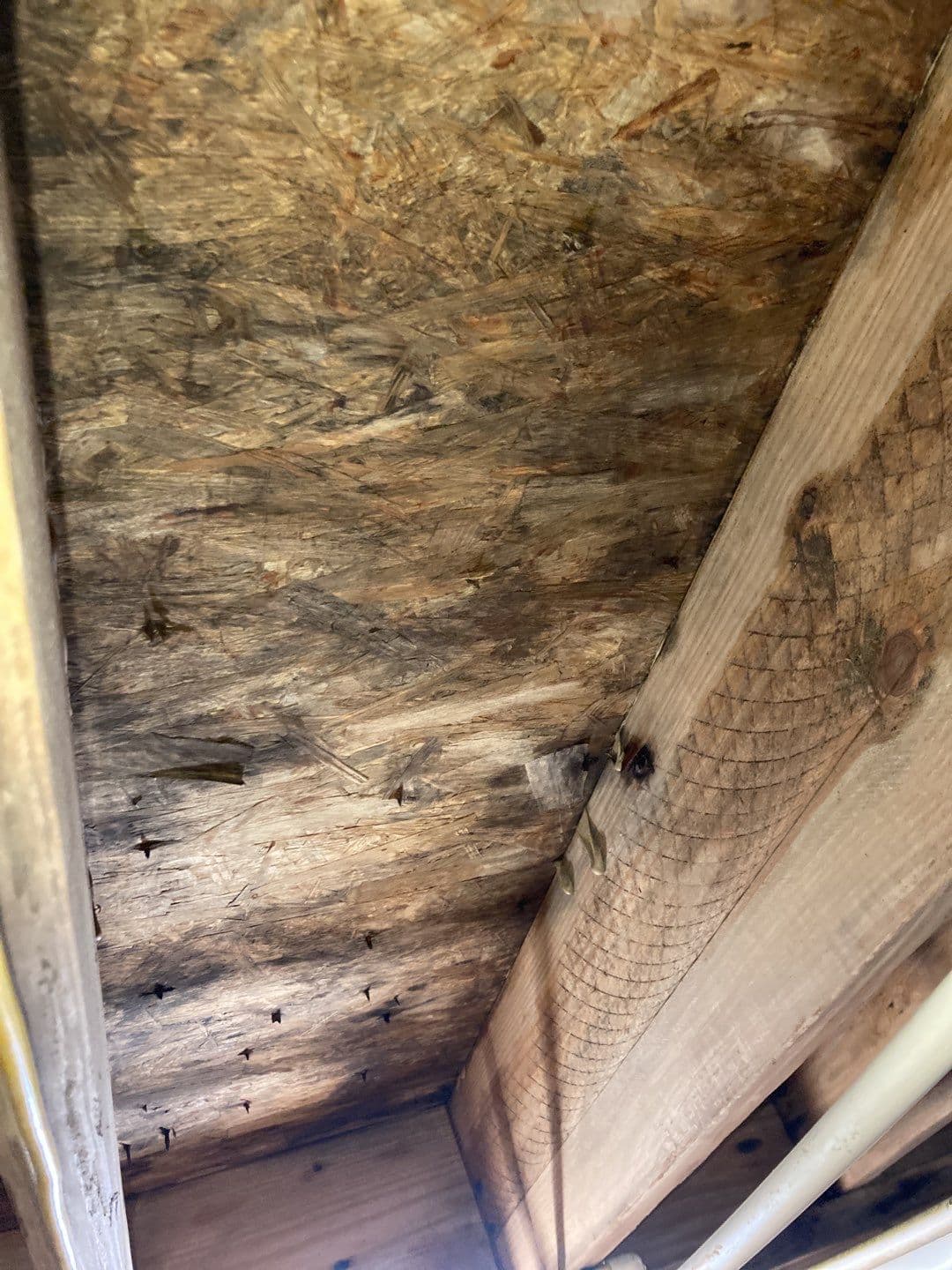
High crawl space humidity through Piedmont summers around Charlotte, Greensboro, and the Triangle keeps wood damp month after month, and over time that wood softens and loses its strength.
Add a plumbing leak, poor drainage, or a high water table near the coast around Wilmington and Brunswick County, and the joists closest to the moisture are the first to go. Repairing the joist without understanding what damaged it sets up a repeat, so our inspection looks at the wood and the conditions together.
CH 02
How Are Damaged Floor Joists Repaired?
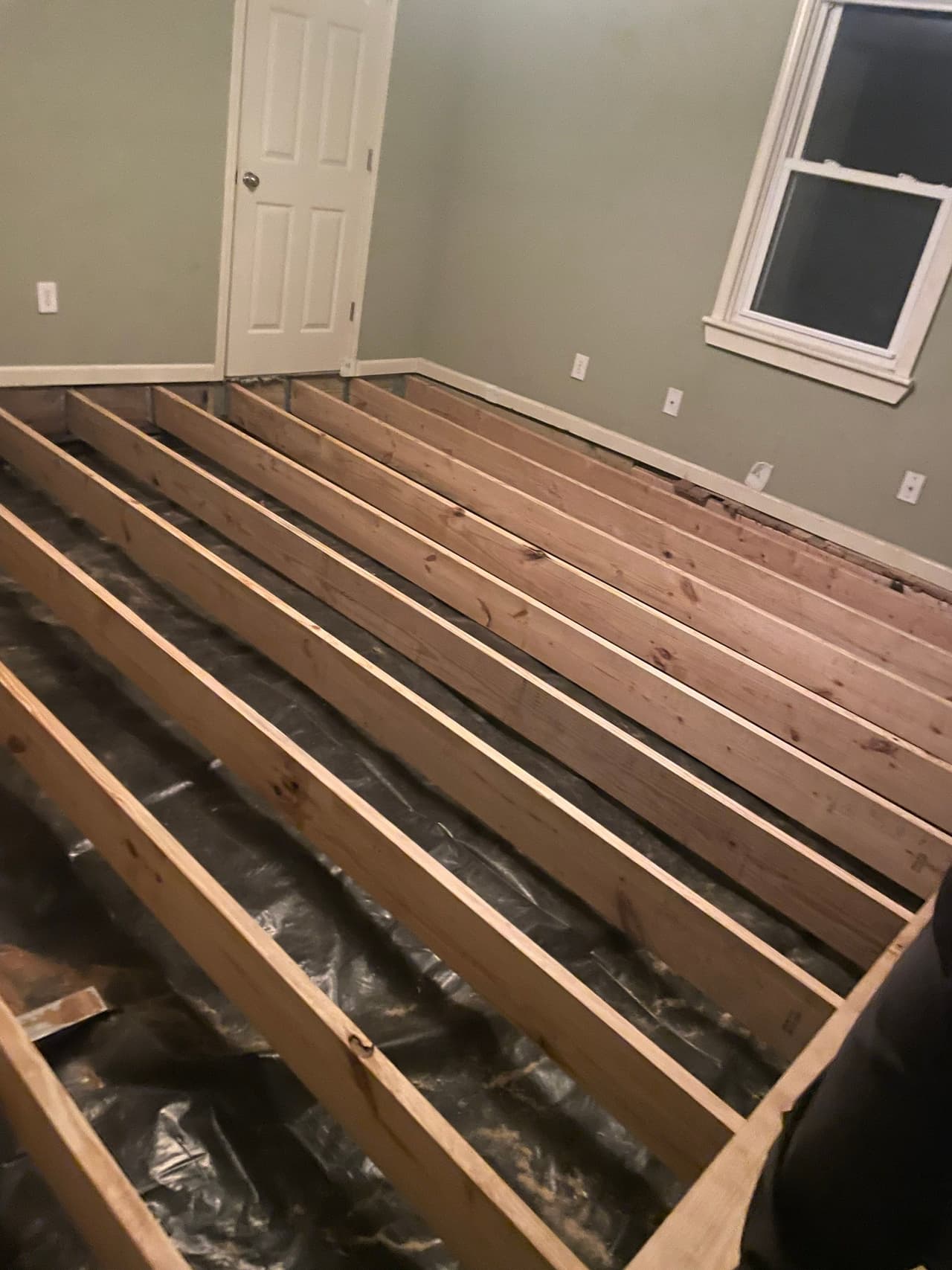
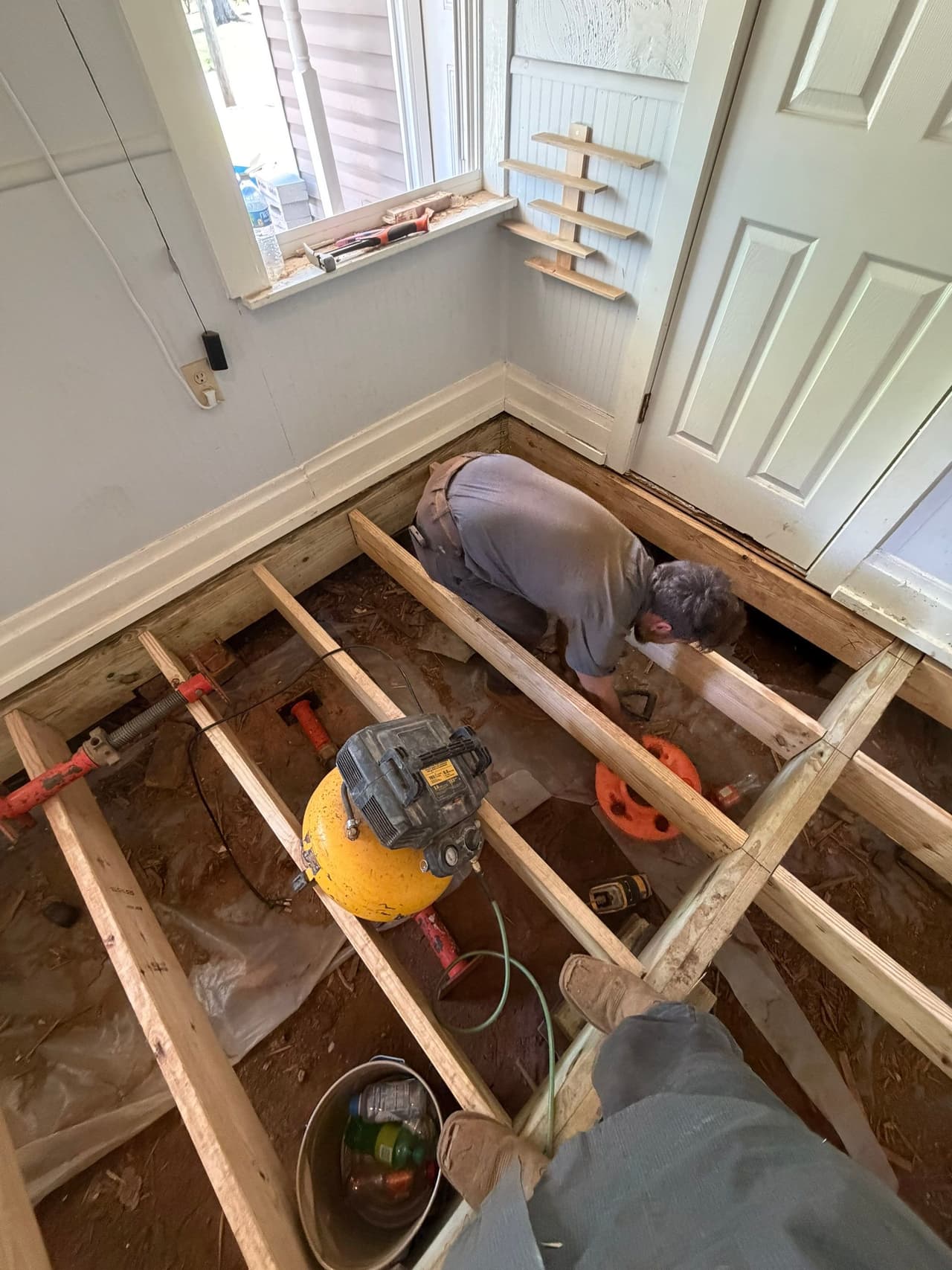
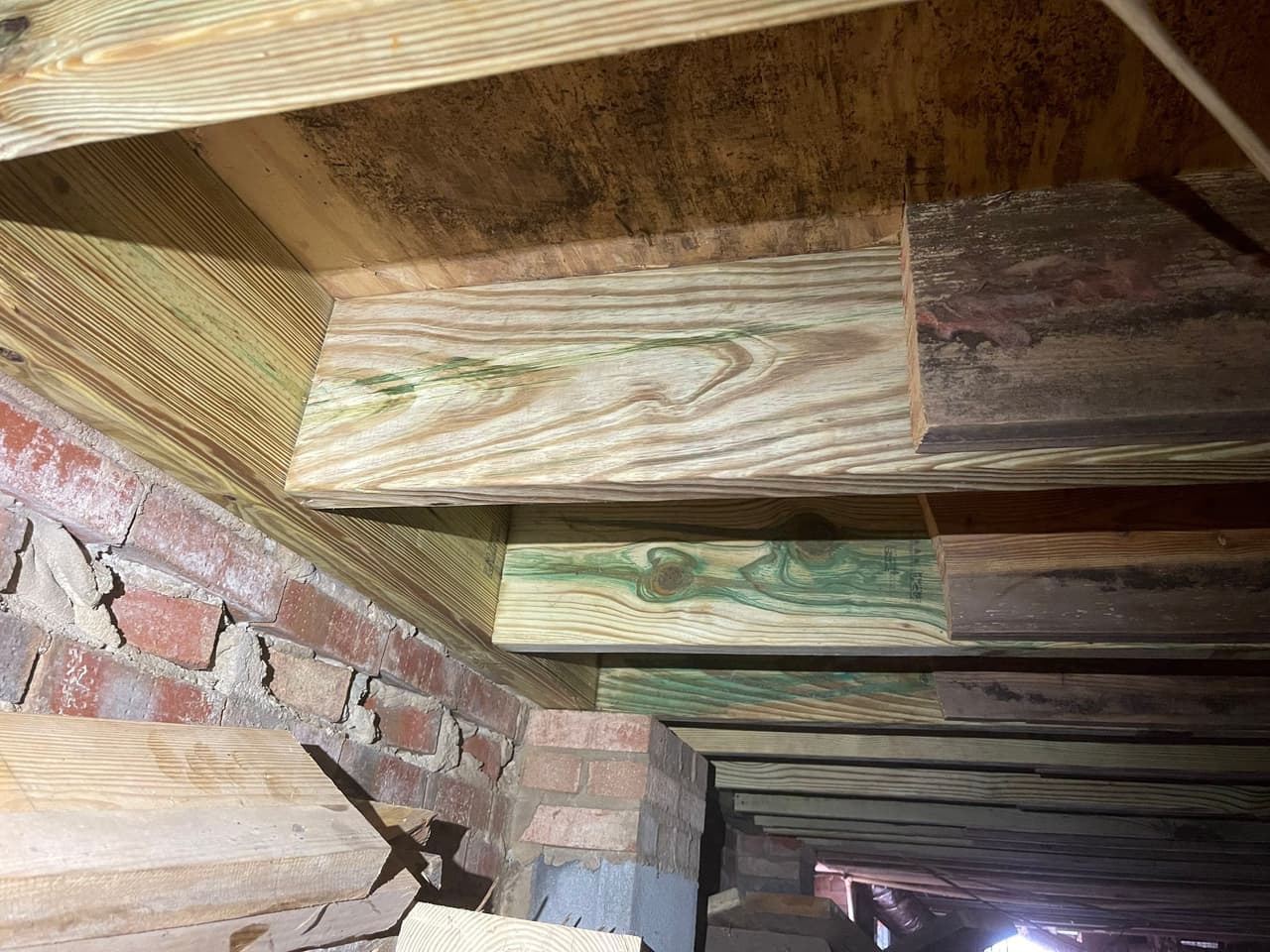
The right repair depends on what the joist needs. A joist that is cracked, split, or partially weakened but still sound enough to hold a fastener is usually reinforced by sistering a new member alongside it. A joist with localized damage at one spot may be reinforced with galvanized steel repair plates.
When the failure is at the bearing ends, where the joist rests on the sill or beam, the bearing has to be rebuilt and the joist properly supported again, sometimes with a new joist hanger at the connection. When a joist has rotted through and no longer holds load, replacement is the repair the damage calls for. And where the joists are sagging because the beam or posts beneath them dropped, sagging floor repair starts below the joists.
CH 03
Why Does the Moisture Source Matter for Joist Repair?
In a crawl space, a rotted joist almost always points to a moisture problem that is still active, and we walk you through that as part of the recommendation, because a new joist installed into the same wet conditions is on the same path as the one it replaced. Wood rot repair and prevention pairs the framing work with the moisture source.
If the damage is limited and the wood is largely sound, we tell you the repair is small. If it is widespread, you will know that too, so you can make an informed decision. Other framing symptoms are covered on our framing repair problem signs page.
CH 04
What Are the Signs of Damaged Floor Joists?
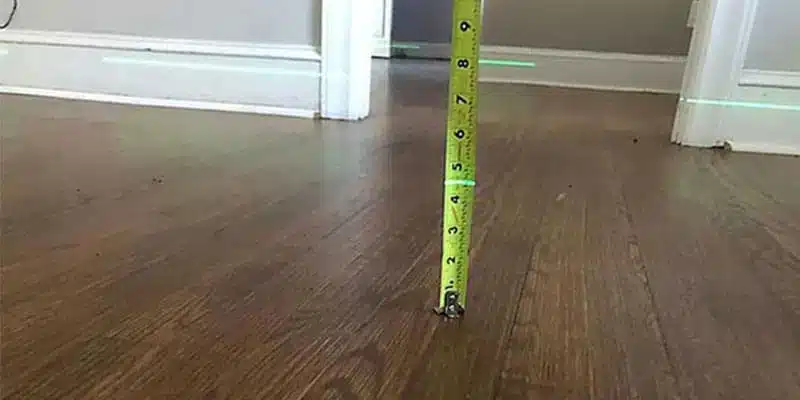
Damaged joists usually show up in the rooms above first. A floor that bounces when you walk, a soft spot near a bathroom or kitchen, a slope toward one wall, or a gap opening under baseboards can all point to joists that are no longer carrying the floor the way they should. Doors that start to rub in their frames can be part of the same pattern.
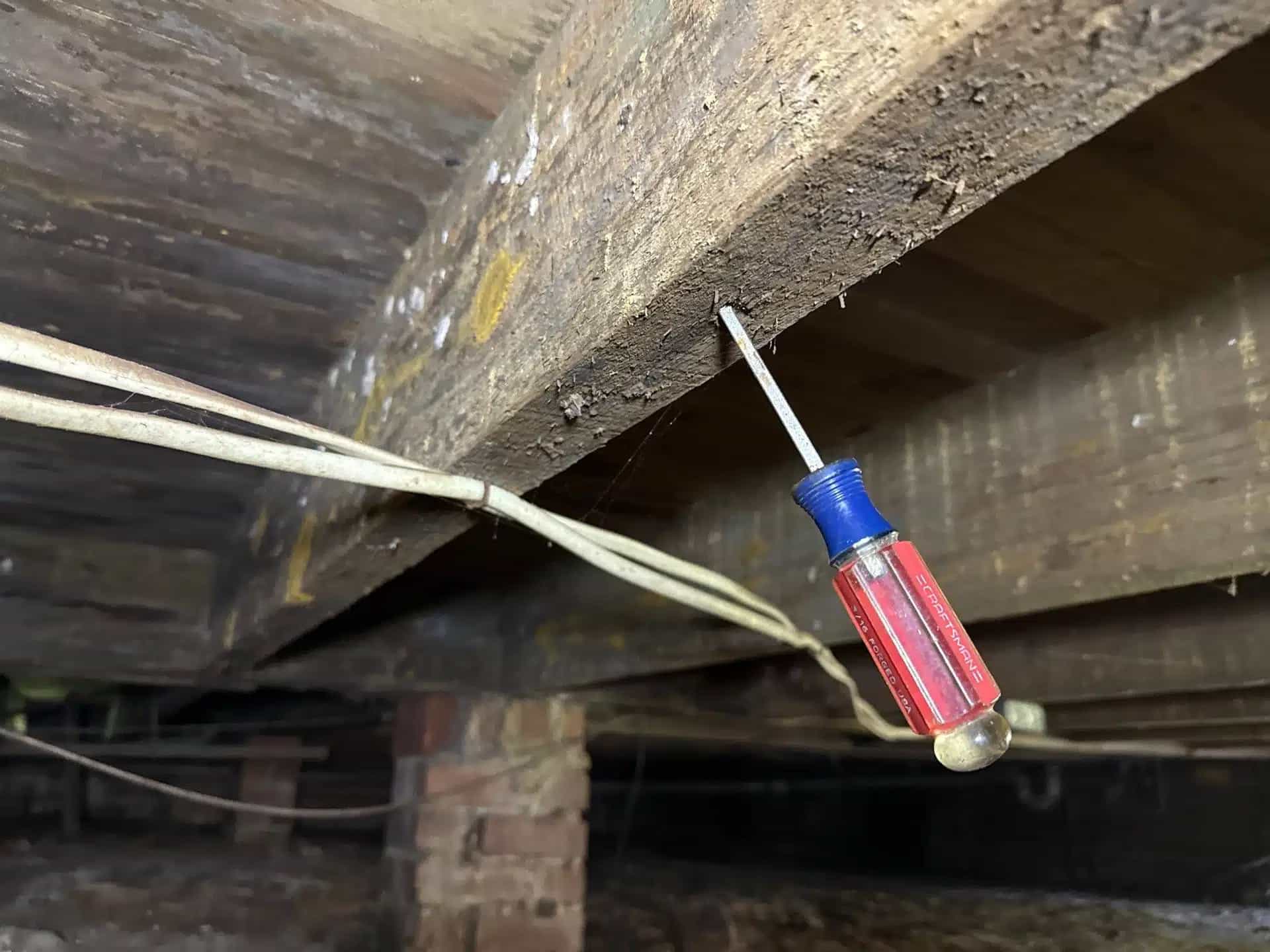
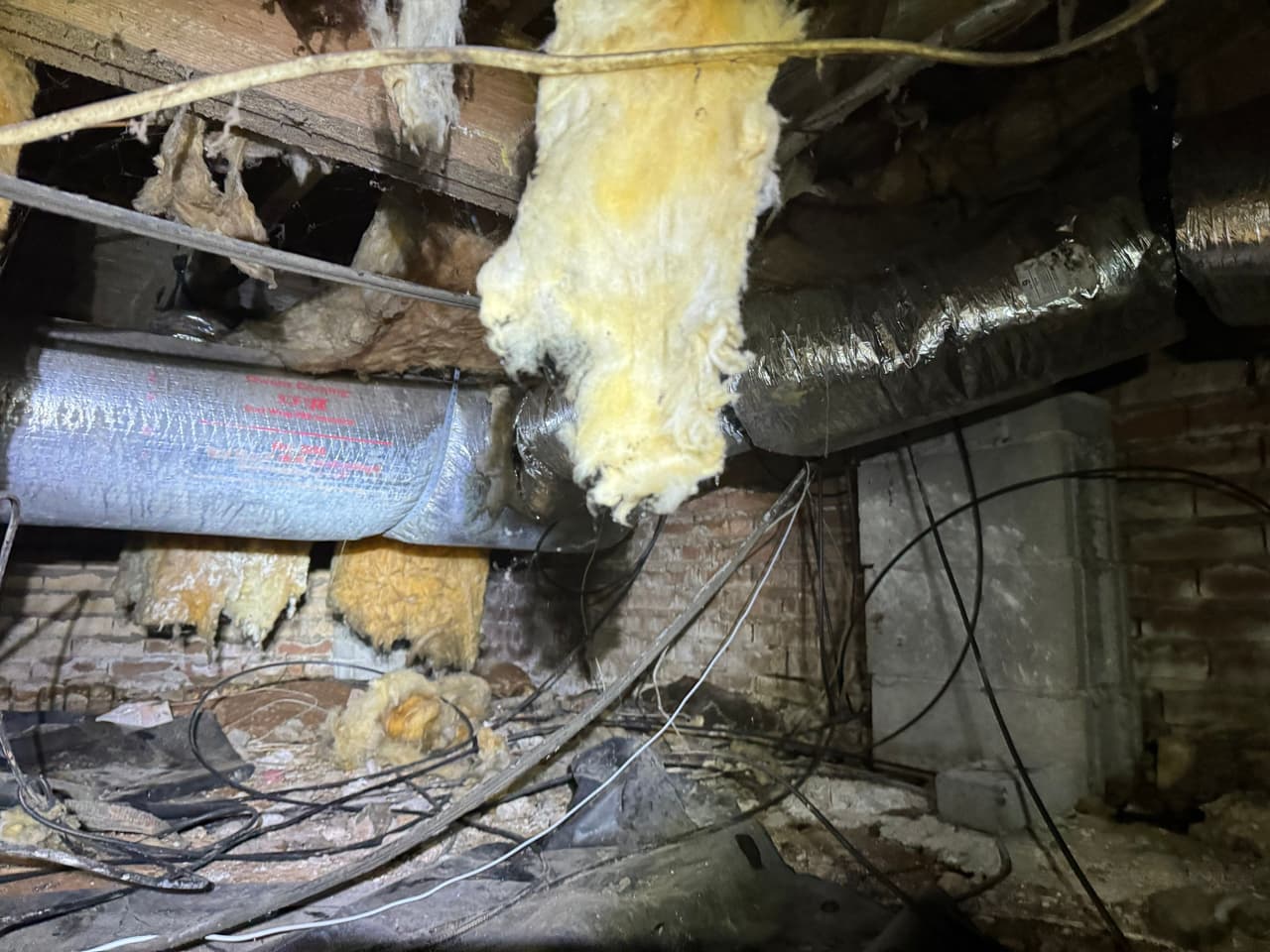
In the crawl space the joists themselves tell the rest of the story. We look for cracks along the grain, wood that is dark, soft or crumbling, joists that have split or broken, ends that have crushed where they rest on the sill or beam, and old notches or holes cut for pipes and ducts. Each finding points to a different repair.
CH 05
Can Floor Joists Be Repaired Instead of Replaced?
Often, yes. Most joist damage we find in Carolina crawl spaces is partial, so the joist can be reinforced and stay in place. Sistering a new member alongside it, or bridging one damaged spot with steel plates, restores the strength the floor needs without removing the subfloor above.
Replacement is the repair when a joist has rotted through, has crushed at its bearing ends, or has so little sound wood left that nothing can be fastened to it. When we replace a joist we rebuild its bearing at the sill or beam as well, so the new joist has solid support at both ends.
CH 06
How Does Crawl Space Moisture Damage Floor Joists?
Wood stays strong when it stays dry. In a vented crawl space, warm and humid Carolina air flows in through the summer and meets cooler surfaces under the house, and that moisture can collect on the framing and keep it damp. Over months and years, damp wood can soften and lose strength, starting with the joists nearest the moisture source.
Common sources include standing water after rain, a damaged or missing ground cover, a leaking pipe or condensate line, and a high water table near the coast. Fixing the joist is one half of the repair. Managing the moisture, whether that means an interior crawl space drain or a sealed crawl space, is what helps the new wood last.
CH 07
What Happens During a Floor Joist Inspection?
We start by walking the floor to map where it dips or bounces, then inspect the crawl space under that area. Each joist is checked by eye and with a probe, along with the sill, the beams, the posts and the moisture conditions around them.
You receive written documentation, typically an estimate with photographs of what we found, and video if you ask for it. If only a few joists need work, we say so, and if a joist looks stained but is still firm, we tell you it can stay as it is.
CH 08
What Does Floor Joist Repair Cost?
The cost follows the number of joists involved, the kind of damage, whether bearing points need rebuilding, and how much room there is to work in the crawl space. Reinforcing a few joists in an open crawl space is a smaller job than replacing a run of rotted joists and rebuilding their bearings. Your written estimate comes from the free inspection, and financing is available.
CH 09
What Warranty Comes With Floor Joist Repair?
Framing repairs carry a 30 year warranty that the work was completed correctly per state building code, which begins once the final invoice is paid in full and does not cover termite damage, or moisture or water damage unless a full encapsulation, a drainage system and a dehumidifier are all installed as part of the same project. The complete terms are on our written warranty details page.