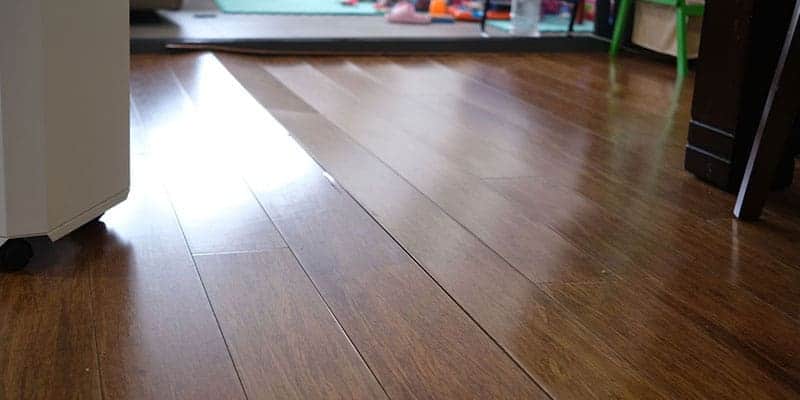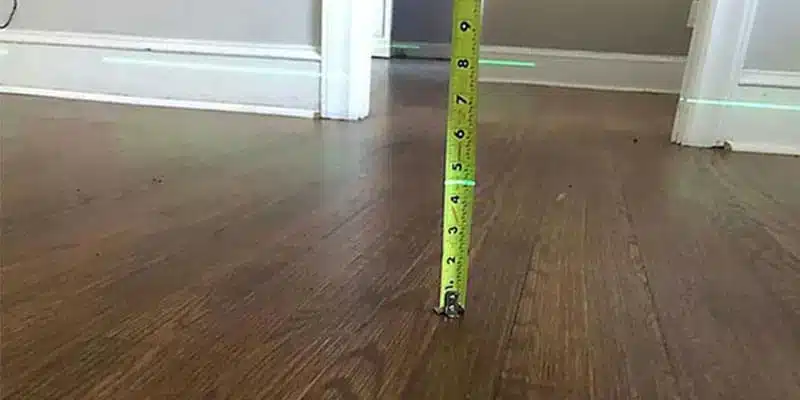

Sagging floors usually happen for one of three reasons: the floor was built with too few joists or joists spaced too far apart, the foundation has settled unevenly, or moisture in the crawl space has weakened the wood. Each cause has its own repair, from added framing and crawl space supports to foundation piers.
If your floor has a dip or feels uneven underfoot, this article covers why sagging floors happen and how they are fixed.
What Are the Main Causes of Sagging Floors?
There are several reasons a floor may begin to sag, and each one calls for its own repair.
Construction Errors

The first cause is how the floor was built.
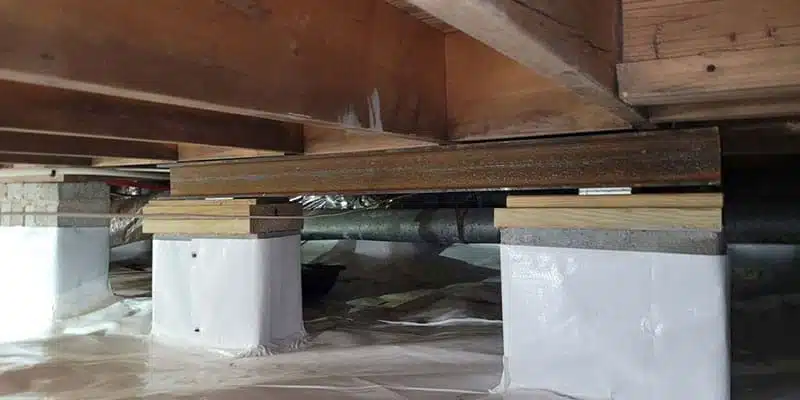
In a home with a crawl space foundation, the floors rest on wood joists and beams. The joists run parallel to one another and sit on beams that run the other way. If the house was built with too few joists, or with joists spaced too far apart, the joists can sag under the weight of the floor over time.
Differential Foundation Settlement
Another cause of sagging floors is differential foundation settlement. Your foundation depends on the soil below it for support. If that soil shifts or sinks, your foundation and the rest of your home will move.
A small amount of even settlement is typical after construction. Differential settlement is uneven, and it can damage the structure.
When it happens, signs can show up throughout the home, such as foundation cracks, sticking windows and uneven or sagging floors.
Structural Decline and Moisture
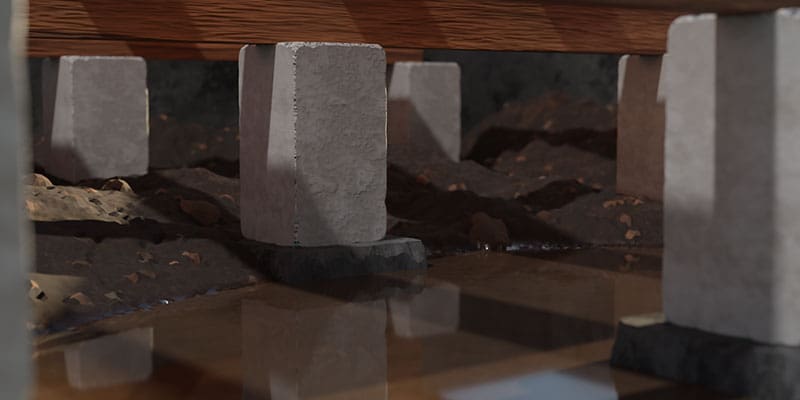
Even a well built floor can weaken over time as the joists and beams decay. As the support weakens, the floor can begin to slope or sag.
Floor supports can receive damage from general wear and tear and direct impacts. However, moisture can also be a significant factor in the longevity of structural components primarily consisting of timber.
Excess moisture is common in basements and crawl spaces, and when it is not managed it can lead to wood rot. As rot spreads, the joists and beams weaken, which can lead to sagging and sloping floors.
For more information, see Sagging Floors Repairs and Causes.
How Do You Fix Sagging Floors?
Repairing a sagging floor is usually a job for a professional, because the repair has to match the cause. These are two common repairs.
Foundation Underpinning
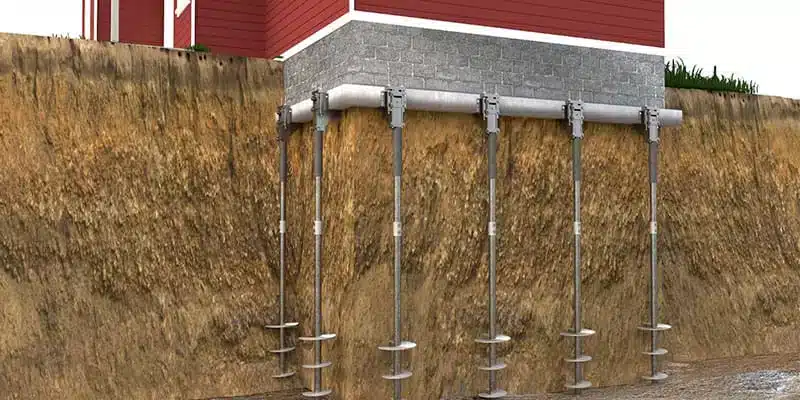
If your sagging floor results from differential settlement, your repair team may suggest solving the issue via a service called underpinning. Underpinning involves inserting foundation piers into the earth and connecting them to your foundation to add support. Push and helical piers are the most widespread pier types for this job.
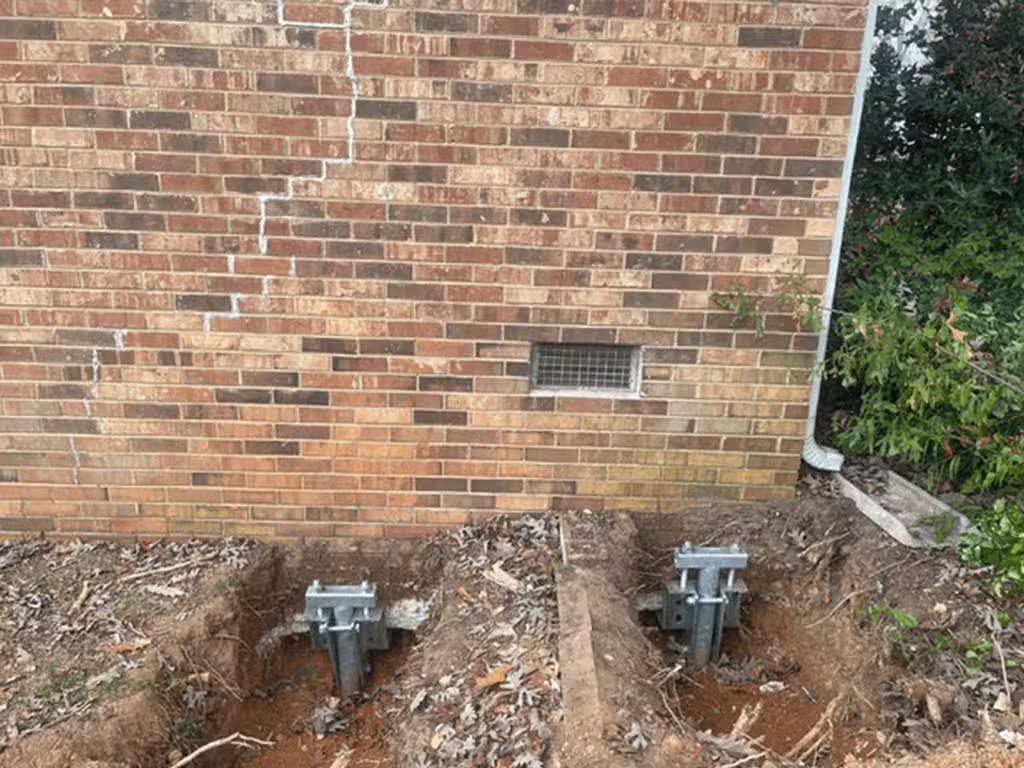
A foundation repair team installs push piers using a hydraulic pump to press them into the earth until they hit bedrock or firm strata. The top of the piers attaches to your foundation via a bracket. Once the connection is in place, the piers can often be used to lift the foundation back toward level without causing damage.
Helical piers are similar, with one main difference: rather than being pressed in, they are shaped like large screws and turned into the ground until they reach soil that can support the home.
Structural Reinforcement
Structural reinforcement is usually the repair when a floor sags because of the wood framing in the crawl space. It can take several forms, depending on what the framing needs.

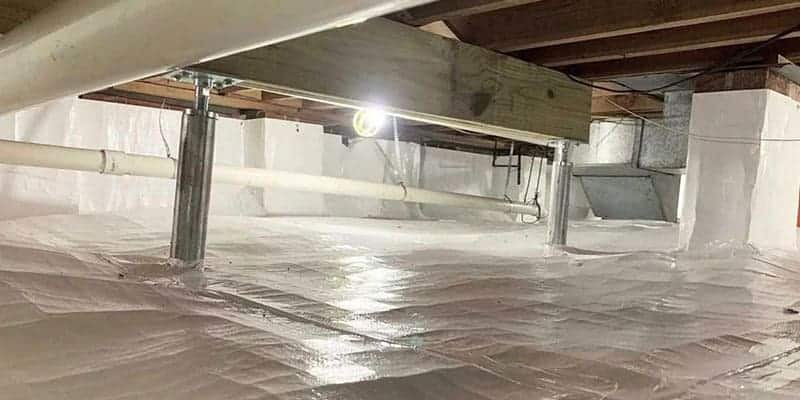
For example, if the house was built with too few joists, the repair may add joists, sister new lumber to joists or add bridging between them. Adjustable crawl space jacks can also support a sagging beam from below. These add stiffness and support to the floor.
It also helps to address any moisture that caused the joists or beams to rot, with interior drainage or a crawl space dehumidifier. Reducing moisture makes it less likely the floor will sag again.
Get Help With Sagging Floors
If your sagging floor comes from a foundation or crawl space problem, HydroHelp911 provides crawl space and foundation repair services across North and South Carolina, starting with a free inspection.
Next Step
Schedule a Free Inspection
Call or fill out our quick online form. We'll book a convenient time to assess your home at no cost.
Learn more about our crawl space repair services.
Found this useful? Share it with someone working on their home.
Written by
Cory Parks
Owner & President, HydroHelp911
Cory Parks founded HydroHelp911 and leads its structural and moisture repair work for homeowners across North and South Carolina, from the clay soils of the Piedmont to the saturated, sandy ground along the coast.
More about CoryGet a Free Inspection
Two ways to start. Both are free, with no obligation.
Pick your own day in our calendar. You save $250 if you go ahead with the work.
Send a short form, and our office will call to book a time that suits you.
For new customers who book online through our website and then sign a contract.