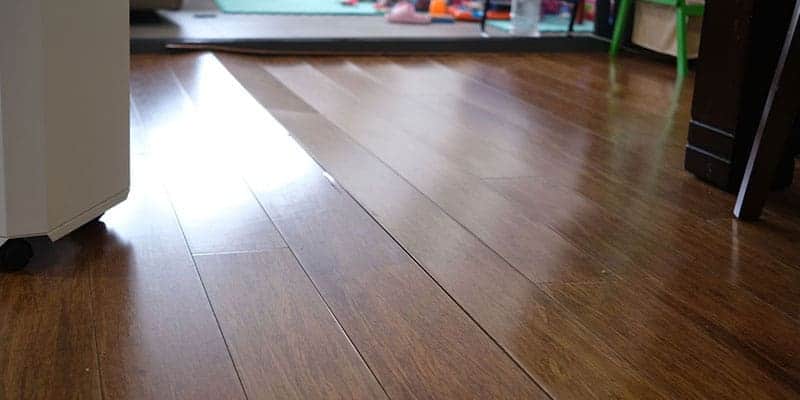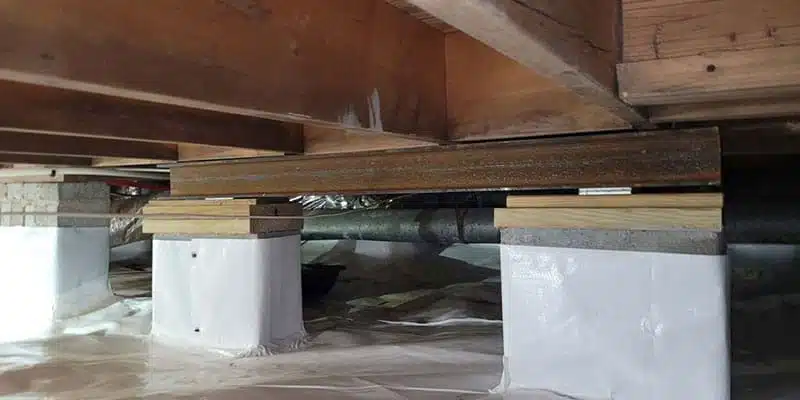

A sloping floor is worth having checked when the slope is noticeable over a short distance, is getting worse, or comes with sticking doors and windows. Floors usually slope because the wood framing under them has weakened or the foundation has settled unevenly, and each cause has its own repair.
This article covers why floors slope, when a slope matters and how sloping floors are fixed.
Why Are Your Floors Sloping?
The first step toward knowing whether you should worry about sloping floors is to understand how floors become sloped in the first place. As mentioned in the introduction, there is more than one reason why this can occur. The sections below will explain the two most common ones.
Direct Floor Damage
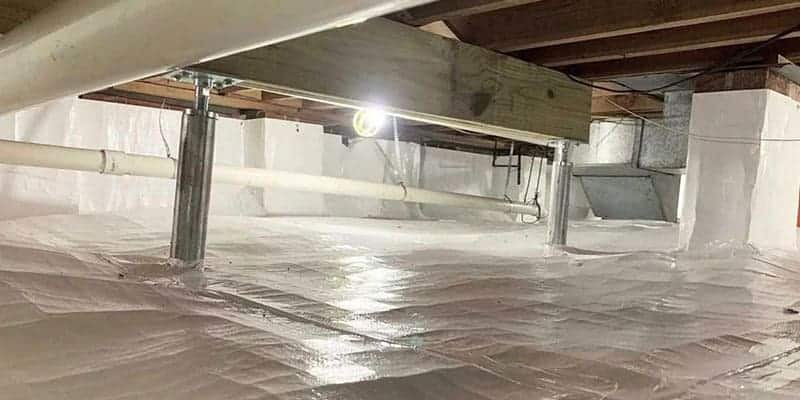
One of the most common causes of a sloping floor is damage to the floor itself. Over time, floors and their supporting structures in your crawl space can take damage from several sources.
For instance, excessive moisture in your home can cause wood to rot. When the crawl space supports below your floor start to decay, it is typical for the floorboards they support to begin sagging. This sagging causes the entirety of your floor to become uneven.
Wooden floorboards can also become cracked, bent, and bowed through use and age. Regardless of what causes the damage to your floor and its joists, the result is often a noticeable floor pitch ranging from mild to severe.
Differential Foundation Settling
Sometimes, the source of your sloping floor has nothing to do with your actual floor. Instead, a sloping floor can be an indication of foundation settling.
When the soil below a foundation sinks or shifts, the foundation will sink and shift in turn. This often results in a change in the rest of your home.
Some foundation settling is normal, especially in the first years after construction. Differential settling is different: it is uneven, and it can give floors a noticeable pitch and make doors and windows stick.
How Much Slope Is Too Much?
When you notice that a floor in your home has begun to slope, it can be challenging to diagnose the cause on your own. However, some signs can indicate that you should worry about your sloping floor.
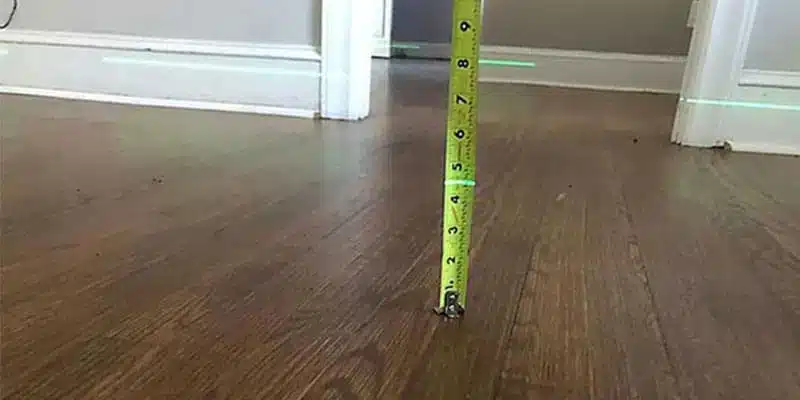
Mainly, paying attention to the degree of the floor slope is essential. To evaluate the slope, you’ll need to remember that the floor has a vertical rise and a horizontal run.
Generally, a floor with a noticeable rise or fall over a short run is worth having checked. This degree of slope can indicate a problem with your floor or your foundation.
With that said, it’s also important to consider comfort and safety. Any time a sloping floor is difficult to walk on or causes a tripping hazard, a professional repair team can help.
Are Sloping Floors More Common in Certain Homes?
Any home can develop a sloping floor. However, some houses are more likely to have uneven floors than others. For instance, sloping floors are far more common in older homes that have had more time to settle over the years. Older homes are also more likely to have deteriorating structural materials in their crawl space foundations that can lead to sloping floors.
As hinted in the sections above, sloping floors are also more common in homes that have experienced foundation problems, regardless of age. When a foundation becomes damaged or settles unevenly, it can cause many issues, including sloping floors, stuck doors, jammed windows, and much more.
Will a Sloping Floor Collapse?
Whether or not a sloping floor will collapse depends on several factors, such as the cause of the slope and the total degree of damage. For example, collapse is unlikely when a floor has a slight slope due to normal foundation settling.
A sloping floor can collapse only when the framing damage is well advanced or the problem has gone unaddressed through extreme neglect. HydroHelp911 has seen two or three cracked joists in a row with two to three inches of sag and slope that had still not collapsed. A sloping, sagging, or bouncy floor is still worth having evaluated, because the cause usually continues until it is addressed and the repair scope follows how many joists are affected.
What Are the Best Ways to Fix a Sloping Floor?
Finding the best way to fix your floor depends entirely on the cause. For example, if you find out that your floor slopes due to damage to the floor itself, the best solution is to repair the floor and its underlying structure.
At times, you may be able to replace sloping floorboards on your own. However, a professional repair team can help your repair project run smoothly, safely, and successfully.
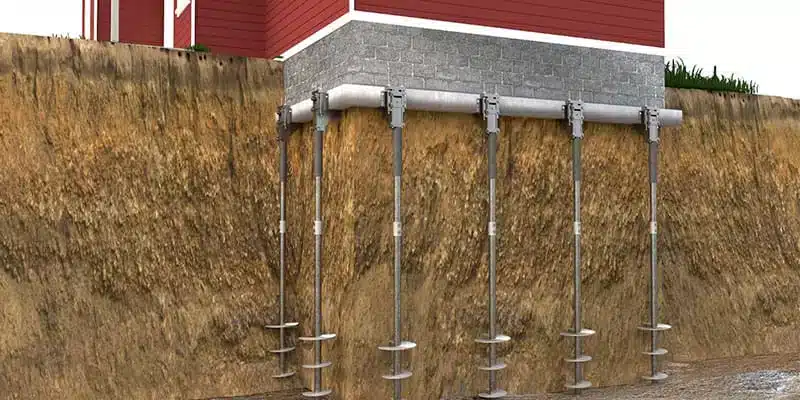
Similarly, if your floor slopes because of a foundation problem, there is little to no opportunity for you to repair this issue on your own. Instead, you’ll need to find a foundation repair team to diagnose and solve the problem. Sometimes, underpinning with steel piers is the repair. It uses piers to stabilize the foundation and, in many cases, lift it back toward level.
Get Help for Your Sloping Floors
A sloping floor can have several causes, and an inspection shows which one applies. A floor that slopes significantly or becomes difficult to walk on may point to a problem with the structural support in your crawl space or the foundation. In either case, a professional inspection is a sensible first step toward leveling your floors.
Since 2017, the HydroHelp911 team has been repairing foundations and crawl spaces across North and South Carolina, and a free inspection can show why your floor slopes.
Next Step
Schedule a Free Inspection
Call or fill out our quick online form. We'll book a convenient time to assess your home at no cost.
Learn more about our crawl space repair services.
Found this useful? Share it with someone working on their home.
Written by
Cory Parks
Owner & President, HydroHelp911
Cory Parks founded HydroHelp911 and leads its structural and moisture repair work for homeowners across North and South Carolina, from the clay soils of the Piedmont to the saturated, sandy ground along the coast.
More about CoryGet a Free Inspection
Two ways to start. Both are free, with no obligation.
Pick your own day in our calendar. You save $250 if you go ahead with the work.
Send a short form, and our office will call to book a time that suits you.
For new customers who book online through our website and then sign a contract.