Framing Repair · Problem Signs

A rotted deck joist is a moisture problem the wood has been carrying for years, and a structural one once it softens

Deck joists live outdoors in rain, humidity, and splash, and the framing that carries the deck surface can soften and lose strength long before the boards on top look worn. Here is what drives deck joist rot across the Carolinas and what a no-pressure inspection looks at.

North Carolina · South Carolina BBB A+ Rated

Let's take the first step toward a healthy home.

A local specialist will inspect your foundation, walk you through the findings, and send a clear estimate. no cost, no pressure.

Book instantly with Driive
BBB Accredited
Fully Insured
"By Your Side" Guarantee
What this symptom means

Rotted Deck Joist: diagnosed and explained.

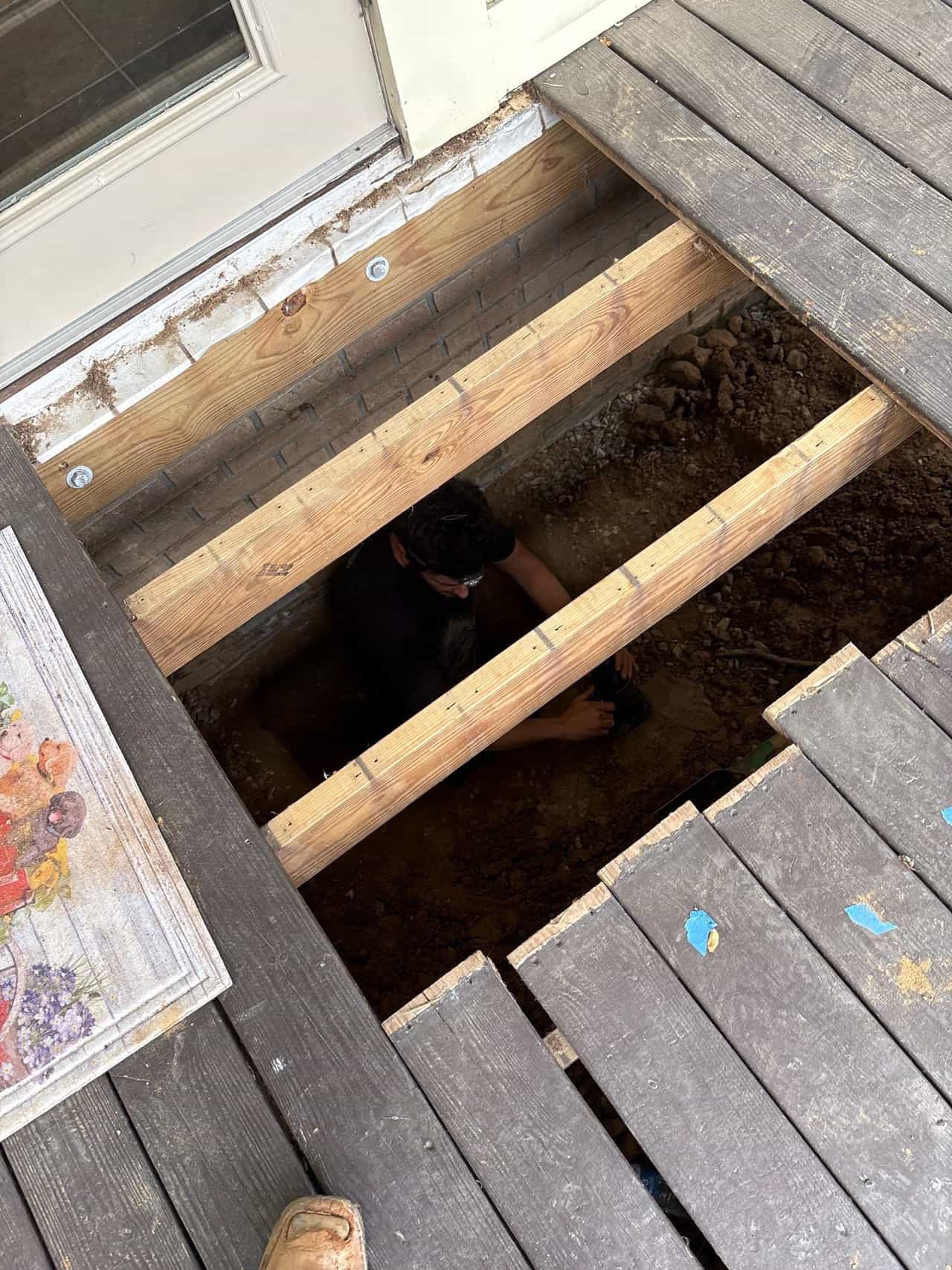
A deck joist is one of the framing members beneath the deck surface. The joists run between the ledger board attached to the house and the outer beam, the ledger ties the deck to the home's band joist, and the beam rests on posts and footings. Together these carry the deck boards and everyone who stands on them. Rot is structural decay in that framing after sustained moisture has fed wood-eating fungi. Healthy framing is firm and resists a probe. Decaying wood turns dark or grayed, feels soft or spongy, may crack into cube-like blocks, holds fasteners poorly, and can be pressed into or flaked apart with a screwdriver. Because the joists, beam, and ledger sit below the deck boards, the decay usually progresses out of sight, and homeowners notice the consequences first: a spot in the deck that feels soft or springy underfoot, a section that has begun to sag or slope, a railing post that has loosened, or rust streaks and a damp, earthy smell from the framing below. The ledger connection where the deck meets the house is the most important area to evaluate, because a rotted ledger or band joist can let the deck pull away from the home. Rot needs moisture to continue, so the framing and the water reaching it have to be assessed together. A no-pressure inspection examines the joists, beam, ledger, posts, and footings, probes the wood to gauge how far the decay has gone, checks how the deck is connected to the house, and identifies where the moisture is coming from before any repair is discussed.

Catch It Early

Signs that often show up alongside a rotted deck joist

01

A soft, springy, or bouncy spot underfoot on the deck

A localized give as you cross one area of the deck, rather than firm support everywhere, usually means a joist or the beam directly below that spot has lost strength to decay and is flexing under load.

02

A section of the deck surface that sags or slopes

When a rotted joist or beam can no longer carry its load, the deck boards above settle into a visible dip or a slope, most often over the weakened framing rather than along a fully supported edge.

03

The deck pulling away from the house

A gap opening between the deck and the home, or fasteners working loose at the ledger, can mean the ledger board or the band joist it attaches to has rotted. This connection carries the inner edge of the deck and is the most important area to have looked at.

04

Loose, wobbly railings or posts

A railing that moves when you lean on it, or a post that rocks at its base, often traces to decayed framing or corroded connectors that no longer hold securely, since rails and posts are fastened into the same joists and beam that may be softening.

05

Dark, damp, or discolored wood and a musty smell underneath

Framing that looks grayed or stained, feels damp or spongy, shows cracking into blocks, or carries an earthy, musty odor confirms that decay is active and helps show where it is concentrated.

06

Wood that crumbles or gives way when probed

Sound framing resists a screwdriver tip. Wood on a joist, beam, ledger, or post that can be pushed into, flaked apart, or pulled out in pieces has lost structural strength and is no longer safely carrying its share of the deck.

07

Rust streaks, corroded fasteners, or failed flashing

Rust stains running down the framing, badly corroded joist hangers and screws, or flashing that has slipped at the ledger point to water reaching the wood and to connections that are weakening alongside the lumber.

Most Common Causes

What causes rotted deck joist in Carolinas homes.

Rain, humidity, and constant outdoor exposure
Unlike crawl space framing, deck joists sit fully exposed to the weather. Across the Carolinas, frequent rain, long humid summers, and repeated wet-then-dry cycles keep deck framing damp for much of the year. The Piedmont around Charlotte, Greensboro, Winston-Salem, and the Triangle, the SC Upstate around Greenville, and the Midlands around Columbia all carry heavy summer humidity that slows drying after every storm. Wood that cannot dry out between rains stays wet long enough for decay fungi to take hold in the joists and beam, which is why outdoor exposure is the leading driver of deck joist rot in this climate.
Water trapped at the ledger where the deck meets the house
The ledger board fastens the deck to the home's band joist, and that junction is where many decks rot first. If the ledger was not flashed correctly, water running off the house siding gets behind the board and sits against both the ledger and the band joist with little chance to dry. This is the most consequential rot location on a deck, because the ledger and band joist carry the inner edge of the entire deck. A rotted ledger connection is a common reason a deck begins to pull away from the home, and resolving it falls within our framing and structural repair work.
Standing water and debris on top of the joists
Where deck boards are spaced too tightly or have filled with leaves, pine straw, and dirt, water and debris collect on the top edge of the joists and the beam instead of draining through. Those flat upper surfaces stay wet and trap moisture against the framing for days after rain. Carolinas decks shaded by pines and hardwoods catch a steady fall of needles and leaves, and that packed debris holds water directly on the wood that carries the deck, accelerating decay along the tops of the joists.
Posts and joist ends in contact with wet ground and splash
Deck posts and the lower framing sit closest to the soil, where rain splash, ground moisture, and saturated earth keep the wood wettest. In the Sandhills around Fayetteville and Pinehurst, sandy soils drain quickly but splash and ground contact still wet post bases, while in coastal markets like Wilmington, Leland, and Brunswick County a high water table, saturated sandy soils, and salt air keep the ground and the lower framing damp and corrode the metal connectors holding the deck together. Around Asheville and the mountains, sloped lots and heavy rainfall send runoff toward post footings and the framing above them. Wood and fasteners closest to the ground are usually where decay and corrosion show up first.
Aging wood, failed sealant, and corroded fasteners
Pressure-treated lumber resists decay but does not last forever, and protective sealant wears off over years of sun and rain, leaving the wood open to moisture again. As joists repeatedly swell and shrink, checks and splits open along the grain and channel water into the core of the board. At the same time, nails, screws, joist hangers, and post connectors corrode in the damp, humid air, and corrosion is faster near the coast in the salt air. Loosened fasteners and enlarged nail holes let the framing flex and admit still more water, so an older deck often shows both softening wood and failing connections together.
Permanent Solutions

How framing repair specialists actually fix rotted deck joist.

Solving rotted deck joist means addressing the underlying soil, pressure, or settlement cause. Not just patching the visible damage. Below are the engineered solutions we install most often for this symptom in Carolinas homes.

Framing Repair solutions
Related Solutions

Engineered framing repair solutions for this problem.

Each method is matched to a specific failure mode and soil profile. Browse the toolkit we draw from when diagnosing your home.

Regional Context

Why floor framing in older Carolina homes fails predictably

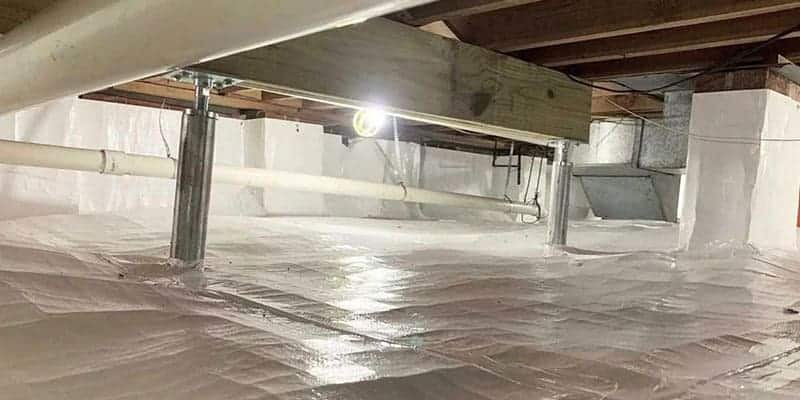
Much of the floor framing we repair sits over a crawl space that has stayed damp for years. In the humid Piedmont and the coastal markets around Wilmington and Leland, warm, moist air and ground moisture keep sill plates, girders, and joist ends wet long enough to rot and lose bearing. As that wood softens and the supporting soil shifts under the crawl space, floors above begin to sag and bounce. Our team diagnoses the cause first, whether it is settled support, rotted bearing, or an undersized member, before rebuilding the framing and addressing the moisture that weakened it.

Piedmont
Clay-rich soil belt
Charlotte to the Triad
Wet / dry
Seasonal moisture swing
Soil expands, then contracts
Coastal
High water table & salt air
Wilmington & Brunswick County
NC + SC
Local, no-pressure crews
Offices across the Carolinas

Piedmont clay and the crack patterns it produces

Much of the Piedmont, from Charlotte through the Triad, sits on clay-rich soil that holds water. Clay absorbs moisture in wet seasons and swells, then contracts in dry periods. That cycle pulls pressure on and off a foundation, pulling away from footings, creating voids beneath slabs, and producing the vertical and diagonal settlement cracks we see most frequently across the region.

Homes built on uncompacted clay backfill show the highest incidence of progressive settlement cracking in our inspection work. The same clay that looks stable through a normal year can move enough during a long wet spring or a hard summer drought to open a crack that keeps widening.

Coastal and Sandhills soils behave differently

In Wilmington, Brunswick County, and Leland, high water tables, saturated and sandy soils, and salt air drive a different set of failure modes than inland clay. Lateral water pressure, erosion, and corrosion are the drivers here, which is why coastal foundation and seawall work needs an approach that inland techniques don't account for.

Across the Sandhills near Fayetteville and Pinehurst, sandy soils drain differently again, and in the mountains around Asheville, hillside foundations, slopes, and heavy rainfall change the picture once more. We diagnose to the soil and climate of the specific home, not to the Carolinas generically.

"When someone calls about a rotted deck joist, the wood is telling us water has been sitting on it for a long time. We get underneath, probe the joists and the beam, and pay close attention to the ledger where the deck ties into the house, because that connection is what carries the inner edge of the whole deck. If the wood is weathered on the surface but still sound, we will tell you that. If a joist or the ledger has lost real strength, we reinforce or replace it and renew the corroded connectors, and we deal with how the water was reaching it so the rot does not just start over. No pressure and no upsell."
CP
Cory Parks
Owner, HydroHelp911
Why Choose HydroHelp911

Care and expertise from a team that does this every day.

HydroHelp911 is locally owned and operated, with crews dedicated exclusively to foundation, basement, and concrete work across the Carolinas.

Specialized expertise.

Foundation repair, waterproofing, and concrete leveling are our entire focus. not a sideline.

Locally owned and operated.

Deep experience with Carolinas soils, basements, and weather conditions.

BBB A+ rated.

Accredited with an A+ rating and thousands of homeowner reviews across the Carolinas.

Warrantied solutions.

Lifetime warranties available on many services, backed by the original installer.

HYDROHELP911

Why hire HydroHelp911.

MEET THE TEAM · 2 MIN
Frequently Asked Questions

Answers to common questions about Rotted Deck Joist.

Don't see your question here? Our team is happy to help. Reach out anytime.

Deck joist rot is a moisture problem. Deck framing sits fully exposed to the weather, and the Carolinas combination of frequent rain and long, humid summers keeps it damp long enough for decay fungi to take hold. The single most common trouble spot is the ledger where the deck attaches to the house, because water that gets behind a poorly flashed ledger sits against the wood with little chance to dry. Debris and standing water collecting on top of the joists, ground contact and rain splash at the posts, and aging wood with worn sealant and corroded fasteners all add to it. On the coast around Wilmington and Leland, salt air speeds the decay and corrodes the metal connectors as well.

Pricing ranges above are general estimates only and are not project quotes. A precise figure is provided on each written estimate after on-site inspection.
Related Problem Signs

Other framing repair warning signs to watch for.

If you see one, it's worth checking for the others. Most foundation problems show up as more than one symptom.

01

Broken or Cracked Floor Joists

Floor joists are the horizontal wooden members that span between the girder beam and the foundation walls and carry the floor of the room above them. A broken or cracked joist is one that has split, fractured, or partially failed and can no longer hold its share of the load. Because joists sit in the crawl space below the finished floor, the damage is almost always hidden, and homeowners notice the consequences upstairs first. A floor that has begun to sag in one spot, a soft or springy feel as you cross a specific area, a sudden dip under a heavy appliance, or a baseboard pulling away from the floor can all trace back to a joist that has cracked underneath. When you can see the joist itself in the crawl space, a failure shows as a long split running with the grain, a clean fracture across the member, a section that has sagged or twisted, or a sister board someone added in the past that has pulled loose. A crack does not have to break all the way through to matter. Once a joist is split, it bends more under load and transfers weight to its neighbors, which then start to overload as well. Because the cause sits below the floor, the reliable way to know which joists have failed and why is to go into the crawl space, inspect the framing, probe the wood, and measure the floor elevations across the home. That is what a no-pressure inspection is for.

Learn More
02

Rotted or Rotten Floor Joist

A floor joist is one of the horizontal wood beams under your floor. The joists run in parallel rows across the crawl space, resting on the foundation walls and on a central girder beam, and they carry the subfloor and everything above it. A rotted or rotten floor joist is a joist that has lost structural strength, usually to sustained moisture and decay fungi, to termite damage, or to both working together. Sound joists are firm and pale. A rotting joist turns darker or grayed, feels soft or spongy, may crack into cube-like blocks, and can be pushed into or pulled apart with a screwdriver. Termite-damaged joists can look intact on the surface while being hollowed out along the grain inside, leaving thin galleries and packed soil where solid wood should be. Because the joists sit below the finished floor, the damage usually progresses out of sight and homeowners notice the consequences upstairs first. A floor that feels soft or springy over one spot, a section of floor that has started to sag or dip, a sticking door, or a gap opening between the floor and the baseboard can all trace back to a weakened joist underneath. Joist rot and termite damage both need to be evaluated alongside the moisture in the crawl space, because the same dampness that decays wood also draws termites. A no-pressure inspection enters the crawl space, probes the joists to judge how far the damage has gone, measures floor elevations to see what has already moved, and identifies where the moisture is coming from before any repair is discussed.

Learn More
03

Sagging Floor Joist

A sagging floor joist is a single horizontal framing member, one of the parallel boards that carry your floor across the crawl space, that has dropped below the joists beside it. Because each joist supports a strip of the floor directly overhead, when one sags you typically feel it as a localized dip, soft spot, or slope above that one board, rather than a problem spread evenly across the whole room. The floor covering is rarely the issue. What has moved is the joist itself, or the support holding it up. A floor joist sags for one of two reasons, and often both together. Either the wood has been weakened, most commonly by moisture exposure that has softened or rotted it so it can no longer hold its load, or the support beneath the joist has failed, meaning the girder beam or the pier carrying that beam has settled and let the joist drop with it. Spans that were undersized or notched when the home was built tend to give way first. Because the joist and its support sit in the crawl space below the finished floor, the reliable way to know which joist has dropped and why is to go underneath, inspect the framing and the supports, and measure the floor elevations across the home. That is the purpose of a no-pressure inspection.

Learn More
Service Areas

Serving North Carolina & South Carolina.

Local crews based in offices across the Carolinas, dispatched daily. If your town isn't listed, call us. we likely serve your area.

Top cities we serve
Check Your Service Area
Our Process

Take the first step toward a healthy home.

A straightforward path from initial inspection to completed repairs.

Step 01

Schedule your inspection.

A local specialist visits your home, evaluates the foundation, and answers your questions on site. No cost, no obligation.

Step 02

Receive an estimate based on your needs.

We provide a clear, written estimate with a scope of work tailored to your home's specific issues. Typically within one business day.

Step 03

Get your repairs.

Our certified crews complete the work on schedule and back it with product warranties of up to 25 years.

Customer Reviews

Over 1,750 homeowners have shared their experience.

A 4.9-star average across Google, with verified reviews from homeowners throughout North and South Carolina.

Free Estimate

Two ways to start: book instantly, or request an estimate.

Schedule your inspection in seconds with our Driive booking tool, or share a few details and a local specialist will follow up within one business day.

What to expect
  • A local foundation specialist on site
  • A complete walk-through of the findings
  • A written estimate within one business day
  • No cost, no obligation, no high-pressure sales
Prefer to call
704-610-4399
North Carolina · South CarolinaBBB A+ Rated
HydroHelp911

Let's take the first step toward a healthy home.

A local specialist will inspect your foundation, walk you through the findings, and send a clear estimate. no cost, no pressure.

Book instantly with Driive
BBB Accredited
Fully Insured
"By Your Side" Guarantee
Our Locations

Local offices across the Carolinas.

See all service areas
Dallas, NC
HydroHelp911
111 Iron Station Rd
Dallas, NC 28034
704-610-4399
Huntersville, NC
HydroHelp911
14936 Brown Mill Rd Ste 9
Huntersville, NC 28078
704-610-4399
Matthews, NC
HydroHelp911
11145 Monroe Rd Ste 105
Matthews, NC 28105
704-610-4399
Asheville, NC
HydroHelp911
34 Wall St #805D
Asheville, NC 28801
704-610-4399
Wilmington, NC
HydroHelp911
201 N Front St Ste 214
Wilmington, NC 28401
704-610-4399
Greensboro, NC
HydroHelp911
1515 W Cornwallis Dr Suite 201-B
Greensboro, NC 27408
704-610-4399
Greenville, SC
HydroHelp911
7 Brendan Way #13
Greenville, SC 29615
704-610-4399
Columbia, SC
HydroHelp911
1122 Lady St Suite 208
Columbia, SC 29201
704-610-4399