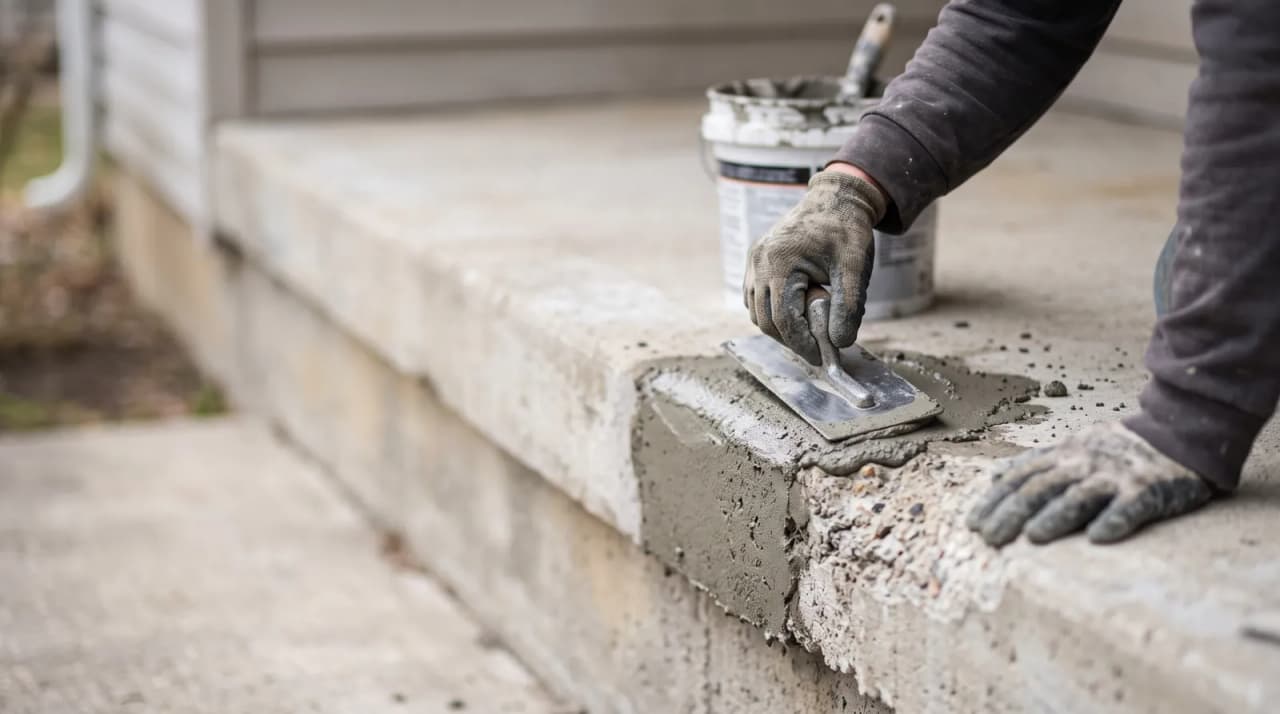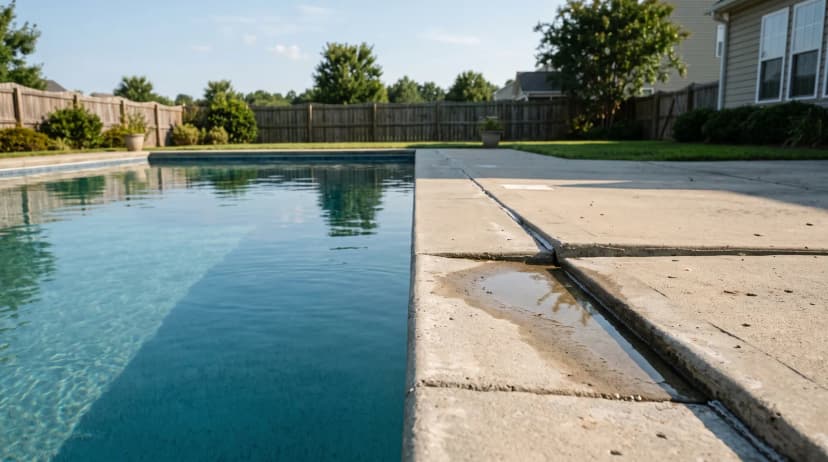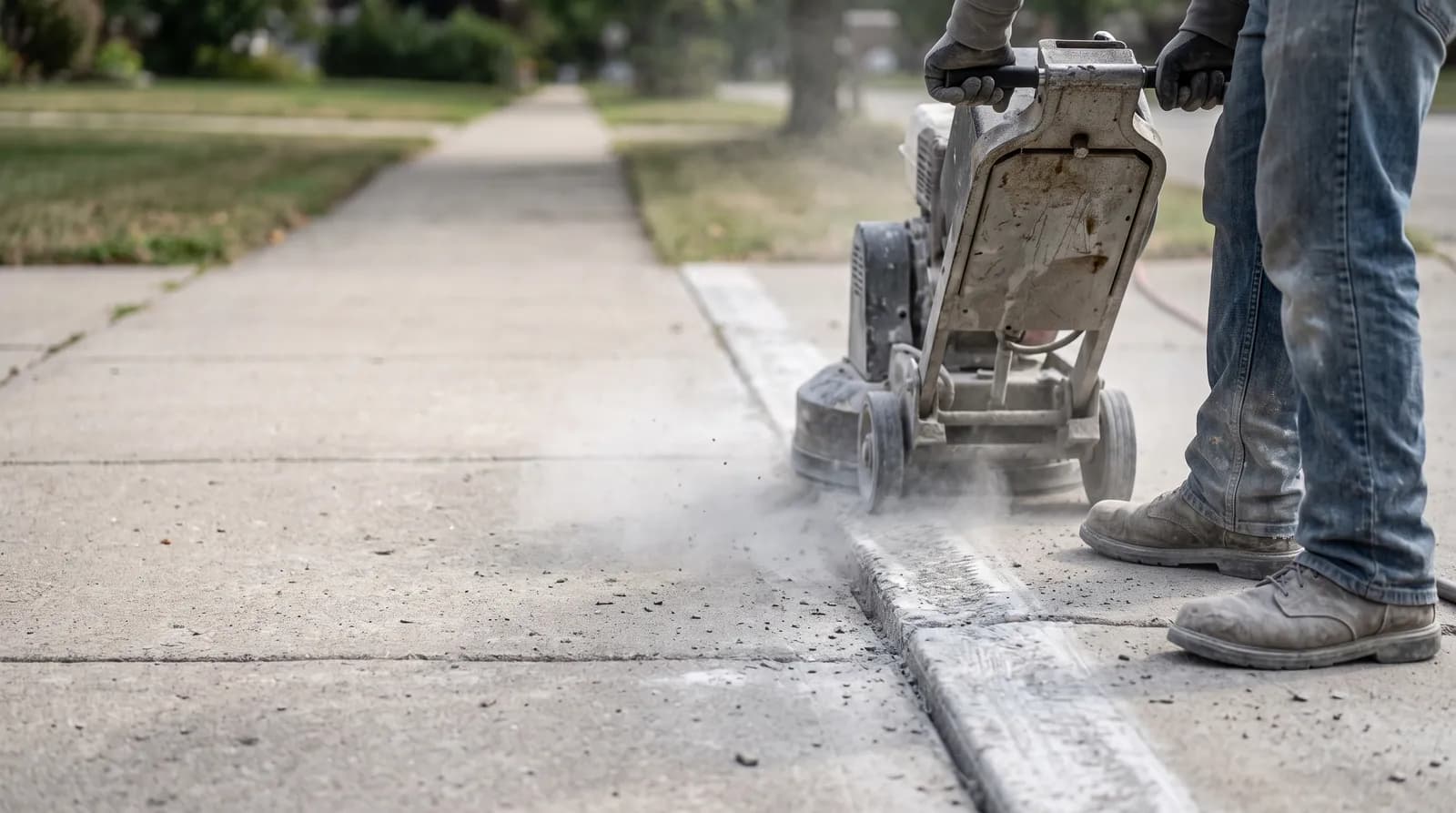

Concrete grinding is a surface method that removes concrete from the top of a slab. A grinder with diamond tooling shaves down the raised edge where two slabs meet, or a high spot on one slab, so the surface sits flush and walks evenly. It comes up most often on sidewalks, patios and garage floors, where one section has risen or another has dropped and left a lip that catches a foot or a wheel.
The lip itself usually starts in the ground. Across the Piedmont, clay under flatwork swells in wet seasons and shrinks in dry ones, so sections rise and fall unevenly. In the Sandhills and along the coast, sandy soil can wash out from under a slab and let it drop. Tree roots can also push a section up from below. Grinding works on the high side of the joint, so it suits a slab that is stable and only slightly out of line.
HydroHelp911 levels settled concrete by lifting the low slab with polyurethane foam, and this page explains grinding so you can compare the two. Every concrete leveling visit starts with a free inspection of the slab and the cause of the movement.
What to Know About Concrete Grinding and How the Method Works
HydroHelp911 lifts settled slabs with expanding polyurethane foam, and this page explains concrete grinding so you can compare them. Grinding removes material from the high side of an uneven joint until it meets the low side.
The grinder makes controlled passes across the raised edge, feathering the surface so the change in height is gradual. The slab stays where it is, so grinding suits a small, stable offset. When a section has sunk, lifting the low slab with foam addresses the low side instead, and foam injected beneath the slab also fills the void that let it drop.
Grinding does not change what moved the slab, so a trip hazard at a joint can return if the soil or a root keeps moving it. Sealing the joints between slabs keeps water from soaking the soil below, and it is one of the concrete services HydroHelp911 provides.
Common Questions About Concrete Grinding
Does Concrete Grinding Lift a Sunken Slab?
No. Grinding removes concrete from the high side of a joint, so it lowers the raised edge and leaves the low slab where it is. Lifting raises the low slab back toward level. HydroHelp911 lifts settled slabs with polyurethane foam, and the inspection shows whether a slab has sunk or the neighboring one has risen.
What Kinds of Surfaces Is Concrete Grinding Used On?
Grinding is commonly used on sidewalks, walkways, patios, porch landings and garage floors, wherever a raised edge creates a trip hazard on concrete that is otherwise sound.
Will Grinding Fix the Reason My Slabs Became Uneven?
Not by itself. Grinding smooths the surface but does not change the soil, water or roots that moved the slab, so the offset can return if the cause stays active. The inspection looks at drainage near the slab, the soil and any nearby trees.
Does Concrete Grinding Weaken the Slab?
Grinding takes material off the top surface, so it is generally used for small offsets where enough concrete remains. A larger offset usually points to a slab that has moved, which is a leveling question for the inspection.
How Much Does Concrete Grinding Cost?
There is no set price for concrete grinding, because the cost follows the number of joints, how far each edge stands up and access to the area. HydroHelp911 levels settled slabs with polyurethane foam, and the free inspection ends with a written estimate at no cost before any work is scheduled.
Next Step
Schedule a Free Inspection
Call or fill out our quick online form. We'll book a convenient time to assess your home at no cost.
Learn more about our concrete leveling services.
Found this useful? Share it with someone working on their home.
Written by
Cory Parks
Owner & President, HydroHelp911
Cory Parks founded HydroHelp911 and leads its structural and moisture repair work for homeowners across North and South Carolina, from the clay soils of the Piedmont to the saturated, sandy ground along the coast.
More about CoryGet a Free Inspection
Two ways to start. Both are free, with no obligation.
Pick your own day in our calendar. You save $250 if you go ahead with the work.
Send a short form, and our office will call to book a time that suits you.
For new customers who book online through our website and then sign a contract.