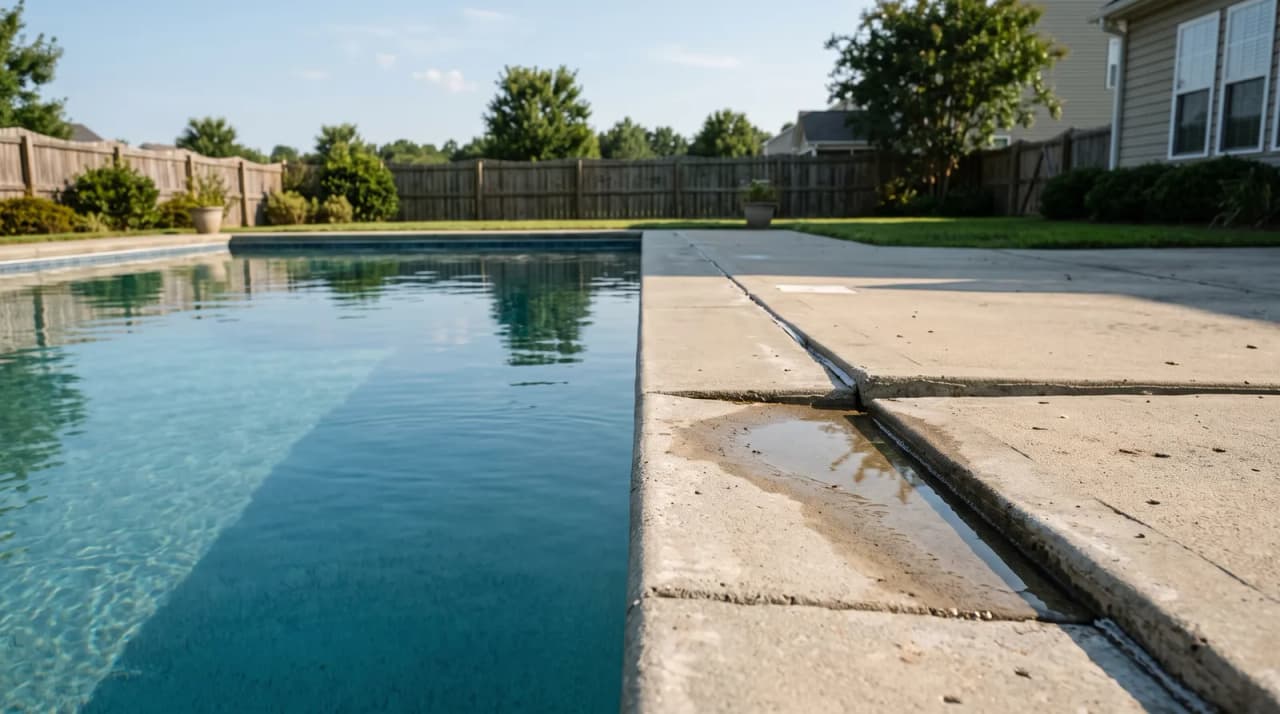
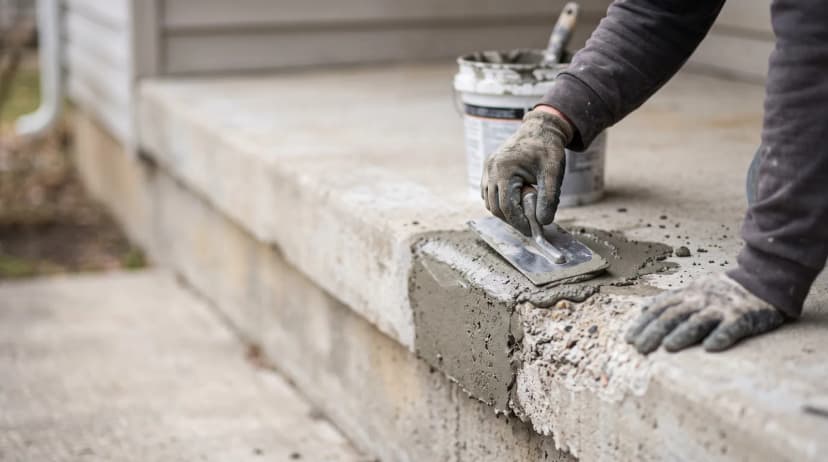
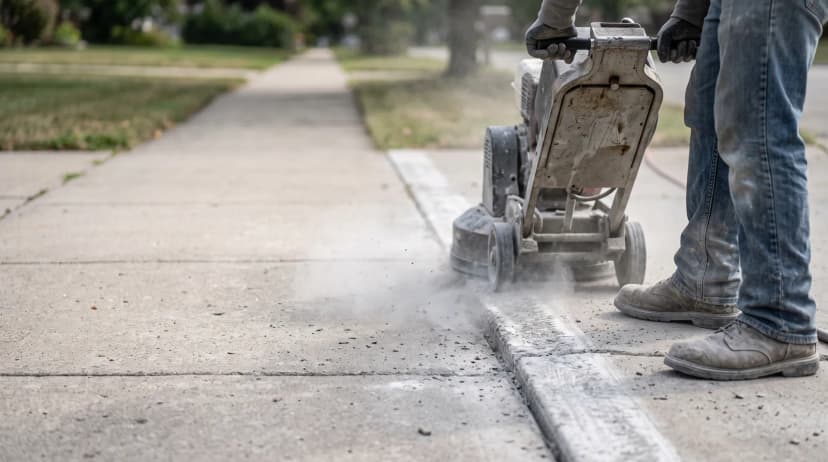
A driveway that dropped at the apron or dipped in the middle is usually following the soil under it down. This guide explains why driveways settle, how polyurethane leveling lifts a settled slab, and when lifting is not the right fix.
What Is Your Driveway Doing?
Driveway problems usually fall into a few patterns, and the pattern points to the kind of repair that fits.
- A Section Dropped as One Piece. A step at the garage or street joint. An intact slab that has settled can usually be lifted back to grade.
- A Hollow Sound, Surface Still Level. A drum note underfoot. A void may have formed while the slab still sits at the right height, and filling it supports the slab again.
- Cracked Into Loose Pieces. Fragments that rock under the tires. Concrete broken into pieces cannot be lifted as a unit, so lifting is not the right repair for that section.
Why Do Driveways Sink or Become Uneven?
A driveway is one of the first slabs to show soil movement, partly because it carries the weight of vehicles and partly because of where it sits. The most common spot to see it is where the driveway meets the garage or the street, because the transition makes any drop obvious.
In the Piedmont around Charlotte and Greensboro, clay soil under a driveway swells in wet months and shrinks in dry stretches, and over years that cycle opens voids the slab settles into. In the Sandhills near Fayetteville and Pinehurst, sandy soil shifts and drains differently, and around Asheville, runoff from sloped lots can wash the supporting soil out from under the apron.
These are the same conditions behind uneven concrete slabs around the rest of the property, and some driveways also show cracks across the slab as it loses support.
How Does Driveway Leveling Work?
Driveway leveling lifts the settled section back toward its original elevation, and the existing concrete stays in place. Small ports are drilled through the slab, and material is pumped underneath under controlled pressure until the concrete rises evenly and the void below it is filled.
The most common material today is polyurethane foam. Each leveling method is explained on the concrete leveling solutions page.
Because the solid concrete is supported from below again, the soft spot that let the slab sink is filled at the same time. The ports are patched afterward, which is part of why lifting is less disruptive than tearing out and repouring.
When Is Driveway Leveling Not the Right Fix?
Lifting is the right approach when the driveway slab is structurally sound and simply sitting too low. It is not the answer when the concrete is crumbling or broken into multiple pieces, or when the movement traces back to a deeper issue than flatwork settlement.
A slab that is too far gone is not a candidate for lifting, because material pumped under it has nothing sound to hold up. Once a lifted slab is back to grade, sealing the joints and cracks helps limit water working beneath it.
Common Questions About Driveway Leveling
What Causes a Driveway to Sink or Become Uneven?
Almost always the soil beneath it. In the Piedmont, clay soils swell with moisture and shrink as they dry, opening voids the slab settles into. Other causes include fill soil that was never fully compacted when the driveway was poured, and water washing fine particles out of the supporting soil over time, which is common on sloped lots around Asheville. The slab simply follows the ground down, which is why the cause matters as much as the dip.
Can Concrete Leveling Fix a Cracked Driveway?
It depends on the cracking. If the slab has settled but the sections are still intact, lifting it back to grade can close the gap at the joints and remove the trip hazard. If the driveway is broken into many loose pieces or is crumbling, lifting alone will not restore it, and replacing that area may be the better option.
How Long Does Driveway Leveling Last?
A lift holds as long as the slab stays supported, so it depends on what the soil does over time. In areas with active clay movement or ongoing water intrusion, conditions can change, which is why drainage and soil behavior matter as much as the dip in the slab. Addressing the cause is what makes a lift hold.
Which Slabs Around a Home Does HydroHelp911 Level?
HydroHelp911 uses polyurethane foam lifting on sidewalks and walkways, patios and porches, garage floors, pool decks, interior slabs and concrete steps. Each job starts with a free inspection that finds why the slab moved and ends with a written estimate.
Next Step
Schedule a Free Inspection
Call or fill out our quick online form. We'll book a convenient time to assess your home at no cost.
Learn more about our concrete leveling services.
Found this useful? Share it with someone working on their home.
Written by
Cory Parks
Owner & President, HydroHelp911
Cory Parks founded HydroHelp911 and leads its structural and moisture repair work for homeowners across North and South Carolina, from the clay soils of the Piedmont to the saturated, sandy ground along the coast.
More about CoryGet a Free Inspection
Two ways to start. Both are free, with no obligation.
Pick your own day in our calendar. You save $250 if you go ahead with the work.
Send a short form, and our office will call to book a time that suits you.
For new customers who book online through our website and then sign a contract.