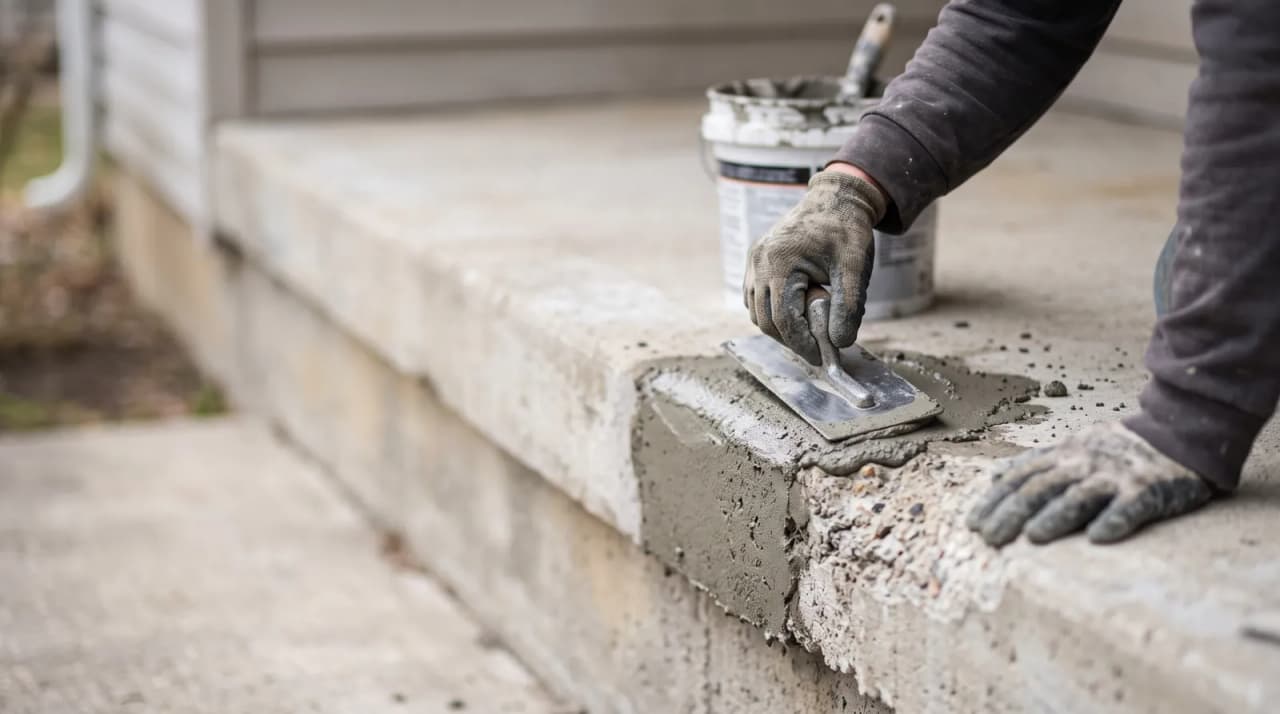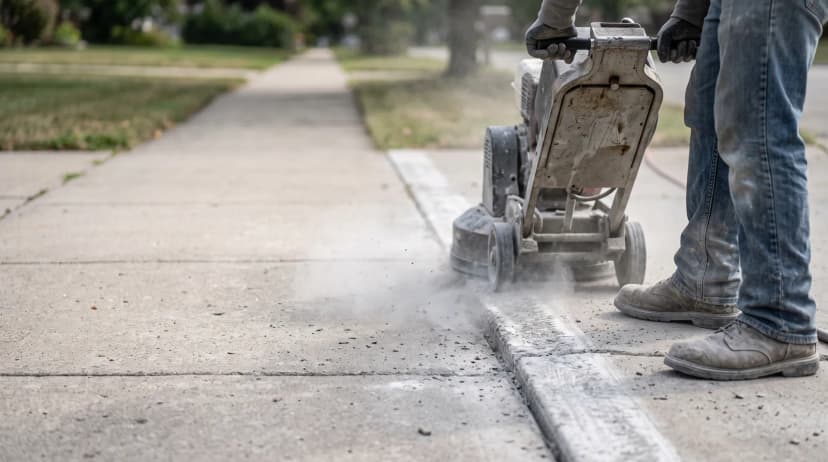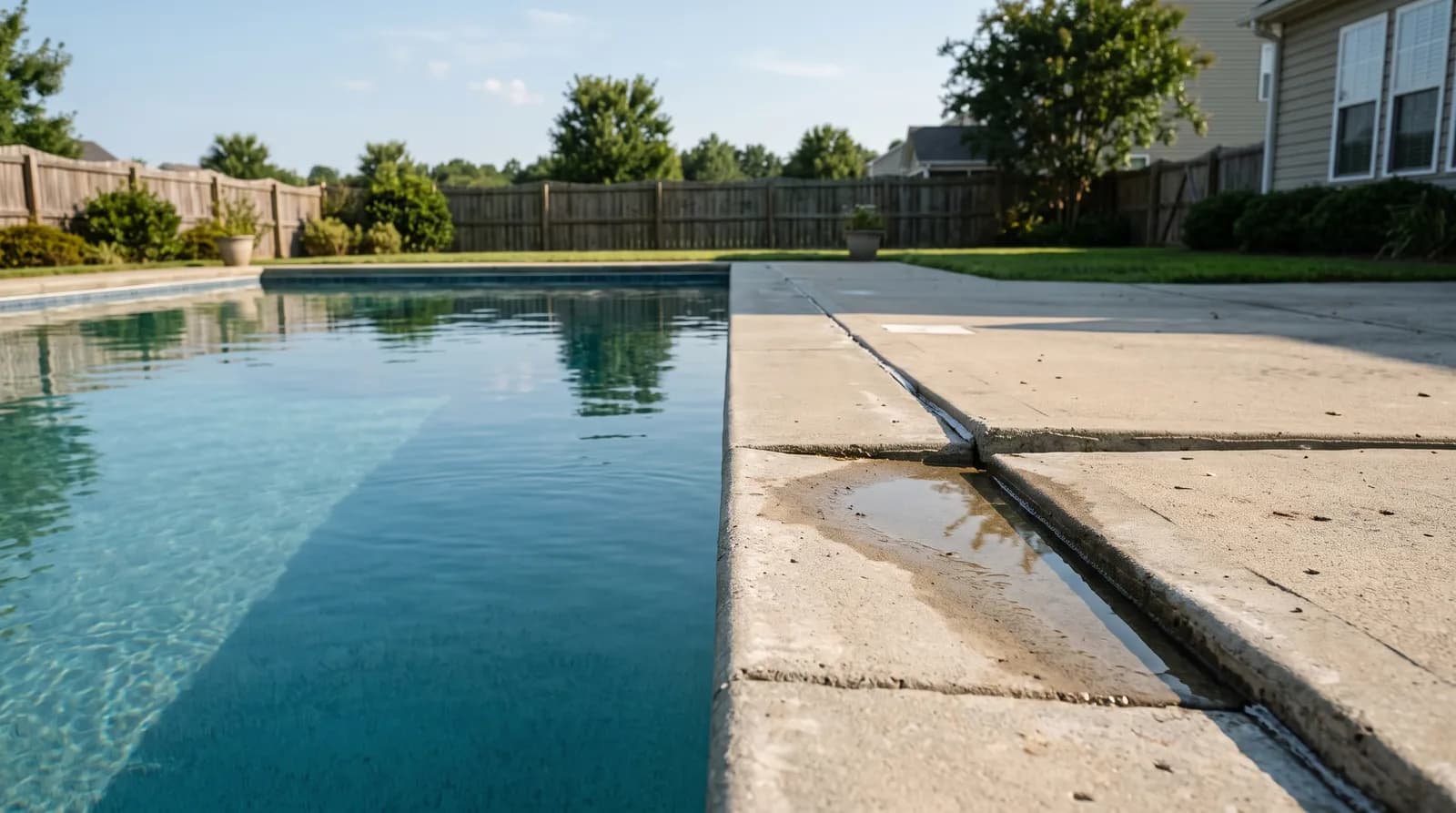

Mudjacking is a concrete leveling method that raises a slab which has settled below its original height. A slurry made with cement is pumped through small holes drilled in the surface, and the existing concrete stays in place. The slurry fills the empty space beneath the slab and lifts it back toward level. It is a less disruptive way to restore a settled surface than tearing it out, which is why homeowners often consider it for driveways, sidewalks, walkways, patios, porch slabs, and garage floors.
Mudjacking serves three goals at once: it restores stability so the slab is properly supported again, it removes the trip hazards that form where two sections of concrete no longer sit flush, and it improves the appearance of a surface that has sunk, cracked, or pitched to one side. The reason a slab settles, though, is almost always in the ground beneath it, and that is where the Carolinas matter. Across the Piedmont, from Charlotte to Greensboro and the Triangle, clay soils take on water through wet seasons and contract through dry stretches. That seasonal swing opens voids under slabs poured on top of the clay, and the concrete drops into the space left behind. In the Sandhills near Fayetteville and Pinehurst, sandy soils drain fast and let fine particles wash out, which quietly loosens the support beneath flatwork. In the Upstate and Midlands of South Carolina around Greenville and Columbia, foothill clay combined with heat and humidity drives a similar moisture load.
Mudjacking suits some of these slabs, but it is not the answer for every one. Whether a slab is a good candidate depends on its condition and on what caused the settlement. HydroHelp911 lifts settled concrete with polyurethane foam injection, and this page explains mudjacking so you can compare the two methods. Every concrete leveling visit begins with a free inspection of the slab and the cause of the settlement.
What to Know About Mudjacking and How the Method Works
HydroHelp911 lifts settled slabs with polyurethane foam, and this page explains mudjacking so you can compare the two. Mudjacking fills the voids under a settled slab with a dense, flowable cement slurry, blended from sand, water, and other fine material, that supports the concrete and pushes it back up.
In mudjacking, a pattern of small holes is drilled through the slab and the slurry is pumped through them under pressure. The lift is done in small, controlled increments so the slab rises evenly. At the target height the holes are patched, and the surface sits flush again, with the trip hazards and the pitched, uneven look corrected. To compare, the polyjacking with expanding foam page shows the method HydroHelp911 uses.
Mudjacking does not change the soil behavior that let the slab settle. Where the soil is already weak or washed out, a lighter polyurethane foam adds less load. In active Piedmont clay, in Sandhills sand where fines keep washing out, or where water drains against the slab, the cause may need correcting first, or piers may be needed.
Common Questions About Mudjacking
What Is Mudjacking and How Is It Different From Replacing the Concrete?
Mudjacking is a concrete leveling method that lifts a settled slab back to level by pumping a slurry made with cement through small holes drilled in the surface. The slurry fills the voids beneath the slab and raises it in place. Replacing the concrete means breaking out the existing slab and pouring a new one. For a slab that is structurally sound but has settled, mudjacking is usually less disruptive. If a slab is badly cracked or deteriorated, replacement may make more sense.
What Kinds of Concrete Can Be Mudjacked?
Mudjacking is commonly used on residential flatwork such as driveways, sidewalks, walkways, patios, porch slabs, and garage floors that have settled and become uneven. Whether it is the right fit depends on the condition of the specific slab and what caused the settlement, which an inspection of the slab establishes.
Will Mudjacking Get Rid of the Trip Hazard Where My Walkway Has Lifted?
That is one of the main reasons homeowners ask about it. When one section of a walkway or driveway settles below the next, the lip between them becomes a trip hazard. Mudjacking raises the low section back flush with the rest so the surface is even again, which removes the hazard and improves how the concrete looks. Whether the slab is a candidate for lifting is confirmed first.
How Much Does Mudjacking Cost?
There is no set price for mudjacking, because the cost follows the slab and the soil beneath it. In general, mudjacking cost depends on the size of the slab, how far it has settled, the number of injection points, access to the area, and the soil conditions. HydroHelp911 lifts settled slabs with polyurethane foam, and the free inspection ends with a written estimate at no cost before any work is scheduled.
Does Mudjacking Fix the Reason My Slab Settled?
Not by itself. Mudjacking lifts the slab and fills the void beneath it, but it does not change the deeper soil behavior that caused the settlement. If the cause is something like water draining against the slab or unstable subgrade, it needs to be addressed as part of the plan, and where the ground needs deeper support a structural solution may be needed, so the lift is more likely to hold.
Next Step
Schedule a Free Inspection
Call or fill out our quick online form. We'll book a convenient time to assess your home at no cost.
Learn more about our concrete leveling services.
Found this useful? Share it with someone working on their home.
Written by
Cory Parks
Owner & President, HydroHelp911
Cory Parks founded HydroHelp911 and leads its structural and moisture repair work for homeowners across North and South Carolina, from the clay soils of the Piedmont to the saturated, sandy ground along the coast.
More about CoryGet a Free Inspection
Two ways to start. Both are free, with no obligation.
Pick your own day in our calendar. You save $250 if you go ahead with the work.
Send a short form, and our office will call to book a time that suits you.
For new customers who book online through our website and then sign a contract.