Crawl Space Repair · Problem Signs

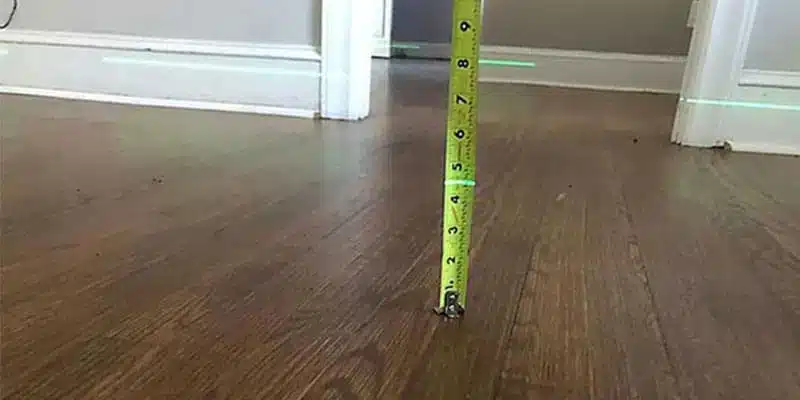
Sagging floors usually start in the crawl space below, where rot or weak joists have stopped carrying the load

A floor that sags or feels bouncy is rarely a problem with the floor itself. In most Carolinas homes the cause is wood rot or weakened joists in a damp crawl space underneath. Here is what drives it and what a no-pressure crawl space inspection looks at.

North Carolina · South Carolina BBB A+ Rated

Let's take the first step toward a healthy home.

A local specialist will inspect your foundation, walk you through the findings, and send a clear estimate. no cost, no pressure.

Book instantly with Driive
BBB Accredited
Fully Insured
"By Your Side" Guarantee
What this symptom means

Sagging Floors: diagnosed and explained.

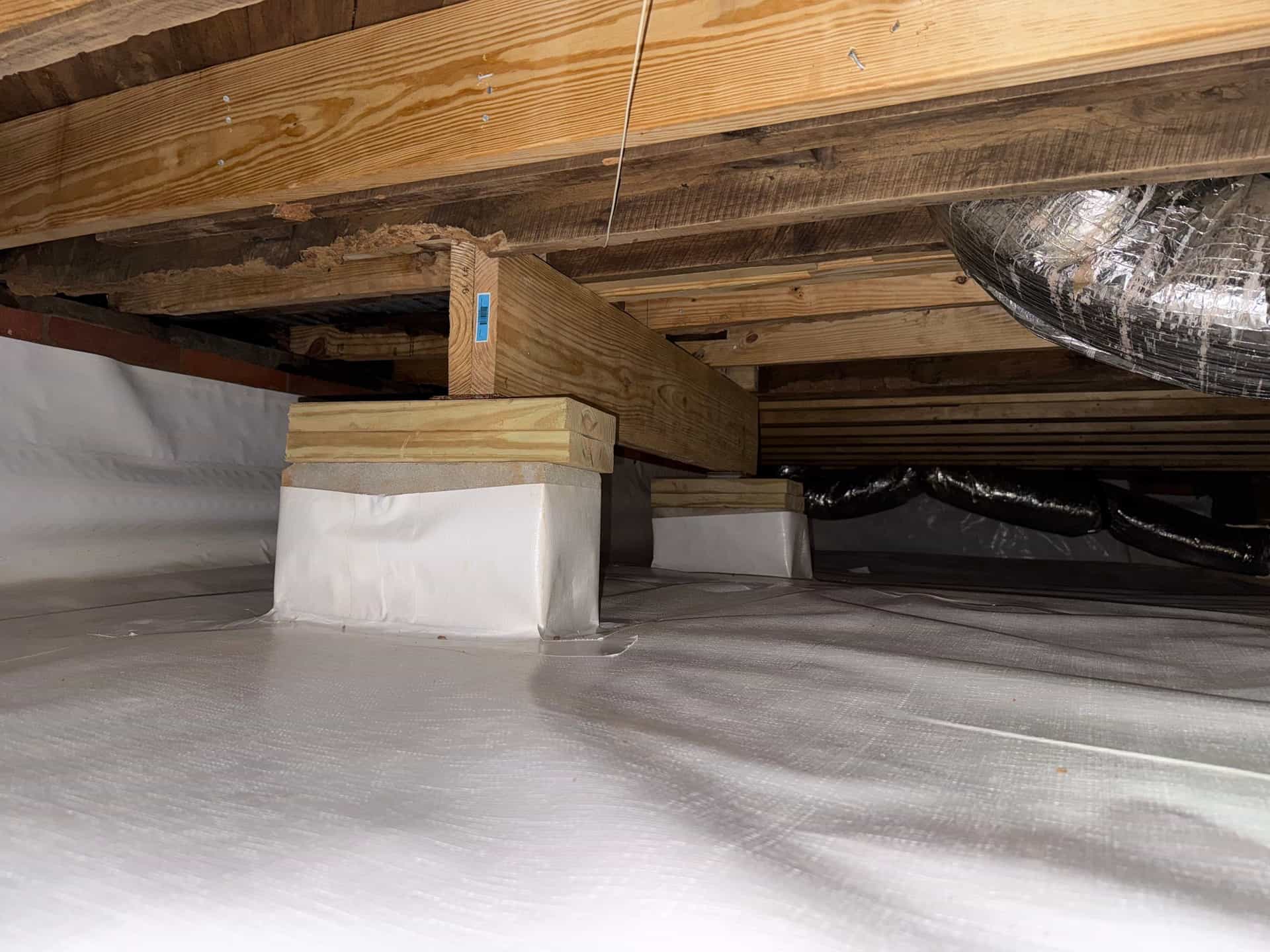
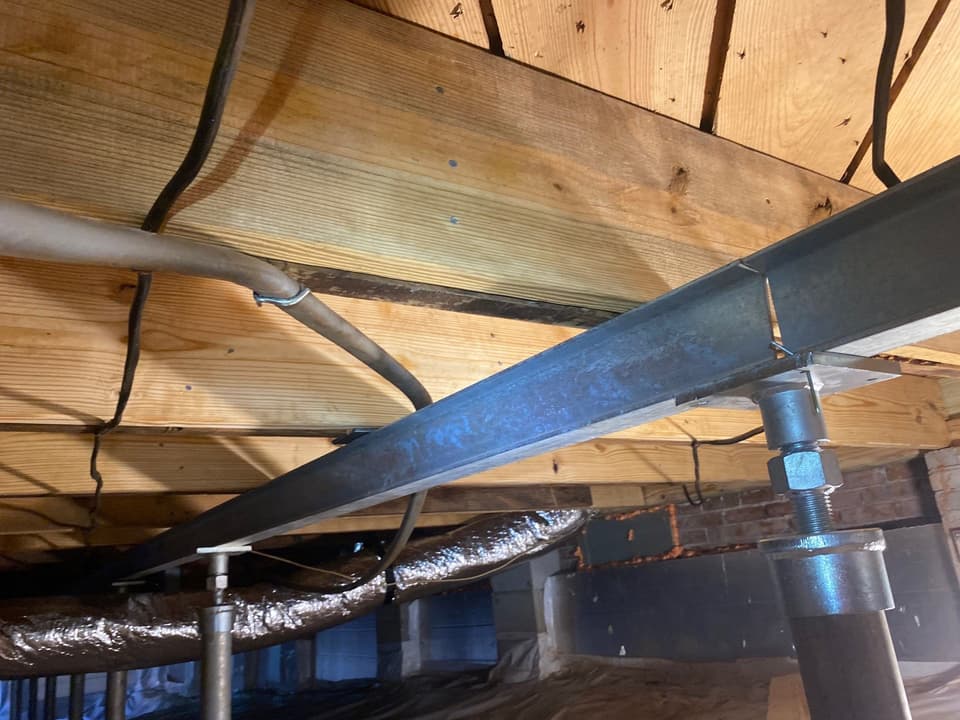
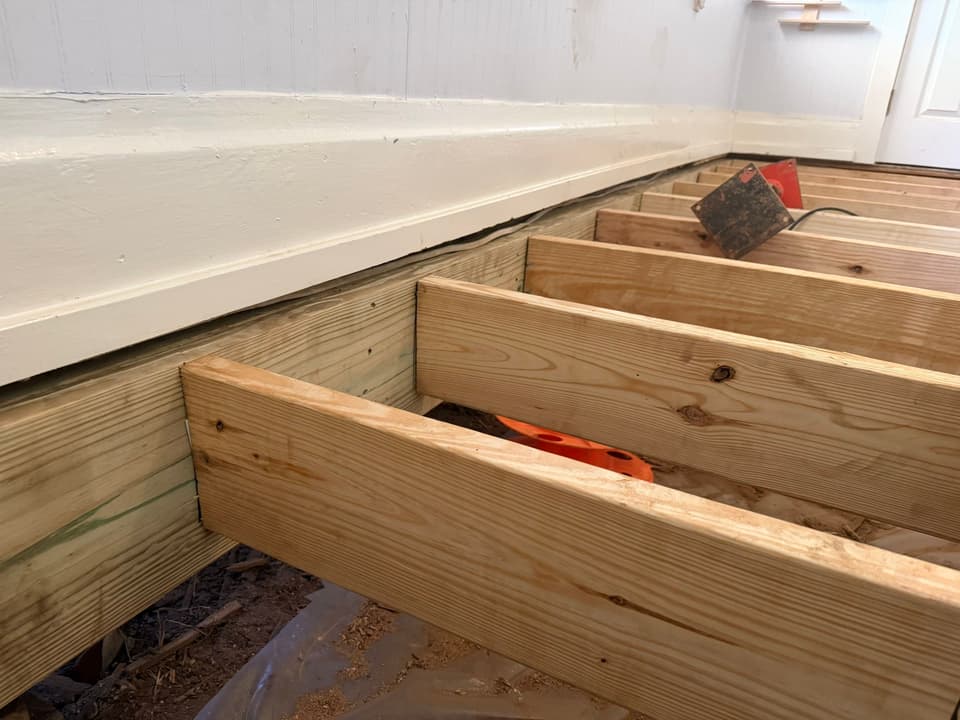
A sagging floor is a floor that has dropped below the framing around it, leaving a visible dip or a soft, bouncy feel as you walk across it. The sag usually concentrates toward the center of a room or along a hallway rather than at the walls, so the lowest point sits away from the perimeter. Homeowners often notice it first when furniture rocks, a rolling object drifts toward the middle of a room, or a gap opens between the floor and a baseboard. The floor covering itself is rarely the problem. What has dropped is the wood structure that carries the floor, and in most Carolinas homes that structure sits in a crawl space below the finished floor: the floor joists, the main girder beam they rest on, and the support piers under that beam. When that wood weakens, most often from moisture and rot, or when a support pier sinks, the floor above it sags. Because the cause is hidden underneath, the reliable way to know what has given way is to go into the crawl space, inspect the framing and supports, and measure the floor elevations across the home. That is the purpose of a no-pressure inspection.

Catch It Early

Other signs that often show up alongside sagging floors

01

A soft, bouncy, or springy feel underfoot

A localized bounce or give as you cross a specific area, rather than a general slope, usually points to weakened or rotted joists and a beam flexing under load in the crawl space directly below that spot.

02

Gaps between the floor and baseboards or walls

A gap opening where the floor meets a baseboard, or a baseboard pulling away from the wall, indicates the floor system has dropped relative to the framing around it.

03

Furniture that rocks or appliances that sit off-level

When a floor sags toward the middle of a room, tables and chairs may rock and a refrigerator or washer can sit visibly out of level. These are everyday indicators that the floor has lost its flat plane.

04

Damp, discolored, or soft wood visible in the crawl space

If you can access the crawl space, joists or a girder beam that look discolored, feel damp, or have soft, crumbly spots help confirm that moisture and rot have weakened the wood carrying the floor.

05

A musty smell or standing moisture below the home

A musty odor inside the house or visible dampness and pooling water in the crawl space points to the moisture conditions that rot floor framing and lead to sagging over time.

Most Common Causes

What causes sagging floors in Carolinas homes.

Wood rot in joists, beams, and sill plates from crawl space moisture
This is the most common cause of a sagging floor in the Carolinas. Ground moisture vapor rising from bare crawl space soil, combined with humid summers across the Piedmont, the SC Upstate, and the Midlands, keeps many crawl spaces damp for much of the year. Sustained moisture softens and rots the wooden floor joists, girder beams, and sill plates that carry the floor, and weakened wood flexes and sags under the weight it holds. A dip in the middle of a room with a springy feel very often traces to damp, rotted wood in the crawl space directly below that spot.
Weakened or undersized floor joists
The joists that span between the girder beam and the foundation wall carry the floor directly. If they were undersized for their span when the home was built, were notched or cut for plumbing or ductwork, or have weakened with age and moisture, they deflect more than they should under normal foot traffic. That deflection is felt as sag and bounce. Spans that were borderline at construction tend to show it first, especially under larger rooms and long hallways.
A sagging girder beam over the crawl space
Many Carolinas homes carry the interior floor load on a main girder beam that rests on a row of support piers in the crawl space. When that beam softens from moisture, or the spacing between its piers is too wide for the load, the girder dips between supports and the floor above it drops along that line. A sag that follows the center of the home, rather than tilting toward an outside wall, often points to a girder beam that has weakened or lost support.
Settled, undersized, or shifted support piers
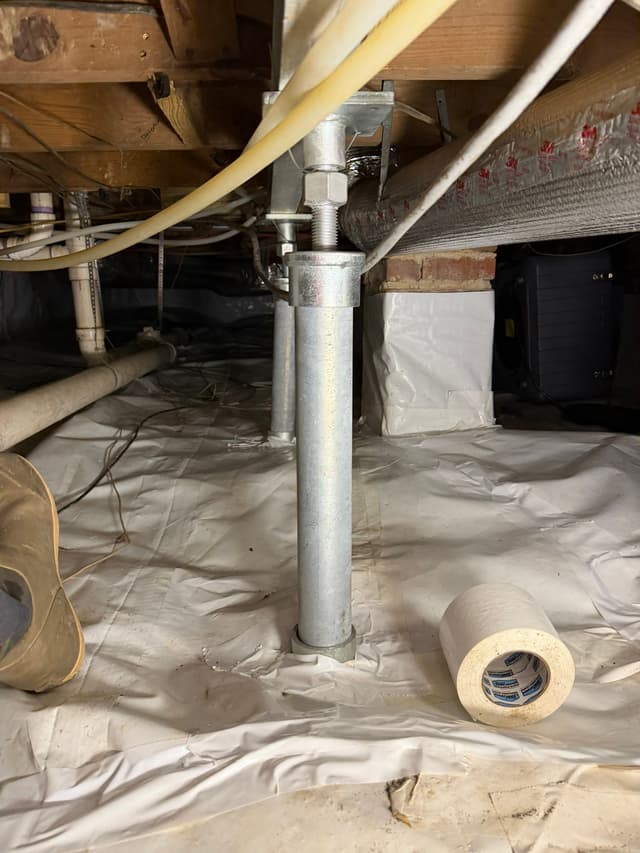
The piers that hold up the girder beam rest on footings in the crawl space soil. If a pier was set on a poor footing, was never adequately sized, or has settled as the soil beneath it moved, it stops carrying its share of the load and the beam sags toward it. Across the Piedmont around Charlotte, Huntersville, Matthews, Greensboro, and Winston-Salem, clay-rich soils swell when wet and shrink when dry, and that repeated movement can settle a pier footing unevenly over the years.
High water table and saturated soils on the coast
In coastal markets like Wilmington, Leland, and Brunswick County, a high water table and sandy, saturated soils keep crawl spaces and the ground beneath the piers wet. Saturated sandy soil has reduced bearing strength, so support piers can settle, and the constant dampness accelerates rot in the joists and beams above. Here a sagging floor is commonly tied to water saturation and persistent moisture rather than to the clay shrink-and-swell seen inland.
Permanent Solutions

How crawl space repair specialists actually fix sagging floors.

Solving sagging floors means addressing the underlying soil, pressure, or settlement cause. Not just patching the visible damage. Below are the engineered solutions we install most often for this symptom in Carolinas homes.

Crawl Space Repair solutions
Related Solutions

Engineered crawl space repair solutions for this problem.

Each method is matched to a specific failure mode and soil profile. Browse the toolkit we draw from when diagnosing your home.

Regional Context

Why crawl spaces across the Carolinas need a sealed approach

Carolina summers are hot and humid, so a traditional vented crawl space pulls warm, moist outside air under your home for months at a time, where it cools and condenses on framing and ductwork. In the coastal markets around Wilmington and Brunswick County, a high water table adds constant ground moisture to that humid air, and in the Piedmont and SC Midlands the same heat and humidity load builds up under homes on clay soil that drains slowly. Left vented, these crawl spaces become a steady moisture source for your floors and air. Our team assesses ground moisture, outdoor humidity, condensation, and drainage together before recommending a sealed solution.

Piedmont
Clay-rich soil belt
Charlotte to the Triad
Wet / dry
Seasonal moisture swing
Soil expands, then contracts
Coastal
High water table & salt air
Wilmington & Brunswick County
NC + SC
Local, no-pressure crews
Offices across the Carolinas

Piedmont clay and the crack patterns it produces

Much of the Piedmont, from Charlotte through the Triad, sits on clay-rich soil that holds water. Clay absorbs moisture in wet seasons and swells, then contracts in dry periods. That cycle pulls pressure on and off a foundation, pulling away from footings, creating voids beneath slabs, and producing the vertical and diagonal settlement cracks we see most frequently across the region.

Homes built on uncompacted clay backfill show the highest incidence of progressive settlement cracking in our inspection work. The same clay that looks stable through a normal year can move enough during a long wet spring or a hard summer drought to open a crack that keeps widening.

Coastal and Sandhills soils behave differently

In Wilmington, Brunswick County, and Leland, high water tables, saturated and sandy soils, and salt air drive a different set of failure modes than inland clay. Lateral water pressure, erosion, and corrosion are the drivers here, which is why coastal foundation and seawall work needs an approach that inland techniques don't account for.

Across the Sandhills near Fayetteville and Pinehurst, sandy soils drain differently again, and in the mountains around Asheville, hillside foundations, slopes, and heavy rainfall change the picture once more. We diagnose to the soil and climate of the specific home, not to the Carolinas generically.

"When a homeowner calls about a sagging floor, the floor itself is just the messenger. Most of the time the real story is in the crawl space, where years of moisture have softened the joists or the beam carrying that floor, and sometimes a support pier has dropped. We go underneath and measure the whole house before we say a word about repairs. If the framing is sound, we will tell you that. We also want to find where the water is coming from, because reinforcing the wood without fixing the moisture just sets you up to do it again. There is no pressure and no upsell here."
CP
Cory Parks
Owner, HydroHelp911
Why Choose HydroHelp911

Care and expertise from a team that does this every day.

HydroHelp911 is locally owned and operated, with crews dedicated exclusively to foundation, basement, and concrete work across the Carolinas.

Specialized expertise.

Foundation repair, waterproofing, and concrete leveling are our entire focus. not a sideline.

Locally owned and operated.

Deep experience with Carolinas soils, basements, and weather conditions.

BBB A+ rated.

Accredited with an A+ rating and thousands of homeowner reviews across the Carolinas.

Warrantied solutions.

Lifetime warranties available on many services, backed by the original installer.

HYDROHELP911

Why hire HydroHelp911.

MEET THE TEAM · 2 MIN
Frequently Asked Questions

Answers to common questions about Sagging Floors.

Don't see your question here? Our team is happy to help. Reach out anytime.

A sag centered in a room almost always traces to the wood structure in the crawl space below it, not to the floor covering. The most common cause in the Carolinas is moisture and rot weakening the floor joists or the girder beam that carry the floor, followed by joists that were undersized for their span or a support pier that has sunk into the soil. Because the cause is hidden underneath, an inspection that measures floor elevations and looks in the crawl space is the reliable way to confirm which of these is at work.

Pricing ranges above are general estimates only and are not project quotes. A precise figure is provided on each written estimate after on-site inspection.
Related Problem Signs

Other crawl space repair warning signs to watch for.

If you see one, it's worth checking for the others. Most foundation problems show up as more than one symptom.

01

Allergic Reactions

Allergic reactions that get worse inside your home, and ease when you leave, are a sign worth tracing rather than ignoring. The reason a crawl space matters is a basic feature of how air moves through a house. Warm air rises and escapes through the upper floors, which pulls replacement air upward from the lowest level of the home. In a house over a crawl space, a meaningful portion of the air you breathe in the living areas was first in that crawl space. This upward airflow is often called the stack effect. When the crawl space is damp, that rising air carries the crawl space environment with it. A crawl space that stays wet is a comfortable place for mold and mildew to grow on the soil, the wood framing, and the insulation, and for dust mites and other allergens to thrive in the humidity. As crawl space air rises into the home, it can carry mold spores, mustiness, and elevated humidity into the rooms where your family spends time, which is what shows up as worse congestion, sneezing, itchy eyes, or asthma symptoms indoors. The moisture is the root condition. Mold and mildew, the musty smell, and the allergens that bother sensitive people are downstream of a crawl space that does not stay dry. Because the source sits out of sight beneath the floor, you usually cannot confirm it from the living space alone. A no-pressure inspection enters the crawl space, measures the humidity and looks for standing water, condensation, and damp framing, and identifies where the moisture is coming from before any solution is discussed. HydroHelp911 addresses the moisture conditions in the crawl space. We do not perform mold remediation, and an inspection will tell you plainly what is driving the dampness and what controlling it involves.

Learn More
02

Deteriorating Insulation

Deteriorating insulation is crawl space insulation that has lost its ability to slow heat transfer, almost always because it has taken on moisture. In most Carolinas homes the insulation at risk is fiberglass batting stapled to the underside of the subfloor between the floor joists. When that fiberglass is dry, it traps still air and keeps the floor above closer to the temperature of the home. When it absorbs humidity from a damp crawl space, the fibers compress, the batt grows heavy and dark, the staples and supports give way, and the insulation sags or falls to the ground. Insulation lying on the soil or hanging loose is no longer insulating anything. Worse, a wet batt that is still pressed to the subfloor holds moisture directly against the wood framing it touches, which is the opposite of what it is there to do. Because this happens out of sight, homeowners usually notice the consequences upstairs first: floors that feel cold in winter, a heating and cooling system that runs longer to hold a comfortable temperature, higher energy bills through the long Carolina cooling season, and sometimes a musty smell rising from below. Deteriorating insulation is not the root problem on its own. It is the visible result of a crawl space that stays too damp, so the insulation and the moisture source have to be evaluated together. A no-pressure inspection enters the crawl space, checks whether the existing insulation is wet, sagging, fallen, or contaminated, and identifies where the moisture is coming from before any replacement is recommended.

Learn More
03

Groundwater Seepage

Groundwater seepage is water entering the crawl space from the ground itself, rather than from a pipe or from rain falling on the surface. It happens when the water table, the level below which the ground is saturated, rises close enough to the surface that water moves up through the soil and into the crawl space. It also happens when the soil around and beneath the house stays so wet that water weeps through the dirt floor or through the joints and pores of a foundation wall. The water arrives slowly and from below, so it is easy to mistake for ordinary dampness. What makes it a structural concern is twofold. First, seepage keeps the crawl space wet, and sustained moisture under a home feeds wood decay in the joists, girders, and subfloor, invites efflorescence and rust on metal connectors, and raises the humidity in the living space above. Second, the same saturated ground that lets water seep in also presses against the foundation, and water held against a block or poured wall exerts hydrostatic pressure, the sideways force that can crack or bow a wall over time. Because the source sits in the soil and water table beneath the home, you usually cannot confirm seepage from inside the living space, and it is easy to confuse with condensation, a plumbing leak, or surface water finding its way in. A no-pressure inspection examines the crawl space, the dirt floor and foundation walls, and the surrounding soil and water conditions to determine whether groundwater is the source, where it is entering, and what it is doing to the structure, before any repair is discussed.

Learn More
04

High Energy Bills

High energy bills are often a comfort and efficiency symptom rather than a structural one, and in a Carolinas home the crawl space is a common and overlooked source. Roughly half of the air you breathe upstairs has passed through the space below first, which is the stack effect: warm air rises and escapes through the upper floors, and as it leaves it draws replacement air up from the crawl space. If that crawl space is vented to the outside, humid, and poorly insulated, the air being pulled into your living space is damp and at the outdoor temperature, so your furnace or air conditioner has to recondition it again and again. The result is an HVAC system that runs longer cycles to hold the thermostat setting, rooms over the crawl space that feel cold in winter and clammy in summer, and a monthly bill that climbs without an obvious cause. Three conditions usually combine to produce it: outdoor humidity and ground moisture vapor saturating the crawl space air, insulation that is missing, fallen, or soaked and no longer slowing heat transfer, and open foundation vents that let conditioned air and humid outdoor air move freely. Because none of this is visible from the living space, the bill is frequently blamed on the HVAC equipment or the utility rate when the conditions underneath the home are the real driver. A no-pressure inspection enters the crawl space to measure the humidity, check the condition of the insulation and vapor barrier, look at how the vents and ductwork are performing, and identify which of these conditions is adding to your energy use before any solution is discussed.

Learn More
05

Moisture in Crawl Space

Moisture in a crawl space is any sustained dampness in the air, on the framing, or on the ground beneath your home. It usually comes from one or more of four sources: ground moisture vapor rising off bare soil, humid outdoor air entering through foundation vents, condensation forming where warm humid air meets cooler surfaces, and water intruding through drainage or a high water table. The dampness itself is rarely what a homeowner notices first. The consequences are. Over time a wet crawl space softens and decays the wood framing that carries your floors, leaves a musty odor that rises into the living space, can show beads of water or frost on ductwork and pipes, and creates the damp, dark conditions that draw wood-destroying insects and other pests. Because the crawl space sits out of sight below the finished floor, the moisture often builds for a long time before the effects reach you upstairs. A floor that feels soft in one spot, a persistent earthy smell, higher humidity inside the home, or visible dampness and pooling water when you open the access door can all trace back to the same wet crawl space. Resolving it is not a matter of drying it once. It depends on identifying which source or combination of sources is keeping it wet, because the right repair for ground vapor is different from the right repair for a high water table or a drainage problem. A no-pressure inspection enters the crawl space, measures the moisture and humidity, examines the framing for early decay, and traces where the water is coming from before any solution is discussed.

Learn More
Service Areas

Serving North Carolina & South Carolina.

Local crews based in offices across the Carolinas, dispatched daily. If your town isn't listed, call us. we likely serve your area.

Top cities we serve
Check Your Service Area
Our Process

Take the first step toward a healthy home.

A straightforward path from initial inspection to completed repairs.

Step 01

Schedule your inspection.

A local specialist visits your home, evaluates the foundation, and answers your questions on site. No cost, no obligation.

Step 02

Receive an estimate based on your needs.

We provide a clear, written estimate with a scope of work tailored to your home's specific issues. Typically within one business day.

Step 03

Get your repairs.

Our certified crews complete the work on schedule and back it with product warranties of up to 25 years.

Customer Reviews

Over 1,750 homeowners have shared their experience.

A 4.9-star average across Google, with verified reviews from homeowners throughout North and South Carolina.

Free Estimate

Two ways to start: book instantly, or request an estimate.

Schedule your inspection in seconds with our Driive booking tool, or share a few details and a local specialist will follow up within one business day.

What to expect
  • A local foundation specialist on site
  • A complete walk-through of the findings
  • A written estimate within one business day
  • No cost, no obligation, no high-pressure sales
Prefer to call
704-610-4399
North Carolina · South CarolinaBBB A+ Rated
HydroHelp911

Let's take the first step toward a healthy home.

A local specialist will inspect your foundation, walk you through the findings, and send a clear estimate. no cost, no pressure.

Book instantly with Driive
BBB Accredited
Fully Insured
"By Your Side" Guarantee
Our Locations

Local offices across the Carolinas.

See all service areas
Dallas, NC
HydroHelp911
111 Iron Station Rd
Dallas, NC 28034
704-610-4399
Huntersville, NC
HydroHelp911
14936 Brown Mill Rd Ste 9
Huntersville, NC 28078
704-610-4399
Matthews, NC
HydroHelp911
11145 Monroe Rd Ste 105
Matthews, NC 28105
704-610-4399
Asheville, NC
HydroHelp911
34 Wall St #805D
Asheville, NC 28801
704-610-4399
Wilmington, NC
HydroHelp911
201 N Front St Ste 214
Wilmington, NC 28401
704-610-4399
Greensboro, NC
HydroHelp911
1515 W Cornwallis Dr Suite 201-B
Greensboro, NC 27408
704-610-4399
Greenville, SC
HydroHelp911
7 Brendan Way #13
Greenville, SC 29615
704-610-4399
Columbia, SC
HydroHelp911
1122 Lady St Suite 208
Columbia, SC 29201
704-610-4399