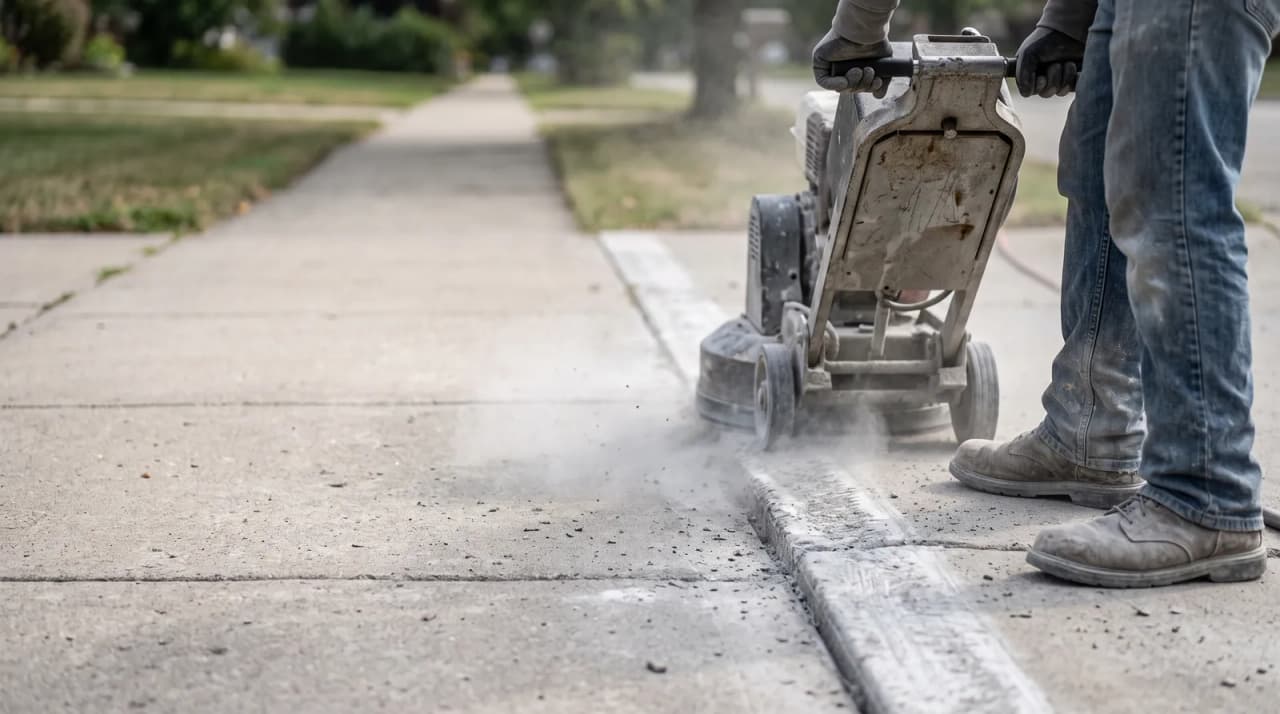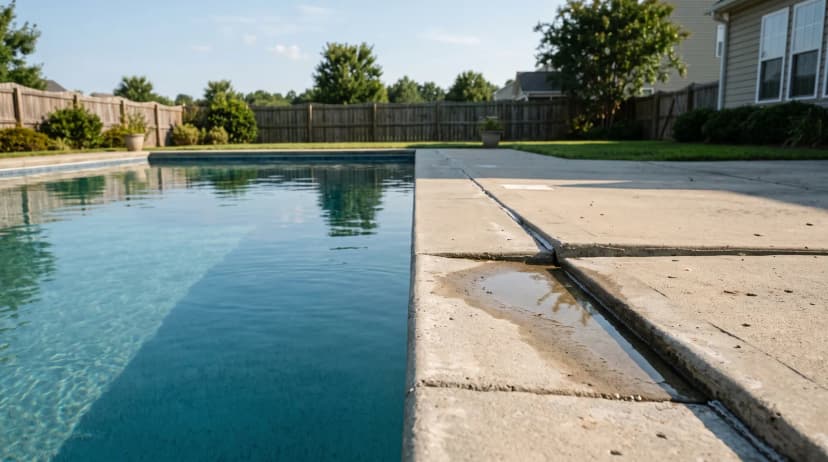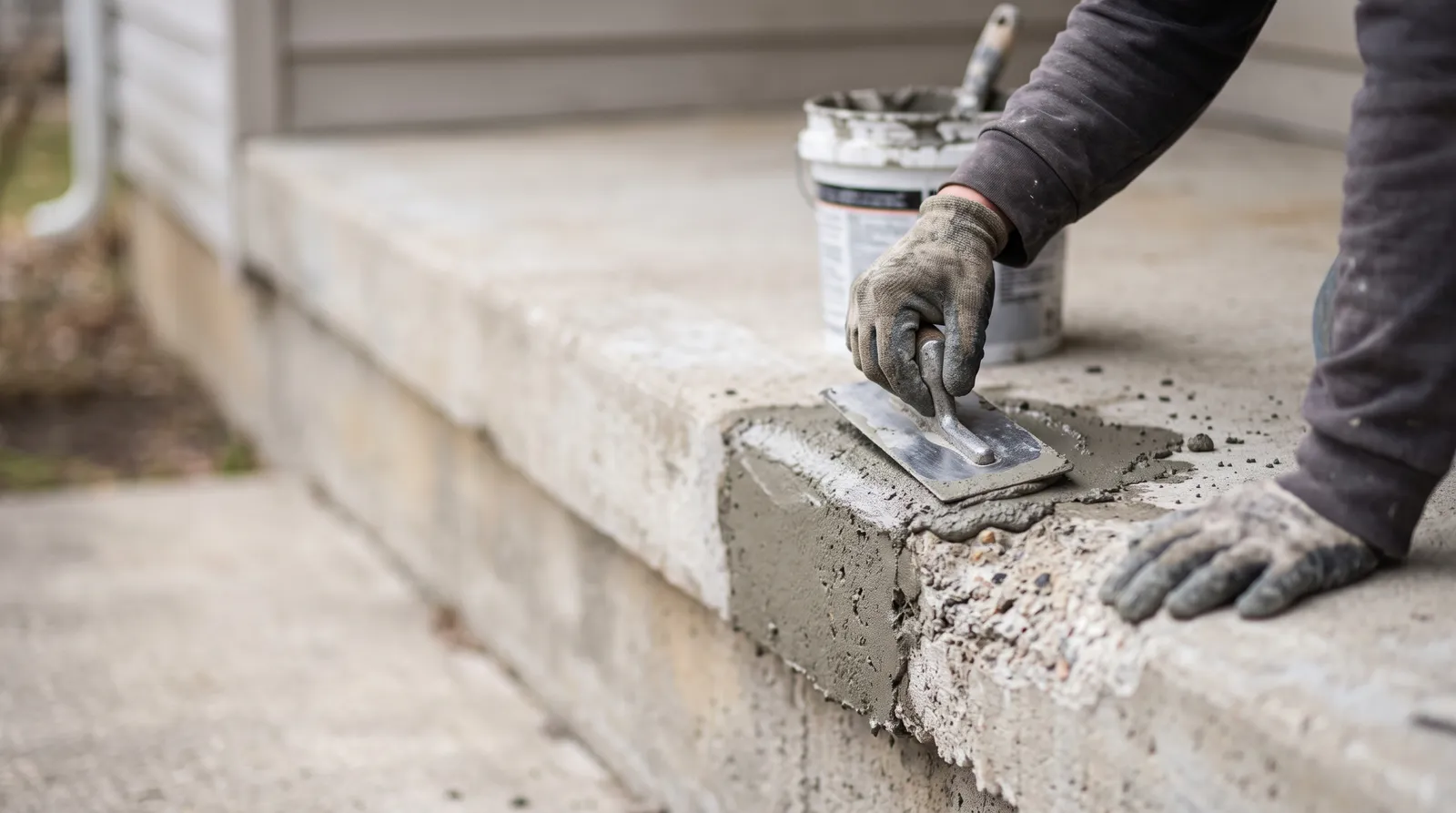

Concrete resurfacing is a repair method that bonds a thin overlay to the top of an existing slab. The overlay fills shallow pitting and spalling, evens out a rough or worn finish and gives the slab a uniform new surface, without breaking out the old concrete. It is used on walkways, patios, porch slabs, pool decks and garage floors where the slab is structurally sound but the top has worn.
Surface wear in the Carolinas has a few common causes. Freeze and thaw cycles in the mountains and the Piedmont can flake the top of a slab, especially where water sits on it. Heavy summer rain and standing water speed that wear. Settlement is a different problem: a slab that has dropped or tipped needs support from below, and an overlay alone does not change its height.
HydroHelp911 levels settled slabs with polyurethane foam and seals joints and cracks, and this page explains resurfacing so you can compare it with those repairs. Every concrete leveling visit starts with a free inspection of the slab and the cause of the damage.
What to Know About Concrete Resurfacing and How the Method Works
HydroHelp911 lifts settled slabs with expanding polyurethane foam and seals joints and cracks, and this page explains resurfacing so you can compare. In resurfacing, the old surface is cleaned and roughened so the overlay can bond to it.
Damaged spots are filled first, then a thin cement based overlay is spread across the slab and finished to a uniform texture. Because the overlay is thin, it follows the slab beneath it, so a slab that has settled, cracked through or tipped needs its support addressed before any surface work. Foam lifting beneath a settled section fills voids and raises it back toward level.
Resurfacing does not seal the joints between slabs, where water reaches the soil. Joint and crack sealing closes those gaps, and cracks running through the concrete are a sign to look below the surface before renewing the top.
Common Questions About Concrete Resurfacing
What Is the Difference Between Concrete Resurfacing and Concrete Leveling?
Resurfacing renews the top of a slab with a bonded overlay and leaves the slab at the height it sits. Leveling raises a settled slab back toward its original height from below. HydroHelp911 levels settled slabs with polyurethane foam, and the inspection shows whether a slab has a surface problem, a support problem or both.
Can Concrete That Has Cracked or Settled Be Resurfaced?
An overlay follows the slab beneath it, so cracks that are still moving and settlement tend to show through again. A settled slab is usually lifted and its cracks addressed first. The inspection looks at whether the slab is stable before any surface work is discussed.
Is Resurfacing Less Disruptive Than Replacing the Concrete?
Usually, yes. Resurfacing keeps the existing slab in place and adds a thin layer on top, while replacement means breaking out the old concrete and pouring new. For a sound slab with a worn top, an overlay is the lighter repair. For a slab that is broken through, replacement may make more sense.
Will Resurfacing Fix the Reason My Concrete Is Damaged?
Not by itself. Resurfacing renews the surface but does not change the water, soil or drainage that wore or moved the slab. Standing water, open joints and settled sections are part of the inspection, so the cause is addressed along with the surface.
How Much Does Concrete Resurfacing Cost?
There is no set price for concrete resurfacing, because the cost follows the size of the slab, its condition and the overlay used. HydroHelp911 levels settled slabs with polyurethane foam and seals joints and cracks, and the free inspection ends with a written estimate at no cost before any work is scheduled.
Next Step
Schedule a Free Inspection
Call or fill out our quick online form. We'll book a convenient time to assess your home at no cost.
Learn more about our concrete leveling services.
Found this useful? Share it with someone working on their home.
Written by
Cory Parks
Owner & President, HydroHelp911
Cory Parks founded HydroHelp911 and leads its structural and moisture repair work for homeowners across North and South Carolina, from the clay soils of the Piedmont to the saturated, sandy ground along the coast.
More about CoryGet a Free Inspection
Two ways to start. Both are free, with no obligation.
Pick your own day in our calendar. You save $250 if you go ahead with the work.
Send a short form, and our office will call to book a time that suits you.
For new customers who book online through our website and then sign a contract.