Cracks in Floor Tiles and Grout Often Trace Back to the Floor Beneath Them
Tile and grout are rigid, so they crack when the floor under them flexes or drops. Sometimes that is a tile-setting issue, and sometimes it is the foundation moving. Here is how to tell the difference across the Carolinas and what a no-pressure inspection looks at.
Let's take the first step toward a healthy home.
A local specialist will inspect your foundation, walk you through the findings, and send a clear estimate. no cost, no pressure.
Cracks in Floor Tiles and Grout: diagnosed and explained.
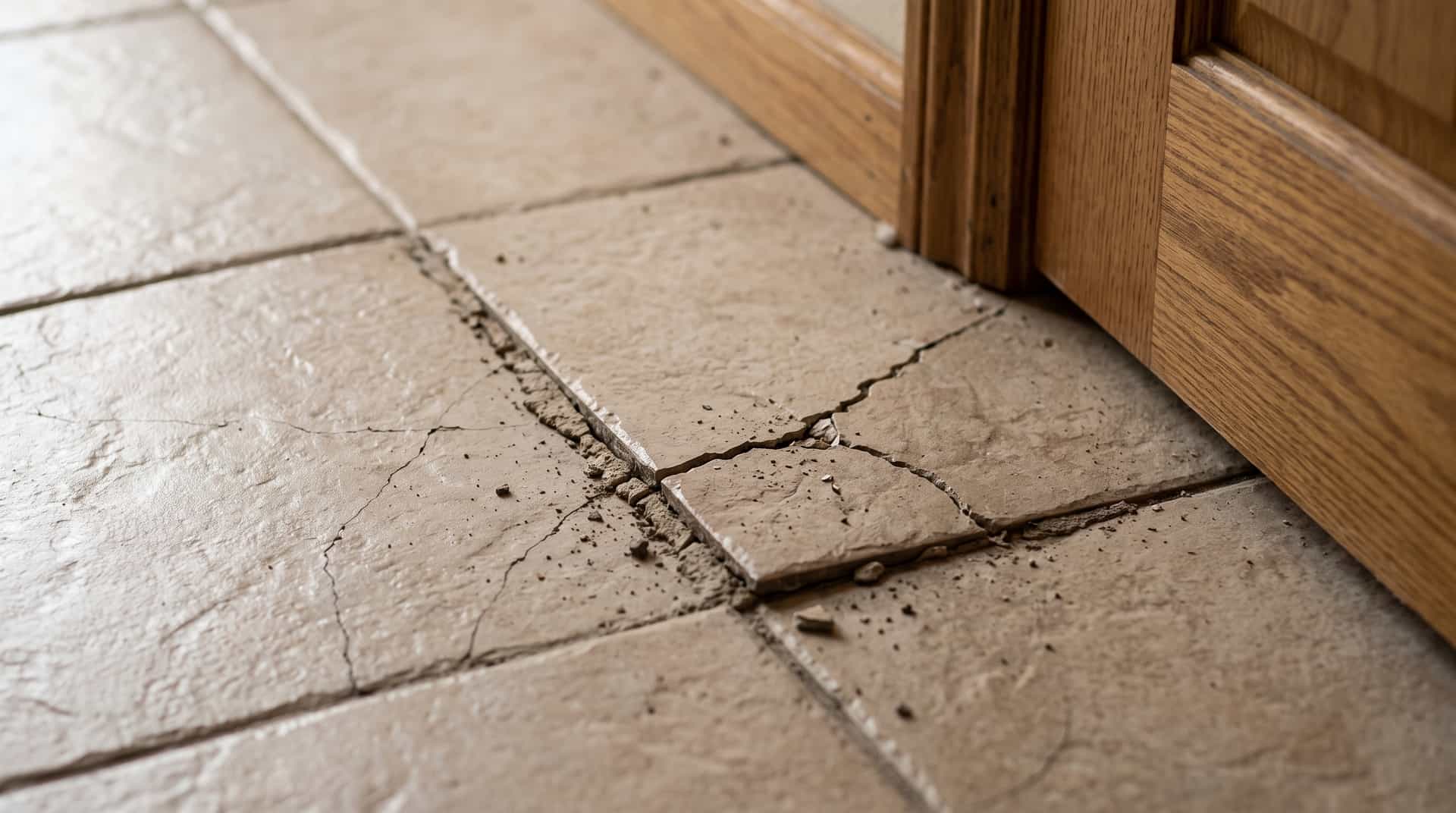
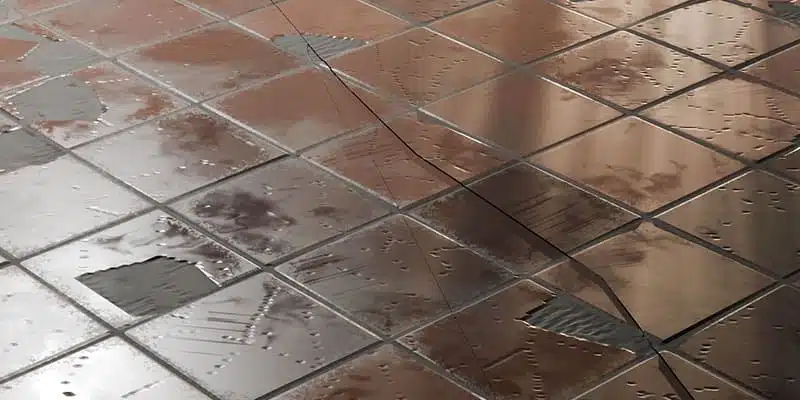
Cracks in floor tiles and grout usually show up in one of a few ways. You might see a single tile crack near a doorway or a heavy fixture, grout lines splitting and crumbling along a seam, tiles that have loosened and pop or sound hollow when you tap them, or a crack that tracks in a straight or diagonal line across several tiles in a row. Tile and grout are brittle and rigid by design, so they do not bend with the floor. When the surface beneath them moves even slightly, the tile and the grout joint are where that movement shows first. Not every cracked tile means a foundation problem. A tile can crack from an impact, from a poor installation over a flexing subfloor, from missing expansion joints, or from grout that was mixed or cured improperly. What separates a cosmetic issue from a structural one is the pattern. A crack that runs in a line across multiple tiles, grout splitting along that same path, tiles loosening across a whole area rather than in one spot, or cracking that appears alongside a sloping floor and sticking doors points to movement underneath rather than a single bad tile. The tile and grout are a symptom, not the root cause. The crack is the finished floor reacting to the slab or the floor framing below it, most often soil movement beneath a slab or settlement in the foundation that supports the structure. Because the cause sits under the surface you can see, the reliable way to know what is happening is to measure floor elevations across the home and inspect the slab, the foundation, the crawl space, and the soil conditions, which is what a no-pressure inspection is for.
Signs Cracked Tile or Grout Is More Than Cosmetic
Cracks running in a line across several tiles
A single cracked tile is often an installation or impact issue. A crack that travels in a straight or diagonal line across several tiles in a row, with the grout splitting along the same path, usually means the floor beneath them is flexing or dropping rather than one tile failing on its own.
Tiles loosening, popping, or sounding hollow
Tiles that have worked loose, pop up, or sound hollow when tapped can mean the slab or subfloor beneath them has moved and broken the bond. When this happens across an area rather than at one tile, it points to movement in the floor below.
Grout that keeps splitting after it is repaired
Grout that cracks again soon after being re-grouted is a sign the joint is still moving. Stable grout stays intact once repaired, so recurring cracks suggest the floor underneath continues to flex or settle.
Sloping or uneven floor near the cracked tile
A floor that slopes toward one wall or dips near the cracked tiles indicates the support under that area has settled. Cracked tile combined with a noticeable slope is more likely to be structural than cracked tile on an otherwise level floor.
Other settlement signs elsewhere in the home
Stair-step cracks in exterior brick, diagonal cracks at door and window corners, and doors that suddenly stick often appear alongside structural floor movement. Several of these signs showing up together with the cracked tile points to foundation movement rather than an isolated tile problem.
What causes cracks in floor tiles and grout in Carolinas homes.
How foundation repair specialists actually fix cracks in floor tiles and grout.
Solving cracks in floor tiles and grout means addressing the underlying soil, pressure, or settlement cause. Not just patching the visible damage. Below are the engineered solutions we install most often for this symptom in Carolinas homes.
Engineered foundation repair solutions for this problem.
Each method is matched to a specific failure mode and soil profile. Browse the toolkit we draw from when diagnosing your home.
Slab & Mud Jacking
A proven, less-invasive way to raise settled slabs across North and South Carolina, without tearing out and repouring the concrete.
Push Piers
A proven structural method for settled foundations across North and South Carolina, transferring your home's weight onto stable soil deep below the surface.
Helical Piers
Screw-like steel piers driven deep below the active surface soil to support and, where possible, lift a settling foundation across North and South Carolina.
Foundation Underpinning
When the soil near the surface can no longer carry your foundation, underpinning reaches deeper ground to stabilize the structure. Serving homeowners across the greater Charlotte area and the Carolinas.
Why foundation movement across the Carolinas needs a regional diagnosis
Foundation movement behaves differently depending on where your home sits. In the Piedmont around Charlotte, Greensboro, Winston-Salem, and the Triangle, clay-rich soils absorb water in wet seasons and pull away from foundations as they dry, cycling pressure on your footings year after year. On the coast around Wilmington, Brunswick County, and Leland, a high water table and sandy, saturated soils create lateral pressure and settlement that inland clay never produces. In the mountains around Asheville, hillside lots and runoff load one side of a foundation more than the other. That is why our team starts with the soil and slope under your home, not just the crack on the wall.
Piedmont clay and the crack patterns it produces
Much of the Piedmont, from Charlotte through the Triad, sits on clay-rich soil that holds water. Clay absorbs moisture in wet seasons and swells, then contracts in dry periods. That cycle pulls pressure on and off a foundation, pulling away from footings, creating voids beneath slabs, and producing the vertical and diagonal settlement cracks we see most frequently across the region.
Homes built on uncompacted clay backfill show the highest incidence of progressive settlement cracking in our inspection work. The same clay that looks stable through a normal year can move enough during a long wet spring or a hard summer drought to open a crack that keeps widening.
Coastal and Sandhills soils behave differently
In Wilmington, Brunswick County, and Leland, high water tables, saturated and sandy soils, and salt air drive a different set of failure modes than inland clay. Lateral water pressure, erosion, and corrosion are the drivers here, which is why coastal foundation and seawall work needs an approach that inland techniques don't account for.
Across the Sandhills near Fayetteville and Pinehurst, sandy soils drain differently again, and in the mountains around Asheville, hillside foundations, slopes, and heavy rainfall change the picture once more. We diagnose to the soil and climate of the specific home, not to the Carolinas generically.
"When someone calls about tile cracking or grout that keeps splitting, the tile is just the messenger. It is rigid, so it is the first thing to break when the floor under it moves. A lot of what we look at turns out to be a setting issue or one cracked tile, and when that is the case, we say so. When the cracks run across a line of tiles, or the grout keeps coming back, or the floor is sloping with it, that is when we start looking at the slab, the framing, and the soil. We measure the whole home and find the cause before we talk about any repair. No pressure, no upsell."
Care and expertise from a team that does this every day.
HydroHelp911 is locally owned and operated, with crews dedicated exclusively to foundation, basement, and concrete work across the Carolinas.
Foundation repair, waterproofing, and concrete leveling are our entire focus. not a sideline.
Deep experience with Carolinas soils, basements, and weather conditions.
Accredited with an A+ rating and thousands of homeowner reviews across the Carolinas.
Lifetime warranties available on many services, backed by the original installer.
Answers to common questions about Cracks in Floor Tiles and Grout.
Don't see your question here? Our team is happy to help. Reach out anytime.
Other foundation repair warning signs to watch for.
If you see one, it's worth checking for the others. Most foundation problems show up as more than one symptom.
Serving North Carolina & South Carolina.
Local crews based in offices across the Carolinas, dispatched daily. If your town isn't listed, call us. we likely serve your area.
- Charlotte, NC
- Huntersville, NC
- Matthews, NC
- Greensboro, NC
- Winston-Salem, NC
- Asheville, NC
- Wilmington, NC
- Fayetteville, NC
- Greenville, SC
- Columbia, SC
Take the first step toward a healthy home.
A straightforward path from initial inspection to completed repairs.
Schedule your inspection.
A local specialist visits your home, evaluates the foundation, and answers your questions on site. No cost, no obligation.
Receive an estimate based on your needs.
We provide a clear, written estimate with a scope of work tailored to your home's specific issues. Typically within one business day.
Get your repairs.
Our certified crews complete the work on schedule and back it with product warranties of up to 25 years.
Over 1,750 homeowners have shared their experience.
A 4.9-star average across Google, with verified reviews from homeowners throughout North and South Carolina.
Two ways to start: book instantly, or request an estimate.
Schedule your inspection in seconds with our Driive booking tool, or share a few details and a local specialist will follow up within one business day.
- A local foundation specialist on site
- A complete walk-through of the findings
- A written estimate within one business day
- No cost, no obligation, no high-pressure sales