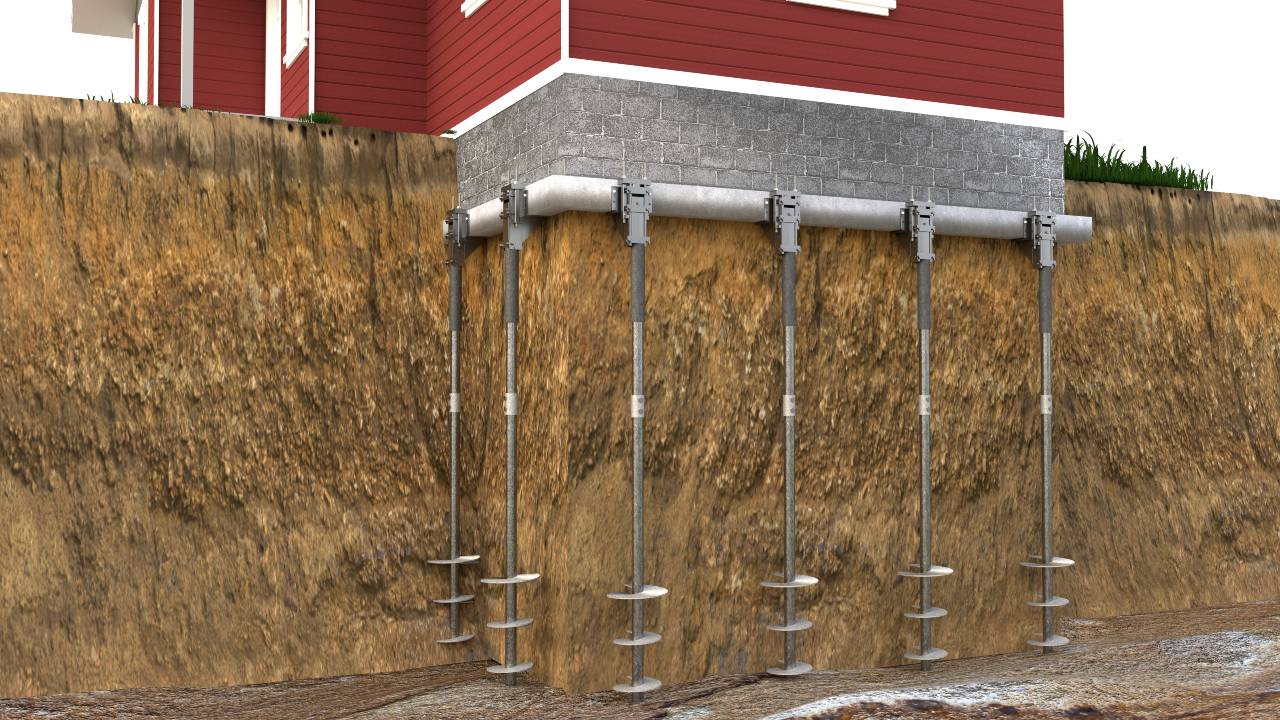

The main foundation repair methods for a shifting house are steel piers (helical, push or slab piers) that carry the house down to more stable soil, wall anchors and carbon fiber straps that stabilize bowing basement walls, and crawl space jacks that support sagging floors. Which one fits depends on what is moving and why, and an inspection shows that.
If floors feel uneven, doors do not shut the way they used to or new cracks appear, the house may be shifting. Here is a look at foundation repair methods, the signs of a problem and the repair options.
What Causes a House to Shift?
A shifting house usually comes down to the soil under it. Much of the Carolina Piedmont has clay rich soil that swells in wet weather and shrinks in dry weather. On the coast, sandy soil and a high water table are the bigger factors, and in the mountains, slopes and runoff. Poor drainage, erosion and heavy rain add to that movement.
Other causes include:
- Poor grading around the home
- Plumbing leaks under the foundation
- Tree roots drawing moisture from the soil
- Time and gravity
A house is only as stable as the ground it sits on. When that ground shifts or sinks, the house moves with it.
What Are the Common Signs of Foundation Problems?
If you see these signs, an inspection can show what they mean:
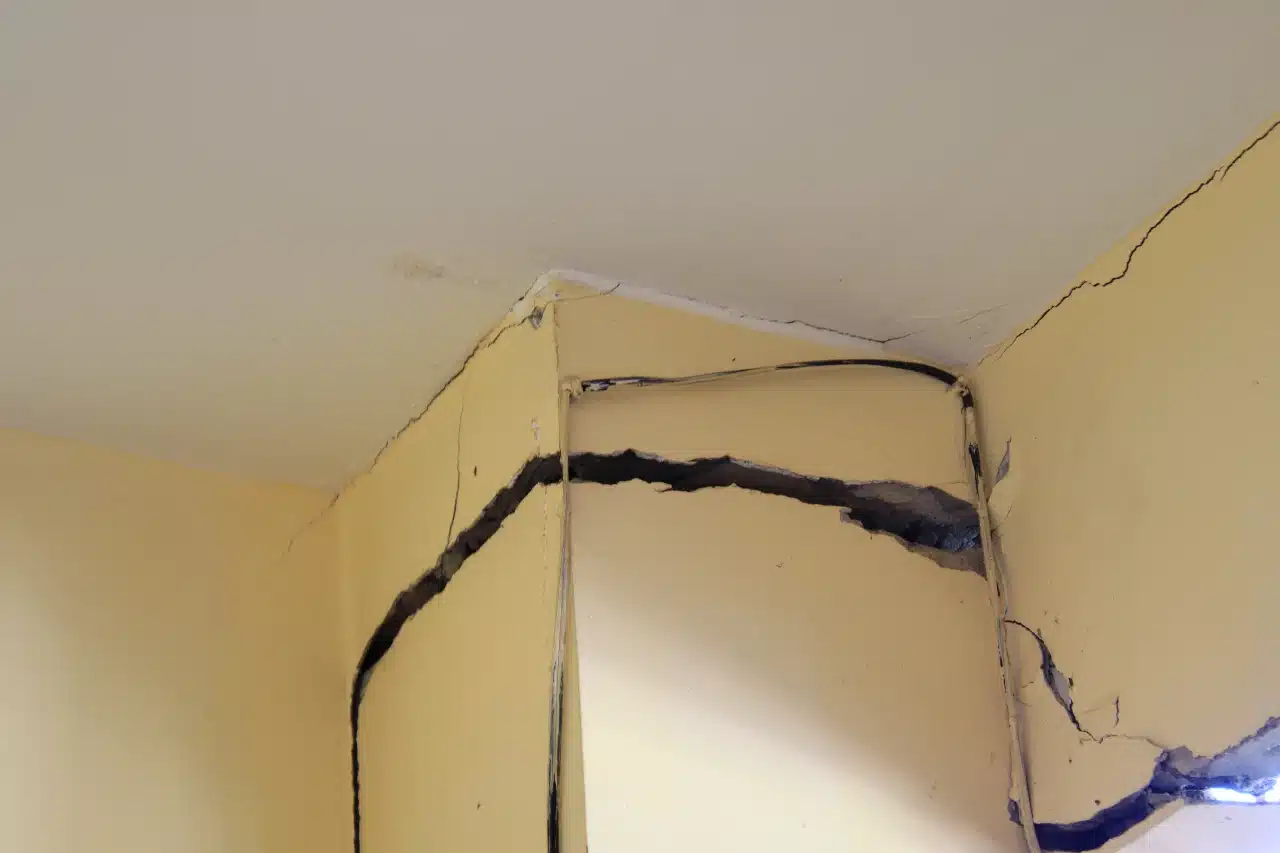
- Cracks in the drywall, especially around doors and windows
- Uneven floors or sloping rooms
- Sticking doors and windows
- Gaps between walls and ceilings
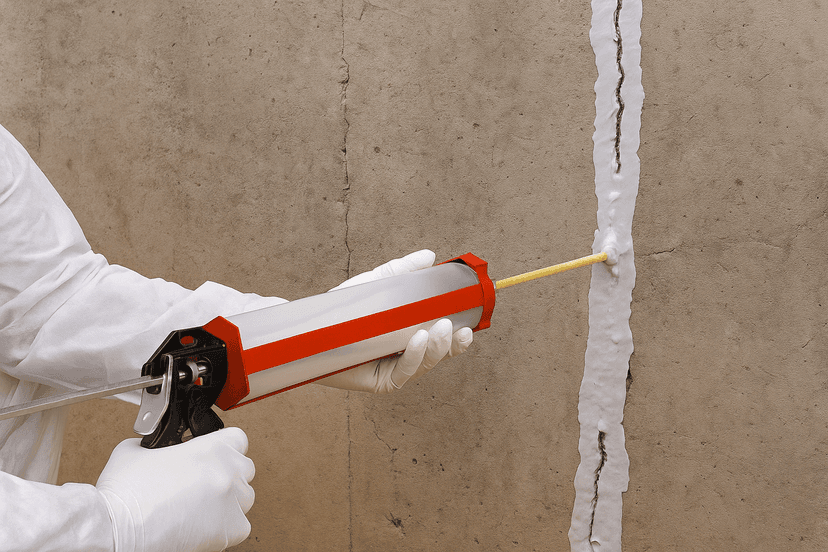
- Cracks in the foundation itself
- Water pooling around the foundation after rain
If you have any of these, it is worth looking at your foundation repair options for a shifting house.
Which Foundation Repair Methods Work for a Shifting House?
These are the methods we recommend, depending on what the inspection finds.
Helical Piers
Helical piers are steel shafts with plates shaped like a screw. They are turned into the ground beside or under the foundation until they reach stable soil or rock.
Best for: Lighter structures or areas with poor soil. How it helps: The piers carry the weight of the home down to firmer soil below the weak upper layers. How deep they go depends on the soil at your home.
Push Piers
Push piers work on a similar idea, but they are driven straight into the ground using the weight of the house.
Best for: Heavier homes with more settlement. How it helps: The piers support the sinking sections of the foundation and help stabilize them against further settlement.
Slab Pier Systems
If your home is built on a concrete slab and you have noticed cracking or settling, slab piers can support those areas from underneath.
How it helps: The piers support the slab directly and help limit further movement.
Wall Anchors
If foundation walls are bowing inward, wall anchors can stabilize them.
Best for: Basements with bowing walls. How it helps: Steel plates on the inside of the wall are connected by rods to anchors set in firm soil outside the home, which stabilizes the wall against further inward movement. Anchors stabilize a wall; they do not straighten it.

Carbon Fiber Straps
When a wall has moved only a little, carbon fiber straps reinforce basement walls without taking up space.
How it helps: The straps help keep the wall from moving further and sit nearly flat against it. Warranty terms and their conditions are on our warranties page.
Crawl Space Jack Posts
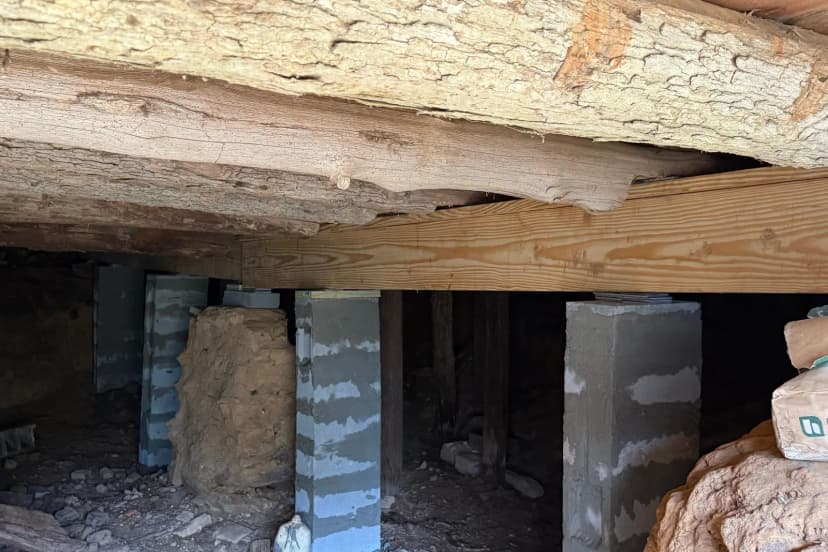
If floors feel bouncy or sloped, the cause may be under the house. Crawl space jacks add support where beams have sagged or their supports have failed.
How it helps: The jacks support the beams on solid footings and, where the framing allows, can raise a sagging floor back toward level. Tip: Pairing them with crawl space encapsulation helps control the moisture that can weaken wood framing.

What Can Happen When Foundation Problems Are Not Addressed?
When the cause of a shifting house is not addressed, cracks can grow and floors can sink further. Foundation problems can also lead to:
- Water getting in
- Insects in damp wood
- Mold from moisture
- Further structural movement
How Does HydroHelp911 Fix a Shifting House?
Our process:
- Free Foundation Inspection: We look at the foundation, the crawl space or basement and the signs you have noticed, and give you a clear assessment with no pressure.
- Repair Plan for Your Home: Not every house needs the same repair. We match the method to what the inspection finds.
- Permanent Solutions, Not Patch Jobs: We look for the cause before recommending a repair. Our warranty terms and their conditions are on our warranties page.
How Do You Know If a House Needs a Foundation Inspection?
If your house is shifting, leaning or cracking, a free inspection can show what is happening. Schedule your free inspection online.
Next Step
Schedule a Free Inspection
Call or fill out our quick online form. We'll book a convenient time to assess your home at no cost.
Learn more about our foundation repair services.
Found this useful? Share it with someone working on their home.
Written by
Cory Parks
Owner & President, HydroHelp911
Cory Parks founded HydroHelp911 and leads its structural and moisture repair work for homeowners across North and South Carolina, from the clay soils of the Piedmont to the saturated, sandy ground along the coast.
More about CoryGet a Free Inspection
Two ways to start. Both are free, with no obligation.
Pick your own day in our calendar. You save $250 if you go ahead with the work.
Send a short form, and our office will call to book a time that suits you.
For new customers who book online through our website and then sign a contract.