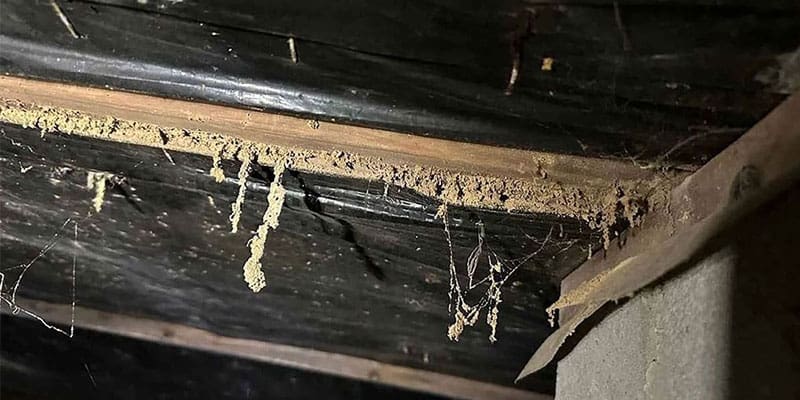

Most homeowners know that termites can damage the wooden support structures in a crawl space. However, few know how to recognize the signs of termite infestation. In this article, we’ll review the signs your crawl space might have a termite problem and what to do about it.
Signs of Termites and Termite Damage in a Crawl Space
Damaged Wood
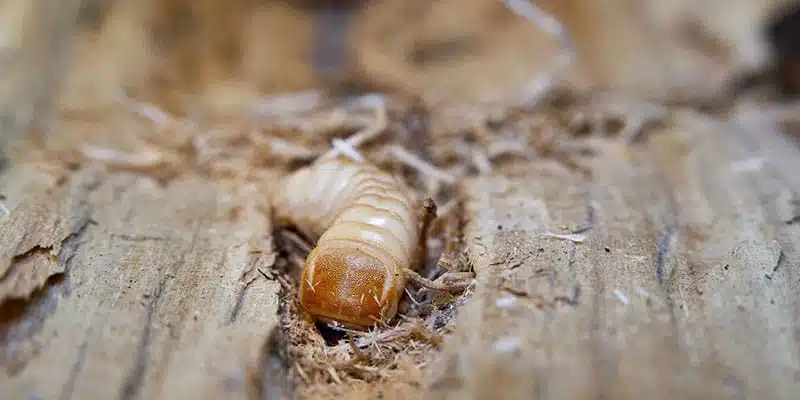
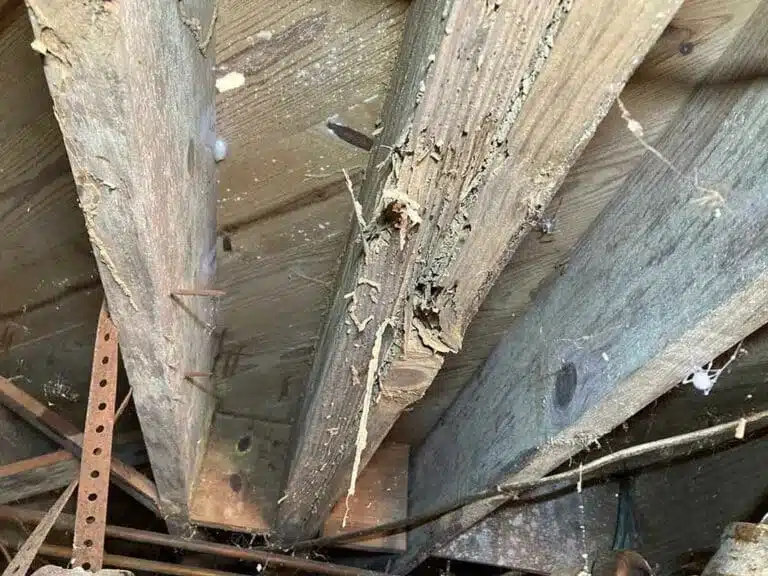
The most obvious sign of termites in your crawl space is damaged wood. Since termites use wood as a food source, they will be happy to chew on timber structural supports.
When termites chew the wood in your crawl space, it will undergo multiple noticeable changes. For instance, the wood will likely have long cracks and gaps while also showing discoloration and a spongy texture.
Damaged wood matters because it can weaken the crawl space framing. As termite damage spreads, beams, joists and other wood supports can lose strength.
Termite Droppings
Termite droppings look like tiny pellets, each less than 1/16 of an inch in length, and have a light brown color similar to wood. Termites often drop their feces in prominent piles near the wood they consume.
Termite Wings
There are various types of termites in a termite colony. Some have wings larger than their bodies. When these winged termites find a mate, their wings fall off. Therefore, if you notice transparent, oval wings about one inch long in your crawl space, that’s a strong sign termites are present. Shed wings can mean a colony is nearby, even if you do not see the termites themselves.
Dead Termites
The presence of dead termites is one of the surest signs you’re dealing with an infestation. After all, if you see dead termite bodies, the odds are there are living ones nearby. Identifying a dead termite can be tricky, though. As noted above, there are multiple types of termites, each with a different appearance.
Worker termites are often the smallest at about ⅛ of an inch long. They have a light tan color, small pinchers, and a thorax that appears entirely fused to their abdomen.
Soldier termites are similar in size to worker termites. However, soldiers tend to have a darker color, especially on their heads, and they have much larger pinchers.
Lastly, there are winged termites mentioned previously. These termites have bodies similar to worker termites, but the main difference is they have wings about one inch long.

Mud Tubes
Termites depend on moisture to survive; if their conditions become too dry, they will quickly perish. To avoid that, termites form moist mud tubes to travel safely. Mud tubes consist of termite saliva, dirt, and other materials. The tubes typically form on the exterior surface of your foundation, and they can be several inches long and wide. The presence of these tubes indicates termites have entered your crawl space. If you notice them, calling pest control services is your best next step.
Cracked or Bubbling Paint
Cracks and bubbles in paint can also indicate the presence of termites. Since termites must avoid drying out to survive, they tend to generate a lot of moisture. As this moisture accumulates below a layer of paint, it is common for the paint to form bubbles and cracks in some cases.
Bubbling paint is not always a sign of termite damage. Therefore, if you are unsure what caused your paint cracks and bubbles, check your crawl space for pests.
Foul Odors
Termites themselves do not have a distinct smell. However, termite activities can cause the places they infest to have an unpleasant odor. As noted above, termites need moisture to survive. Moisture encourages the growth of mold and mildew, as well as wood rot, creating a musty smell which flows up into your home’s living area. A musty smell in your home often points to excessive moisture.
What to Do If You Find Signs of Termites
If you find signs of termites in your home’s crawl space, the best approach is to hire a pest control company to identify and remove the termites from your home.
Professional pest control teams are prepared to diagnose and treat pest problems in your home’s crawl space. Contacting one of these teams when you see one or more of the signs described above is a way to limit the damage termites cause.
If the termites have already caused a considerable amount of damage, you’ll need repairs as well. Therefore, having a foundation repair team you can trust is essential.
Get Help From a Professional
As noted above, seeking the help of a professional pest control team is the first step to take when dealing with termites in your crawl space. However, once the pest control team finishes their work, you may also require attention from a foundation specialist.
If you are a homeowner who has experienced crawl space damage, whether from termites or not, HydroHelp911 is here to help across North and South Carolina. We provide structural repairs for crawl spaces.
Next Step
Schedule a Free Inspection
Call or fill out our quick online form. We'll book a convenient time to assess your home at no cost.
Learn more about our crawl space repair services.
Found this useful? Share it with someone working on their home.
Written by
Cory Parks
Owner & President, HydroHelp911
Cory Parks founded HydroHelp911 and leads its structural and moisture repair work for homeowners across North and South Carolina, from the clay soils of the Piedmont to the saturated, sandy ground along the coast.
More about CoryGet a Free Inspection
Two ways to start. Both are free, with no obligation.
Pick your own day in our calendar. You save $250 if you go ahead with the work.
Send a short form, and our office will call to book a time that suits you.
For new customers who book online through our website and then sign a contract.