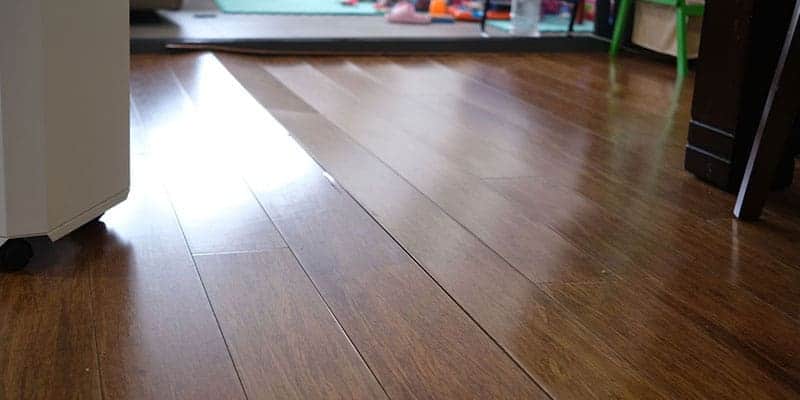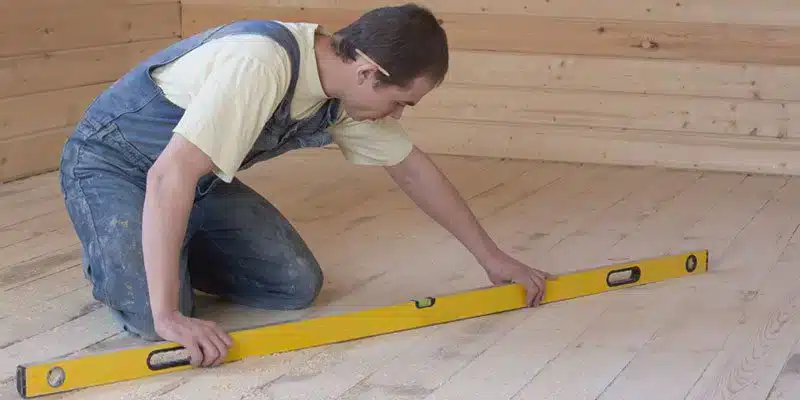

Whether you should worry about sloping floors in an older home depends on what is causing the slope. Sloping floors are common in older homes, and many come from years of gradual settling that is not a structural problem on its own. A slope that comes with sticking doors and windows, wall cracks or stair step cracks in masonry can point to foundation damage or decayed floor framing, and an inspection shows which you have.
This article covers why floors slope in older homes, when it matters and how sloping floors are repaired.
Why Do Floors in Older Homes Slope?
Generally, sloping floors are more commonly found in older homes than newer ones. The reason for this is that it typically takes a considerable amount of time for a floor to slope to the point that it is easily noticeable.
For example, some sloping floors are the result of accumulated damage or decay to the structural components that support the floor. This is especially true of wooden floors, as rotted joists and broken boards can all cause a floor to become unlevel.
However, there are many instances in which the cause of a sloping floor has nothing to do with damage to the floor itself. Instead, many sloping floors in older homes arise as a result of settling.
After a house is built, it is common for the soil below the house’s foundation to shift gradually over time. This is most prevalent when the soil has not been properly compacted, meaning that it has many small pockets of air within it.
Since the soil supports the foundation, and thus the rest of the house, if it shifts or sinks, the foundation will usually shift or sink to the same degree. A small amount of settling is to be expected, but some houses settle far more dramatically than others.
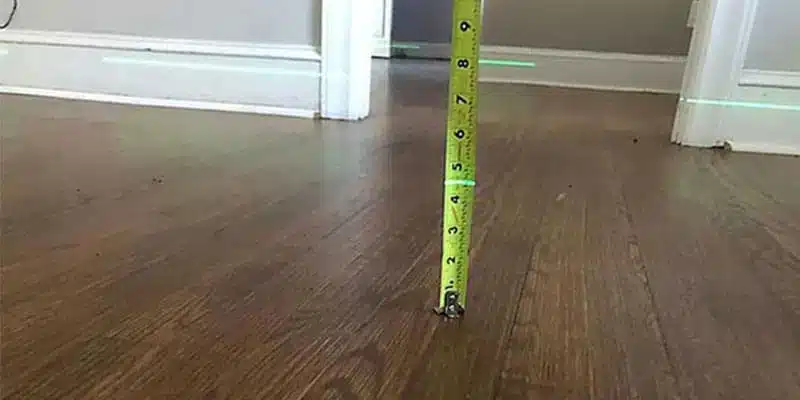
In many older homes, enough settling has occurred over the decades that the entire house has become uneven. The slope of a floor is often one of the easiest ways to recognize that unevenness.
An older home settling is not something that should cause concern on its own. Despite being uneven, a settled house is not necessarily structurally unsound, meaning that a sloping floor is also not necessarily something that should cause immediate concern.
But with that said, a sloping floor can also be a sign of foundation damage. A damaged foundation can cause a similar shifting effect as normal settling does. It can also result in sloping floors.
So a sloping floor alone does not show whether an older home has a structural problem, and it is hard to judge on your own. An inspection can find the cause of the slope and whether it needs repair.
How Much Slope Is Too Much?
Some signs anyone can look for suggest a slope is worth checking: windows and doors that stick, cracks in walls and stair step cracks in masonry. These often point to a deeper cause.
The amount of slope matters too. Some slopes are so slight you may not notice them, while others are steep enough to trip on. There is no single number that decides it. If a slope bothers you or is getting worse, an inspection can tell you what is causing it and what a repair would involve.
What Can You Do About a Sloping Floor?
If you decide that your floor is sloping enough to require a repair, the next step is to figure out what kind of repair is necessary. Remember that a sloping floor can occur due to one of several potential causes, each of which can call for a different solution.
For example, we mentioned earlier that some sloping floors result from damage to the floor itself or the floor’s supporting structures. In most cases, solving these kinds of sloping problems comes down to replacing the materials that have become damaged or decayed.
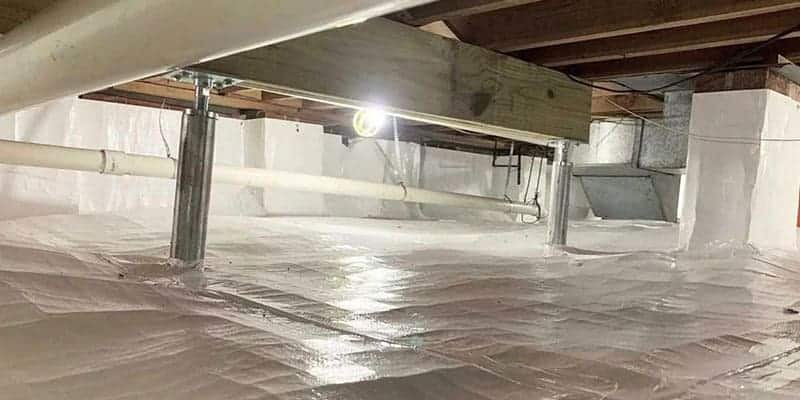
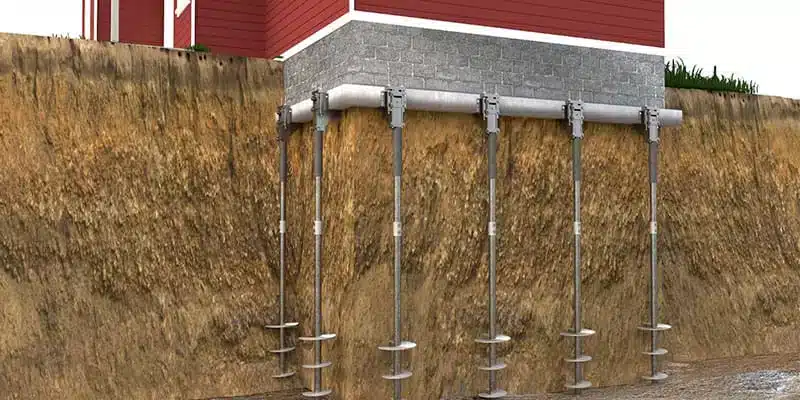
If the slope comes from a foundation problem, new flooring will not fix it. The repair is in the foundation, such as foundation underpinning or new supports under the floor framing, which can help bring the floor back toward level from below.
Whatever the cause, a professional inspection finds it, and the repair is matched to it.
Get Help With Sloping Floors in an Older Home
HydroHelp911 inspects older homes with sloping floors and finds out why the floors slope. We repair foundations and crawl spaces across North and South Carolina, starting with a free inspection.
Next Step
Schedule a Free Inspection
Call or fill out our quick online form. We'll book a convenient time to assess your home at no cost.
Learn more about our crawl space repair services.
Found this useful? Share it with someone working on their home.
Written by
Cory Parks
Owner & President, HydroHelp911
Cory Parks founded HydroHelp911 and leads its structural and moisture repair work for homeowners across North and South Carolina, from the clay soils of the Piedmont to the saturated, sandy ground along the coast.
More about CoryGet a Free Inspection
Two ways to start. Both are free, with no obligation.
Pick your own day in our calendar. You save $250 if you go ahead with the work.
Send a short form, and our office will call to book a time that suits you.
For new customers who book online through our website and then sign a contract.