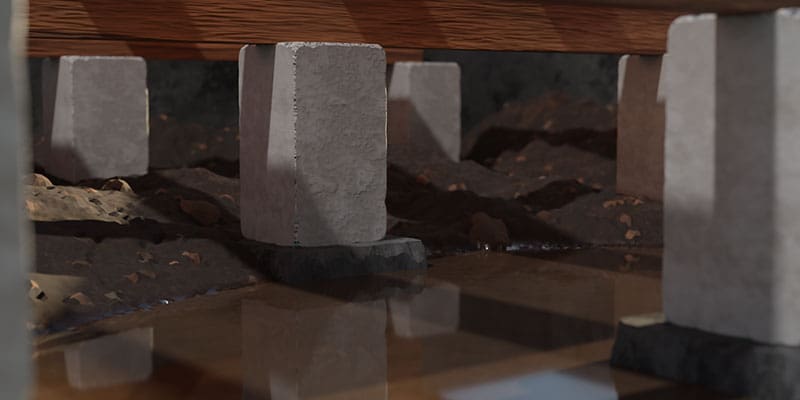

Moisture under a house usually comes from one of three places: a drainage system that has failed, roof and yard water collecting next to the foundation, or damage to the foundation itself. Once the source is found, the fix is usually interior drainage, foundation repair, encapsulation, a dehumidifier or a combination of them.
Crawl spaces and basements are prone to high humidity, and that moisture can affect the rest of your home. This article covers the causes and the fixes.
What Causes Moisture Under a Home?
There are several reasons the area under your home can become too damp. These are three of the most common.
Poor Drainage
Standing water or high humidity under your home can come from a lack of proper drainage. Many homes have interior drainage systems, floor drains and sump pumps. When one of these clogs, breaks or leaks, water can collect in the basement or crawl space.
Gutter, Downspout and Grading Issues
Roof and yard water is another common source. Clogged gutters can spill water right next to the foundation, and downspouts that empty close to the house can cause puddles near the walls. A yard that is flat or slopes toward the house can also send water toward the foundation.
Direct Foundation Damage
Damage to the foundation itself can let moisture into the area below your house. Cracks or walls that have moved can let water in, and they can also point to settlement or water pressure against the walls. In those cases, an inspection shows what the foundation repair needs to address.
How Do You Get Rid of Moisture Under a House?
The right fix depends on where the water comes from. These are the most common ones.
Repair or Add Interior Drainage
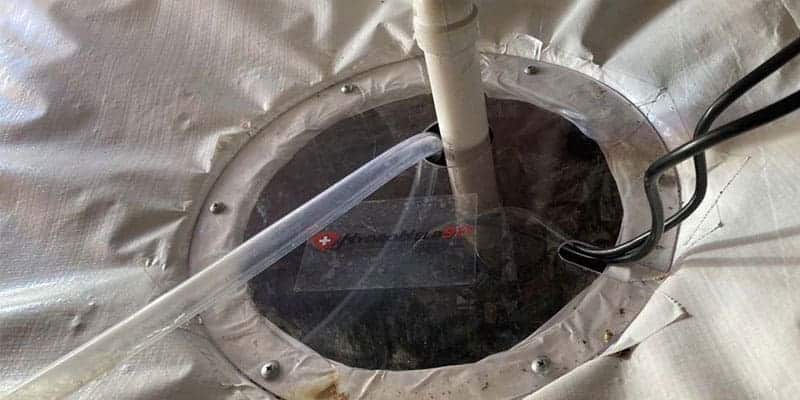
If the moisture comes from a drainage system that has failed, the usual fix is to repair it or add an interior system. That starts with an inspection of the drainage you have. The fix may be an interior drainage for crawl spaces, an interior French drain or a sump pump that carries the water out.
Homeowner Tip: Keep Gutters and Downspouts Clear
Gutters, downspouts and the slope of the yard are maintenance a homeowner or another trade looks after. Cleaning the gutters helps them carry roof water away from the foundation, and downspouts that empty well away from the house keep that water from pooling near the walls.
Fix Issues With Your Foundation
When foundation damage lets moisture in, it often comes from one of two sources: uneven settlement or water pressure against the walls.
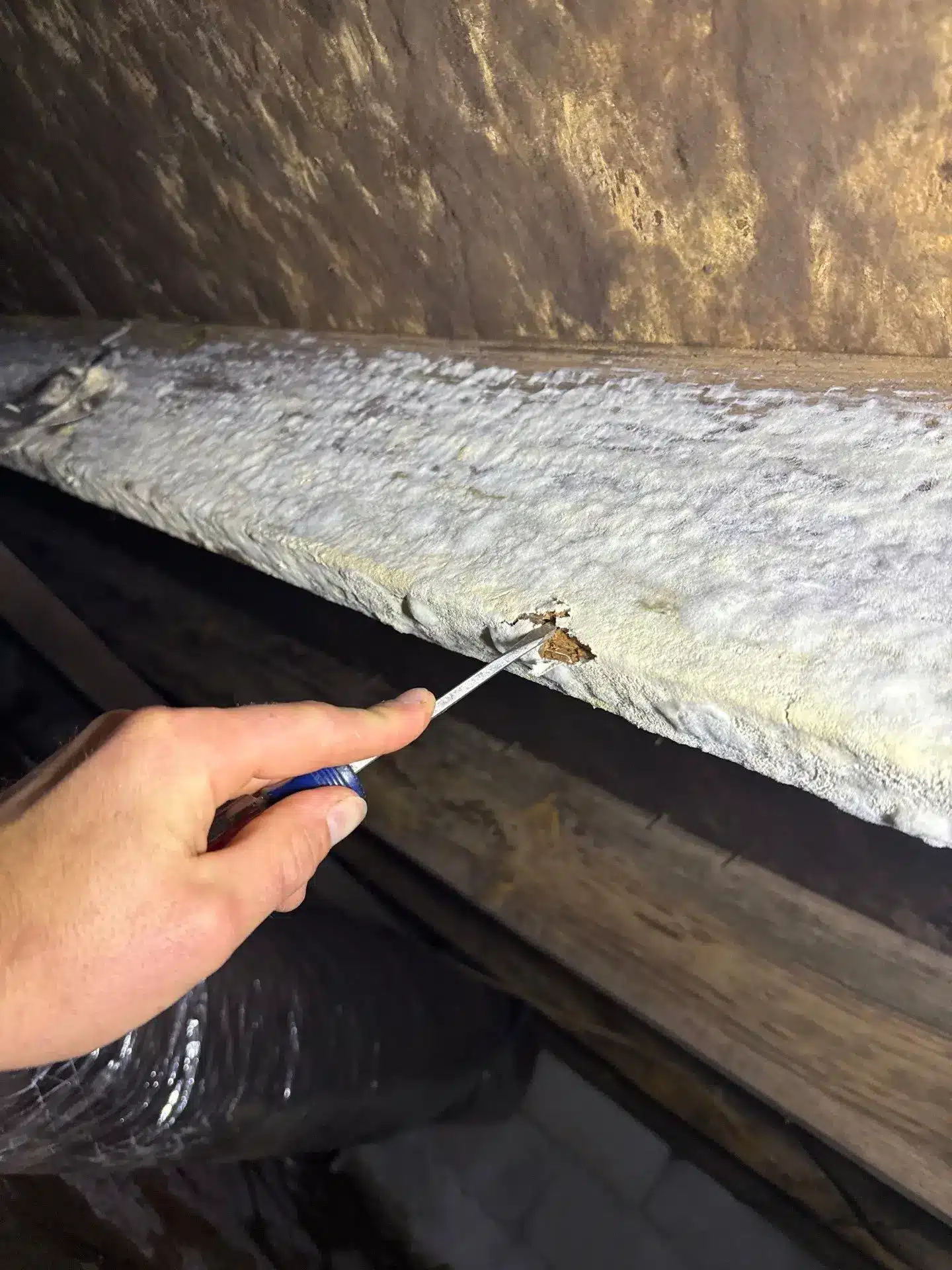
A small amount of even settlement is normal. Uneven settlement is when one part of the house moves more than another. It is often addressed with steel foundation piers, which reach firmer soil below the foundation and connect to it with brackets to help stabilize the settled area.
Water pressure is the other source. When the soil around a foundation is saturated, the water pressing against the walls can lead to bowing, cracks and leaks. The repair usually combines interior drainage to relieve that pressure with crack repair where the wall has cracked, and a bowing wall may also need stabilization.
Crawl Space Encapsulation
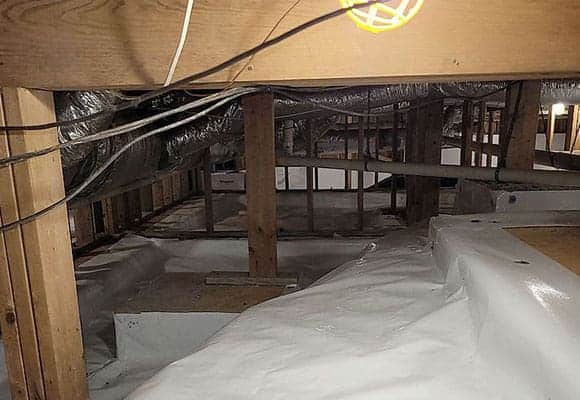
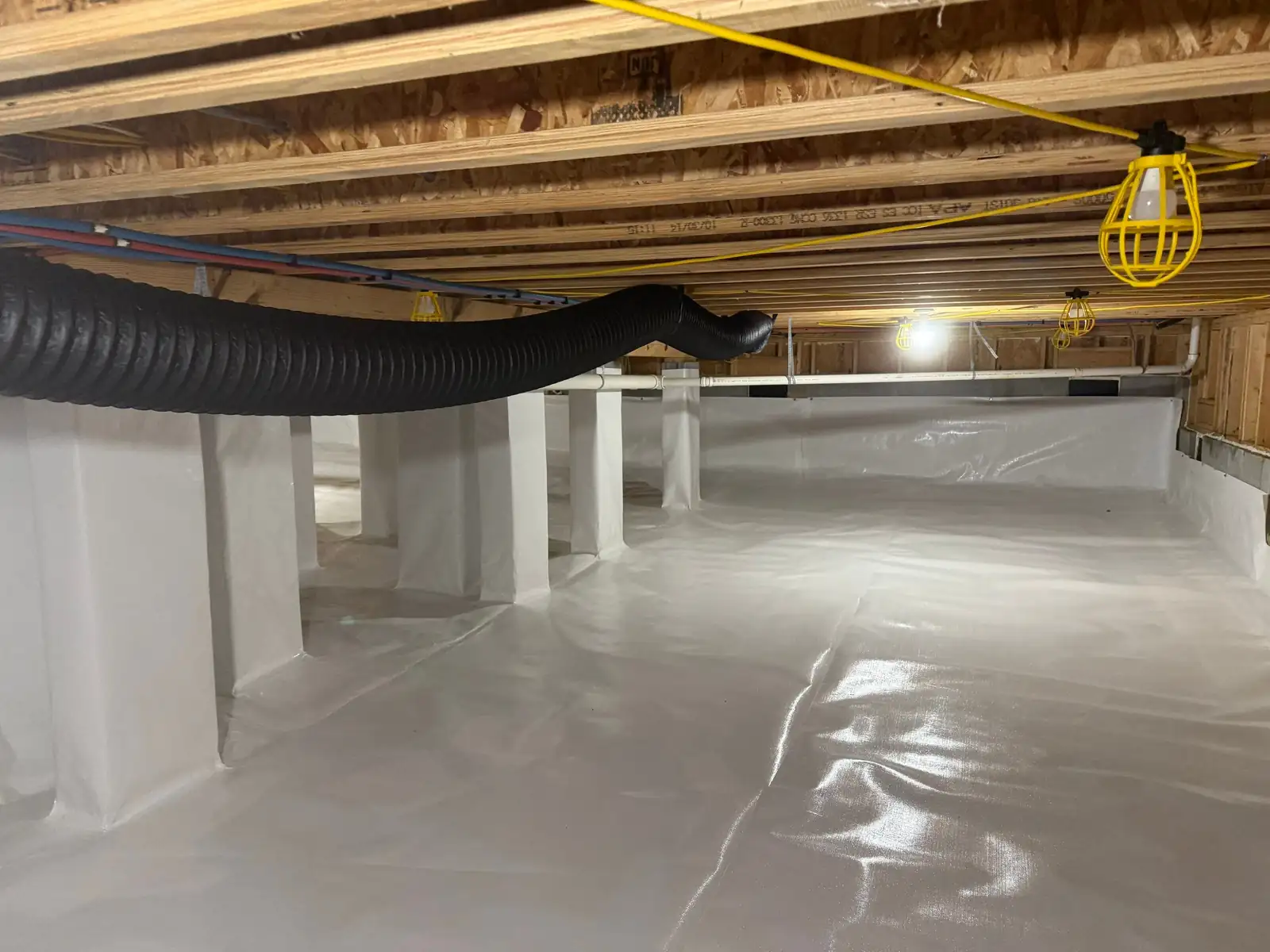
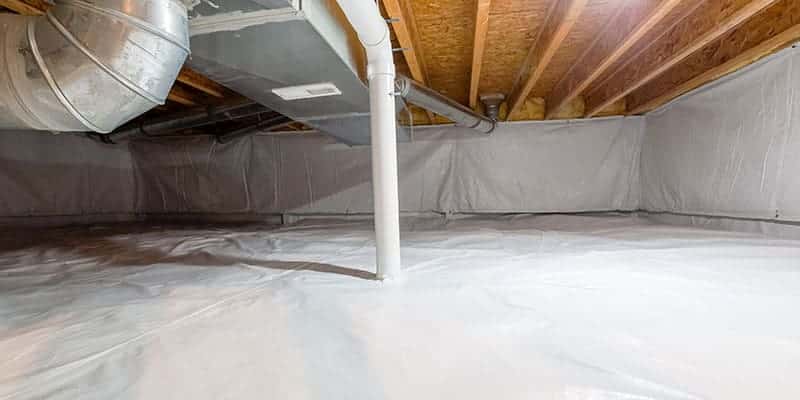
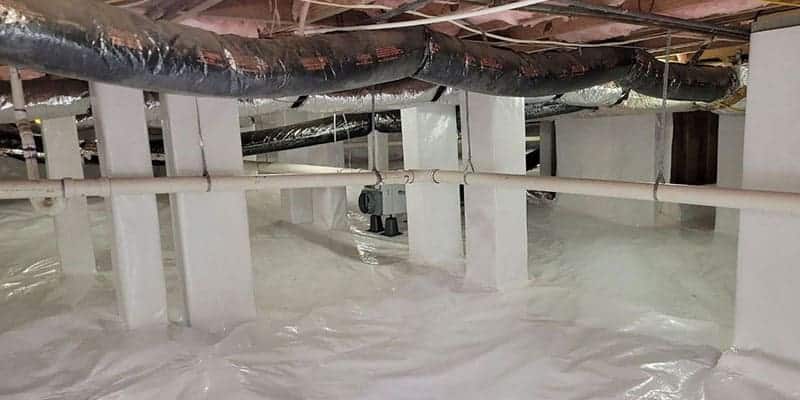
Encapsulation is another way to manage moisture. Crawl space encapsulation covers the crawl space floor, foundation walls and piers with a liner, with every seam taped, so ground moisture stays behind the barrier. Closing the crawl space off this way also helps keep humid outside air out.
Dehumidification
A dehumidifier is another way to help keep the area under your home dry. After the sources of moisture are addressed, you can install a dehumidification system to help keep the basement or crawl space dry.
A dehumidifier lets you monitor and manage the relative humidity under your home. It is often added after encapsulation.
Get Help With Moisture Under Your House
HydroHelp911 inspects crawl spaces and basements across North and South Carolina and shows you where the moisture is coming from before recommending a fix.
Next Step
Schedule a Free Inspection
Call or fill out our quick online form. We'll book a convenient time to assess your home at no cost.
Learn more about our crawl space repair services.
Found this useful? Share it with someone working on their home.
Written by
Cory Parks
Owner & President, HydroHelp911
Cory Parks founded HydroHelp911 and leads its structural and moisture repair work for homeowners across North and South Carolina, from the clay soils of the Piedmont to the saturated, sandy ground along the coast.
More about CoryGet a Free Inspection
Two ways to start. Both are free, with no obligation.
Pick your own day in our calendar. You save $250 if you go ahead with the work.
Send a short form, and our office will call to book a time that suits you.
For new customers who book online through our website and then sign a contract.